
Author: Senior Gas Systems Engineer / Indonesia Market Observer
Introduction: The Selection Logic Has Changed in Cilegon and Morowali
For colleagues working in the Indonesian steel industry—whether in carbon steel or the booming RKEF ferronickel sector—two pain points are unavoidable: Electricity costs (Listrik) and green/low-carbon initiatives.
In the past, giants like Krakatau Steel chose Cryogenic without hesitation, while small workshops opted for PSA. But times have changed. As medium-sized blast furnaces (450m³–1080m³) and Electric Arc Furnaces (EAF) proliferate across Indonesia, and with the post-2025 pressure to “reduce costs and carbon,” traditional selection logic is becoming obsolete.
Today, we compare these three technologies side-by-side within the context of Indonesia’s hot and humid environment.
I. Technical DNA and Scale: Which Fits Your Plant?
Each technology has its own “specialty.” Don’t be misled by irrelevant data.
1. Cryogenic ASU (Air Separation Unit) — “The Clumsy Giant”
- Principle: Freezes air to -180°C to liquefy it, then separates components via distillation.
- Indonesia Context: Suitable for ultra-large integrated steel mills (annual output >2 million tons).
- Pros: High purity (99.6%+); produces liquid oxygen, nitrogen, and argon simultaneously.
- Cons: Extremely slow start-up (24–36 hours for a cold start); cannot be frequently toggled on/off. Massive footprint and high civil engineering costs.
2. Standard PSA (Pressure Swing Adsorption) — “The Small-Scale Backup”
- Principle: Pressurized adsorption using a compressor to force air into molecular sieves.
- Indonesia Context: Suitable for small cutting workshops or medical use; unsuitable for large-scale steelmaking.
- The Flaw: When gas production exceeds 200 Nm³/h, energy consumption spikes, making long-term electricity costs unsustainable.
3. VPSA (Vacuum Pressure Swing Adsorption) — “The Steel Mill Special Forces”
- Principle: Vacuum desorption. Includes a vacuum pump system for more thorough molecular sieve regeneration.
- Indonesia Context: Currently the most suitable technology for medium-sized steel plants and RKEF ferronickel plants in Indonesia.
- Pros: Low energy consumption, flexible scale (300 – 10,000 Nm³/h), and rapid start-up.
II. What Owners Care About Most: The “Electricity Bill” (OPEX)
Industrial electricity prices in Indonesia are significant. Let’s calculate the power consumption per cubic meter of oxygen.
| Technology | Unit Consumption (kWh/Nm³ O2) | Estimated Cost (at Rp 1,444/kWh) | Expert Comment |
|---|---|---|---|
| Cryogenic (ASU) | 0.55 – 0.70 | Rp 800 – 1,000 | Only viable for massive scale (>20,000 Nm³/h); otherwise, it’s an “electricity tiger.” |
| Standard PSA | 0.45 – 0.60 | Rp 650 – 850 | High-pressure compressors consume much power; high maintenance costs due to wear. |
| VPSA (Minnuo Tech) | 0.29 – 0.35 | Rp 420 – 500 | The Champion. Uses low-pressure blowers; saves 30%-50% electricity vs Cryo/PSA. |
Conclusion: For a mill producing several hundred thousand tons annually, the electricity saved by VPSA in one year is enough to buy half a new unit. In Indonesia’s low-margin competitive environment, a 0.1 kWh difference is the gap between profit and loss.
III. Local Challenges: “Heat, Humidity” and “Islands”
This is why many Western equipment brands fail in Indonesia.
1. High Temperature & Humidity
Indonesia stays 30°C+ with 80%+ humidity year-round.
- PSA/VPSA Challenge: Molecular sieves are “afraid” of water. Without proper pre-treatment, sieves can pulverize and fail within months.
- The Difference: Standard PSA often has rudimentary dehydration. VPSA designed for Indonesia (like the Minnuo solution) features specialized hydrophobic molecular sieves and reinforced refrigerated dryers.
- Cryogenic Pain Point: Cooling water efficiency drops in high heat, often leading to system trips.
2. Logistics in an Archipelago
If your plant is in Java, logistics are fine. But if you are in the mining areas of Sulawesi or Halmahera:
- Cryogenic ASU: The “Cold Box” is a massive, monolithic piece of equipment. Transporting it requires special vehicles and docks; installation takes 6–12 months.
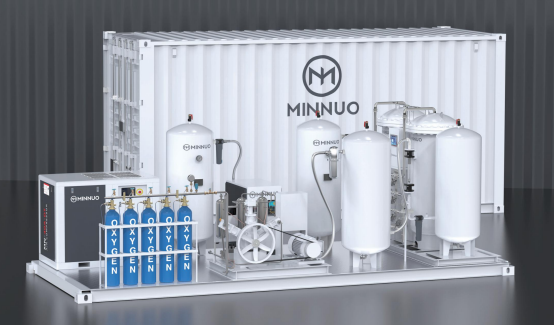
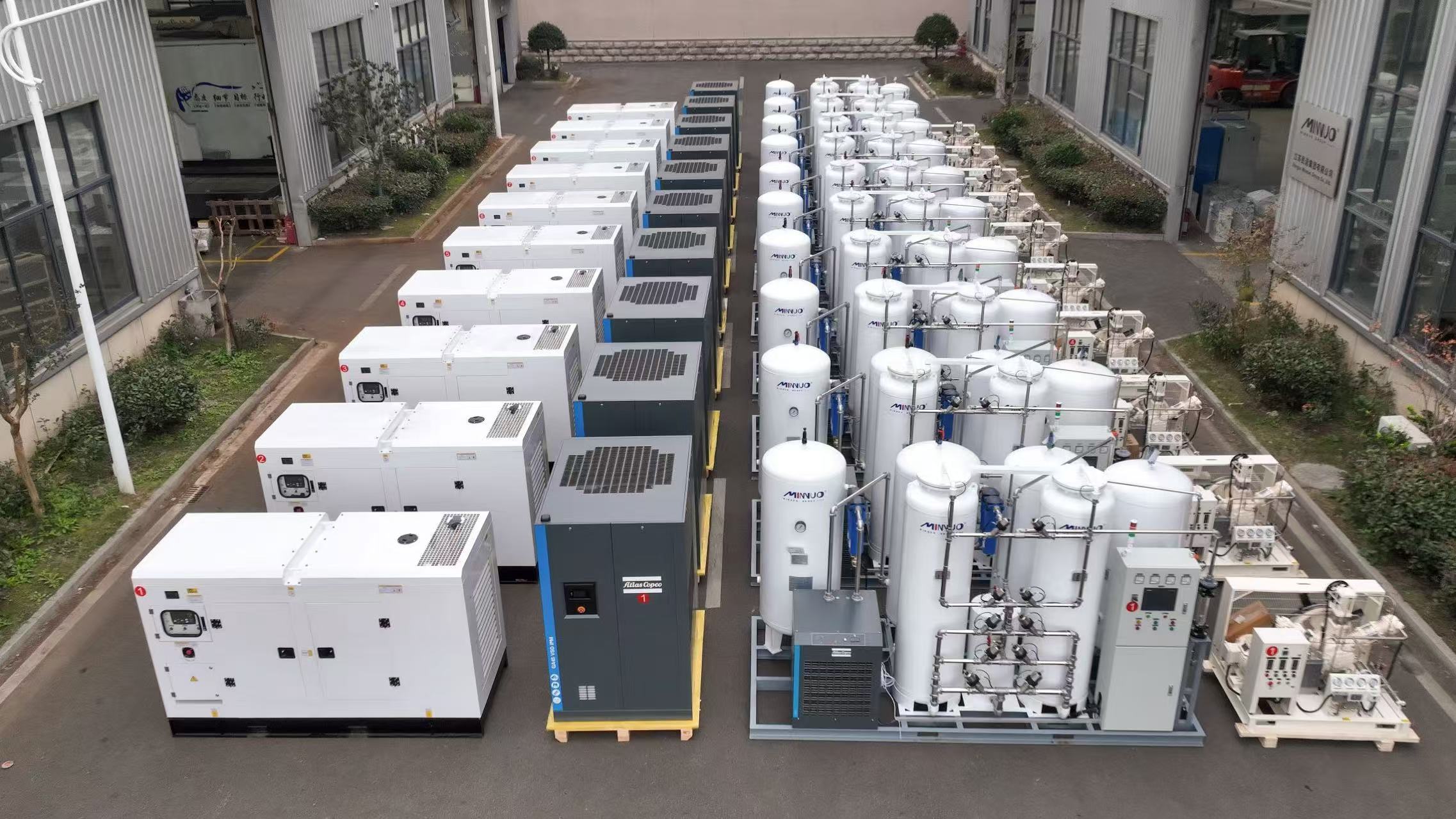
- VPSA: Modular design. All components fit into standard containers and can be trucked into mountainous regions. Installation and commissioning take only 15–30 days. For Indonesian owners racing to meet market demand, this speed is a decisive advantage.
IV. Process Matching: Do We Really Need 99.6% Purity?
This is a common misconception among technical staff.
- Cryogenic: Produces 99.6%+ high-purity oxygen. Best for medical and precision cutting.
- VPSA: Produces 93% ± 2% purity oxygen.
The Reality Check: Does a blast furnace (PCI), an EAF, or an RKEF rotary kiln really need 99.6%?
The answer is No.
Based on combustion principles, 90%-93% purity is the “Golden Point” of cost-effectiveness for metallurgy. Chasing 99.6% purity means paying 30% more in electricity to strip away that last bit of argon and nitrogen—which is a pure waste for steelmaking purposes.
Ultimate Recommendation: How to Choose in Indonesia?
As an industry insider, here is the straightforward selection guide:
Scenario A: Large Integrated Steel Mills (Krakatau Posco Level)
- Requirement: High oxygen purity and massive amounts of nitrogen for shielding gas.
- Choice: Cryogenic ASU. This is the only viable option for this scale.
Scenario B: Medium Blast Furnaces, EAFs, RKEF Ferronickel Lines
- Requirement: Oxygen demand of 1,000 – 10,000 Nm³/h. Focus on low cost and fast production.
- Choice: VPSA (Vacuum Pressure Swing Adsorption).
- Reason: Lowest electricity cost; 93% purity perfectly matches the process. This is the fastest-growing segment in the Indonesian market.
Scenario C: Small Foundries or Cutting Stations
- Requirement: Oxygen demand < 1,000 Nm³/h.
- Choice: Standard PSA or simply buying liquid oxygen cylinders.
Closing Thoughts
In the vibrant Indonesian market, the best technology isn’t the most expensive or the most “high-end”—it is the most durable, most energy-efficient, and easiest to maintain.
VPSA technology, with its Low OPEX and Modular Logistics, is becoming the “hidden champion” for cost reduction and efficiency in the Indonesian steel industry. If your factory is facing electricity price pressures or emission targets, it is time to reassess your gas supply system.

 sales2:+86 17506119168