Introduction: The Radical Shift in Indonesia’s “Oxygen Economics”
According to the CELIOS (Center of Economic and Law Studies) report, “Prospects for Decarbonizing Indonesia’s Steel Industry 2025,” the Indonesian steel sector is facing an unprecedented double squeeze: trade barriers from the EU’s CBAM (Carbon Border Adjustment Mechanism) on high-carbon products, and soaring costs due to the phase-out of domestic energy subsidies. In this context, oxygen is no longer just a combustion aid; it is a strategic resource for cost reduction and carbon mitigation.
The core thesis of this guide is: Given Indonesia’s unique archipelagic geography and high electricity prices, traditional Cryogenic ASU is no longer the sole choice for mid-sized steel plants. VPSA (Vacuum Pressure Swing Adsorption) technology, with its low energy consumption and modularity, is emerging as the optimal “transition technology” for EAF and RKEF ferronickel lines facing decarbonization challenges.
Which Technology Fits the “Archipelagic Conditions”?
In industrial hubs like Cilegon or Morowali, oxygen generator selection must go beyond theoretical parameters to account for Indonesia’s high humidity, high temperatures, and logistics.
1. Cryogenic ASU —”The Giant of the Old Era”
Separates air by cooling it to for liquefaction.
- Best For: Ultra-large integrated steel mills (e.g., Krakatau Steel level) with annual capacities exceeding 2 million tons.
- Indonesian Limitations: Extremely long startup times (24–36 hours) make it incompatible with Indonesia’s grid fluctuations or frequent maintenance. Furthermore, transporting “Cold Boxes” to remote mining areas is a logistical nightmare.
2. Standard PSA — “The High-Energy Backup”
Uses pressurized adsorption; common for medical or small-scale cutting.
- Best For: Small workshops with oxygen demand below .
- Indonesian Limitations: The Energy Trap. As scale increases, power consumption from high-pressure compressors rises exponentially, making long-term OPEX much higher than alternatives.
3. VPSA — “The Energy-Efficiency Specialist”
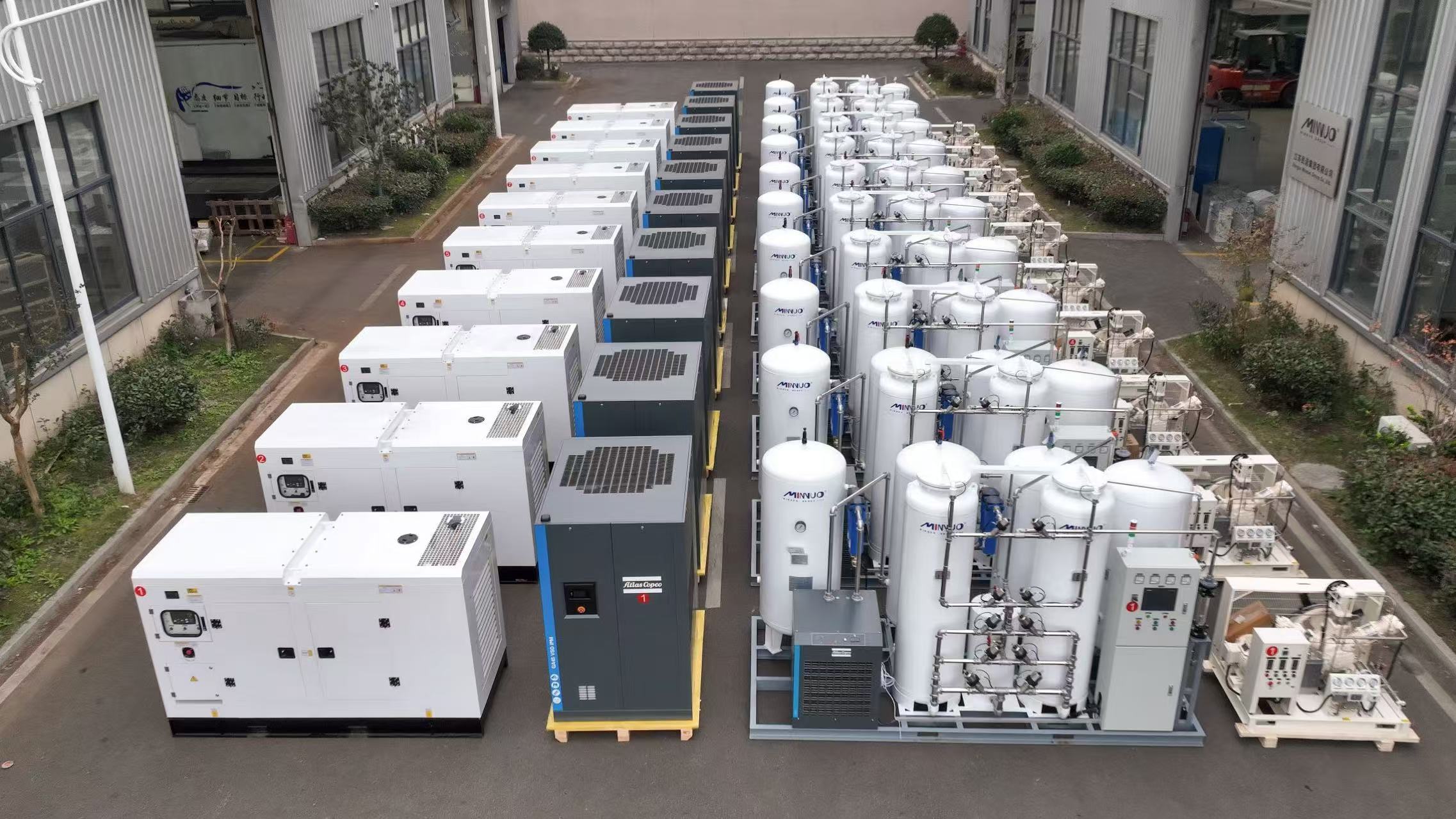
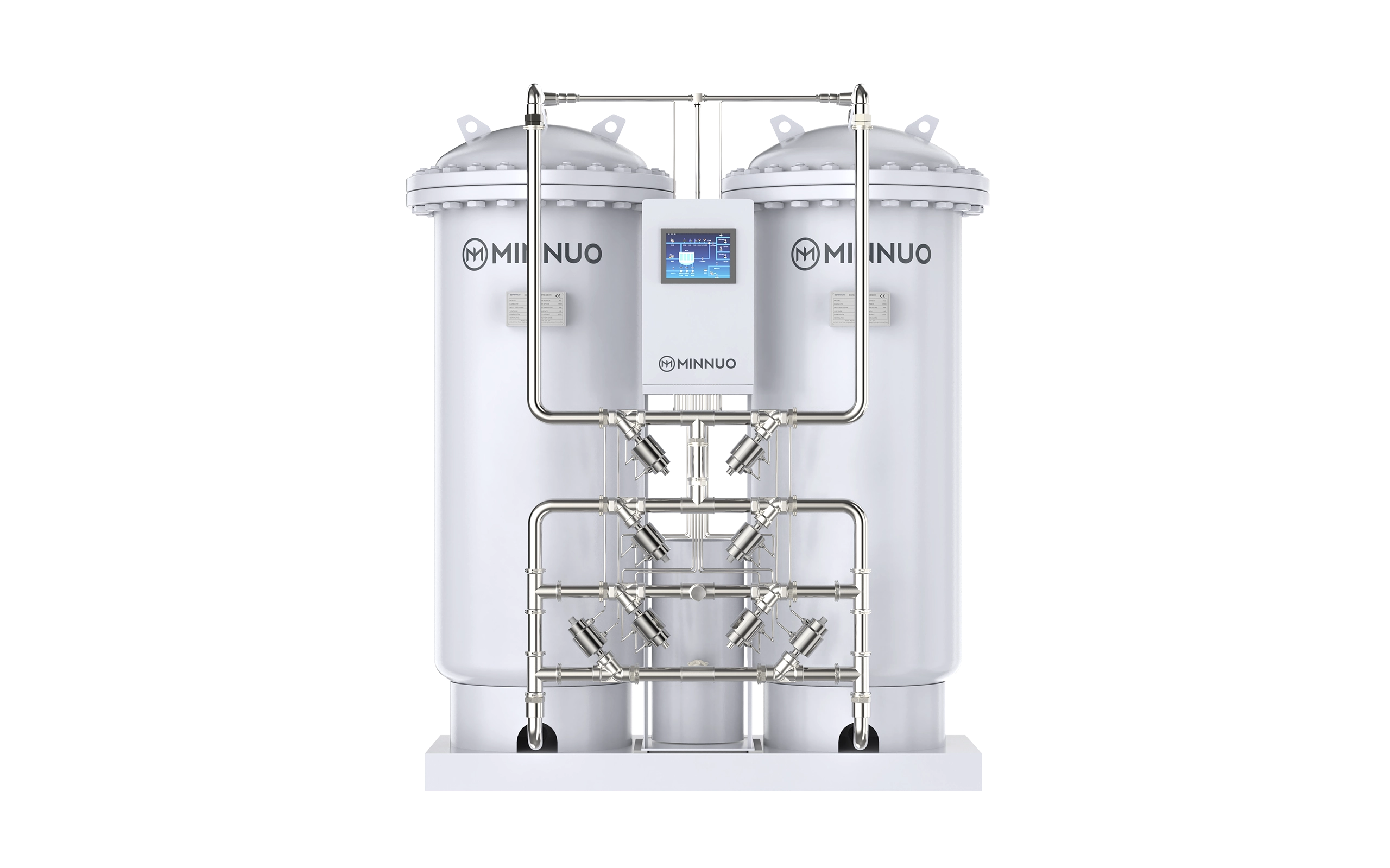
Utilizes low-pressure blowing and vacuum desorption (e.g., Minnuo Group’s VPSA systems).
- Best For: Mid-sized steel plants, EAF (Electric Arc Furnaces), and RKEF ferronickel plants ().
- Core Advantages: Optimized for Indonesia’s humid/hot climate, fast startup (30 minutes), and energy consumption lower than standard PSA.
Economic & Operational Comparison (Data & FAQ)
Based on the “OPEX Sensitivity Analysis” in the CELIOS report, we quantified the costs of the three technologies in actual Indonesian operations.
Core Technical Selection Matrix
| Evaluation Dimension | Cryogenic ASU | Standard PSA | VPSA (Advanced Tech) |
|---|---|---|---|
| Unit Energy Cons. () | 0.55 – 0.75 (Scale dependent) | 0.45 – 0.60 | 0.29 – 0.35 (Most Efficient) |
| Avg. Production Cost (IDR) | High (Inc. heavy depreciation) | Medium (High electricity %) | Low (~40% OPEX savings vs ASU) |
| Oxygen Purity | (High Purity) | (Metallurgy Sweet Spot) | |
| Logistics Suitability | Poor (Special heavy transport) | Good (Containerized) | Excellent (Modular for islands) |
| Startup / Response Speed | Slow (24 – 36 Hours) | Fast (15 – 20 Mins) | Fast (15 – 30 Mins) |
Expert Insight: The key lies in “Purity Overkill.” Steel metallurgy (Oxygen-enriched coal injection, EAF fluxing) only requires purity. Using Cryogenic tech to produce oxygen for steelmaking is a massive thermodynamic waste of energy, directly contradicting the efficiency principles of the CELIOS report.
Field FAQ: Insights from Indonesian Engineers
Q1: Indonesia’s humidity is often . Will VPSA molecular sieves fail quickly?
A: This is a misconception. While molecular sieves are water-sensitive, modern VPSA systems (like those from Minnuo) feature high-efficiency hydrophobic pretreatment modules and dew-point monitoring. Data shows that with tropical-specific designs, sieve lifespans in Indonesia can exceed 10 years.
Q2: If Cryogenic energy consumption is high, why do big mills still use it?
A: Large mills need massive quantities of Nitrogen (for shielding) and Argon (high-value byproduct). When demand exceeds , Cryogenic efficiency improves. However, for current Indonesian RKEF and EAF trends, VPSA offers the highest ROI.
Decarbonization Impact: Aligning with CELIOS 2025
The CELIOS report highlights that reducing “Scope 2 Emissions” (emissions from electricity consumption) is a critical path for Indonesian steel, as the national grid remains heavily coal-dependent.
The VPSA Emission Leverage Effect
- Lower Indirect Emissions: VPSA’s low energy demand () means every cubic meter of oxygen produced reduces indirect emissions by approximately compared to Cryogenic (based on Indonesia’s grid carbon factor).
- Process-Level Reductions: Low-cost oxygen encourages plants to increase Pulverized Coal Injection (PCI) rates and EAF secondary combustion efficiency.
- Data Support: According to the IEA, for every increase in oxygen enrichment, blast furnace fuel consumption can drop by over .
Conclusion: The “Golden Ratio” for Indonesian Mid-sized Mills
In summary, while Cryogenic ASU remains king for ultra-scale operations, VPSA technology is the undisputed “MVP” for the transition period outlined in the CELIOS report.
Summary of Findings:
“For Indonesian steel and RKEF plants with capacities between 100k and 2M tons, VPSA technology reduces OPEX by 30%-50% compared to Cryogenic and extends equipment life by 20% over standard PSA. It is the only path that simultaneously addresses Indonesia’s high electricity sensitivity, logistical constraints, and rapid decarbonization needs.”
Call to Action:
We recommend Indonesian steel enterprises conduct an immediate LCOE (Levelized Cost of Oxygen) audit. If your plant relies on purchased liquid oxygen or legacy PSA systems, evaluate a switch to on-site VPSA to capture cost advantages before CBAM implementation.
[Source Attribution]
Written by: Senior Industrial Gas Strategist (15+ years experience in ASU selection across SE Asia).
Data Sources:
- Decarbonization: CELIOS – “The Prospects of Indonesia’s Steel Decarbonization 2025.“
- Efficiency: Minnuo Group (Minnuogas.com) & Argonne National Laboratory LCA models.
- Grid Factors: PLN (Perusahaan Listrik Negara) industrial carbon emission benchmarks.