
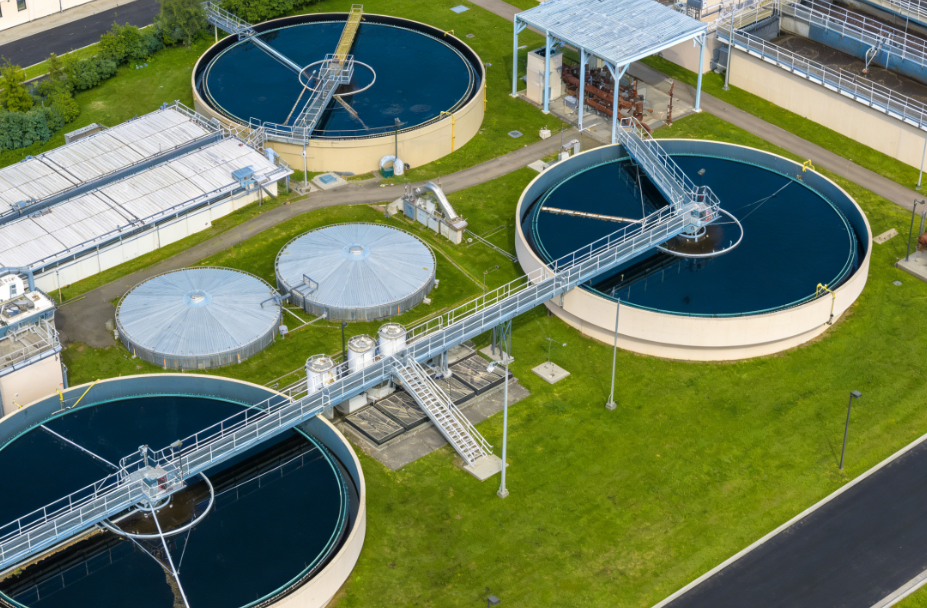
In municipal and industrial wastewater treatment, the aeration process is the biological heart of the system—and its single largest energy consumer, often accounting for 50-70% of a plant’s total electricity use. Traditional fine-bubble diffused aeration, which uses ambient air (21% oxygen), is inherently inefficient for transferring oxygen into water.
Integrating an on-site oxygen generator to inject high-purity oxygen (90-95% O₂) into aeration tanks represents a step-change technology. It dramatically boosts treatment capacity, slashes energy costs, and provides critical resilience during high-load or toxic shock events. This guide explains the engineering and economic case for adopting oxygen generation in wastewater treatment.
Core Principle: The Mass Transfer Advantage
The driving force for oxygen dissolving into water is the concentration gradient between the gas and the liquid. Pure oxygen creates a gradient nearly 5 times greater than air.
Key Benefit: Achieving the same Dissolved Oxygen (DO) level requires significantly less gas volume and lower blower energy when using pure oxygen. This translates to:
- Higher Oxygen Transfer Efficiency (OTE): More O₂ molecules enter the water per unit of energy.
- Increased Treatment Capacity: Existing tanks can handle higher Biochemical Oxygen Demand (BOD) loads.
- Reduced Sludge Production: More efficient oxidation can lead to less biomass yield.
Application Scenarios: Where On-Site Oxygen Excels
1. Capacity Upgrades & Peak Load Management
Many plants face seasonal or periodic high-strength wastewater inflows (e.g., food processing seasons, stormwater ingress). Oxygen generators provide a flexible, on-demand boost to maintain compliance without constructing new tanks.
- Action: Use oxygen during peak hours (8-12 hrs/day) to supplement existing air blowers.
2. Energy Cost Reduction in High-Electricity Regions
Where electricity costs are prohibitive, replacing a portion of air blower operation with a more efficient oxygen injection system can yield a fast ROI.
- Action: Conduct an energy audit comparing blower kWh/kg O₂ transferred vs. oxygen generator kWh/kg O₂ produced.
3. Dealing with Toxic Shock Loads
Ammonia spikes or toxic contaminants can inhibit nitrifying bacteria. High-purity oxygen rapidly restores DO levels and supports biomass recovery faster than air.
- Action: Use oxygen as an emergency response tool to prevent process failure.
4. Sludge Digestion Enhancement
Oxygen injection into sludge holding tanks or digesters improves stabilization, reduces odors, and can decrease volatile solids.
System Design: Key Components & Configuration
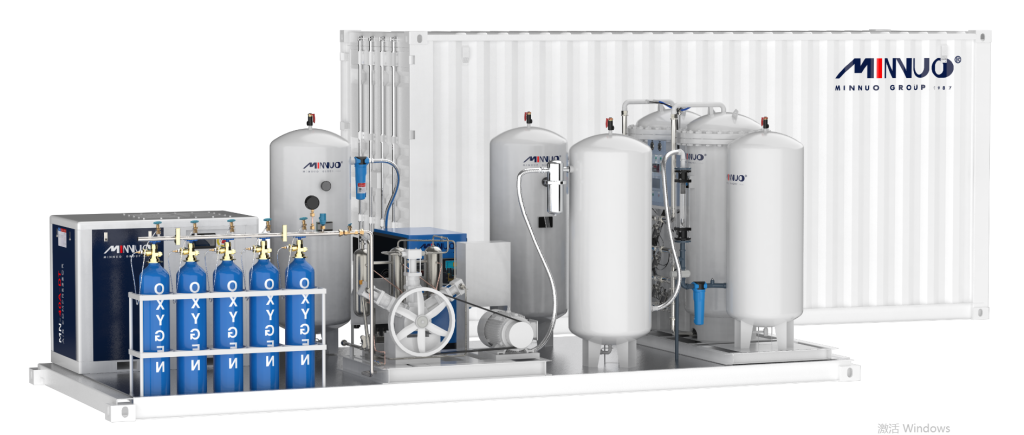
A typical Wastewater Oxygenation System includes:
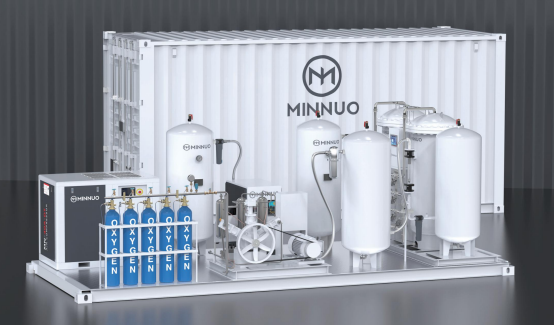
- Oxygen Source: A Pressure Swing Adsorption (PSA) oxygen generator is standard, sized for the required flow (Nm³/h) at 90-93% purity.
- Dissolution System: The critical component that injects O₂ into the water. Options include:
- Venturi Injectors: Use tank water recirculation to create a vacuum that draws in oxygen. High efficiency, requires a recirculation pump.
- Downflow Bubble Contactors (Oxygen Cones): Oxygen is bubbled into a column of falling water. Very high transfer efficiency (>90%).
- Fine Bubble Diffusers (Specialized): Made of materials compatible with high-purity oxygen; require careful safety design.
- Control & Monitoring: Linked to the plant’s DO probes and SCADA system to modulate oxygen flow based on real-time demand.
- Safety Systems: Oxygen concentration monitors in enclosed spaces, relief valves, and non-return valves to prevent water backflow.
Economic Analysis: Calculating the ROI
The business case hinges on comparing the cost per kilogram of oxygen delivered to the water.
Cost Comparison Framework:
| Cost Factor | Traditional Fine-Bubble Aeration (Air) | On-Site Oxygen Injection (PSA) |
| Capital Cost | Lower (blowers, pipes, diffusers) | Higher (generator, dissolution system, controls) |
| Primary Energy Consumer | Blower Motors (large HP) | Air Compressor for PSA + Recirculation Pump |
| Key Efficiency Metric | ~2 kg O₂ / kWh transferred (Standard) | ~4.5 kg O₂ / kWh produced & dissolved (System) |
| Operational Flexibility | Low. Slow response to DO changes. | High. Rapid response, easy turndown. |
| Impact on Capacity | Fixed by basin size and diffuser layout. | Can increase capacity of existing basins by 2-3x. |
Simplified ROI Calculation:
- Determine current blower energy cost to meet oxygen demand.
- Calculate energy cost to produce and dissolve the equivalent oxygen mass with a PSA system.
- Factor in reduced sludge hauling costs (if applicable) and avoided capital cost of new tank construction.
- The annual savings divided by the system capital cost gives a simple payback period, often between 2 to 5 years for suitable applications.
FAQ: Oxygen in Wastewater Treatment
Q1: What purity of oxygen is needed for wastewater treatment?
A1: 90-93% oxygen from a standard PSA generator is typically sufficient. The key metric is mass of O₂ transferred, not ultra-high purity. Higher purity (up to 95%) can be specified for very large systems where efficiency gains offset the increased energy cost of production.
Q2: Is pure oxygen dangerous to use in a biological tank?
A2: The oxygen is immediately dissolved into water, so explosion risk in the basin is minimal. The main safety focus is on the oxygen generation and storage equipment room, which must be well-ventilated and follow NFPA/NFPA 55 guidelines for oxygen systems. Proper training and gas detection are essential.
Q3: Can we use liquid oxygen (LOX) instead of a generator?
A3: Yes, for pilot projects or very small, intermittent needs. However, for continuous base-load use, LOX is 3-5 times more expensive per kilogram of oxygen than on-site generation due to delivery and evaporation losses. Generators offer superior long-term economics and supply security.
Q4: How do we size an oxygen generator for our plant?
A4: Sizing is based on the peak oxygen demand of your process. This is calculated from your peak BOD/COD loading and ammonia nitrogen (NH3-N) load using standard biochemical formulas (~1.1 kg O₂ per kg BOD removed, ~4.6 kg O₂ per kg NH3-N nitrified). An engineering firm or technology provider should perform this detailed mass balance.
Conclusion: A Strategic Upgrade for Modern Plants
Incorporating on-site oxygen generation is no longer just an emergency tool; it is a strategic asset for operational efficiency and resilience. For treatment plants facing capacity constraints, high energy costs, or stringent compliance limits, it offers a proven path to significantly upgraded performance without the massive capital outlay of new concrete and land.
The transition requires careful design and integration but delivers compelling returns through energy savings, capacity gains, and operational flexibility.
Is your wastewater treatment plant reaching its limits? Minnuo‘s application engineers specialize in integrating oxygen generation into biological processes. We can provide a feasibility study with detailed oxygen demand modeling and a clear financial analysis to determine if this technology is the right solution for your facility’s next chapter of growth and efficiency.

 sales2:+86 17506119168