Introduction: The Core of Purity and Industrial Value of PSA Nitrogen Generators
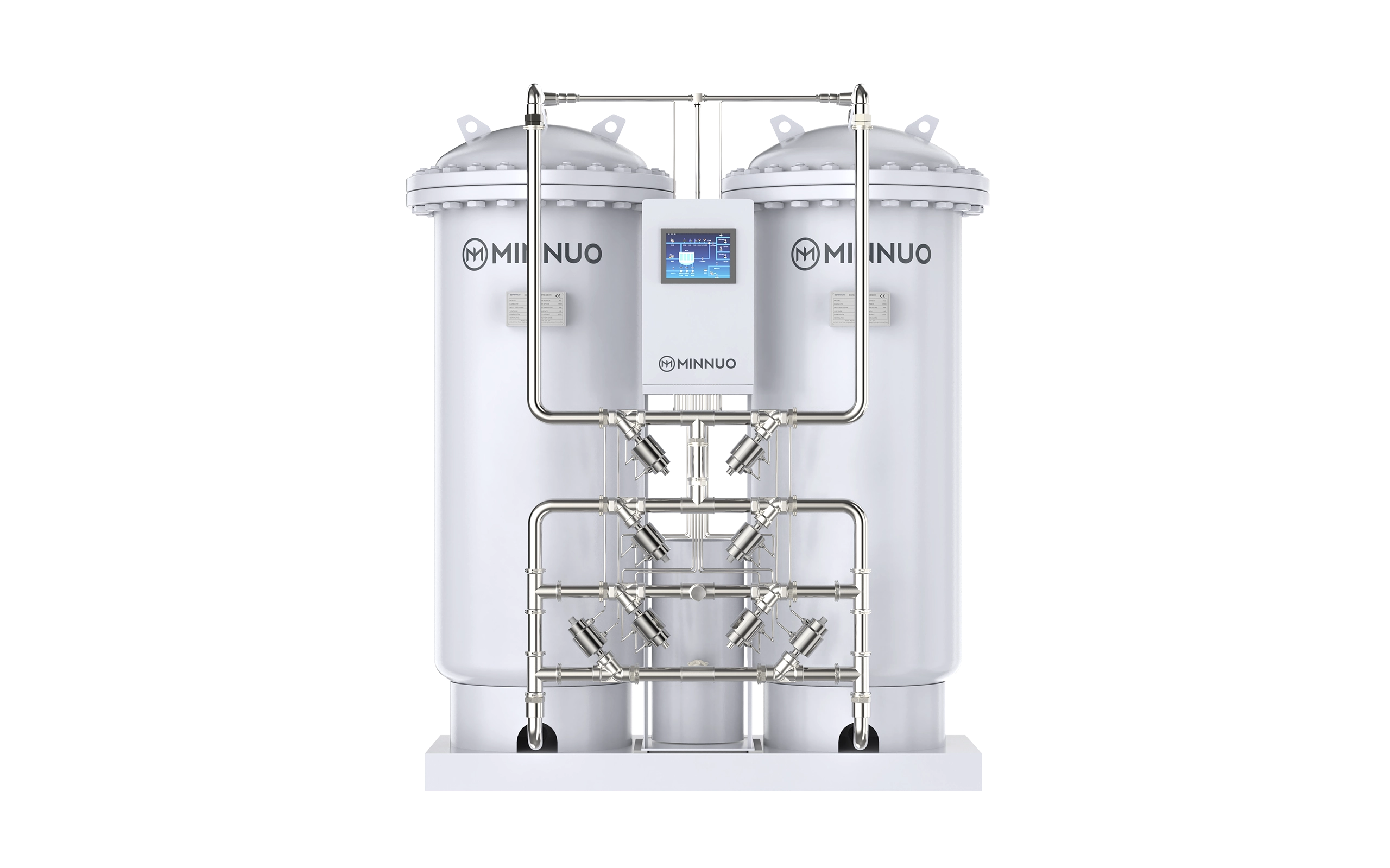
Pressure Swing Adsorption (PSA) nitrogen generation technology uses air as feedstock and separates oxygen and nitrogen through the selective adsorption properties of Carbon Molecular Sieves (CMS). It can flexibly produce nitrogen with purity levels ranging from 95% to 99.9995%. With the advantages of on‑site production and customizable purity, it has replaced traditional bottled nitrogen and cryogenic air separation nitrogen production, becoming the preferred solution for food preservation, chemical production, electronics manufacturing and other fields. Nitrogen purity directly determines production safety, product quality and operating costs. Accurately matching purity requirements is a key prerequisite for efficient industrial production.
I. Low‑purity Nitrogen (95%–98%): Economical for Basic Inert Requirements
Low‑purity nitrogen has an oxygen content of 2%–5%. Featuring low production cost, simple equipment structure and low energy consumption, it is widely used in basic industrial scenarios with loose purity requirements. Its core value is to provide an inert environment to isolate oxygen.
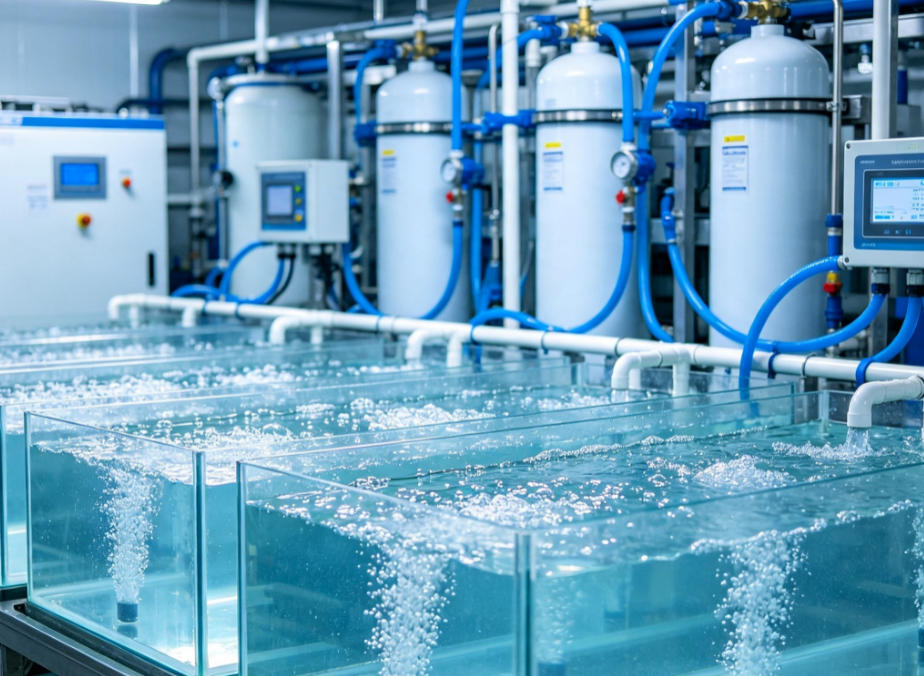
In food packaging and storage, 95%–98% purity nitrogen meets Modified Atmosphere Packaging (MAP) needs for ordinary foods. By replacing air inside packages, it inhibits bacterial growth and oil oxidation, extending the shelf life of snacks such as potato chips and pastries. It complies with food hygiene standards without additional purification. In tire manufacturing and maintenance, nitrogen of this purity is used to inflate automobile and aircraft tires due to low molecular permeability and stable chemical properties. It effectively reduces tire pressure fluctuations, lowers blowout risks at high speeds, and extends tire service life by more than 15%.
n the chemical industry, low‑purity nitrogen is the most cost‑effective explosion‑proof protective gas. It is used for pipeline purging, vessel replacement and tank inerting to prevent safety accidents caused by contact between flammable and explosive raw materials and oxygen, especially suitable for batch production processes of small and medium‑sized chemical enterprises. In general laser cutting, this purity nitrogen serves as an auxiliary gas for carbon steel cutting, preliminarily preventing cut surface oxidation. Although cutting accuracy is lower than that of high‑purity nitrogen, it significantly reduces processing costs and fits general machining scenarios with low requirements for cut surface quality.
II. Medium‑purity Nitrogen (99%–99.9%): Universal for Mainstream Industrial Needs
Medium‑purity nitrogen controls oxygen content at 0.1%–1%. It is the most widely used purity grade in the market, balancing production quality, cost and energy consumption. Separation is achieved through precision molecular sieves and optimized adsorption cycles. It covers core industrial fields such as machinery manufacturing, electronic components and plastic processing.
In metal processing, 99%–99.9% purity nitrogen is an ideal auxiliary gas for laser cutting of stainless steel and aluminum. It effectively avoids oxide layer formation on metal surfaces during cutting, delivering smooth and flat cut surfaces while improving cutting speed and material utilization, suitable for processing automotive parts and precision machinery. In electronic component manufacturing, soldering processes such as reflow soldering and wave soldering require nitrogen of this purity as a shielding gas to isolate oxygen, prevent solder joint oxidation, reduce cold soldering and false soldering, and ensure connection reliability of electronic components like circuit boards.
In plastic injection molding, high‑pressure nitrogen injected into mold cavities reduces internal stress and bubble defects in plastic products, improving dimensional accuracy and surface finish, especially for mass production of home appliance shells and engineering plastic parts. In medical device manufacturing, this purity nitrogen provides a clean, dry inert environment for assembly and leak testing of ventilators, medical catheters and other equipment, avoiding corrosion of equipment materials by oxygen and moisture. In addition, 99.9% purity nitrogen replaces traditional steam vulcanization in rubber vulcanization processes, reducing tire delamination risks, extending vulcanization bladder service life by 10% and saving 20% energy consumption.
III. High‑purity Nitrogen (99.99%–99.999%): Precise for Precision Manufacturing and High‑end Industries
High‑purity nitrogen reduces oxygen content to 10 ppm–100 ppm. It imposes extremely high requirements on molecular sieve quality, air purification systems and equipment control systems, with significantly increased production costs and energy consumption. Yet it meets strict quality standards in precision manufacturing, pharmaceuticals, new energy and other fields.
Semiconductor and electronics manufacturing is a core application scenario for high‑purity nitrogen. In chip and integrated circuit production, 99.99%–99.999% purity nitrogen is used in wafer cleaning, photoresist coating, packaging testing and other key steps. Any tiny impurities or residual oxygen may degrade electrical performance or even scrap components. Therefore, catalytic deoxidation and deep drying systems are required to control dew point below −60 °C to ensure product yield. In the photovoltaic industry, thin‑film deposition and silicon wafer doping in solar panel manufacturing need high‑purity nitrogen as shielding gas to prevent material oxidation failure and enhance battery conversion efficiency.
In pharmaceuticals and medicine, high‑purity nitrogen meets GMP standards. It is used in drug synthesis, freeze‑dried preparation production and packaging to isolate oxygen and moisture, prevent drug oxidation and deterioration, extend shelf life and ensure stable efficacy, especially suitable for high‑end pharmaceutical production such as antibiotics and biological preparations. In laboratory analysis, this purity nitrogen acts as carrier and purge gas for Gas Chromatography (GC) and Liquid Chromatography‑Mass Spectrometry (LC‑MS), avoiding impurity interference with detection signals and ensuring accurate analysis results, serving as basic supporting gas for scientific research in chemistry, environmental monitoring and other fields.
IV. Ultra‑high‑purity Nitrogen (Above 99.999%): Cutting‑edge for Special Industry Needs
Ultra‑high‑purity nitrogen has oxygen content below 10 ppm, and some scenarios require levels above 99.9999%. It usually needs dedicated purification devices after the PSA system, with strict anti‑pollution requirements for contact parts and pipeline materials. It is mainly used in cutting‑edge fields such as aerospace, nuclear industry and high‑end semiconductors.
In advanced semiconductor manufacturing, chip production at 7 nm and below requires ultra‑high‑purity nitrogen above 99.9999% for environmental purification and protection in Extreme Ultraviolet Lithography (EUV) processes, preventing nano‑scale circuit patterns from contamination — a critical supporting condition for upgrading chip processes. In aerospace, ultra‑high‑purity nitrogen is used for pipeline purging of spacecraft propulsion systems, fuel storage inerting, and vacuum packaging of satellite electronic components, preventing corrosion of equipment by oxygen and moisture in space environments and ensuring spacecraft operational reliability.
In the nuclear industry, ultra‑high‑purity nitrogen serves as inert shielding gas for reactor cooling systems, replacing oxygen in pipelines to reduce equipment corrosion risks. It also provides shielding and isolation during nuclear fuel processing to ensure operational safety. Furthermore, electrode drying and electrolyte injection in lithium battery manufacturing require nitrogen above 99.999% purity to prevent moisture and oxygen from affecting battery capacity and cycle life, an important guarantee for the high‑quality development of the new energy vehicle industry.
Conclusion: Coordinated Evolution of Purity Matching and Industrial Development
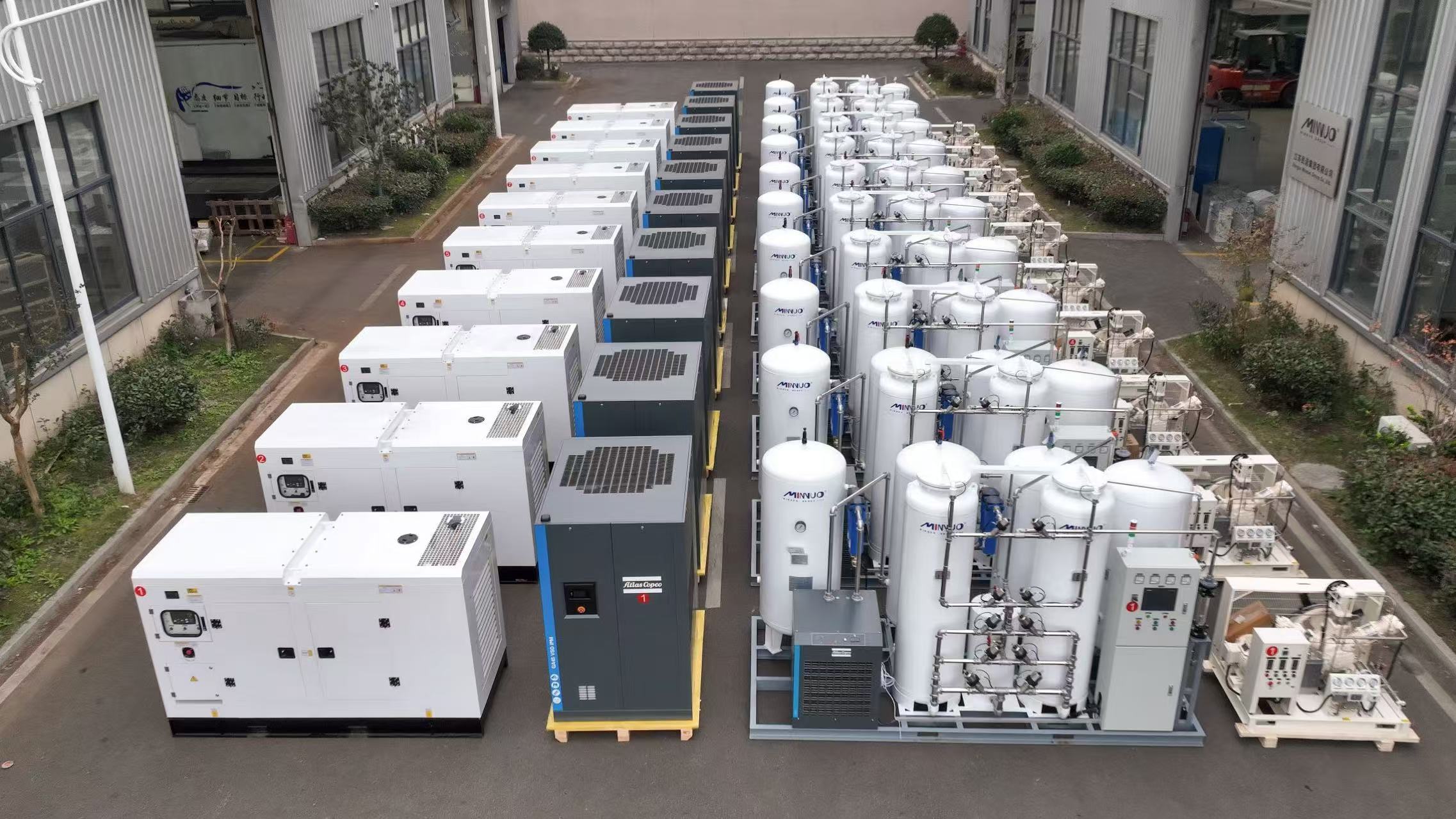
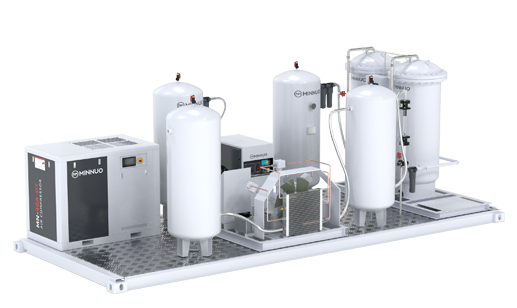
The core competitiveness of PSA nitrogen generators lies in their on‑demand purity adjustment capability. From basic industrial protection at low purity to cutting‑edge manufacturing support at ultra‑high purity, their application scenarios extend to high value‑added fields as purity levels rise. With technological upgrades in chemical, electronics, new energy and other industries, demand for nitrogen purity continues to increase, driving PSA nitrogen generation technology toward intelligence and modularization — PLC intelligent control systems optimize adsorption cycles and reduce energy consumption by more than 10%; skid‑mounted modular design enables fast installation and capacity expansion.
In the future, PSA nitrogen generators will further balance purity demand and cost control through technological innovation. Driven by green production policies, they will replace traditional liquid nitrogen supply models and provide more efficient, energy‑saving and stable nitrogen solutions for various industries. When selecting models, enterprises should accurately evaluate purity requirements, gas supply demand and operating cost budgets of their own processes to achieve optimal matching between nitrogen purity and application scenarios, maximizing the industrial value of PSA nitrogen generation technology.