
Medical oxygen is classified as a drug in most jurisdictions, and its production within a healthcare facility carries profound responsibilities. A hospital’s central oxygen supply is not merely a utility—it is a life-support system. When a patient in the ICU, operating theater, or emergency department depends on that flow, failure is not an option. This is why medical PSA (Pressure Swing Adsorption) oxygen plants are held to the most stringent international standards. This comprehensive guide outlines the regulatory landscape—ISO 7396-1, FDA, WHO, and regional pharmacopoeias—and translates those requirements into practical design, installation, and operational criteria for building a compliant, safe, and reliable medical oxygen plant.
I. The Regulatory Landscape: Why Standards Matter
Medical oxygen is unique among hospital utilities because it directly contacts patients and supports critical physiological functions.
1. Oxygen as a Pharmaceutical Product
In the United States, medical oxygen is regulated by the FDA as a prescription drug. In Europe, it falls under the European Pharmacopoeia (Ph. Eur.) . The World Health Organization (WHO) includes medical oxygen on its Model List of Essential Medicines . This classification means that the oxygen itself must meet defined purity standards, and the equipment producing it must be manufactured and operated under quality systems.
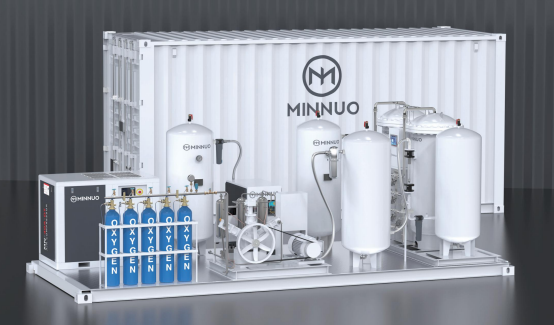
2. The Core Standards
Several key documents define the requirements for medical gas systems:
- ISO 7396-1: The international standard for medical gas pipeline systems—the most comprehensive framework for design, installation, and testing.
- National Fire Protection Association (NFPA) 99: The US standard for health care facilities, covering gas systems extensively.
- HTM 02-01: The UK’s Health Technical Memorandum for medical gas systems.
- WHO Technical Specification for Medical Oxygen Systems: Guidance for low- and middle-income countries.
- United States Pharmacopeia (USP) / European Pharmacopoeia (Ph. Eur.): Define the required purity and testing methods for medical oxygen.
II. Core Technical Requirements for Medical PSA Oxygen Plants
The standards translate into specific technical mandates.
1. Oxygen Purity: The 93% (±3%) Standard
ISO 7396-1 and all major pharmacopoeias specify that oxygen produced for medical use must have a concentration of 93% ± 3% (by volume) , with the balance being primarily argon and nitrogen .
- Why Not 99.5%? Medical oxygen does not require cryogenic purity. The 93% standard has been clinically validated as safe and effective for all medical applications, including neonatal care .
- Monitoring Requirement: The plant must have a continuous oxygen analyzer with an alarm that activates if purity falls below 90% or rises above 96% (or as specified by local regulations).
2. Contaminant Limits
The oxygen must be free of harmful contaminants:
- Carbon Monoxide (CO): < 5 ppm (Ph. Eur.) or < 10 ppm (USP) .
- Carbon Dioxide (CO₂): < 300 ppm (USP) or < 500 ppm (Ph. Eur.) .
- Oil and Particulates: Essentially free. This is why the feed air compressor must be oil-free (Class 0) , and the system must include appropriate filtration .
- Odor: The oxygen must be odorless .
3. Moisture Control (Dew Point)
While not always strictly limited in the final gas standard for gaseous oxygen (as it is often specified in the pipeline standard), moisture must be controlled to prevent:
- Corrosion in the pipeline system.
- Freezing of valves in cold environments.
- Bacterial growth in the presence of liquid water.
ISO 7396-1 requires that the gas be delivered at a dew point low enough to prevent condensation under any operating condition. Typically, this means a pressure dew point of -40°C or lower at the plant outlet.
III. System Design Mandates from ISO 7396-1
ISO 7396-1 is the most detailed standard for the physical system.
1. Redundancy: No Single Point of Failure
The standard mandates that the medical oxygen supply system must be designed so that a single fault does not interrupt supply .
- Multiple Sources: For a PSA-based plant, this typically means:
- Multiple PSA modules (e.g., N+1 redundancy) so that if one module is down for maintenance, the others can meet full demand.
- A backup supply—usually a liquid oxygen (LOX) reserve with automatic changeover—to cover extended outages or peak demands beyond PSA capacity .
- Duty and Standby: All critical components (compressors, dryers, control systems) should be configured with full redundancy.
2. Alarm Systems
The plant must be integrated with the facility’s medical gas alarm system . Required alarms include:
- High and Low Pressure in the pipeline.
- Low Oxygen Purity (below 90%).
- Reserve Supply in Use (when the system switches to LOX backup).
- Reserve Supply Low (when LOX tank level is critically low).
Alarms must be both audible and visual, located at a continuously staffed station.
3. Material Compatibility
All materials in contact with oxygen must be compatible with oxygen service .
- Piping: Must be copper or stainless steel, cleaned specifically for oxygen service to remove any hydrocarbon residues that could ignite in high-pressure oxygen .
- Valves and Fittings: Must be constructed from materials that do not react with oxygen and are rated for the operating pressure.
4. Zone Valves and Terminal Units
The distribution network must include zone valves to isolate specific areas (e.g., ICU, operating suite) in case of emergency or maintenance. Terminal units (wall outlets) must be of a gas-specific, non-interchangeable design to prevent dangerous misconnections.
IV. WHO Guidelines for Low- and Middle-Income Countries
The WHO has published specific guidance for PSA plants in resource-limited settings, recognizing that these are often the most reliable solution where liquid oxygen supply chains are weak .
1. Sizing for Demand
WHO recommends calculating the peak oxygen demand based on:
- Number of beds (including ICU, where consumption is highest).
- Average consumption per bed (e.g., 10-15 L/min for ICU, 5-10 L/min for general wards).
- A safety factor of 25-50% .
2. Reliability in Challenging Environments
Key considerations include:
- Robust air compressors designed for continuous duty.
- Stable power supply (may require UPS or generator backup for controls).
- Local availability of spare parts and training for local technicians .
V. Validation, Documentation, and Quality Assurance
Compliance is not just about building correctly—it’s about proving it.
1. Design Qualification (DQ)
Documentation that the plant design meets the user requirements and applicable standards .
2. Installation Qualification (IQ)
Verification that the plant has been installed according to specifications, including:
- Piping integrity and cleanliness.
- Electrical connections.
- Component identification.
3. Operational Qualification (OQ)
Testing that the plant operates as intended under normal and simulated fault conditions. This includes:
- Purity testing over the full flow range.
- Alarm function testing.
- Changeover testing (PSA to backup).
4. Performance Qualification (PQ)
Demonstration that the plant consistently delivers the required quantity and quality of oxygen under actual operating conditions over a defined period.
5. Ongoing Quality Control
- Daily Logs: Operators must record pressure, purity, and any alarms .
- Periodic Testing: Oxygen purity should be verified periodically by an independent laboratory .
- Preventive Maintenance: A documented schedule for filter changes, valve servicing, and analyzer calibration .
VI. Special Considerations for PSA Plants vs. Liquid Oxygen
1. When PSA Is the Right Choice
- Locations where liquid oxygen supply is unreliable or prohibitively expensive.
- Facilities with large, continuous oxygen demand (> 20-30 patients/day on long-term oxygen).
- Situations where supply chain independence is a strategic priority.
2. The Hybrid Approach: PSA + LOX Backup
For maximum reliability, many modern hospitals opt for a hybrid system:
- PSA plant provides the baseload oxygen at lowest operating cost.
- Liquid oxygen reserve provides instantaneous backup and can handle peak surges (e.g., during a pandemic surge).
- Automatic changeover ensures seamless transition without staff intervention.
FAQ: Medical PSA Oxygen Plants
Q1: Is 93% oxygen “pure enough” for all hospital uses, including ICU and neonatal care?
A1: Yes. Extensive clinical evidence and all major pharmacopoeias confirm that 93% ±3% oxygen is safe and effective for all medical applications, including neonatal resuscitation. The remaining gases are primarily argon and nitrogen, which are physiologically inert.
Q2: How often must the oxygen purity be tested?
A2: The system should have continuous online monitoring with alarms. Additionally, most regulations require periodic laboratory verification (e.g., annually or semi-annually) to confirm the online analyzer’s accuracy and to test for trace contaminants like CO and CO₂.
Q3: What size PSA plant does a 300-bed hospital need?
A3: A rough estimate is 5-10 L/min per bed on average, with ICU beds consuming significantly more. A 300-bed hospital with a 30-bed ICU might have a peak demand of 3,000-5,000 L/min (180-300 Nm³/h). A detailed assessment should consider historical consumption, future expansion, and the inclusion of backup. WHO provides calculation tools for this purpose.
Q4: What happens if the PSA plant fails?
A4: This is why redundancy is mandatory. A compliant system has:
- Multiple PSA modules so failure of one does not stop production.
- A liquid oxygen backup that automatically activates if the PSA system cannot meet demand.
- Alarms to alert staff immediately.
Q5: What maintenance does a medical PSA plant require?
A5: A comprehensive program includes:
- Daily: Visual checks, drain condensate, record readings.
- Monthly: Check alarm functions, inspect filters.
- Quarterly: Replace pre-filters, service compressor (per manual).
- Annually: Calibrate oxygen analyzer, inspect valves, service dryer, change compressor oil and filters.
- Every 5-10 years: Replace molecular sieves (depending on feed air quality).
Q6: Can we use the same PSA plant to fill portable oxygen cylinders for home care patients?
A6: Yes, but with additional equipment. The plant can be equipped with a high-pressure oxygen booster and cylinder filling station. This is common in larger facilities that serve a home-care population. The filling station must meet additional safety standards for high-pressure oxygen.
Conclusion
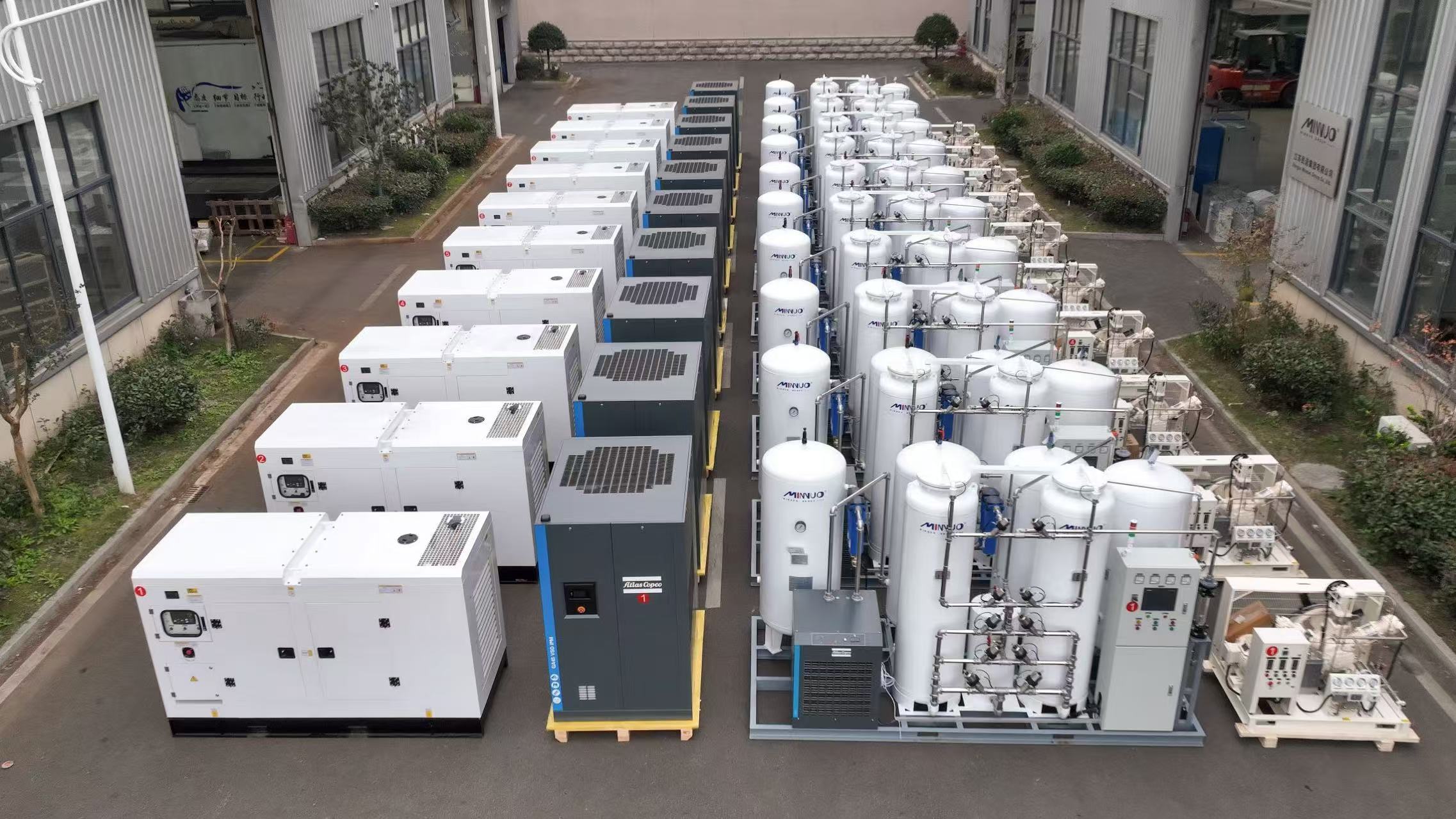
Building a medical PSA oxygen plant is a task that blends engineering excellence with regulatory rigor. Compliance with ISO 7396-1, FDA requirements, and WHO guidelines is not a bureaucratic hurdle—it is the framework for ensuring that every breath delivered to a patient is safe, reliable, and therapeutically effective. From the mandated 93% purity with continuous monitoring to the redundant system design and fail-safe alarms, every element of a compliant plant is focused on one goal: uninterrupted, life-sustaining oxygen supply. For healthcare institutions seeking to achieve this standard of care, MINNUO provides medical PSA oxygen plants engineered to meet the world’s most demanding regulations, delivering peace of mind alongside every cubic meter of oxygen.


 sales2:+86 17506119168