
Quick Answer:
An oxygen concentrator unit separates oxygen from ambient air to provide continuous oxygen supply, typically used for medical or industrial purposes. An oxygen cylinder, on the other hand, is a pressurized container that stores oxygen in liquid or gas form. Oxygen concentrators offer on-demand supply, whereas cylinders provide a fixed amount of oxygen.
1. Definition:
Oxygen Concentrator Unit:
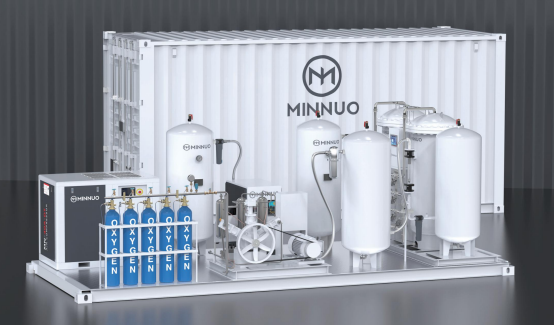
An oxygen concentrator is a device that filters nitrogen and other gases from atmospheric air to provide concentrated oxygen. It works by utilizing a technology called Pressure Swing Adsorption (PSA) to capture and remove nitrogen, delivering oxygen with a purity of around 90-95%. Oxygen concentrators are widely used in medical settings and in industries where precise oxygen levels are required.
Oxygen Cylinder:
An oxygen cylinder, also known as an oxygen tank, is a portable vessel used to store oxygen in either gas or liquid form. The oxygen is stored at high pressure and can be released via a valve for use. Cylinders can contain different grades of oxygen depending on the industry, including medical-grade and industrial-grade.
2. Process Explanation:
Oxygen Concentrator Process:
- Intake of Ambient Air: The concentrator draws in air from the surrounding environment.
- Filtration via Molecular Sieves: The air is passed through a molecular sieve bed, which adsorbs nitrogen and other gases, allowing pure oxygen to pass through.
- Oxygen Delivery: The purified oxygen is delivered at a consistent flow rate to the user, typically at a purity of 90-95%.
- Waste Gas Release: The nitrogen-rich air is expelled out as waste gas.
This continuous process ensures that an oxygen concentrator can provide on-demand oxygen without the need for refilling.
Oxygen Cylinder Process:
- Oxygen Generation (if applicable): Oxygen cylinders are typically filled either by producing oxygen from liquid air or through electrolysis, or directly from oxygen production plants.
- Storage and Compression: The oxygen is stored under high pressure (3000-4000 psi) in gas cylinders or at cryogenic temperatures in liquid form in special tanks.
- Oxygen Dispensation: The oxygen is dispensed via a valve at a regulated flow rate, depending on the pressure inside the tank.
Cylinders provide a one-time supply of oxygen, which must be replenished after use.
3. Technical Specifications:
| Parameter | Oxygen Concentrator | Oxygen Cylinder |
|---|---|---|
| Oxygen Purity | 90-95% | 99.5% or higher (depending on grade) |
| Flow Rate | 1-10 LPM (liters per minute) | 0.5-15 LPM (depending on valve) |
| Power Source | Electrical (AC or DC) | None (mechanical pressure release) |
| Capacity | Continuous operation | Finite based on cylinder size |
| Weight | 5-25 kg (portable models) | 10-30 kg (depending on size) |
| Operating Time | Unlimited (with power) | Limited (depends on cylinder size) |
| Refill Requirements | None (continuous) | Regular refilling required |
| Noise Level | Low (45-60 dB) | None (silent operation) |
4. Advantages and Disadvantages:
Oxygen Concentrator Unit:
Advantages:
- Continuous supply: Unlike cylinders, concentrators provide a constant supply of oxygen as long as they have power.
- Cost-effective: Eliminates the need for regular refills, making it cheaper in the long term.
- Portable and Compact: Lightweight models are available for medical or industrial use, making them easy to transport.
- Environmental Impact: No need to transport or store large quantities of oxygen, reducing logistics costs.
Disadvantages:
- Power Dependency: Requires electricity to function, which can be a limitation in remote locations.
- Limited Oxygen Flow Rate: Flow rates may be insufficient for certain high-demand applications.
- Initial Cost: Higher upfront investment compared to cylinders.
Oxygen Cylinder:
Advantages:
- High Oxygen Purity: Oxygen cylinders often have higher purity (99%+) compared to concentrators.
- No Power Dependency: Can be used in locations without electricity or where power supply is unreliable.
- Portable: Widely available in different sizes and can be moved or transported easily.
Disadvantages:
- Limited Supply: Once the cylinder is empty, it needs to be refilled, creating logistical challenges.
- Heavy and Bulky: Cylinders can be large and difficult to transport, especially in industrial settings.
- Safety Concerns: High-pressure tanks can pose a safety risk if not properly maintained or handled.
5. Industrial Applications:
Oxygen Concentrator Unit Applications:
- Healthcare: Used in hospitals, clinics, and home care settings for patients requiring oxygen therapy.
- Welding and Cutting: Used in low-scale operations or areas where a portable, continuous oxygen supply is required.
- Aquaculture: Oxygen concentrators are used to enrich water in fish farms, ensuring aquatic life thrives in low-oxygen environments.
Oxygen Cylinder Applications:
- Heavy Industry: Used in welding, metal cutting, and industrial combustion processes.
- Aerospace: Cylinders are used to provide oxygen for high-altitude aviation or spacecraft.
- Chemical Industry: For processes that require high purity or a large volume of oxygen, such as oxidation reactions.
6. Comparison with Alternatives:
Oxygen Concentrator vs. Liquid Oxygen Tank:
| Feature | Oxygen Concentrator | Liquid Oxygen Tank |
|---|---|---|
| Oxygen Purity | 90-95% | 99.5% or higher |
| Energy Requirement | Electrical (AC or DC) | No electrical supply required |
| Storage Capacity | Continuous (no refills) | Limited by tank size, refill needed |
| Portability | More portable, but requires electricity | Heavier but portable with careful handling |
| Cost | Higher initial cost, no refill cost | Lower initial cost, higher refill cost |
7. FAQ Section:
Q1: How does an oxygen concentrator work?
An oxygen concentrator works by drawing ambient air, filtering out nitrogen and other gases, and providing purified oxygen through a molecular sieve. The process uses a Pressure Swing Adsorption system to separate the gases.
Q2: Can oxygen concentrators replace oxygen cylinders?
Yes, in many applications, oxygen concentrators can replace cylinders, especially in medical or industrial scenarios where a continuous oxygen supply is needed. However, for certain high-purity or high-flow requirements, cylinders may still be preferred.
Q3: How long does an oxygen cylinder last?
The duration of an oxygen cylinder depends on its size, the flow rate, and the pressure of the oxygen. A small cylinder may last 2-4 hours at a standard flow rate, while larger cylinders can provide more extended use.
Q4: Are oxygen concentrators safe to use?
Yes, oxygen concentrators are generally safe as long as they are maintained properly. They have built-in safety features like alarms for low oxygen purity or malfunction, and they are widely used in healthcare settings.
Q5: What is the typical cost difference between an oxygen concentrator and a cylinder?
Oxygen concentrators have a higher initial purchase cost, typically ranging from $500 to $3,000 depending on the model. However, they eliminate the recurring costs associated with refilling oxygen cylinders, which can cost $50 to $200 per refill depending on the size.
Conclusion:
Both oxygen concentrators and oxygen cylinders serve vital roles in various industrial and medical applications. The decision to use one over the other depends on factors such as oxygen demand, portability, cost, and operational environment. Oxygen concentrators offer long-term savings and continuous supply, while oxygen cylinders remain a reliable option when high purity and portability are essential.
This structured, optimized article is designed to answer key questions while providing both a high-level overview and detailed technical insights, suitable for engineers and procurement professionals seeking in-depth knowledge about oxygen supply solutions.

 sales2:+86 17506119168