
Selecting the right nitrogen generator for cable production directly impacts XLPE insulation quality and long-term cable performance. Nitrogen serves as an inert blanketing and cross-linking agent in the vulcanization process, and any inconsistency in supply or purity shows up as voids or premature aging in the finished cable. This guide walks through the critical parameters for matching a nitrogen generation system to XLPE manufacturing requirements.
I. Why Nitrogen Is Critical in XLPE Cable Manufacturing
Cross-linked polyethylene insulation transforms standard polyethylene into a thermoset material with superior heat resistance and mechanical strength. The cross-linking reaction requires precise temperature control and an oxygen-free environment. Oxygen present during curing causes oxidative degradation, creating micro-voids that lead to partial discharge and eventual cable failure.
Nitrogen serves three essential functions in the XLPE production line:
- Inert Atmosphere Blanketing: Nitrogen purges oxygen from the curing tube, preventing oxidation of the molten polyethylene surface.
- Pressure Medium: High-pressure nitrogen maintains uniform pressure on the insulation during cross-linking, ensuring void-free solidification.
- Cooling and Stripping: Nitrogen flow assists in controlled cooling and prevents moisture ingress before the cable exits the catenary line.
Without a reliable nitrogen supply, maintaining IEC 60502 or ICEA standards for XLPE insulation quality becomes nearly impossible.
II. Determining Purity Requirements for XLPE Cable Nitrogen
The single most common mistake in selecting a nitrogen generator for cable production is over-specifying or under-specifying purity.
1. Standard XLPE Curing: 99.5% to 99.9% Purity
For medium-voltage XLPE cables (up to 35 kV), nitrogen purity of 99.5% to 99.9% is typically sufficient. The residual oxygen content at this purity level is 0.1% to 0.5%, which is low enough to prevent meaningful oxidative degradation during the short residence time in the curing tube.
2. High-Voltage and Extra-High-Voltage XLPE: 99.99%+ Purity
For HV (69 kV and above) and EHV (220 kV+) cables, the insulation is thicker, residence time is longer, and any micro-void becomes a critical defect. These applications demand 99.99% or higher nitrogen purity, often with a pressure dew point below -40°F to eliminate moisture as a variable.
3. The Moisture Consideration
Purity specifications often overlook moisture content. Water vapor in the nitrogen stream creates steam pockets at curing temperatures, forming voids identical to oxygen defects. Always specify a pressure dew point of -40°F or lower for XLPE applications, regardless of oxygen purity.
| Application | Required Purity | Required Dew Point |
| LV XLPE (<1 kV) | 99% – 99.5% | -20°F |
| MV XLPE (1-35 kV) | 99.5% – 99.9% | -40°F |
| HV/EHV XLPE (>69 kV) | 99.99%+ | -60°F or lower |
III. Calculating Nitrogen Flow Rate for Cable Production
Flow rate requirements depend on three variables: curing tube diameter, line speed, and nitrogen recovery system design.
1. Continuous Purge Flow Calculation
The curing tube must maintain positive nitrogen pressure while continuously venting to remove volatiles. A conservative estimate uses tube cross-sectional area and line speed:
Minimum N₂ Flow (SCFH) = Tube Cross-Section (in²) × Line Speed (ft/min) × 0.8
For a typical 6-inch diameter curing tube running at 100 ft/min: Cross-section ≈ 28.3 in². Minimum flow = 28.3 × 100 × 0.8 = 2,264 SCFH (approximately 38 SCFM).
2. Accounting for Leakage and Transients
Add a 20-30% safety margin above calculated minimum flow to account for seal leakage, start-up purging, and pressure fluctuations. For the example above, specify 3,000 SCFH (50 SCFM) nitrogen generation capacity.
3. Recovery System Impact
Many XLPE lines incorporate nitrogen recovery and purification systems that recycle 70-80% of the gas. If a recovery system is present, the generator only needs to supply make-up nitrogen for losses. A 50 SCFM demand with 75% recovery requires only 12.5 SCFM of fresh nitrogen generation.
IV. Selecting the Right Nitrogen Generator Technology
For cable production, two technologies dominate: PSA and membrane. Each has distinct advantages depending on purity requirements.
1. PSA Nitrogen Generators
Pressure Swing Adsorption uses carbon molecular sieves to separate nitrogen from compressed air. PSA systems achieve 99.5% to 99.999% purity and are the standard choice for XLPE cable manufacturing.
- Advantages: High purity capability, proven reliability, stable performance across varying ambient conditions.
- Considerations: Requires clean, dry compressed air feed; CMS media replacement every 8-10 years.
2. Membrane Nitrogen Generators
Membrane systems use hollow fiber bundles to selectively permeate oxygen and water vapor. They achieve 95% to 99.5% purity.
- Advantages: Simpler mechanical design, lower maintenance, no moving parts in separation process.
- Limitations: Cannot economically achieve 99.9%+ purity required for MV/HV XLPE.
Selection Guideline:
- LV XLPE with recovery system: Membrane may be adequate and more economical.
- MV/HV/EHV XLPE without recovery: PSA is the required technology.
- Any cable with 99.9%+ purity requirement: PSA only.
V. Integration Considerations for the Cable Production Line
Selecting a nitrogen generator for cable production extends beyond the generator itself. Proper integration ensures seamless operation.
1. Feed Air Quality
PSA generators require compressed air with ISO 8573-1 Class 1.4.1 minimum (0.1 micron filtration, -40°F dew point, 0.01 mg/m³ oil). Inadequate feed air treatment shortens CMS life and degrades nitrogen purity.
2. Buffer Tank Sizing
A buffer tank between generator and curing line dampens purity fluctuations and handles transient demand spikes. Size the tank for 3-5 minutes of maximum nitrogen consumption.
3. Purity Monitoring and Alarming
Install an oxygen analyzer with automatic venting. If purity drops below setpoint, the system should vent non-conforming nitrogen to atmosphere rather than introducing oxygen into the curing tube.
4. Redundancy for Critical Production
For HV/EHV lines where unscheduled downtime costs exceed $10,000 per hour, consider a dual-generator configuration or a liquid nitrogen backup system that auto-switches on low purity or pressure.
FAQ
Q1: Can I use liquid nitrogen instead of an on-site nitrogen generator for XLPE cable production?
A1: Yes, liquid nitrogen is a common alternative and offers 99.998%+ purity with essentially zero maintenance. However, liquid nitrogen typically costs 3-5 times more per cubic foot than on-site generated nitrogen. For a line consuming 50 SCFM continuously, on-site generation often achieves payback within 12-18 months. Many manufacturers use liquid nitrogen as a backup while relying on PSA generators for primary supply.
Q2: What happens if nitrogen purity drops during XLPE cable manufacturing?
A2: A purity drop introduces oxygen into the curing environment. Oxygen reacts with molten polyethylene to form carbonyl groups and cross-link discontinuities. The result is visible discoloration, surface roughness, and most critically, micro-voids that become partial discharge sites under high voltage. Cables produced during a purity excursion often fail factory acceptance testing or experience premature field failure.
Q3: How often should the CMS media in a PSA nitrogen generator be replaced?
A3: Carbon molecular sieve media typically lasts 8-10 years in XLPE cable production environments, assuming proper feed air treatment. Factors that accelerate CMS degradation include oil carryover from the air compressor, excessive moisture, and rapid pressure cycling. Annual purity verification testing helps identify media decline before it affects cable quality.
Q4: Does a nitrogen generator require special installation considerations for cable factories?
A4: Cable factories present specific challenges: ambient carbon black dust from compound handling and elevated temperatures near extrusion lines. Install the nitrogen generator in a clean, temperature-controlled room separate from compounding areas. Carbon black fines will rapidly clog air intake filters and degrade CMS performance. Ambient temperature should remain below 100°F for rated generator output.
Q5: What is the typical payback period for an on-site nitrogen generator in cable production?
A5: Payback depends on nitrogen consumption volume and local liquid nitrogen pricing. For a medium-voltage XLPE line consuming 30-50 SCFM continuously, payback typically ranges from 12 to 24 months. Additional economic benefits include elimination of delivery scheduling constraints, reduced safety risks associated with cryogenic liquid handling, and stable nitrogen costs independent of commodity price fluctuations.
Q6: Can one nitrogen generator supply multiple XLPE cable production lines?
A6: Yes, a single central nitrogen generation system can supply multiple lines if properly sized. The generator should be rated for the sum of simultaneous peak demands, not average consumption. Install individual flow control and purity monitoring at each line drop. If lines run different voltage classes requiring different purity levels, consider a hybrid system with membrane pre-treatment and PSA polishing for high-purity lines.
Conclusion
Selecting the right nitrogen generator for XLPE cable manufacturing requires balancing purity requirements against capital and operating costs. MV cable lines operate reliably with 99.5% to 99.9% nitrogen from a well-designed PSA system, while HV and EHV applications demand 99.99%+ purity with stringent dew point control. Accurate flow rate calculation—accounting for tube dimensions, line speed, and any recovery system—prevents undersizing that compromises cable quality or oversizing that wastes capital and energy.
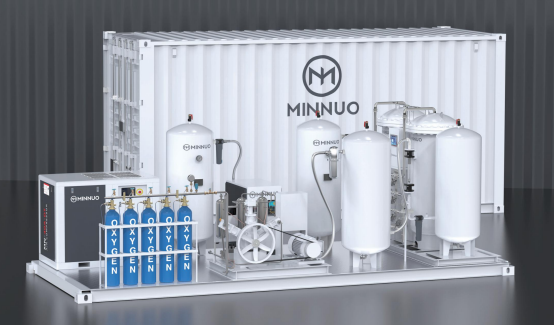
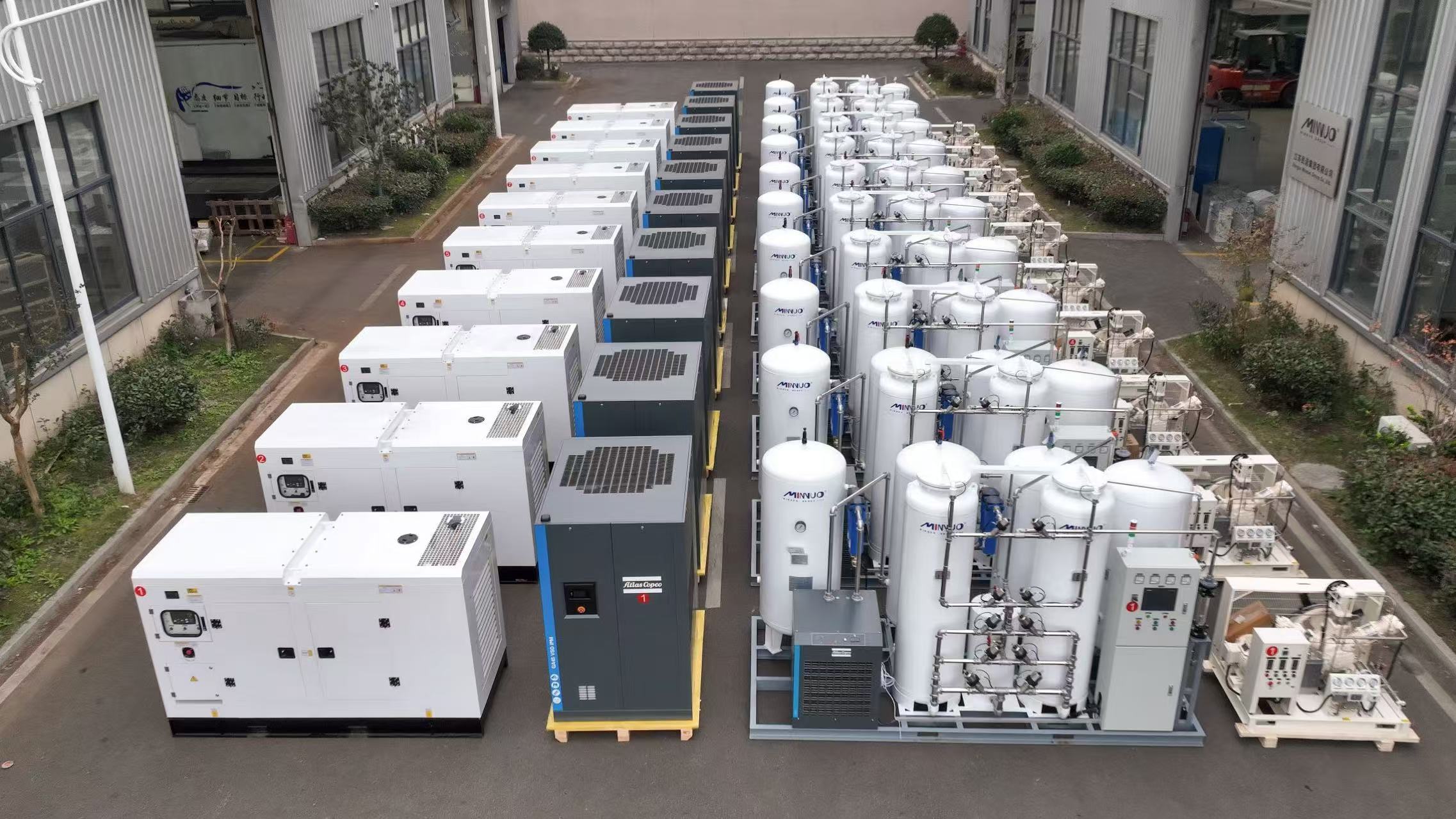
At MINNUO, we engineer PSA and membrane nitrogen generation systems configured specifically for cable production environments. From purity and flow calculations to integration with existing curing lines, our systems deliver the reliable nitrogen supply that XLPE insulation quality demands.


 sales2:+86 17506119168