
You’ve invested in a high-performance nitrogen or oxygen generator. The spec sheet promises 99.9% purity, a stable pressure, and a low dew point. Yet, on the factory floor, welds show porosity, product quality varies, or ozone yield fluctuates. The generator checks out. So, where did the gas quality go wrong?
The answer almost always lies in the “last 100 meters”—the storage and distribution network that carries gas from your pristine generator to the demanding point of use. This network is not just plumbing; it’s a dynamic system that can preserve or destroy gas quality. A poorly designed network introduces contamination, pressure drops, and safety hazards, silently eroding your capital investment and operational reliability.
This guide moves beyond the generator skid to provide a comprehensive framework for designing, installing, and validating a gas distribution network that protects your gas integrity from vessel to valve.
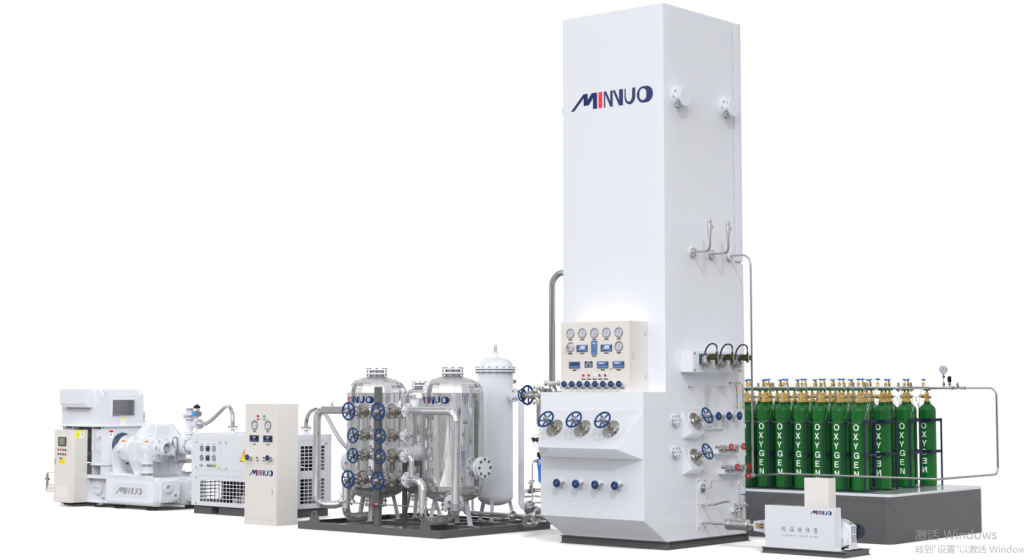
I. Storage Strategy: The First Buffer Against Instability
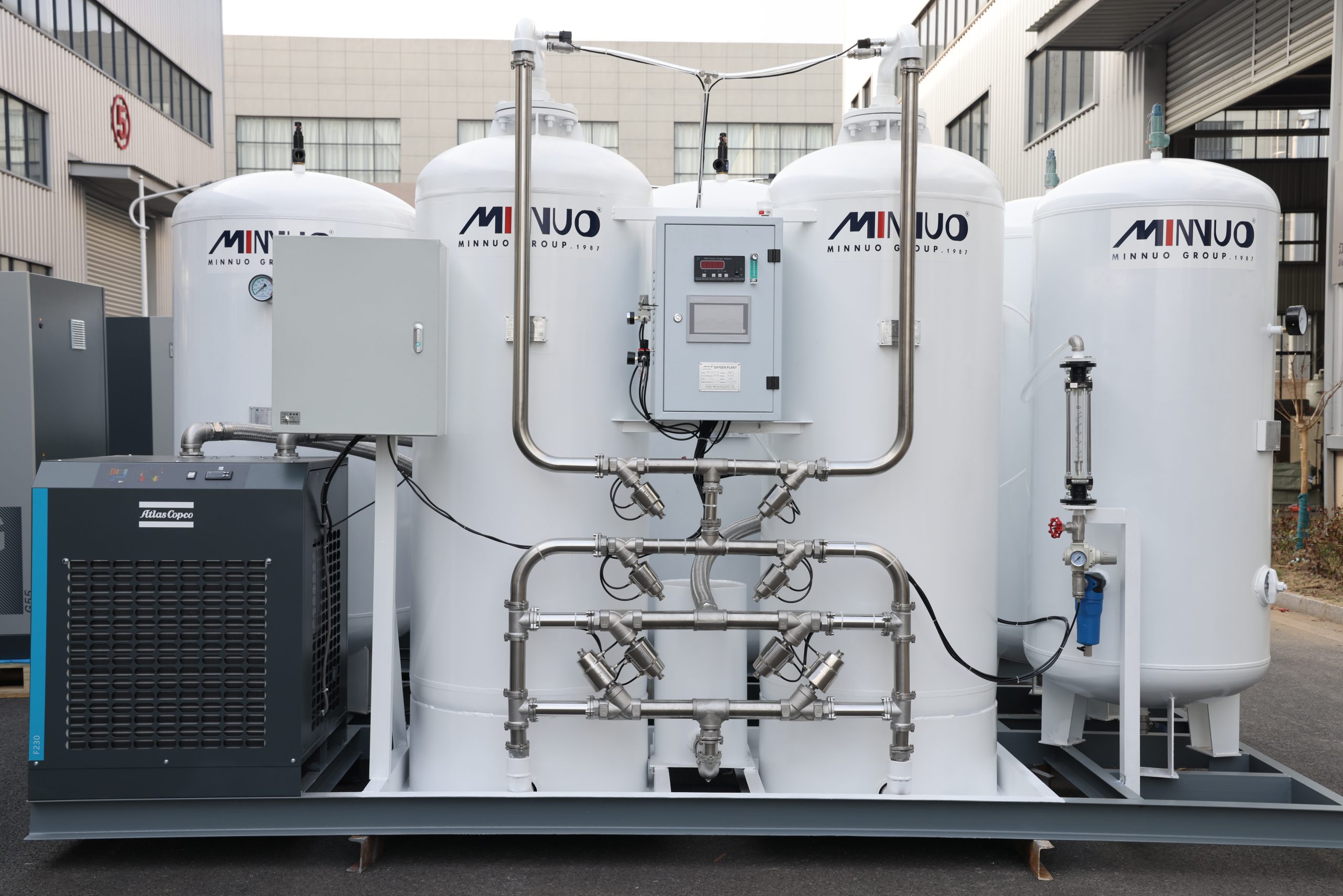
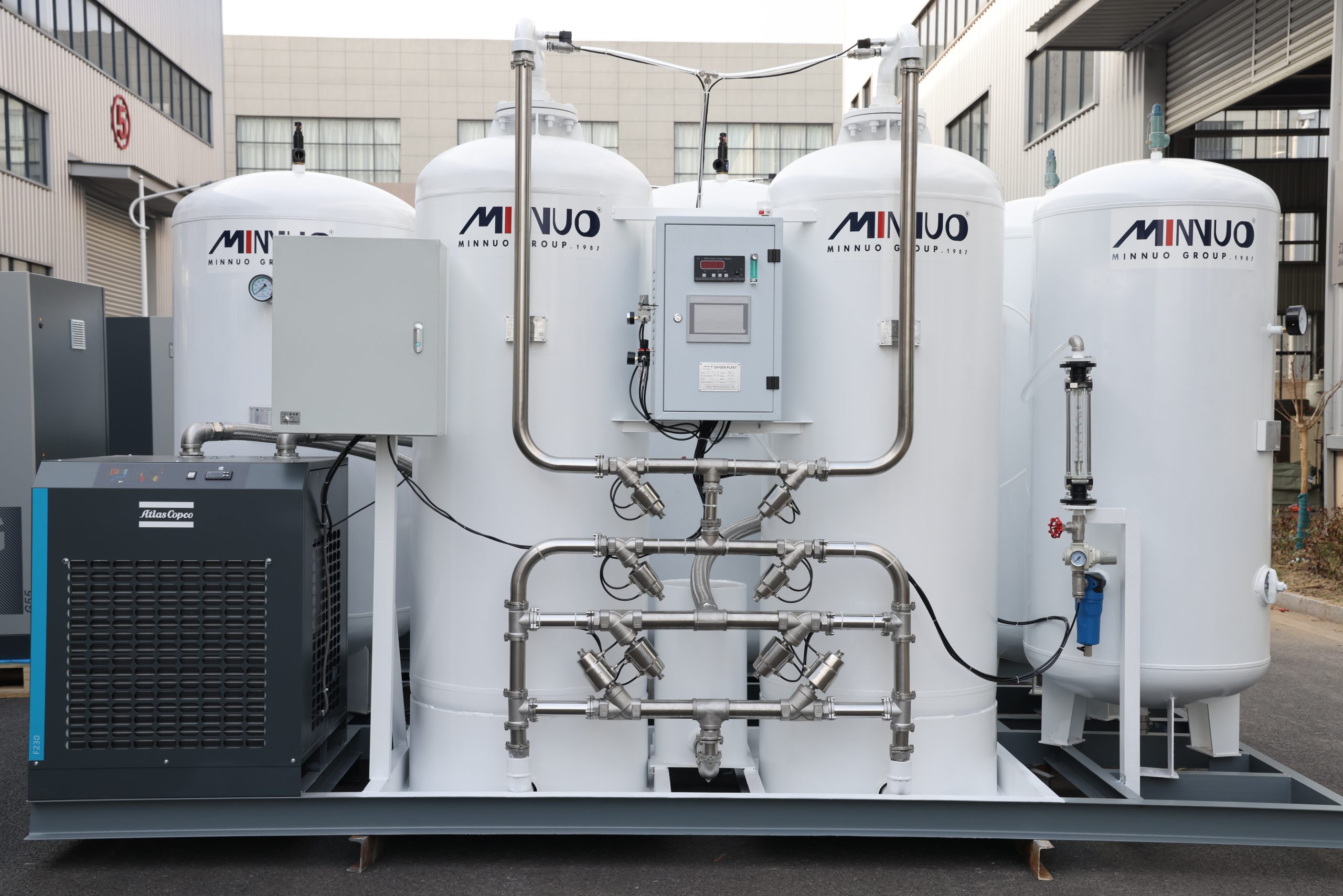
The storage vessel is the shock absorber of your system. Its primary role is to decouple gas production from consumption, handling peak demands and allowing the generator to run in efficient, steady cycles.
- Sizing the Buffer Tank: A rule of thumb is to provide storage for 1 to 2 minutes of peak consumption. Calculate: Tank Volume (Nm³) = Peak Flow Rate (Nm³/min) x 1.5. This prevents the generator from being overloaded during short, high-demand events.
- Location & Safety: For nitrogen, placement is flexible. For oxygen, tanks must be located outdoors or in a well-ventilated, dedicated area away from flammable materials, following strict local safety codes.
- The Backup Source Decision: For critical applications, consider the role of a liquid nitrogen (LN2) or liquid oxygen (LOX) Dewar as a backup or peak-shaving source. It connects via a vaporizer, providing a massive reserve of high-purity gas with excellent pressure stability.
II. Piping: The Arteries of Quality
The pipe is not a passive conduit. Its material, layout, and condition directly determine final gas quality.
- Material Selection – The Non-Negotiable for Oxygen: Oxygen piping MUST use oxygen-compatible materials, typically stainless steel 316L or copper alloys. These materials resist ignition in an oxygen-rich environment. Carbon steel is prohibited due to oxidation and fire risk.
- Material Selection – For High-Purity Nitrogen: While black steel (carbon steel) is common for general nitrogen, it introduces risks. The internal mill scale can flake off, introducing particulate contamination. For sensitive applications (electronics, food), stainless steel or electro-polished stainless tubing is recommended.
- System Design Best Practices:
- Slope and Drain: Design the network with a continuous slope (≥1%) back to the main header or to low-point drains. This prevents condensation (in nitrogen lines) from pooling, which causes corrosion and sporadic contamination.
- Loop vs. Branch: A loop main provides more consistent pressure to all points and allows for future expansion. Dead-end branches are cheaper but can lead to stagnant gas and larger pressure drops at the end of the line.
- Velocity Control: Size pipes to maintain gas velocity below 15-20 m/s. Higher velocities can stir up particulates and, in oxygen systems, increase the risk of pipe ignition from particle impact.
III. Safety in Design: Especially for Oxygen
Oxygen distribution demands a distinct, rigorous design philosophy focused on eliminating ignition sources and ensuring safe venting.
- Cleanliness: All oxygen components (pipes, valves, fittings) must undergo professional degreasing and cleaning to remove all hydrocarbons. This is a specialized procedure, not standard workshop cleaning.
- Component Compatibility: Every valve, gauge, and filter must carry oxygen service certification. Standard industrial components can be lethal in oxygen use.
- Pressure Relief & Venting: Install pressure relief valves sized for the protected section of pipe. Oxygen vents must discharge to a safe outdoor location, clear of intakes and ignition sources, and use materials that won’t spark upon impact.
IV. Validation & Monitoring: Proving the System Works
The final, critical step is verifying that gas quality at the point of use matches the generator outlet.
- The Point-of-Use Test: After installation and a thorough purging and pressurization cycle, use portable analyzers to measure oxygen content (for nitrogen) and dew point at the farthest and most critical use points. Compare this to readings at the generator outlet.
- Permanent Monitoring Points: For critical processes, install permanent oxygen analyzers or dew point transmitters on key distribution branches. Their data provides trending and early warning of system degradation (e.g., a slowly rising dew point indicates a developing leak or moisture ingress).
V. Frequently Asked Questions
Q: Why does our nitrogen purity read 99.9% at the generator but only 99.5% at the welding station?
A: This common issue is almost always due to atmospheric ingression. Tiny leaks in threaded joints, under-sized pipes causing pressure drops, or permeable hose materials can allow oxygen to diffuse into the line. The solution is a leak test, replacing hoses with proper piping, and ensuring all connections are properly sealed.
Q: We’re installing an oxygen line. What are the absolute must-follow safety rules for the piping?
A: Oxygen pipeline safety revolves around eliminating ignition sources: 1) Use only oxygen-compatible materials (SS 316L, copper). 2) Ensure all components are professionally cleaned for oxygen service. 3) Avoid sudden bends or restrictions that cause turbulence. 4) Clearly label all lines and include shut-off valves. Always comply with NFPA 55 or your local equivalent.
Q: Should we use stainless steel or carbon steel pipes for our new nitrogen network?
A: The choice depends on your purity needs and budget. Carbon steel is cost-effective for general industrial nitrogen but risks internal rust contaminating the gas. Stainless steel is inert, prevents corrosion, and is mandatory for oxygen or high-purity nitrogen (e.g., for food or electronics). For long-term reliability, stainless is often the better investment.
Q: How do we correctly slope nitrogen pipes to prevent water traps?
A: To prevent condensation pooling, the piping should have a continuous slope of at least 1% (1 cm per meter) back towards the main header or a designated drain point. Install automatic drain traps at all low points that cannot be avoided.
Q: What size buffer tank do we need for our PSA nitrogen generator?
A: A simple calculation is: Tank Volume (Nm³) = Peak Consumption Rate (Nm³/min) x Desired Buffer Time (min). A buffer time of 1.5 to 2 minutes is typical to handle short surges without cycling the generator. For example, a peak demand of 10 Nm³/min would require a 15-20 Nm³ tank.
VI. Conclusion: An Integrated System for Guaranteed Performance
A reliable gas supply is a chain, and its strength is determined by the weakest link. That link is often the distribution network. By applying the principles of proper storage, compatible materials, intelligent layout, and rigorous validation, you transform a collection of pipes into a guarantee—a guarantee that the quality and performance engineered into your MINNUO generator is delivered, unimpaired, to your process.
This holistic approach to gas supply—viewing generation, storage, and distribution as one integrated system—is what separates functional equipment from foundational industrial utility. It turns a capital expense into a secure, long-term asset.
At MINNUO, our partnership extends beyond the skid edge. We provide the expertise and support to help you design and validate this complete system, ensuring that the gas your process depends on is not just generated to specification, but delivered with absolute fidelity.

 sales2:+86 17506119168