
Introduction
According to the research report “Indonesia’s Steel Decarbonization Outlook 2025” published by CELIOS (Center of Economic and Law Studies), the Indonesian steel industry is at a crossroads, moving from “high-carbon dependence” to “low-carbon competitiveness.” Faced with export barriers from the EU’s Carbon Border Adjustment Mechanism (CBAM) and the rigid constraints of Indonesia’s 2060 Net Zero Emissions (NZE) targets, improving energy efficiency via Oxygen Enrichment and Nitrogen safety purging has become the most pragmatic path forward before green hydrogen steelmaking reaches large-scale commercialization.
Oxygen and nitrogen generators are no longer mere auxiliary production equipment; they are strategic assets for Indonesian steel enterprises to hedge against carbon tax risks, reduce coke ratios, and enhance core competitiveness.
Core Drivers: Decarbonization Urgency Revealed by CELIOS
Approximately 80% of Indonesia’s steel production capacity currently relies on coal. The CELIOS 2025 study indicates that as carbon costs are internalized, traditional high-energy-consumption models will face profit depletion.
Oxygen Enrichment: An Immediate Solution to Lower the “Coke Ratio”
In existing Blast Furnace (BF) and Electric Arc Furnace (EAF) processes, increasing oxygen concentration in the blast is the most direct method to reduce coke consumption. Data from the Indonesian Iron and Steel Industry Association (IISIA) proves that:
- Every 1% increase in oxygen enrichment concentration can reduce the coke ratio by approximately 8–10 kg/t.
- It significantly increases Pulverized Coal Injection (PCI) rates.
- This directly lowers Scope 1 (direct emissions) carbon intensity.
Nitrogen: The Bedrock of System Safety and Quality Control
As process flows are optimized and scrap recycling ratios increase, nitrogen generators have become critical for ladle bottom stirring, converter slag splashing, and equipment oxidation prevention. The CELIOS report emphasizes the role of the “Circular Economy” in decarbonization; high-purity nitrogen is the core technical support for ensuring molten steel quality and reducing inclusion content during scrap smelting.
Technical Selection: On-site Generation vs. Traditional Liquid Gas
For Indonesian mills, particularly large-scale bases in Sulawesi and Java, the choice of gas supply mode directly impacts the “Green Premium.”
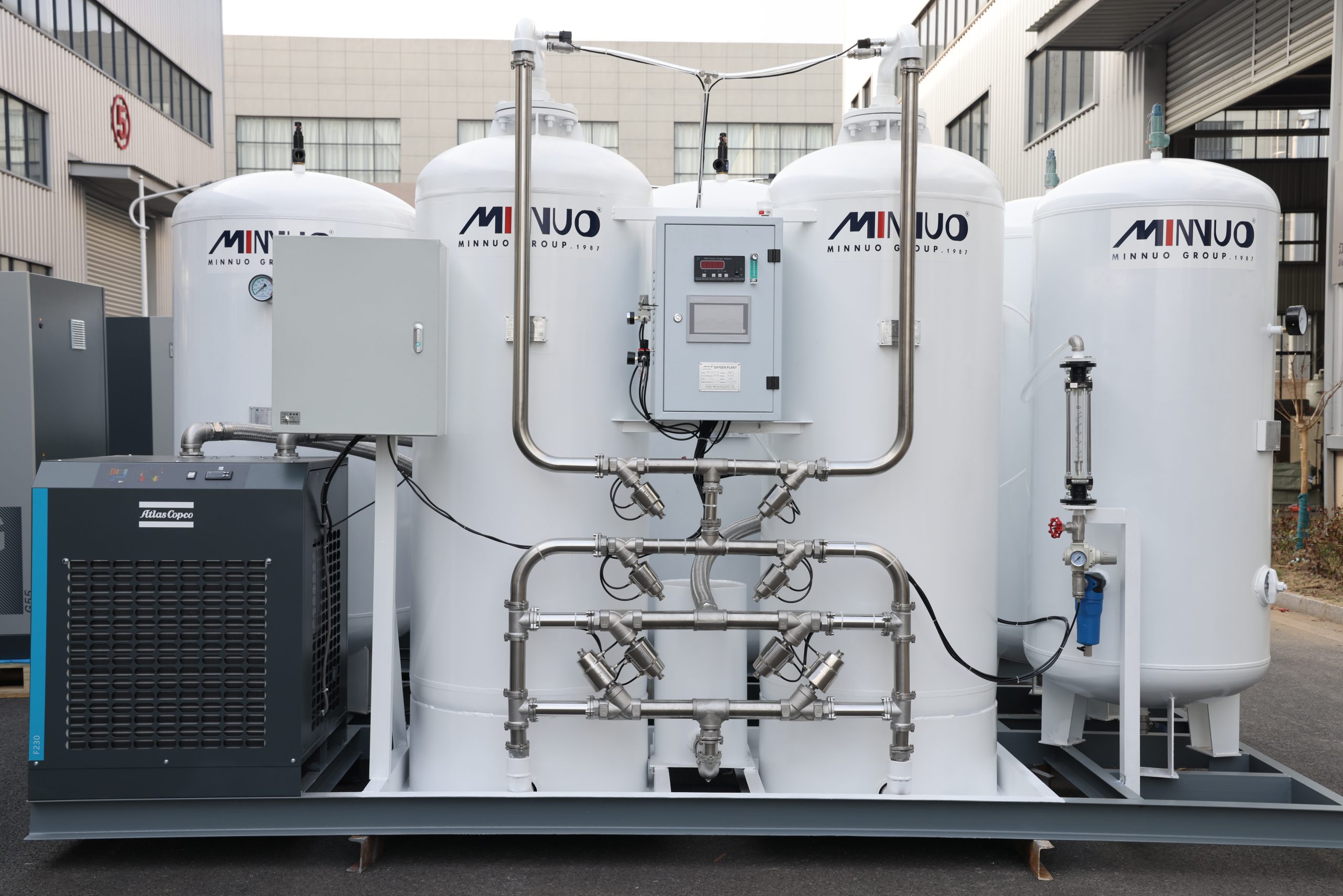
On-site Generation System Comparison Table
| Dimension | On-site VPSA Oxygen / PSA Nitrogen | Traditional Liquid Oxygen/Nitrogen |
|---|---|---|
| Carbon Footprint (Scope 2) | Lower (Eliminates liquefaction & transport emissions) | Higher (High-energy liquefaction & logistics) |
| Cost Structure | CAPEX investment; ultra-low OPEX (Electricity only) | Fluctuating gas prices + high logistics costs |
| Supply Chain Stability | Direct pipeline connection; total autonomy | Vulnerable to infrastructure & traffic congestion |
| Decarbonization Impact | Optimizes combustion; cuts carbon by 5-10% | Purely raw material consumption; no optimization |
FAQ: Gas Equipment Demand in Indonesian Steel Mills
- Q1: Will self-built oxygen generators increase power consumption under Indonesia’s current energy mix?
- A: While oxygen generators consume electricity, the emission reductions gained from reducing coke combustion (a high-carbon energy source) far outweigh the emissions from the generator’s power use. Based on project data from Minnuo Group, total carbon intensity typically drops by over 10%.
- Q2: Why does the CELIOS report emphasize nitrogen for safety?
- A: As more Indonesian blast furnaces undergo oxygen enrichment retrofits, internal oxygen levels rise. High-pressure nitrogen acts as an “invisible shield” for emergency sealing and displacement, preventing backfire and explosions while ensuring production continuity.
2025–2030 Roadmap: Action Recommendations for Professionals
Based on the CELIOS roadmap, Indonesian steel enterprises should deploy gas separation equipment in stages:
- Asset Assessment (2025–2026): Conduct oxygen enrichment audits for Blast Furnaces, prioritizing product lines covered by CBAM.
- Technology Upgrade (2027–2028): Replace traditional liquid gas supply with VPSA (Vacuum Pressure Swing Adsorption) on-site systems. VPSA technology is ideal for Indonesia’s fluctuating power grids due to its low energy consumption and rapid start-stop capabilities.
- Full Integration (2029–2030): Connect oxygen/nitrogen systems to the plant’s Energy Management System (EMS) to achieve gas-on-demand production and maximize efficiency.
Conclusion
Key Finding: The low-carbon transition of Indonesia’s steel industry has entered the execution phase. The CELIOS 2025 report makes the necessity of reducing coal dependence clear, and on-site oxygen and nitrogen generation systems are the most cost-effective tools to achieve this. By optimizing combustion efficiency and ensuring process safety, companies can reduce comprehensive emission intensity by 5–15%.
Actionable Advice: Decision-makers should immediately initiate “On-site Gas Generation Feasibility Studies” and prioritize the procurement of low-energy, highly automated VPSA equipment. This is not just a response to upcoming carbon taxes, but a move to secure a leading position in the ASEAN and global green steel supply chain.
[Source Declaration]
Author: Industrial Gas & Metallurgical Technology Strategist.
Credentials: 10+ years of energy optimization experience in Southeast Asian heavy industry; led multiple Air Separation Unit (ASU) deployments in Sulawesi nickel-iron projects and Java steel bases.
Data Sources: All industry data and policy analyses are based on the CELIOS (2025) Indonesia Steel Decarbonization Outlook, IISIA latest industry briefings, and related engineering practice data.

 sales2:+86 17506119168