
With the continuous improvement of requirements for safety, quality and shelf life in the food industry, high-purity nitrogen, as an inert gas, has been increasingly widely used in food processing, storage and packaging links. As the core equipment for on-site production of high-purity nitrogen, high-purity nitrogen generators have become an important support for food enterprises to enhance their core competitiveness due to their high efficiency, stability and low-cost advantages. This article will detailedly analyze the specific application scenarios, core advantages and industry value of high-purity nitrogen generators in the food industry, helping food enterprises deeply understand their application logic and selection points.
I. Core Application Scenarios of High-Purity Nitrogen Generators in the Food Industry
The inert nature of high-purity nitrogen enables it to effectively isolate oxygen, inhibit microbial growth and prevent food oxidation and deterioration. Therefore, the application of high-purity nitrogen generators runs through multiple key links of food production, covering various food categories.
1. Food Packaging Link: Core Gas Source Guarantee for Modified Atmosphere Packaging
Modified Atmosphere Packaging (MAP) is one of the mainstream food preservation technologies. Its core principle is to replace the air in the package with inert gas to create an oxygen-free or low-oxygen environment and extend the shelf life of food. High-purity nitrogen generators provide high-purity nitrogen (purity usually ≥99.9%, special food requirements ≥99.99%) for modified atmosphere packaging, which is the “core power source” of modified atmosphere packaging.
In specific applications, high-purity nitrogen can be used alone or mixed with carbon dioxide: for baked food (such as bread, cakes), nitrogen can prevent the food from poor taste and dark color caused by oxidation, while maintaining the stiffness of the package and avoiding extrusion damage during transportation; for fresh meat (such as beef, pork), the mixed gas of nitrogen and carbon dioxide can effectively inhibit the growth of pathogenic bacteria such as Escherichia coli and Staphylococcus aureus, maintaining the fresh color and elasticity of meat; for snack foods (such as potato chips, nuts), nitrogen can fill the gap in the package, prevent food from breaking, and isolate oxygen to avoid rancidity caused by oil oxidation.
2. Food Processing Link: Improving Process Stability and Product Quality
In the food processing process, the nitrogen generated by high-purity nitrogen generators can be used in multiple process links to optimize the processing environment and improve product quality. For example, in the beer brewing process, nitrogen can be used in links such as wort cooling, fermenter sealing, and finished wine filling to prevent wort oxidation and deterioration, avoid off-flavors in beer, and improve the foam stability of beer; in edible oil processing, nitrogen can cover the oil surface to form an inert protective layer, preventing oil oxidation during refining and storage, and extending the shelf life of edible oil; in grain processing (such as rice, wheat), nitrogen can be used in the drying link before warehousing, reducing oxidation loss during drying, inhibiting mold growth, and ensuring grain quality.
3. Food Storage and Transportation Link: Extending the Fresh-Keeping Period
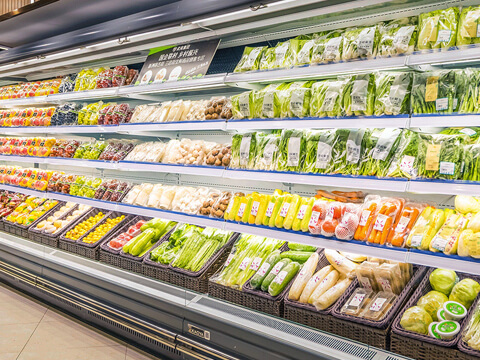
For large-scale food warehouses and long-distance transportation refrigerated trucks, the nitrogen generated by high-purity nitrogen generators can be used to create an inert storage environment. Injecting nitrogen into a sealed storage space to reduce the oxygen concentration in the environment can effectively inhibit the growth and reproduction of microorganisms and reduce the deterioration loss of food during storage and transportation. Especially for perishable foods such as fruits, vegetables and seafood, nitrogen preservation can be combined with refrigeration technology to further extend the fresh-keeping period and expand the sales radius of food.
II. Core Advantages of High-Purity Nitrogen Generators in the Food Industry
Compared with the traditional liquid nitrogen procurement mode, food enterprises using high-purity nitrogen generators for on-site nitrogen production have significant economic advantages and application flexibility, making them an ideal choice for large-scale production in the food industry.
1. Controllable Costs and Reduced Long-Term Operating Costs
Liquid nitrogen procurement requires a series of costs such as transportation, storage and filling, and the price is greatly affected by market fluctuations, resulting in high long-term use costs. High-purity nitrogen generators use air as raw material to produce nitrogen on-site through technologies such as Pressure Swing Adsorption (PSA), which only consumes electrical energy, and the operating cost is much lower than liquid nitrogen procurement. According to statistics, food enterprises using on-site nitrogen production mode can save 30%-50% of gas costs in long-term use, especially for large-scale food processing plants with large gas consumption, the cost advantage is more obvious.
2. Adjustable Purity to Adapt to Diversified Food Needs
Different food categories have different requirements for nitrogen purity. For example, snack foods usually require nitrogen purity ≥99.9%, while high-end beer, fresh meat, etc. have higher purity requirements, which need to reach more than 99.99%. High-purity nitrogen generators can flexibly adjust the nitrogen purity according to the specific needs of food production, accurately match the gas requirements of different processes, and ensure the stability of product quality. In addition, on-site nitrogen production can avoid the possible purity loss of liquid nitrogen during transportation and storage, ensuring that the gas source quality always meets food safety standards.
3. Stable and Continuous to Ensure Uninterrupted Production
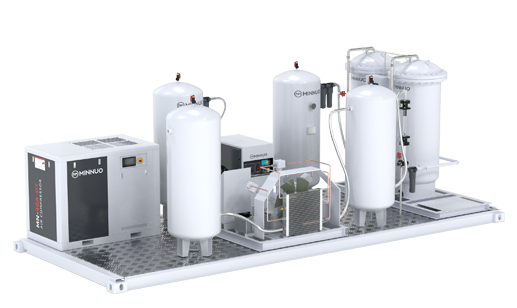
Large-scale food production has extremely high requirements for the continuity of gas sources. Liquid nitrogen procurement may be affected by factors such as transportation delays and supply shortages, leading to production interruptions. High-purity nitrogen generators can operate continuously for 24 hours, output nitrogen stably, and the equipment is simple to maintain and has a low failure rate. It can provide continuous and stable gas source guarantee for food production, avoiding production progress affected by gas source problems. At the same time, the gas storage capacity of the nitrogen generator can be configured according to production needs, further improving the stability of gas source supply.
4. Safe and Environmentally Friendly, Complying with Food Industry Standards
High-purity nitrogen generators adopt physical nitrogen production technology, with no chemical additives in the entire production process, no waste gas or waste water emissions, which meets the environmental protection requirements of the food industry. At the same time, on-site nitrogen production avoids potential safety hazards such as leakage and frostbite that may occur during liquid nitrogen storage, reducing the safety management risks of enterprises. In addition, the materials and production processes of nitrogen generators meet the safety standards for food contact materials, ensuring that nitrogen will not cause secondary pollution to food.
III. Key Points for Selecting High-Purity Nitrogen Generators in the Food Industry
When selecting high-purity nitrogen generators, food enterprises need to comprehensively consider the following points in combination with their own production scale, food categories, gas demand and other factors to ensure that the equipment can accurately match production needs.
1. Nitrogen Purity and Output: Matching Specific Process Requirements
First, it is necessary to clarify the nitrogen purity requirements of different production links and select a nitrogen generator that can stably output nitrogen of the corresponding purity. At the same time, determine the output of the nitrogen generator according to the production scale and gas peak demand, ensuring that the gas production capacity of the equipment can meet the gas demand during the production peak period, and avoid affecting production due to insufficient gas production capacity.
2. Equipment Stability and Reliability: Prioritizing Mature Brands
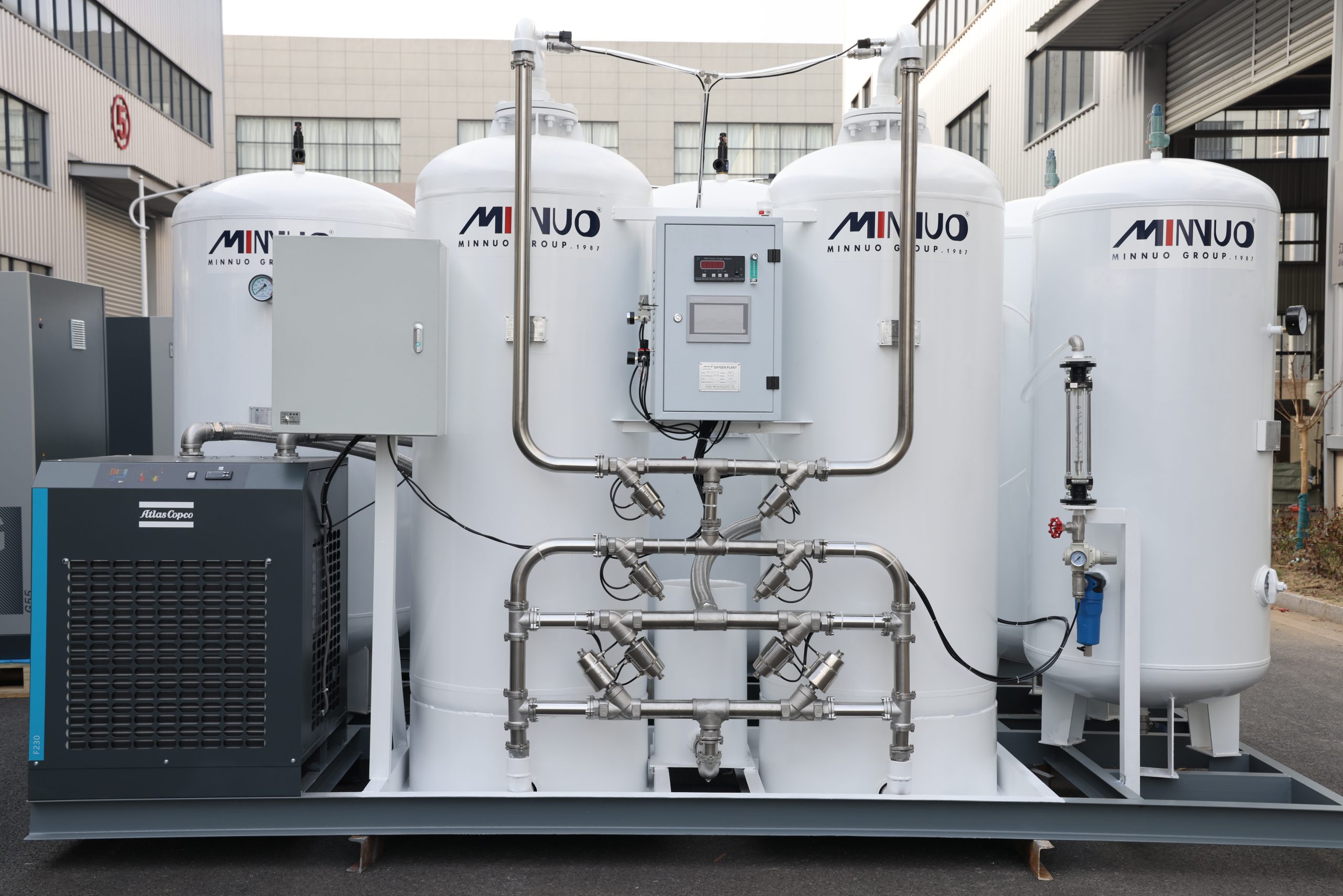
Food production has extremely high requirements for equipment stability, so it is necessary to choose a nitrogen generator brand with a good market reputation and mature technology. Priority should be given to equipment using high-quality adsorbents and precision control systems. Such equipment operates more stably and has a lower failure rate, which can ensure long-term continuous production. At the same time, attention should be paid to the after-sales service of the equipment to ensure that the equipment can be repaired in a timely manner when a failure occurs, reducing production losses.
3. Energy Efficiency and Operating Costs: Paying Attention to Equipment Energy Consumption Indicators
Energy saving is an important factor affecting the long-term operating cost of the equipment, so a high-purity nitrogen generator with low energy consumption and high efficiency should be selected. For example, a nitrogen generator with frequency conversion control technology can automatically adjust the operating power according to the gas demand, effectively reducing energy consumption. At the same time, it is necessary to comprehensively consider factors such as equipment maintenance costs and consumable replacement cycles, and select equipment with lower overall operating costs.
4. Compliance and Safety: Complying with Food Industry Standards
The selected high-purity nitrogen generator must meet the relevant national standards for the food industry, and the equipment materials should be safe and environmentally friendly materials such as food-grade stainless steel to avoid polluting food. At the same time, the equipment should be equipped with complete safety protection devices, such as pressure alarm and overload protection, to ensure the safe operation of the equipment.
IV. Conclusion
Under the general trend of the food industry pursuing safe, high-quality and efficient production, high-purity nitrogen generators have become indispensable key equipment in various links of food production due to their stability, high efficiency and low-cost advantages. From modified atmosphere packaging to processing and storage, high-purity nitrogen generators effectively extend the shelf life of food, improve product quality and reduce enterprise operating costs by providing high-quality inert gas sources. For food enterprises, reasonably selecting a high-purity nitrogen generator that adapts to their own needs can not only meet the production process requirements, but also enhance the core competitiveness of the enterprise, helping the enterprise gain an advantage in the fierce market competition.


 sales2:+86 17506119168