
As the world shifts towards renewable energy, biogas—produced from anaerobic digestion of organic waste—has emerged as a key player. However, raw biogas contains 25-45% CO₂ and trace contaminants like hydrogen sulfide (H₂S), which limit its energy value and pipeline compatibility. Upgrading it to high-purity biomethane (or Renewable Natural Gas – RNG) requires removing these impurities. A critical, yet often overlooked, component in this process is a reliable and economical source of oxygen. This is where on-site Pressure Swing Adsorption (PSA) Oxygen Generators become a game-changer, offering a decentralized, efficient solution for biogas plant operators. This article explains the role of oxygen in biogas upgrading and why a PSA system is the smart choice.
I. The Role of Oxygen in the Biogas Upgrading Process
Oxygen is primarily used in two key stages of biogas treatment: biological desulfurization and, in some technologies, as part of the CO₂ removal process.
1. Biological Desulfurization (Biological Oxidative Scrubbing)
This is the most common and environmentally friendly method to remove corrosive and toxic hydrogen sulfide (H₂S).
- The Process: A small, controlled stream of oxygen (typically 2-6% of the biogas volume) is injected into the raw biogas or into a separate bioreactor. Specialized sulfur-oxidizing bacteria (e.g., Thiobacillus) use this oxygen to convert H₂S into elemental sulfur or harmless sulfate, which can be removed as a sludge.
- The Oxygen Requirement: The process requires a continuous, precisely controlled flow of oxygen. The stoichiometry is critical: too little oxygen leaves H₂S untreated; too much can create safety risks (explosive mixtures) or over-oxidize sulfur to unwanted byproducts.
2. Oxygen in Certain CO₂ Removal Technologies
While not used in mainstream membrane or amine scrubbing, some emerging or hybrid processes utilize oxygen. For instance, in biochemical methanation or certain autothermal reforming concepts, oxygen can be used to partially oxidize methane, providing heat and adjusting the syngas ratio for downstream conversion.
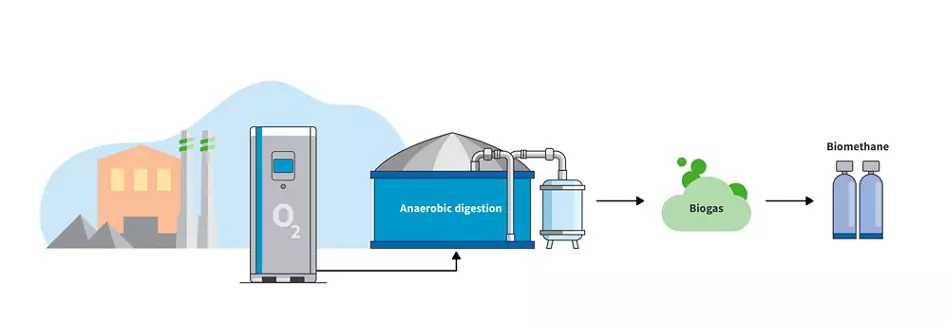
II. Why PSA Oxygen Generation is Ideal for Biogas Plants
Traditionally, oxygen was supplied via cylinders or liquid dewars, which are logistically burdensome and costly for continuous, large-scale processes like biogas upgrading.
1. On-Demand, On-Site Production
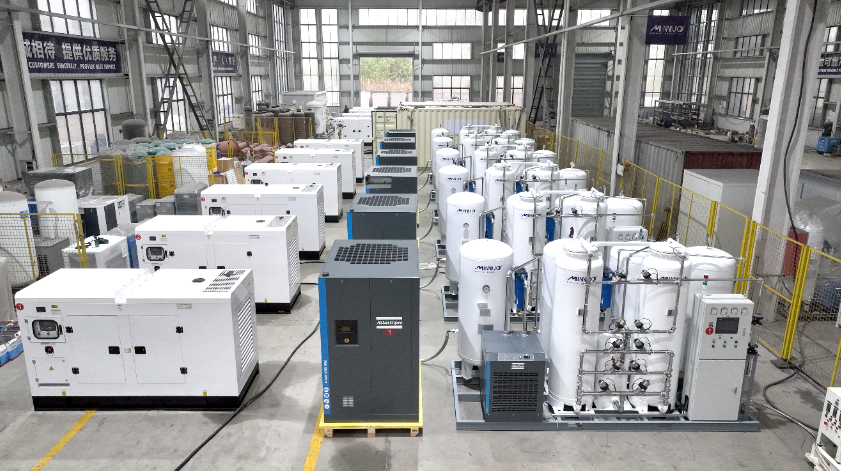
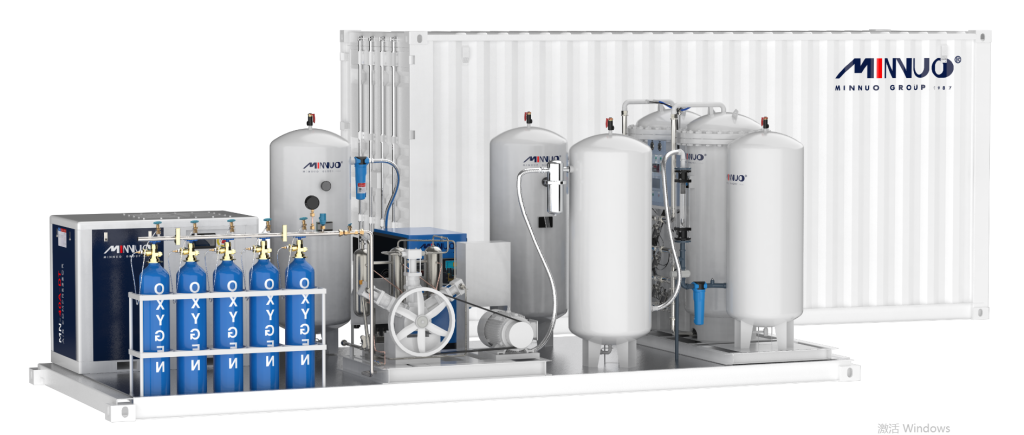
A PSA oxygen generator installed directly at the biogas plant eliminates dependency on external gas suppliers. It draws in ambient air, separates nitrogen, and delivers a continuous stream of 90-95% pure oxygen exactly where and when it’s needed, 24/7. This ensures uninterrupted operation of the desulfurization unit, which is critical for protecting downstream equipment from H₂S corrosion.
2. Significant Operational Cost Reduction
The Total Cost of Ownership (TCO) for a PSA system is dramatically lower than delivered oxygen. After the initial capital investment, the primary cost is electricity for the air compressor. This can result in savings of 50-80% compared to recurring costs of liquid oxygen (LOX) delivery, rental fees, and evaporation losses.
3. Enhanced Safety and Simplicity
Handling and storing cryogenic liquid oxygen or high-pressure cylinders involves inherent risks (frostbite, pressure hazards, oxygen enrichment fires). A PSA system operates at lower pressures and generates oxygen at near-ambient temperature, significantly reducing these hazards. The system is automated, with built-in safety controls.
III. Key Specifications for a PSA System in Biogas Applications
Selecting the right oxygen generator requires matching its specs to the plant’s demands.
1. Oxygen Purity and Flow Rate
- Purity: 90-93% oxygen purity is standard for PSA generators and is perfectly adequate for biological desulfurization. Higher purity offers no process benefit and increases energy consumption.
- Flow Rate: The system must be sized to deliver the peak oxygen demand of the desulfurization unit, with a safety margin. This demand is calculated based on the maximum H₂S concentration in the raw biogas and the designed biogas throughput (Nm³/h).
2. System Reliability and Integration
- Redundancy: For large, continuous-flow biogas plants, a dual-module or N+1 redundancy configuration ensures that oxygen supply never fails, preventing H₂S breakthrough.
- Control Integration: The PSA generator’s control system should be able to communicate with the plant’s SCADA or PLC, allowing for automatic flow adjustment based on biogas feed rate and H₂S sensor feedback.
3. Air Preparation and Environment
The PSA unit requires a feed of clean, dry compressed air. In agricultural or wastewater treatment plant settings, the intake air must be carefully filtered to prevent dust, moisture, and potential ammonia or volatile organic compound (VOC) contamination from fouling the molecular sieves.
IV. Comparing PSA Oxygen to Alternative Sources
- vs. Liquid Oxygen (LOX): PSA wins on long-term operational cost, safety, and supply security. LOX may be preferable for very small or pilot plants with intermittent demand.
- vs. Cryogenic Air Separation Units (ASU): Large ASUs produce ultra-high purity liquid/gaseous oxygen but are capital-intensive and only economical at massive scale (far beyond typical biogas plant needs). PSA is the modular, right-sized solution.
- vs. Oxygen Cylinders/Bundles: Cylinders are prohibitively expensive and operationally impractical for the continuous consumption of even a modest-sized biogas plant.
FAQ: PSA Oxygen Generators for Biogas Upgrading
Q1: What is the typical oxygen consumption for desulfurizing biogas?
A1: A common rule of thumb is that 2-4 volumes of oxygen are required to remove 1 volume of H₂S. For example, a plant processing 500 Nm³/h of biogas with 2% H₂S would require roughly 20-40 Nm³/h of oxygen. An accurate calculation must be performed based on your specific gas analysis and process design.
Q2: Can the oxygen purity from a PSA system affect the desulfurization bacteria?
A2: No. The sulfur-oxidizing bacteria used in bio-scrubbers thrive with the 90-95% O₂ from a PSA generator. There is no need for medical-grade (99.5%+) oxygen. The consistent supply and precise control of the injection rate are far more important than ultra-high purity.
Q3: How do we handle fluctuations in biogas production (and thus O₂ demand)?
A3: Modern PSA systems, especially those with Variable Speed Drive (VSD)compressors, are excellent at handling load fluctuations. The oxygen output can be automatically adjusted to match the real-time demand from the desulfurization unit, maintaining efficiency at part-load conditions.
Q4: What are the main maintenance requirements for a PSA oxygen generator in this setting?
A4: Key maintenance includes: regular replacement of the intake air filters (critical in dusty farm environments), scheduled changeout of the compressor oil and filters, and eventual replacement of the zeolite molecular sieve (typically every 5-10 years). Automated systems require minimal daily attention.
Q5: Does the PSA process itself produce any waste?
A5: The process is clean. The primary “waste” stream is nitrogen-enriched air (about 78% N₂, 21% O₂) that is vented safely back to the atmosphere during the regeneration phase. There are no toxic chemicals or liquids involved in the separation process.
Conclusion
Integrating a PSA oxygen generator into a biogas upgrading plant is a strategic investment that enhances operational independence, safety, and profitability. By providing a reliable, on-site source of oxygen for critical biological desulfurization, it protects valuable downstream equipment, ensures consistent production of high-purity biomethane, and slashes long-term operating costs compared to delivered oxygen. For plant developers and operators aiming to maximize the value and sustainability of their RNG projects, an on-site oxygen solution is no longer a luxury—it’s a cornerstone of efficient design. At MINNUO, we provide robust and precisely sized PSA oxygen systems engineered for the demanding environments of biogas facilities, helping you turn waste into clean, pipeline-ready renewable energy with greater control and lower risk.

 sales2:+86 17506119168