
An on-site nitrogen generator is a champion of cost savings—until it isn‘t. While it slashes your gas bill, a poorly tuned PSA (Pressure Swing Adsorption) nitrogen generator can become a silent energy drain, eroding those savings with unnecessary compressed air consumption and excess electricity use.
The good news? Significant efficiency gains are often just a few adjustments away. You don‘t need a new machine; you need to optimize the one you have. This guide walks you through the three most impactful settings to check and tune, transforming your generator from a “set-and-forget” device into a finely tuned asset.
The Hidden Cost: Compressed Air is Liquid Electricity
Remember: Your nitrogen generator‘s largest operating cost is the compressed air you feed it. Every cubic meter of air (CFM) it consumes was produced by your air compressor using electricity. Therefore, any waste of compressed air by the generator is a direct waste of money.
Optimizing these settings is about maximizing the amount of nitrogen produced per unit of compressed air consumed—the “recovery rate.”
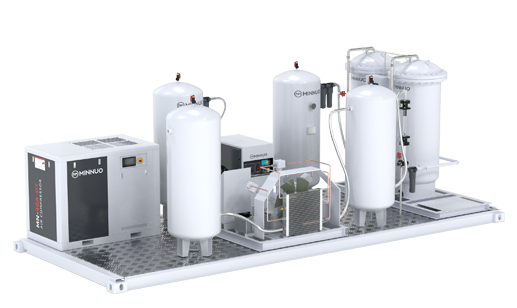
Setting #1 to Check: Operating Pressure (The Biggest Lever)
How It Works: The PSA process requires a minimum pressure to function, but operating above this necessary point wastes massive amounts of energy.
The Problem (Over-Pressurization):
- Your air compressor must work harder to produce higher pressure air, increasing energy use by ~1% for every 2 psi (0.14 bar) increase.
- Higher feed pressure can actually reduce the efficiency of the molecular sieve’s adsorption in some designs, requiring more purge air to achieve the same purity.
How to Check & Optimize:
- Find Your Spec: Check your generator’s manual for the recommended feed pressure range (e.g., 7.0 – 7.5 bar / 102 – 109 psi).
- Measure: Using a reliable gauge, check the pressure at the generator’s air inlet valve.
- Adjust: If the pressure is above the recommended range (e.g., 8.5 bar), work backwards:
- Check if your air compressor discharge pressure is set too high.
- Check for pressure-restricting valves or undersized filters/dryers before the generator.
- Goal: Lower the feed pressure to the lowest point within the recommended range that still reliably delivers your required nitrogen purity and flow.
Potential Savings: Reducing feed pressure by 0.5 bar (7 psi) can lower your air compressor’s energy consumption by ~3-4%. For a 100 kW system, that’s 3-4 kW of continuous savings.
Setting #2 to Check: Purge Time & Flow (The Silent Waste)
How It Works: To regenerate the saturated molecular sieve tower, a small portion of produced nitrogen is used to “purge” it. This purge nitrogen is a necessary cost, but it’s often excessive.
The Problem (Over-Purging):
- Set too long or at too high a flow, the purge cycle wastes valuable nitrogen that you just produced.
- This forces the generator to process more feed air to make up for the lost product, driving up compressed air consumption.
How to Check & Optimize:
Warning: This adjustment is sensitive. It is best performed with, or in consultation with, your service provider.
- Monitor Purity: Connect a calibrated oxygen analyzer to your nitrogen output.
- Baseline Test: Note the current purge settings and the resulting oxygen purity (e.g., 0.5% O₂).
- Incremental Reduction: Gradually reduce the purge time or flow setting in small increments (e.g., 5% steps).
- Observe: Allow several cycles for stability, then monitor the oxygen analyzer.
- Find the Limit: Stop reducing purge when the oxygen purity just begins to approach your maximum allowable limit (e.g., from 0.5% to 0.7% O₂, with a limit of 1.0%). This is your new, optimized setting.
Potential Savings: Optimizing purge can reduce nitrogen waste by 10-20%, directly reducing the load on your air compressor.
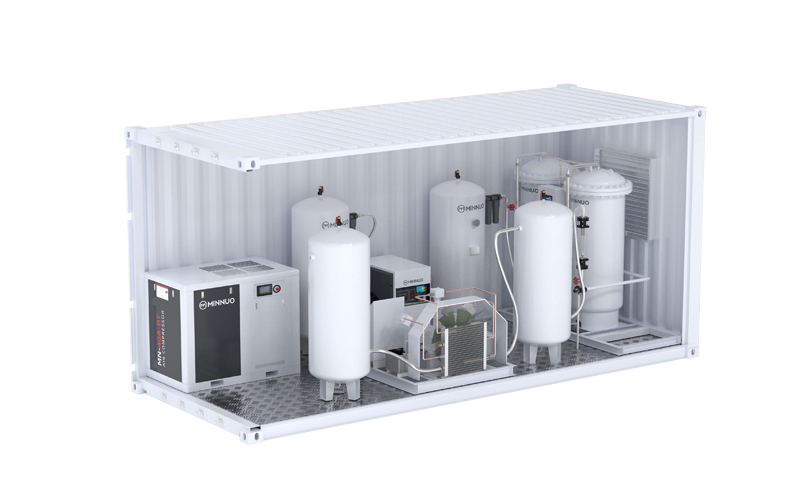
Setting #3 to Check: Adsorption Cycle Time (The Rhythm of Efficiency)
How It Works: The PSA system switches between two towers. The cycle time is how long each tower spends in the adsorption phase before switching.
The Problem (Poor Cycle Timing):
- Too Short: Towers switch before the sieve is fully saturated, wasting purge gas and causing excessive valve wear.
- Too Long: The leading sieve becomes over-saturated, causing oxygen breakthrough and purity drops before the switch, or requiring higher purge to compensate.
How to Check & Optimize:
This is an advanced tuning procedure often requiring provider support.
- Analyze the Curve: With an oxygen analyzer, observe the purity output just before a tower switch. A well-timed cycle will show a stable purity line that only begins to rise (indicating breakthrough) at the very moment of switching.
- Adjust: If purity drops before the switch, shorten the cycle time. If the switch happens while purity is perfectly stable, you could test a slightly longer cycle to improve sieve utilization. Always monitor purity closely.
- Consider Automation: Modern generators have self-optimizing valves that adjust cycle times based on pressure and flow. If you have an older fixed-cycle model, an upgrade may offer significant savings.
System Health: Prerequisites for Optimization
Before tweaking settings, ensure your foundation is solid:
- Clean, Dry, Oil-Free Air: Contaminated air fouls the sieve, forcing you to run higher pressure and purge to maintain purity. Check your pre-filters and dryer.
- No External Leaks: A leak in your nitrogen piping after the generator is functionally identical to over-purging—you’re making nitrogen just to vent it. Perform a leak audit.
- Healthy Valves & Sieve: Worn valves leak internally, and degraded sieve has lower capacity. If optimization fails, these may need service.
FAQ: Nitrogen Generator Energy Tuning
Q1: Can these optimizations damage my generator?
A1: If done carefully and within limits, no. The main risk is adjusting purge or cycle time too aggressively, leading to purity failure (oxygen breakthrough). Always monitor purity with an analyzer when making changes. Pressure adjustments are safer if kept within the manufacturer’s stated range.
Q2: How much can I really save by optimizing these settings?
A2: Combined savings of 10-25% on the compressed air energy consumed by your nitrogen system are common. For a large system, this can translate to thousands of dollars per year with zero capital investment.
Q3: We have a variable nitrogen demand. How does this affect settings?
A3: Significantly. Fixed settings are inefficient for variable flow. If your demand fluctuates, inquire about flow-based control upgrades. These systems automatically adjust purge and cycle parameters in real-time based on the actual nitrogen draw, maximizing efficiency at all load points.
Q4: How often should we review these settings?
A4: Perform a basic check (pressure, purity reading) quarterly. A full optimization review with an oxygen analyzer should be done annually, or whenever you notice a rise in compressed air usage without a corresponding increase in nitrogen production.
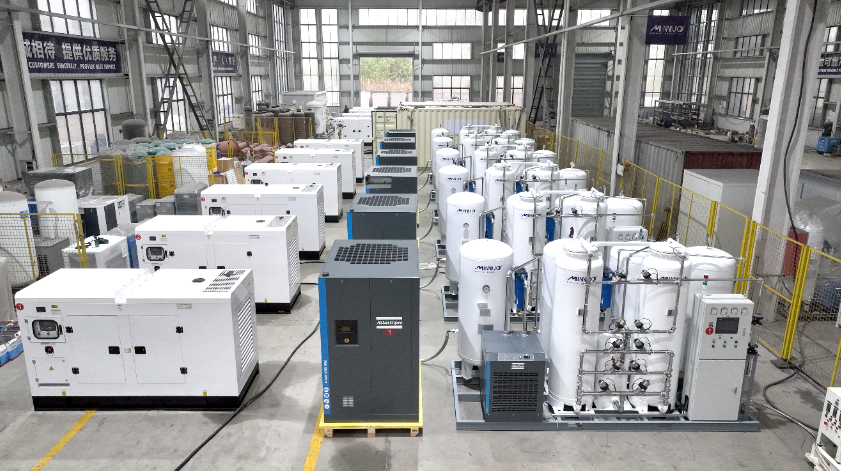
Conclusion: From Fixed Cost to Managed Asset
Your nitrogen generator should be a dynamic, optimized part of your utility profile, not a hidden source of waste. By taking control of these three key settings—pressure, purge, and cycle time—you reclaim the full economic promise of on-site generation: the lowest possible cost per unit of nitrogen.
The process requires attention and sometimes expert guidance, but the return is direct, measurable, and ongoing.
Unsure where to start or need expert support to safely tune your system? Contact the MINNUO engineering team for a complimentary consultation. We can review your generator’s operating data, help interpret purity readings, and provide clear guidance on optimization steps—ensuring your system operates at peak efficiency to maximize your savings.



 sales2:+86 17506119168