
In numerous critical links of industrial production, nitrogen purging, with its core advantages of dryness, cleanliness, and inertness, has become an indispensable process method in scenarios such as pipeline cleaning, equipment drying, explosion-proof inerting, and process isolation. From the removal of oxide layers after pipeline welding in mechanical manufacturing, to the moisture-proof protection of precision equipment in the electronics industry, and the explosion-proof treatment of storage tank maintenance in the chemical field, the effect of nitrogen purging is directly related to product quality, production safety, and operational efficiency.
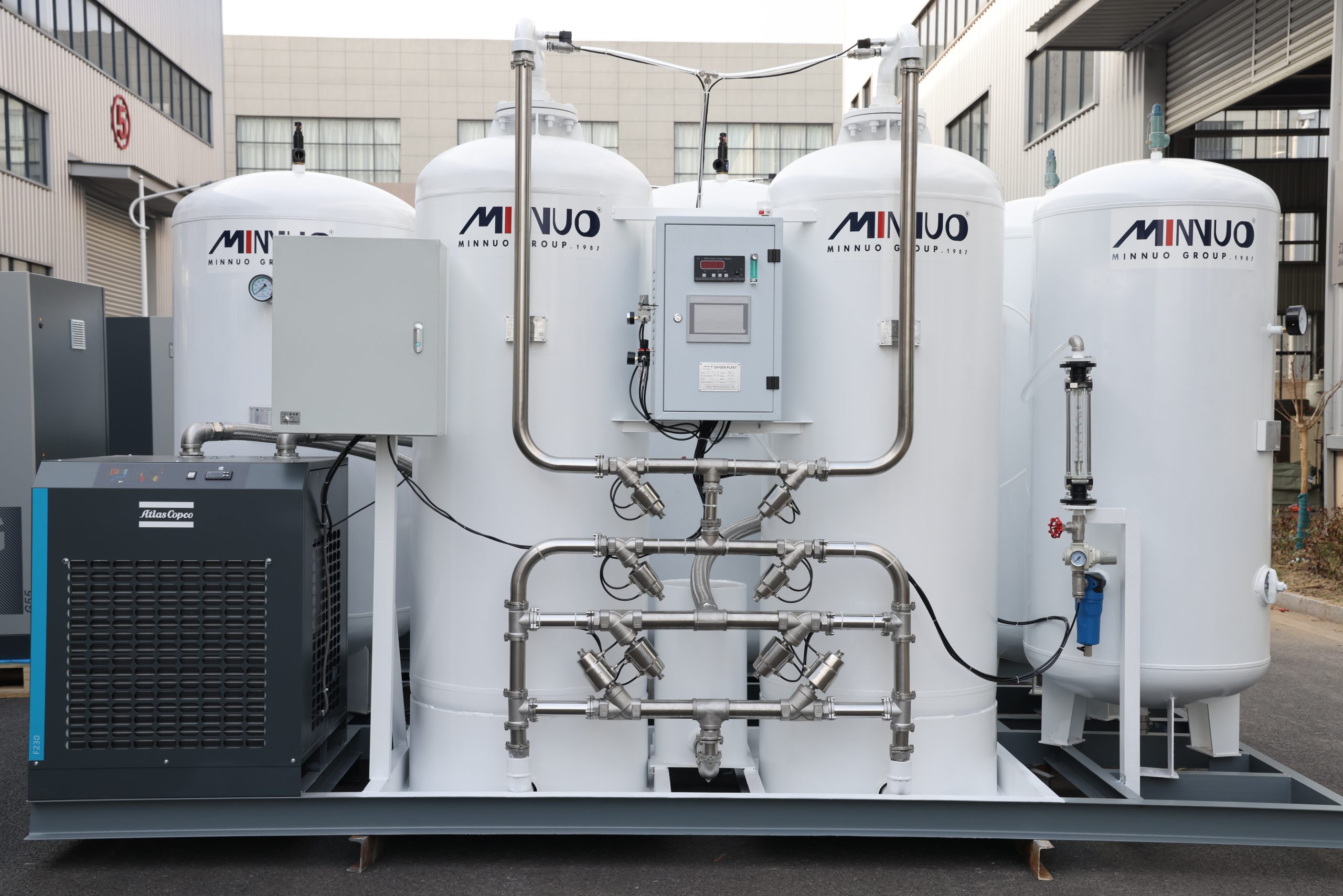
Among various nitrogen generation equipment, the Minnuo brand nitrogen generator has stood the test of the market and become the preferred equipment for countless enterprises, thanks to its core characteristics of “stable and reliable, efficient and energy-saving, and easy to operate” – “Everything is fine, easy to use” is the most intuitive evaluation from customers. As an engineer deeply engaged in the nitrogen generation equipment field, this article will comprehensively analyze, from the perspective of customers’ actual usage needs and dealers’ market service, the key points that customers need to pay attention to when purchasing Minnuo nitrogen generators for nitrogen purging, and how dealers can accurately connect with the market and provide effective service support.
I. Post-Purchase for Customers: Full-Process Operation & Precautions for Nitrogen Purging
1. Installation Preparation: Laying the Foundation for Stable Operation
The installation quality of the nitrogen generator directly determines the subsequent operational stability and nitrogen purity. This step focuses on three core aspects: environmental adaptation, gas source matching, and safety specifications.
1.1 Environmental Site Selection: Avoiding “Invisible Risks”
The ideal operating environment for the Minnuo nitrogen generator must meet the four conditions of “dry, ventilated, clean, and normal temperature”:
- Humidity Control: The relative environmental humidity should be ≤ 85% (no condensation). A humid environment will cause the molecular sieve to absorb moisture and agglomerate, directly affecting adsorption performance and service life. If the production site has high humidity, supporting dehumidification equipment is required.
- Dust Protection: Avoid areas with concentrated dust, oil pollution, and corrosive gases (such as welding workshops and chemical raw material storage areas). Otherwise, the air intake filter element may become clogged and the molecular sieve may be contaminated. It is recommended to install a simple dust cover around the equipment.
- Space Reservation: Reserve ≥ 0.5 meters of maintenance space around the equipment and ≥ 1 meter of ventilation space at the top to ensure smooth heat dissipation and facilitate subsequent operations such as filter element replacement and molecular sieve maintenance.
- Temperature Requirements: The operating environment temperature should be controlled between 5-40℃. Avoid direct sunlight or proximity to high-temperature equipment (such as boilers and heaters). Extreme temperatures can affect the stability of electrical components and the treatment effect of compressed air.
1.2 Gas Source Matching: Accurate Matching is Key
The Minnuo nitrogen generator uses compressed air as raw material. The pressure, flow rate, and cleanliness of the gas source directly affect the operating efficiency and gas production quality of the nitrogen generator. The supporting air compressor and purification equipment must meet the following requirements:
- Pressure Matching: The output pressure of the air compressor should be stably maintained at 0.6-0.8MPa. Too low pressure will reduce the gas production efficiency of the nitrogen generator, while too high pressure will increase energy consumption and equipment wear.
- Flow Adaptation: The rated exhaust volume of the air compressor should be ≥ 1.2 times the rated air intake volume of the nitrogen generator (for example, a Minnuo 10Nm³/h nitrogen generator requires a matching air compressor of ≥ 12Nm³/h) to avoid frequent startup and shutdown of the nitrogen generator due to insufficient gas source.
- Cleanliness Requirements: A three-stage air filtration system (pre-filter + precision filter + activated carbon filter) and a refrigerated dryer must be equipped to ensure that the oil content of the compressed air is ≤ 0.01mg/m³, the dew point is ≤ -20℃, and the solid particles are ≤ 1μm. Otherwise, oil and moisture will irreversibly damage the molecular sieve and shorten its service life.
1.3 Safety Specifications: Building a Solid Production Line of Defense
- Grounding Protection: The equipment must be reliably grounded (grounding resistance ≤ 4Ω). Especially in explosion-proof purging scenarios such as chemical and oil and gas industries, static accumulation may cause potential safety hazards, and grounding is an essential safety measure.
- Pipeline Installation: The nitrogen output pipeline should be made of stainless steel or copper pipes (to avoid rust contamination of nitrogen). The connections of the pipeline must be tightly sealed without leakage. After installation, a pressure test should be carried out (the test pressure is 1.5 times the working pressure, and the pressure is maintained for 30 minutes without pressure drop).
- Explosion-Proof Requirements: When used in explosion-proof areas, the Minnuo explosion-proof nitrogen generator (motor explosion-proof grade ≥ Ex d II BT4) should be selected, and the equipment installation specifications for explosion-proof areas must be strictly followed. Unauthorized modification of the equipment is prohibited.
2. Operation and Running: Precise Control, Balancing Efficiency and Safety
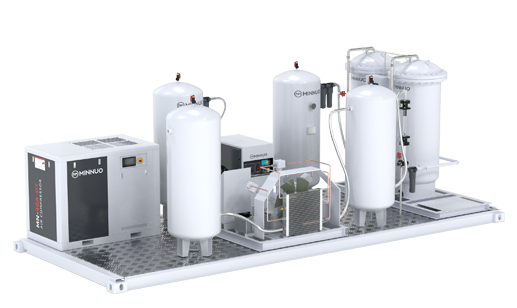
The operation interface of the Minnuo nitrogen generator is simple and intuitive, but the parameter settings and operation specifications of nitrogen purging directly affect the purging effect and need to be accurately adjusted according to specific scenarios.
2.1 Nitrogen Purity: Select on Demand, Balancing Cost and Effect
The Minnuo nitrogen generator supports multi-level purity adjustment from 95% to 99.999%. Different purging scenarios have significantly different purity requirements, and there is no need to blindly pursue the highest purity:
- Ordinary Cleaning Purging (such as removal of pipeline dust and impurities): 99.5% purity is sufficient to meet cleaning needs while reducing energy consumption and operating costs.
- Drying Purging (such as equipment moisture-proof and pipeline dehydration): It is recommended to select a purity of more than 99.9%, combined with low dew point nitrogen, to ensure the drying effect and avoid residual moisture affecting subsequent production.
- Explosion-Proof Inerting Purging (such as maintenance of chemical storage tanks and reactors): High-purity nitrogen of ≥ 99.99% must be selected, and the oxygen content in the equipment after purging must be ≤ 1% (≤ 0.5% for special scenarios) to prevent the mixture of flammable and explosive gases with oxygen from causing explosions.
- Precision Electronic Equipment Purging: Ultra-high purity nitrogen of 99.999% should be selected to avoid micro-impurities in nitrogen contaminating precision components such as chips and PCB boards.
2.2 Purging Parameters: Scientific Setting, Avoiding “Over-Purging” or “Insufficient Purging”
The pressure, flow rate, and time of nitrogen purging need to be scientifically calculated according to the volume, material, and pollution degree of the purged equipment. The Minnuo nitrogen generator can be precisely adjusted through the flow control valve and pressure controller:
- Purging Pressure: It is recommended to control it between 0.2-0.6MPa. Excessively high pressure may cause loosening of pipeline interfaces and damage to precision equipment, while excessively low pressure cannot effectively remove residual impurities and gases.
- Purging Flow Rate: Calculate according to “volume of purged equipment × 5-10 times/hour” (for example, a 10m³ storage tank requires a flow rate of 50-100Nm³/h). Too small a flow rate will prolong the purging time, while too large a flow rate will increase energy consumption.
- Purging Time: For cleaning purging, it is based on the absence of dust and impurities in the outlet gas (a white cloth can be set at the outlet for detection); for drying purging, it needs to continue until the dew point of the outlet nitrogen is ≤ -40℃ (it is recommended to equip a dew point meter for real-time monitoring); for explosion-proof inerting purging, the time should be calculated according to “3 times the nitrogen volume of the equipment volume”, and the oxygen content detector should be used to confirm that the oxygen content meets the standard.
2.3 Start-Stop and Operation Specifications: Extending Equipment Life
- Startup Process: First start the air compressor and refrigerated dryer. After the compressed air pressure is stably above 0.6MPa and the dew point meets the standard, start the Minnuo nitrogen generator. After startup, run it under no-load for 5 minutes to observe whether the nitrogen purity and pressure are normal, then connect the purging pipeline.
- Operation Monitoring: During operation, real-time attention should be paid to the purity display, pressure value, and flow rate on the equipment control panel. If abnormalities such as sudden drop in purity and pressure fluctuation occur, shut down the machine immediately for troubleshooting.
- Shutdown Process: First close the purging pipeline valve, then let the nitrogen generator run under no-load for 10-15 minutes, purge the molecular sieve tower with dry air to avoid residual moisture and impurities adsorbed by the molecular sieve, and finally turn off the nitrogen generator, refrigerated dryer, and air compressor.
- Continuous Operation: The Minnuo nitrogen generator supports 24-hour continuous operation, but it is recommended to shut down for 1 hour of rest every 24 hours of operation to reduce equipment wear and extend service life.
3. Maintenance: Achieving Long-Term Stable Operation at Low Cost
The core components (molecular sieve, filter element, solenoid valve, etc.) of the Minnuo nitrogen generator are made of high-quality materials. Reasonable maintenance can make the equipment operate stably for more than 10 years with low maintenance costs and simple operation.
3.1 Daily Maintenance (Daily Must-Do)
- Check whether the intake pressure, outlet pressure, and nitrogen purity are within the set range, and record the operating parameters to facilitate subsequent troubleshooting.
- Drain the condensed water at the bottom of the refrigerated dryer, air storage tank, and nitrogen generator (at least twice a day, increase the frequency in humid environments) to prevent moisture from entering the molecular sieve tower.
- Observe whether the equipment operates with normal sound and whether there are abnormalities such as air leakage and oil leakage. Deal with problems in a timely manner.
3.2 Regular Maintenance (Implemented According to Cycle)
- Every 3 months: Replace the air filter element (pre-filter and precision filter). If the production environment has a lot of dust, shorten the replacement cycle to 1-2 months; check whether the intake pipeline is blocked and clean the dust on the equipment surface.
- Every 6 months: Check the operating status of the solenoid valve and pneumatic valve to ensure flexible switching; detect the adsorption performance of the molecular sieve. If the purity drops significantly, regenerate the molecular sieve.
- Every 12 months: Replace the activated carbon filter element; conduct a comprehensive inspection of the molecular sieve tower. If the molecular sieve agglomerates or pulverizes, replace it in a timely manner (the normal service life of Minnuo molecular sieve can reach 8000 hours, about 1 year); calibrate instruments such as purity detectors and pressure sensors to ensure accurate detection data.
- Every 2 years: Conduct a comprehensive inspection of the equipment electrical system, check whether the line connections are firm, and replace aging electrical components; perform joint maintenance on the air compressor and refrigerated dryer to ensure stable gas source quality.
3.3 Common Fault Troubleshooting and Handling
- Sudden Drop in Nitrogen Purity: First check whether the air compressor filter element is blocked and whether the dew point of the refrigerated dryer meets the standard (to rule out gas source pollution); then check whether the molecular sieve is damp or agglomerated (regeneration or replacement is required); finally check whether the adsorption tower seal is good (whether there is air leakage).
- Decreased Gas Production Efficiency: Troubleshoot whether the air compressor flow rate is insufficient and the intake pressure is too low; check whether the intake filter element is blocked; clean the equipment heat dissipation channel (to avoid efficiency reduction due to overheating).
- Equipment Failure to Start: Check whether the power supply is normal and whether the emergency stop button is reset; troubleshoot whether the linkage signal between the air compressor and the nitrogen generator is normal; contact Minnuo after-sales service to troubleshoot electrical control system failures (do not disassemble by yourself).
II. Dealer Empowerment: Core Points for Market Promotion & Service of Minnuo Nitrogen Generators
1. Market Positioning: Accurately Locking Core Demand Scenarios
The core advantages of the Minnuo nitrogen generator lie in “high cost performance + stable and reliable + adapting to small and medium batch purging needs”. Dealers need to accurately connect with target customer groups and focus on the following high-frequency application scenarios:
1.1 Machinery Manufacturing Industry
- Application Scenarios: Removal of oxide layers after pipeline welding, cleaning of hydraulic system oil circuits, and drying treatment before equipment assembly.
- Customer Pain Points: High cost, frequent replacement, and unstable purity of traditional bottled nitrogen.
- Promotion Highlights: The Minnuo nitrogen generator produces gas on demand, with an operating cost only 1/3-1/5 of that of bottled nitrogen. It has stable purity and no need for frequent gas source replacement.
1.2 Electronic and Electrical Industry
- Application Scenarios: Removal of flux after PCB board welding, drying and inerting before chip packaging, and moisture-proof storage of electronic components.
- Customer Pain Points: Precision equipment has high requirements for nitrogen purity and dew point, which ordinary nitrogen generators are difficult to meet.
- Promotion Highlights: The Minnuo nitrogen generator supports ultra-high purity output of 99.999% with a dew point as low as -60℃, fully adapting to the needs of the precision electronics industry. It has low operating noise (≤75dB), suitable for workshop environments.
1.3 Chemical and Oil & Gas Industry
- Application Scenarios: Explosion-proof inerting before storage tank maintenance, pipeline replacement, and moisture-proof storage of chemical raw materials.
- Customer Pain Points: Explosion-proof scenarios have high requirements for equipment safety, requiring stable and reliable nitrogen generation equipment.
- Promotion Highlights: The Minnuo explosion-proof nitrogen generator meets the Ex d II BT4 explosion-proof standard, with precise purity adjustment, equipped with online oxygen content monitoring function, and high safety factor. It supports 24-hour continuous operation to meet the continuous production needs of the chemical industry.
1.4 Food Processing and Packaging Industry
- Application Scenarios: Nitrogen-filled fresh-keeping of food packaging (such as potato chips, nuts, meat) and drying of production equipment after cleaning and disinfection.
- Customer Pain Points: The food industry has high requirements for nitrogen cleanliness and is worried about product contamination.
- Promotion Highlights: The Minnuo nitrogen generator is equipped with a food-grade filtration system, with nitrogen cleanliness meeting ISO 8573-1 Class 1 standard, oil-free and impurity-free. It has low operating cost and can reduce the comprehensive cost of food packaging.
1.5 Pharmaceutical Industry
- Application Scenarios: Drying of pharmaceutical production equipment, cleaning and inerting of packaging containers, and moisture-proof storage of raw materials.
- Customer Pain Points: The pharmaceutical industry has strict requirements for equipment compliance and stability.
- Promotion Highlights: The Minnuo nitrogen generator has passed the ISO 9001 quality system certification, with materials meeting the hygiene standards of the pharmaceutical industry. It operates stably and can provide complete quality inspection reports and compliance certificates.
2. Customer Communication: Replacing “Parameter Stacking” with “Scenario-Based Solutions”
When communicating with customers, dealers need to get out of the misunderstanding of “parameter listing”, focus on customers’ actual needs and pain points, and impress customers with “scenario-based solutions”:
2.1 Pain Point Orientation and Accurate Matching
- For chemical enterprise customers: “Every time you maintain your storage tanks, you need to use a lot of bottled nitrogen, which is not only costly but also has unstable purity, posing potential safety hazards. The Minnuo explosion-proof nitrogen generator can produce 99.99% high-purity nitrogen on demand, with real-time oxygen content monitoring. The operating cost is 60% lower than that of bottled nitrogen. One-time investment brings long-term benefits.”
- For electronic enterprise customers: “Your PCB board drying requires high-purity and low-dew point nitrogen. Ordinary nitrogen generators are prone to purity fluctuations, leading to product moisture damage and scrap. The Minnuo nitrogen generator has a stable purity of 99.999% and a dew point as low as -60℃, which can effectively protect precision components and reduce the defect rate.”
2.2 Cost Comparison to Highlight Advantages
Calculating the “economic account” for customers is the key to promoting transactions: Taking a daily consumption of 10Nm³ of nitrogen as an example, the unit price of bottled nitrogen (40L/bottle, purity 99.5%) is about 30 yuan/bottle. 25 bottles are needed per day, with a daily cost of 750 yuan; the operating cost of the Minnuo nitrogen generator (10Nm³/h model) is only electricity fees + filter element replacement fees, about 80-100 yuan/day, saving more than 200,000 yuan annually.
2.3 Case Evidence to Enhance Trust
Sharing successful cases in the same industry allows customers to intuitively feel the product value: “A certain machinery manufacturing enterprise previously used bottled nitrogen for pipeline purging, with a monthly cost of about 20,000 yuan. After purchasing the Minnuo 15Nm³/h nitrogen generator, the monthly operating cost dropped to 3,000 yuan, with more stable purity and 40% higher purging efficiency. The equipment investment was recovered in half a year.”
3. Stocking and Delivery: Pre-Service to Improve Customer Experience
3.1 Stocking Strategy: Focus on Mainstream Models
Based on market demand data, prioritize the storage of mainstream models with “5-20Nm³/h gas production + 99.99% purity”. Such models can cover more than 80% of nitrogen purging scenarios, with fast inventory turnover and quick response to customer orders; at the same time, store a small number of high-purity models (99.999%) and explosion-proof models to meet the needs of special industries.
3.2 Delivery Service: Achieving “Ready to Use Upon Installation”
- On-Site Survey: Proactively conduct an on-site survey of the installation site before delivery, assist customers in planning the equipment placement and gas source pipeline layout, and avoid equipment operation issues due to improper installation environment.
- Professional Installation: Arrange technical personnel trained by Minnuo to conduct on-site installation and commissioning to ensure standardized equipment installation, tight pipeline connections, and accurate parameter settings.
- Operation Training: Provide on-site training for customer operators, including equipment start-stop, parameter adjustment, daily maintenance, and simple fault troubleshooting. Issue illustrated operation manuals to ensure customers can operate independently.
- Acceptance Confirmation: After the completion of installation and commissioning, on-site test key parameters such as nitrogen purity, pressure, and flow rate, and ask customers to sign for confirmation to ensure the equipment meets the requirements.
4. After-Sales Service: Building Long-Term Cooperative Relationships
After-sales service is the core competitiveness of dealers and the key to the word-of-mouth spread of Minnuo nitrogen generators:
4.1 Clear Service Commitments
Clearly communicate service guarantees to customers: “The core components (molecular sieve, compressor) of the Minnuo nitrogen generator have a 2-year warranty, and the whole machine has a 1-year warranty. 24-hour after-sales response is provided, on-site service is available within 48 hours (72 hours for remote areas), and lifelong technical support and spare parts supply are offered.”
4.2 Proactive Maintenance Reminders
Establish customer files and proactively remind customers of regular maintenance according to the equipment operation time: “Your Minnuo nitrogen generator has been operating for 3 months. It is recommended to replace the air filter element in a timely manner. We can provide on-site replacement services to ensure stable equipment operation.”
4.3 Value-Added Service Empowerment
Provide value-added services to customers to enhance customer stickiness:
- Regular On-Site Inspections: Provide free on-site inspections for customers every 6 months to detect equipment operating status and troubleshoot potential problems.
- Process Optimization Suggestions: Provide nitrogen purging parameter optimization suggestions according to changes in customers’ production scenarios to help customers reduce energy consumption and improve efficiency.
- Preferential Supply of Spare Parts: Provide spare parts discounts for long-term cooperative customers to ensure controllable customer maintenance costs.
Conclusion: Based on Quality, Supported by Service, Win-Win in the Nitrogen Purging Market
The “ease of use” of the Minnuo nitrogen generator stems from its in-depth understanding of industrial scenario needs and solid product quality; its continuous popularity in the market is inseparable from customer recognition and dealers’ professional services.
For purchasing customers, following the operation specifications and maintenance points in this article can maximize the value of the Minnuo nitrogen generator, achieving efficient and safe nitrogen purging at low cost; for dealers, accurately connecting with market demand, providing scenario-based solutions and high-quality after-sales services can stand out in the fierce market competition and grow together with the Minnuo brand.
Under the development trend of industrial intelligence and high efficiency, the application scenarios of nitrogen purging will continue to expand. The Minnuo nitrogen generator will empower more enterprises with more stable performance, more convenient operation, and more comprehensive services, and open up a broader market space for dealer partners.

 sales2:+86 17506119168