
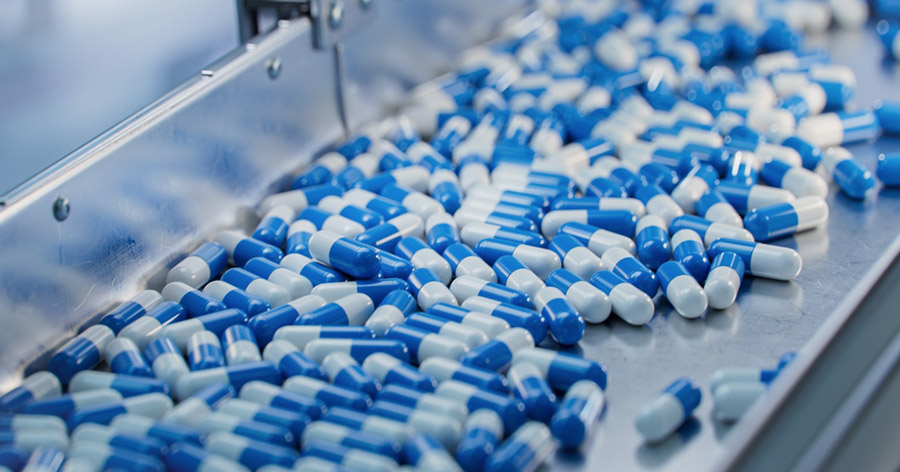
In pharmaceutical manufacturing, there is no margin for error. Every process, every ingredient, every environment must meet stringent quality standards—because the end product affects human health. Nitrogen gas plays a critical role throughout pharmaceutical production, from protecting sensitive reactions to ensuring drug stability in packaging. But in an industry governed by GMP (Good Manufacturing Practice) , FDA regulations, and pharmacopoeial standards, not just any nitrogen will do. This guide explores how on-site nitrogen generation serves the pharmaceutical industry, the specific purity and compliance requirements, and why more pharma manufacturers are making the switch from delivered gas.
I. Why Pharmaceuticals Need Nitrogen
1. API Manufacturing and Chemical Synthesis
Active Pharmaceutical Ingredients (APIs) are often produced through complex chemical reactions involving sensitive compounds. Many of these reactions are oxygen-sensitive—exposure to air can cause oxidation, degradation, or unwanted byproducts .
Nitrogen’s role: Blanketing reactors and storage vessels with nitrogen creates an inert atmosphere, protecting reactions and intermediates from oxygen and moisture. It also prevents solvent vapors from forming explosive mixtures .
2. Tank Blanketing and Storage
Raw materials, intermediates, and finished products often need protection during storage. Nitrogen blanketing:
- Prevents oxidation of sensitive compounds
- Keeps moisture out of hygroscopic materials
- Maintains product stability over time
- Reduces fire risk for flammable solvents
3. Pharmaceutical Packaging
Many pharmaceutical products are packaged under nitrogen atmosphere to:
- Prevent oxidation (especially for liquids, oils, and oxygen-sensitive drugs)
- Maintain sterility
- Extend shelf life
- Protect product integrity
Common examples: vials of injectable drugs, bottles of liquid formulations, blister packs of tablets.
4. Freeze Drying (Lyophilization)
Lyophilization removes water from heat-sensitive pharmaceuticals under vacuum. Nitrogen is used to:
- Break the vacuum at the end of the cycle
- Provide an inert environment during stoppering
- Purge the chamber between cycles
5. Material Transfer and Purging
Nitrogen is used to safely transfer flammable solvents through piping systems, preventing explosive mixtures. It also purges equipment before maintenance, ensuring worker safety.
6. Analytical Instruments
QC laboratories rely on nitrogen for:
- Gas chromatography (GC) carrier gas
- Liquid chromatography-mass spectrometry (LC-MS) nebulization
- Fourier-transform infrared spectroscopy (FTIR) purge
II. Pharmaceutical Nitrogen: Purity and Quality Requirements
1. Pharmacopoeial Standards
Pharmaceutical nitrogen must meet standards defined in major pharmacopoeias:
| Pharmacopoeia | Standard | Key Requirements |
| USP (United States Pharmacopeia) | USP <1231> | 99.0% minimum purity; limits for CO, CO₂, moisture |
| Ph. Eur. (European Pharmacopoeia) | Monograph 1247 | 99.5% minimum purity; limits for CO, CO₂, NO/NO₂, moisture |
| JP (Japanese Pharmacopoeia) | JP nitrogen monograph | Similar to USP |
2. Purity Levels by Application
Different pharmaceutical applications require different purity levels:
| Application | Typical Purity Required | Critical Parameters |
| API manufacturing (general) | 99.0-99.5% | Oxygen < 1%, moisture controlled |
| Sensitive API reactions | 99.5-99.9% | Oxygen < 0.5%, moisture < -40°C |
| Parenteral packaging (injectables) | 99.5-99.9% | Sterile filtration required |
| Oral solid packaging | 99.0-99.5% | Oxygen control, no contamination |
| Lyophilization | 99.5% | Dry, sterile at point of use |
| Analytical instruments | 99.5-99.999% | Application-specific |
3. Other Critical Quality Attributes
Beyond purity, pharmaceutical nitrogen must be:
- Oil-free (ISO 8573-1 Class 0 or 1)—hydrocarbon contamination is unacceptable
- Particulate-free—filtration to 0.2 μm or better at point of use
- Bioburden-controlled—for sterile applications
- Endotoxin-controlled—for parenteral use
III. Delivered vs. On-Site: The Pharma Decision
1. Traditional Approach: Cylinders and Liquid Nitrogen
Many pharmaceutical facilities have historically relied on:
- High-pressure cylinders for small users
- Liquid nitrogen (LIN) tanks for larger consumers
Pros:
- No capital investment
- Purity guaranteed by supplier
- Instant availability
Cons:
- High ongoing cost (typically $1-3 per liter)
- Supply chain vulnerability (deliveries, weather, supplier reliability)
- Handling and storage risks (cryogenic burns, pressure hazards)
- Cylinder changeover labor
- Quality documentation varies by batch
2. Modern Approach: On-Site PSA Nitrogen Generation
On-site PSA generators produce nitrogen continuously from compressed air.
Pros:
- Significant cost savings: Typically 50-80% lower cost per liter compared to delivered
- Supply independence: No deliveries, no shortages
- Consistent quality: One validated system, not variable batch supplies
- 24/7 availability: On demand, always
- Reduced safety risks: No cryogenics, no cylinder handling
- Smaller carbon footprint: No delivery trucks
Cons:
- Capital investment required
- Need for validation and ongoing maintenance
- Space for equipment
For facilities with continuous nitrogen demand, on-site generation pays for itself in 1-3 years .
IV. GMP Compliance and Validation
For pharmaceutical manufacturers, the equipment itself must be validated. This is where many industrial gas suppliers fall short—but a properly specified pharma-grade nitrogen generator is designed for validation from the start.
1. Validation Documentation Package
A compliant nitrogen generator should come with:
- User Requirement Specification (URS) cross-reference
- Design Qualification (DQ) documentation
- Factory Acceptance Test (FAT) protocol and report
- Site Acceptance Test (SAT) support
- Installation Qualification (IQ) protocols
- Operational Qualification (OQ) protocols
- Material certifications for wetted parts
- Calibration certificates for all instruments
2. Key Validation Considerations
Installation Qualification (IQ)
- Verify correct installation per specifications
- Confirm utility connections (power, cooling, drain)
- Document component identification and traceability
- Verify material compatibility (316L stainless steel for wetted parts)
Operational Qualification (OQ)
- Demonstrate nitrogen purity across specified flow range
- Verify alarm functionality (low purity, high temperature, etc.)
- Test automatic operation and changeover
- Document pressure and flow capabilities
- Verify instrument calibration
Performance Qualification (PQ)
- Demonstrate consistent performance over time
- Verify purity at point of use (after distribution)
- Confirm microbial and particulate control (if applicable)
- Document over extended operating period
3. Ongoing Monitoring and Revalidation
- Continuous purity monitoring with chart recorders or data logging
- Regular calibration of oxygen analyzers and other instruments
- Scheduled maintenance with documentation
- Change control for any modifications
- Periodic revalidation as required by site procedures
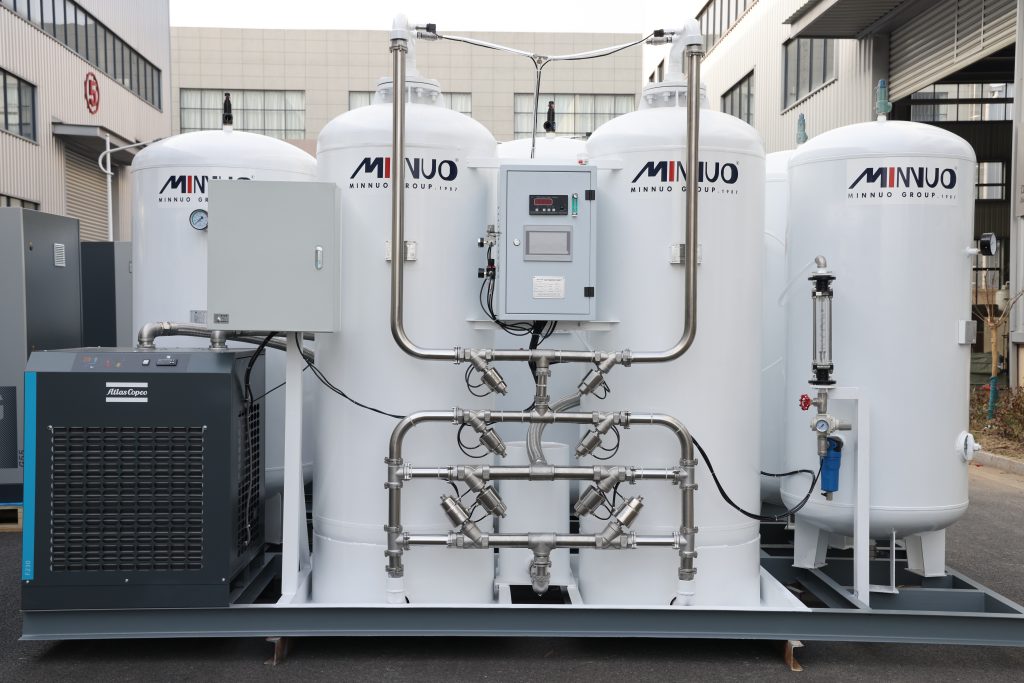
V. System Design Considerations for Pharma
1. Material Selection
- Wetted parts: 316L stainless steel (minimum) for all gas-contact surfaces
- Seals: PTFE, Viton, or other pharma-compatible materials
- Surface finish: Electropolished where required (for sterile applications)
2. Sterile Filtration
For applications requiring sterile nitrogen (injectable packaging, aseptic processing), final filtration at point of use is essential:
- 0.2 μm hydrophobic filters remove bacteria
- Filter integrity testing before and after use
- Sanitary connections (Tri-Clamp, etc.)
3. Oil-Free Compression
Class 0 oil-free air compressors are strongly recommended. Even trace hydrocarbons can:
- Contaminate pharmaceutical products
- Poison catalysts in API synthesis
- Cause analytical instrument interference
- Void GMP compliance
4. Redundancy and Reliability
Pharmaceutical manufacturing often runs 24/7. Critical applications need:
- N+1 compressor configuration (one extra for backup)
- Dual PSA modules or standby generator
- Buffer storage to cover short outages
- Uninterruptible power supply (UPS) for controls
5. Distribution System
The nitrogen distribution system is as important as the generator:
- 316L stainless steel piping (electropolished for sterile areas)
- Sloped lines with drain points
- No dead legs where contamination can grow
- Sanitary connections at point of use
- Regular validation of distribution system
VI. Applications Across the Pharmaceutical Facility
1. API Manufacturing Suites
- Multiple reactors with varying purity needs
- Often high-volume, continuous demand
- May need different pressure levels
2. Formulation Areas
- Mixing vessels, granulators, coaters
- Often intermittent demand
- Need for dry, clean gas
3. Filling Lines
- Vial and syringe filling under nitrogen blanket
- High-purity, sterile requirements
- Peak demands during filling campaigns
4. Packaging Lines
- Blister packaging, bottle sealing
- Lower purity acceptable (99-99.5%)
- Often intermittent, campaign-based
5. QC Laboratories
- Multiple analytical instruments
- Small but critical demand
- High purity (99.5-99.999%) depending on instrument
6. Warehousing and Storage
- Tank blanketing for bulk storage
- Continuous low-flow demand
- Lower purity acceptable
VII. The Financial Case: ROI for Pharma
1. Cost Comparison Example
| Parameter | Delivered Liquid Nitrogen | On-Site PSA Generator |
| Annual consumption | 100,000 Nm³ | 100,000 Nm³ |
| Unit cost | $0.50 per Nm³ | $0.12 per Nm³ |
| Annual gas cost | $50,000 | $12,000 |
| Equipment cost | — | $80,000 |
| Installation | — | $15,000 |
| Annual maintenance | — | $3,000 |
| First year total | $50,000 | $110,000 |
| Year 2-5 annual | $50,000 | $15,000 |
| 5-year cumulative | $250,000 | $185,000 |
Payback period: ~2.5 years
2. Additional Savings
- No cylinder handling labor
- No delivery scheduling
- No inventory management
- No cylinder rental fees
- No minimum purchase requirements
3. Intangible Benefits
- Supply security (no “truck didn’t show”)
- Consistent quality (validated system, not variable batches)
- Reduced safety risks
- Lower carbon footprint
FAQ: Nitrogen Generation for Pharmaceutical Industry
Q1: What purity of nitrogen does pharmaceutical manufacturing require?
A1: It depends on the application:
- General API manufacturing: 99.0-99.5%
- Sensitive reactions: 99.5-99.9%
- Parenteral packaging: 99.5% with sterile filtration
- Oral solid packaging: 99.0-99.5%
- Analytical instruments: 99.5-99.999%
Most PSA generators can deliver 99-99.9% purity, meeting the majority of pharma needs. For higher purity, additional purification can be added .
Q2: Can a PSA nitrogen generator meet GMP requirements?
A2: Yes, absolutely. A properly designed, validated, and maintained PSA system can fully meet GMP requirements. The key is working with a supplier who understands pharma validation and provides complete documentation (DQ, IQ, OQ protocols) .
Q3: Is oil-free compression really necessary for pharma nitrogen?
A3: Yes. Even trace oil contamination can ruin pharmaceutical products, poison catalysts, and cause GMP deviations. A Class 0 oil-free compressor is strongly recommended for the feed air supply. If an oil-lubricated compressor is used, the filtration must be extremely robust and meticulously maintained—but most pharma sites prefer the inherent safety of oil-free .
Q4: What’s the difference between “nitrogen” and “nitrogen, sterile”?
A4: Sterile nitrogen is nitrogen that has been filtered through a 0.2 μm sterilizing-grade filter at the point of use. This removes bacteria and particles. It’s required for any application where nitrogen contacts sterile product or sterile surfaces (injectable filling, aseptic processing) .
Q5: How often must a pharmaceutical nitrogen generator be validated?
A5: The initial validation (DQ/IQ/OQ/PQ) is performed at installation. Thereafter:
- Continuous monitoring of purity, pressure, flow
- Regular calibration of instruments (typically annually)
- Periodic revalidation per site procedures (often annually or after major maintenance)
- Change control documentation for any modifications
Q6: Can one nitrogen generator supply multiple applications with different purity needs?
A6: Yes, with proper design. The generator is sized for the highest purity requirement. The entire output is at that purity. If different areas need different purity levels, you can:
- Use the same high-purity gas (simplest, but slightly less efficient)
- Install a split system with different purity taps (more complex, requires validation of each branch)
- Use point-of-use purification for critical applications
Q7: What documentation should I request from a nitrogen generator supplier?
A7: For pharma applications, request:
- Validation package (DQ/IQ/OQ templates)
- Material certifications (316L stainless steel, wetted parts)
- Weld certificates and logs
- Calibration certificates for all instruments
- Factory Acceptance Test (FAT) protocol and results
- Maintenance manuals and spare parts lists
- P&ID diagrams and electrical schematics
Q8: How much space does a pharmaceutical nitrogen generator need?
A8: A typical system for a mid-size pharma facility (50-100 Nm³/h) might occupy 10-20 m² for the generator package, plus space for the air compressor and buffer tank. Clean, well-ventilated utility space is ideal. Systems can be installed in mechanical rooms, basements, or outdoor enclosures .
Q9: What about nitrogen for cleanrooms—any special requirements?
A9: Yes. For cleanroom installations:
- Stainless steel piping with electropolished finish
- Sanitary connections at point of use
- No dead legs in distribution
- Sterile filtration at point of use
- Validation of distribution system
- Integration with cleanroom monitoring systems
Q10: How long does a pharmaceutical nitrogen generator last?
A10: With proper maintenance:
- PSA system: 15-20+ years (sieve replacement every 8-12 years)
- Air compressor: 10-15 years (depending on duty cycle)
- Controls and instrumentation: 10-15 years before obsolescence considerations
Many systems installed in the early 2000s are still running today .
Conclusion
In the pharmaceutical industry, nitrogen is not just a utility—it’s a critical process material that directly impacts product quality, patient safety, and regulatory compliance. From protecting sensitive API reactions to ensuring drug stability in packaging, the right nitrogen supply is essential.
On-site PSA nitrogen generation has become the preferred solution for pharmaceutical manufacturers who need reliable, high-purity nitrogen at predictable cost. With proper validation, GMP-compliant design, and robust quality systems, on-site generators meet the most stringent regulatory requirements while delivering significant cost savings compared to delivered gas.
The key to success is partnering with a supplier who understands pharmaceutical requirements—not just nitrogen technology. The right partner provides:
- Validation-ready equipment with complete documentation
- GMP-compliant design with appropriate materials and finishes
- Regulatory expertise to navigate pharmacopoeial standards
- Long-term support for maintenance and revalidation
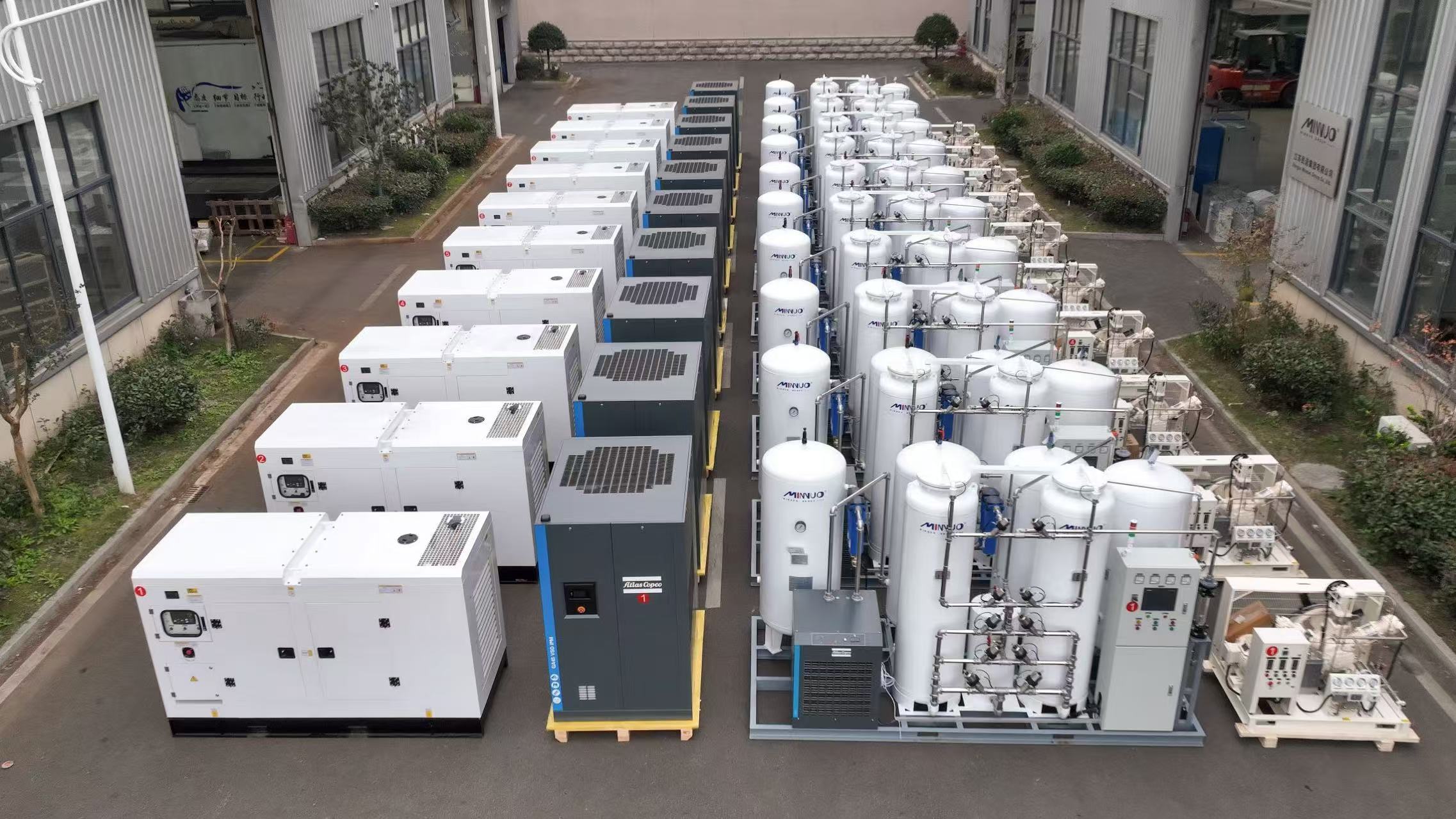
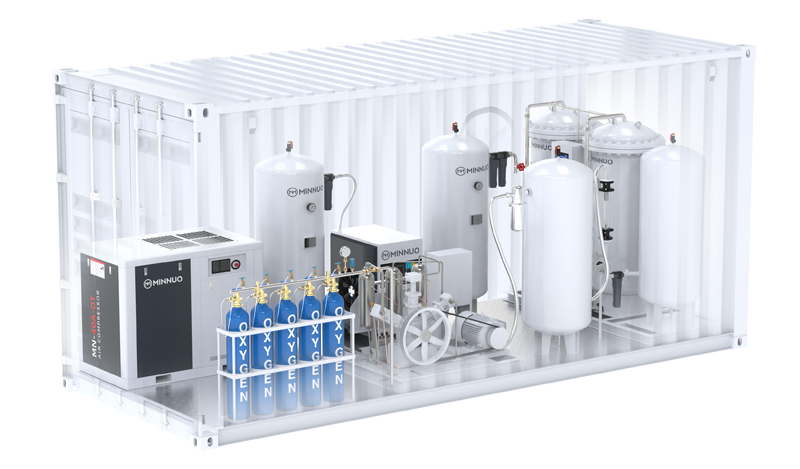
At MINNUO, we specialize in pharmaceutical nitrogen generation systems, from compact units for QC labs to large-scale plants for API manufacturing. All our systems are designed for GMP compliance, with complete validation packages and ongoing support. Contact us to discuss how on-site nitrogen can serve your pharmaceutical facility.

 sales2:+86 17506119168