
Investing in an on-site nitrogen generator is a strategic decision to gain control, predictability, and long-term cost savings. However, the path to a successful project is fraught with technical and commercial pitfalls that can transform this capital investment into a decade-long source of operational headaches and financial underperformance.
The difference between a thriving asset and a costly burden often lies in the purchasing process itself. Many buyers, focused on the immediate price tag and basic specifications, overlook critical details that dictate total cost of ownership and system reliability.
This guide outlines the five most common and expensive mistakes made when procuring an on-site nitrogen system. For each, we provide the actionable questions and strategies you need to secure a solution that meets your expectations for performance, cost, and reliability from day one.
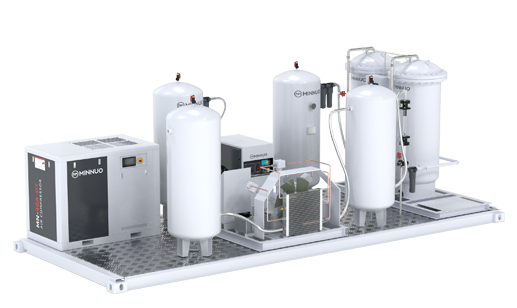
Mistake #1: Comparing Equipment Prices Instead of Total Cost of Ownership (TCO)
The Pitfall: Selecting a system based solely on the lowest capital expenditure (CAPEX) quote is the single most costly error. A cheaper initial design often achieves its price through less efficient components (compressors, dryers), lower-grade materials, or by omitting essential ancillary equipment. This leads to significantly higher electricity consumption, maintenance costs, and downtime over the system’s 10-15 year lifespan.
How to Get It Right: Demand a 10-Year TCO Analysis.
- Ask For: A detailed financial model that includes:
- Capital Costs: Equipment, installation, commissioning.
- Energy Costs: Based on your specific compressed air demand profile, not just a nameplate power rating. The model should simulate energy use across different production loads.
- Maintenance Costs: Projected annual costs for filters, desiccant, oil, and labor. Request a year-by-year breakdown for the first 10 years.
- Consumable Costs: For PSA systems, the cost and replacement cycle for Carbon Molecular Sieve (CMS).
- Key Question to Ask: “Can you provide a detailed TCO comparison between this proposed system and a higher-efficiency alternative, using our local electricity rate and projected maintenance costs?”
Mistake #2: Accepting Vague Performance Guarantees
The Pitfall: Relying on marketing brochures that state performance under ideal “standard conditions” (e.g., 20°C inlet air, 50% relative humidity). Your plant’s real-world conditions (summer heat, humid air, fluctuating demand) will differ, causing the system to miss its promised purity, flow rate, and energy efficiency.
How to Get It Right: Insist on Site-Specific, Contractual Performance Warrantees.
A robust performance guarantee must be specific, measurable, and testable. Ensure your purchase agreement includes a clause guaranteeing the following at your site’s actual operating conditions:
- Flow Rate: Guaranteed Nm³/hr at the required outlet pressure.
- Purity: Guaranteed nitrogen concentration (e.g., 99.5%) at the system outlet.
- Specific Energy Consumption: Guaranteed kilowatt-hours consumed per Nm³ of nitrogen produced under a defined load profile.
- Dew Point: Guaranteed pressure dew point after the dryer (if included).
Key Question to Ask: “What are the exact test procedures (referencing standards like ISO 8573) and measurement instruments you will use to verify these guarantees during commissioning, and what are the financial penalties if the system fails to meet them?”
Mistake #3: Ignoring the “System Boundary” and Hidden Scope
The Pitfall: The quoted system may only cover the nitrogen generator itself, leaving you responsible for critical—and expensive—peripheral components. This leads to budget overruns, project delays, and finger-pointing during commissioning.
How to Get It Right: Define and Map the Complete System.
Request a Piping and Instrumentation Diagram (P&ID) that clearly defines the “battery limits” (what the supplier provides). Use this to clarify responsibility for every component.
| Component | Clarifying Questions to Ask |
| Air Compressor | Is it included? Sized and specified for the nitrogen generator’s peak instantaneous demand, not just average? |
| Air Treatment | Are the required refrigerated or desiccant dryer, filters, and condensate drains included and properly sized? |
| Electrical & Controls | Does the price include the main power disconnect, control panel integration, and connection to your plant’s SCADA? |
| Piping & Installation | Is onsite installation labor included? Does the scope cover piping from the compressor to the generator and to your main header? |
| Start-Up & Training | Are commissioning, performance testing, and operator training included in the base price? |
Key Question to Ask: “Please provide a single-line diagram and P&ID marking the exact point of supply handover. Can you provide a fixed-price turnkey quote for everything within that boundary?”
Mistake #4: Overlooking the Impact of Feed Air Quality
The Pitfall: Assuming any clean, dry compressed air source will suffice. The performance and lifespan of a PSA nitrogen generator’s Carbon Molecular Sieve (CMS) are exquisitely sensitive to oil aerosols and water vapor. Supplying poor-quality air is the fastest way to degrade CMS, leading to collapsing purity, rising energy use, and a premature, costly sieve change (often tens of thousands of dollars).
How to Get It Right: Specify and Protect the Feed Air.
- Define the Standard: Require that the feed air meet at least ISO 8573-1 Class 2.4.2 (or stricter). This means a pressure dew point of ≤ -40°C (or lower) and an oil aerosol content ≤ 0.1 mg/m³.
- Demand the Right Equipment: Ensure the quote includes appropriately sized coalescing filters and a desiccant dryer to reliably achieve this air quality, even in your plant’s worst-case summer conditions.
- Protect Your Investment: Include a clause stating that the performance guarantee and CMS warranty are void if the contracted feed air quality is not continuously maintained, placing the responsibility for upstream air treatment squarely on the supplier.
Key Question to Ask: “What specific dryer and filter models are you including to guarantee ISO Class 2.4.2 air to the PSA inlet, and how does their performance degrade at our maximum inlet air temperature?”
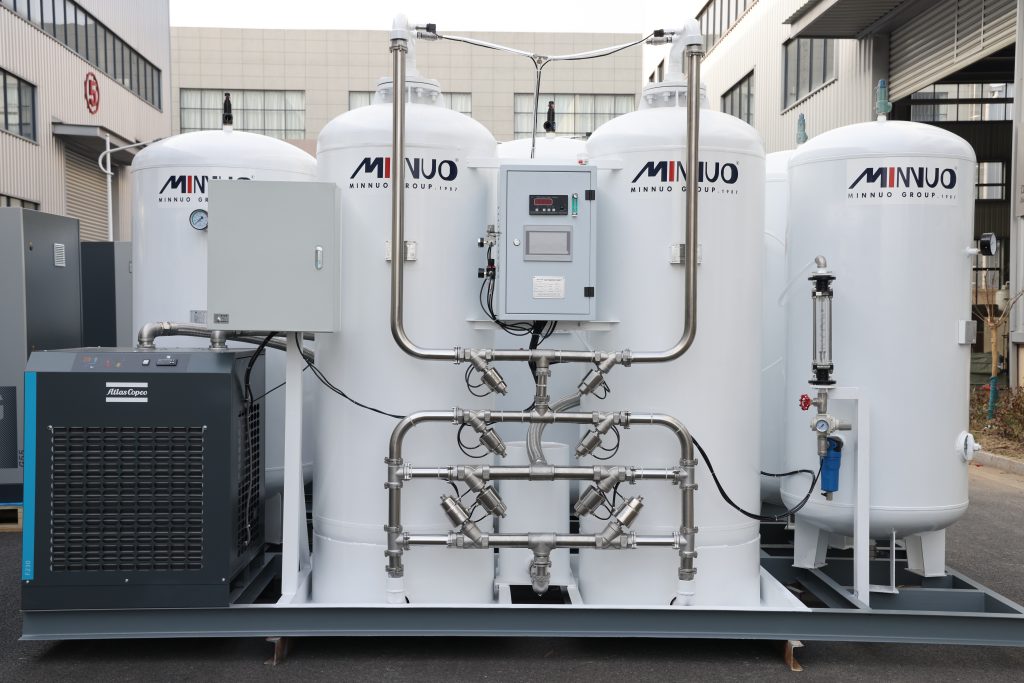
Mistake #5: Having No Plan for Long-Term Maintenance and Support
The Pitfall: Focusing only on the purchase and installation, without a clear, budgeted plan for ongoing maintenance. This leads to reactive “fix-it-when-it-breaks” approaches, which cause unplanned downtime and drastically shorten the life of major components.
How to Get It Right: Secure a Transparent Lifecycle Support Plan.
Treat maintenance not as an afterthought, but as a core part of the purchase. Before signing:
- Get a Maintenance Manual: Review the recommended preventive maintenance schedule—daily, weekly, yearly tasks.
- Price Critical Spares: Request a quote for a recommended first-year spare parts kit (filters, gaskets, sensors) and for major future consumables (like a full CMS change-out).
- Explore Service Contracts: Evaluate the cost and coverage of an annual service contract from the supplier. A fixed annual fee for planned maintenance and priority support often provides better value and predictability than time-and-material calls.
- Verify Technical Support: Confirm the availability of local technical support and typical response times for emergency breakdowns.
Key Question to Ask: *“Can you provide a 10-year projected maintenance and parts cost schedule, and what are the terms and cost of an extended warranty or comprehensive service agreement?”*
Conclusion: From Price Shopper to Informed Buyer
Purchasing an on-site nitrogen generator is not a transaction; it’s the beginning of a long-term partnership with a piece of critical plant infrastructure. The goal is not to find the cheapest seller, but to identify the most capable and reliable solution provider.
By avoiding these five mistakes—shifting focus from price to TCO, demanding robust guarantees, clarifying the full scope, protecting feed air quality, and planning for maintenance—you transform the purchasing process from a risk into a strategic investment.
The most effective tool you have is informed inquiry. Use the questions in this guide during your next supplier meeting. The quality and clarity of their answers will be the truest indicator of the quality and reliability of the system they will deliver.
For a confident investment, begin with a Needs Analysis and Specification Development. At MINNUO, we start by helping clients build a bullet-proof technical and commercial specification document that forms the basis for fair, comparable bids and a successful project outcome, ensuring your new nitrogen generator is an asset, not a liability.

 sales2:+86 17506119168