
Ozone is one of the most powerful oxidizing agents available for water treatment, effectively eliminating microbes, viruses, and trace pharmaceuticals without creating harmful disinfection by-products. But the performance and cost of your entire ozone system hinge on one critical question: Where does your oxygen come from?
For decades, the default choice has been delivered liquid oxygen (LOX). However, reliance on LOX ties your plant’s most critical process to a fragile supply chain—winter storms, driver shortages, or regional supplier outages can disrupt disinfection within hours—plus volatile pricing (LOX costs have risen 20-30% annually in some regions) and significant hidden costs. This leads water plant managers and engineers to ask a pivotal question: Is an on-site oxygen generator a truly reliable and cost-effective alternative for ozone generation?
The resounding answer from the industry is yes. Modern on-site oxygen generation has matured into a robust, economical, and strategically superior technology. This guide breaks down why it is not just a viable option, but often the optimal choice for forward-thinking water treatment facilities.
The Pillars of Reliability: Engineering Uninterrupted Ozone Supply
Reliability in water treatment is non-negotiable. A disruption in disinfection can have severe public health and regulatory consequences. On-site oxygen generators are designed to meet this demand through multiple layers of assurance.
2.1 Eliminate Supply Chain Vulnerabilities
Your oxygen supply is no longer vulnerable to weather, traffic, supplier shortages, or logistical delays. The “raw material”—ambient air—is always available on-site, making it the ultimate reliable oxygen source for ozone disinfection.
2.2 24/7/365 Continuous Operation
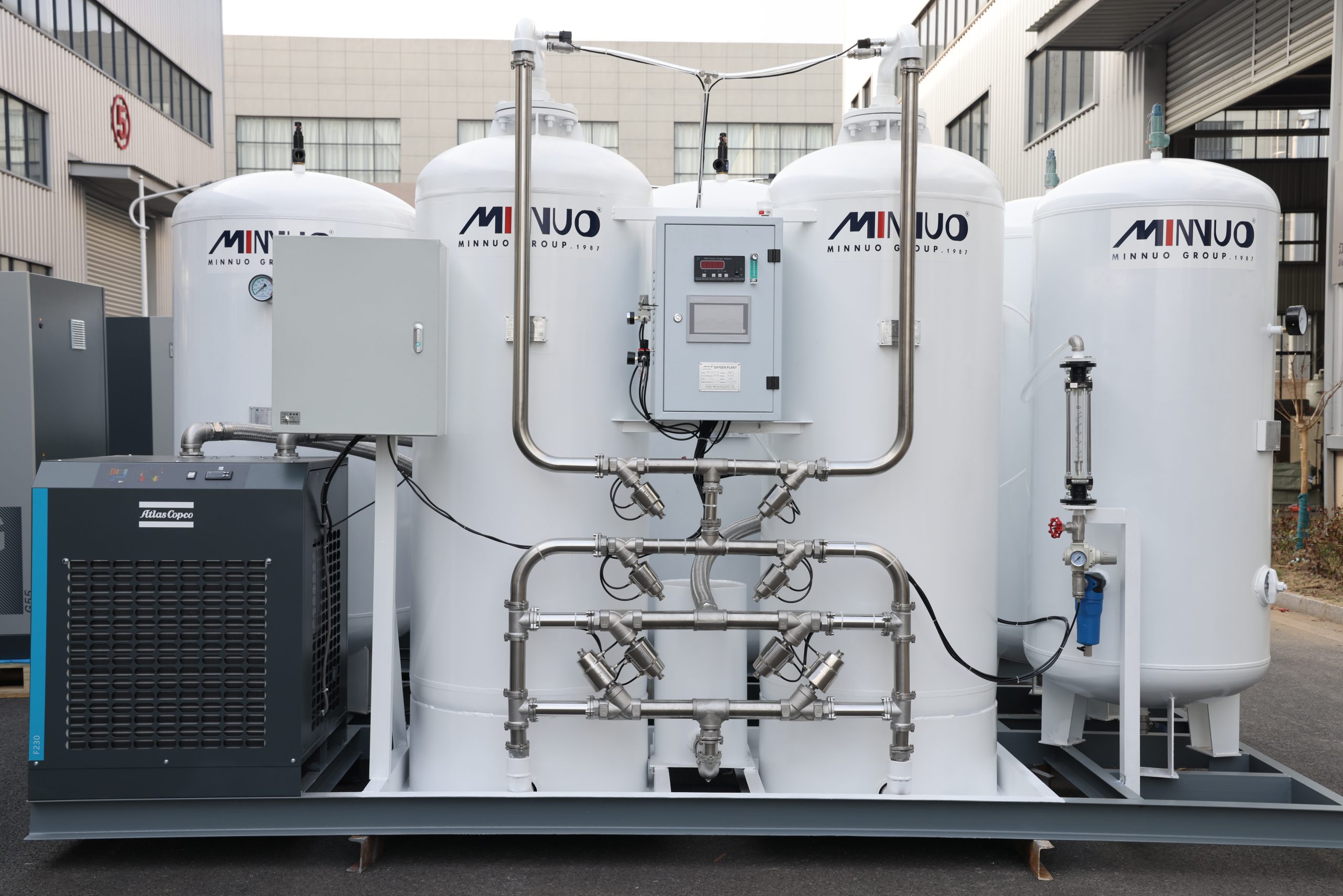
Industrial-grade PSA and VPSA oxygen generators are engineered for continuous operation. With fewer moving parts in the core separation process, they offer exceptional long-term stability, crucial for municipal water plants.
2.3 N+1 Redundancy & Modular Design
For mission-critical applications, systems can be designed with N+1 redundancy (an extra module on standby). This ensures that scheduled maintenance or an unexpected issue with one module does not halt your disinfection capabilities.
2.4 Consistent Purity & Flow
Modern control systems maintain oxygen purity (typically 90-95%) and flow at a stable level, which is crucial for optimizing ozone generator performance and maintaining consistent dissolved ozone levels.
The Cost-Effectiveness Equation: A Clear Financial Victory
While reliability is paramount, the economic case for on-site oxygen is equally compelling. The shift from an operational expenditure (OpEx) model to a capital expenditure (CapEx) model delivers profound savings.
1. Slashing the Direct Cost of Oxygen
The cost of on-site oxygen generation is primarily electricity, which is stable and predictable. This is typically 30-50% lower than the equivalent cost of purchased LOX.
2. Eliminating Hidden and Ancillary Costs
- Delivery Surcharges: Emergency deliveries, remote location fees, and fuel surcharges are eliminated.
- Evaporation Losses: The financial drain of “boil-off” from LOX storage tanks is reduced to zero.
- Tank Rental Fees: Monthly rental fees for LOX storage tanks are a thing of the past.
3. Superior Total Cost of Ownership (TCO)
A true financial analysis must consider Total Cost of Ownership over a 10-15 year lifespan.
| Cost Component | Liquid Oxygen (LOX) | On-Site Oxygen Generator |
| Oxygen Gas Cost | High & Volatile | Low & Stable (primarily electricity) |
| Transport & Delivery | Significant & Recurring | $0 |
| Evaporation Loss | 10-15% Annual Loss | $0 |
| Tank Rental | Recurring Fee | $0 |
| Maintenance | Low (on storage tank & vaporizer) | Moderate (predictable annual cost) |
| Capital Investment | Low (equipment only) † | High (but with strong ROI) |
† Note: The CapEx for LOX typically covers the storage tank and vaporizer unit only, and may not include significant site preparation and installation costs. The CapEx for an on-site generator is often a more comprehensive, all-inclusive price for a turnkey system.
ROI Calculation Example:
Let’s analyze a 10 MGD water plant spending $100,000 annually on LOX. A turnkey on-site oxygen generator solution requires a capital investment of $180,000.
The direct gas cost savings are 40%, or $40,000 per year. However, the true annual savings are greater when factoring in eliminated ancillary costs:
- Evaporation losses: $10,000/year
- Tank rental fees: $5,000/year
This brings the total annual savings to $55,000. The simple ROI is therefore:
$180,000 ÷ $55,000/year = 3.3 years.
It’s important to note that the on-site system does have an operating cost—primarily electricity—which is already factored into the net savings calculation above. The stability of this energy cost, compared to volatile LOX pricing, provides long-term budgetary predictability.
Technical Synergy & Technology Choice: Optimizing Ozone Water Treatment Systems
Beyond cost and reliability, on-site oxygen generators for ozone water treatment offer technical benefits that enhance the entire ozone disinfection process.
- Enhanced Ozone Production Efficiency: Ozone generators operating on high-purity oxygen (90-95% from an on-site generator) are 10-15% more efficient than those running on air. This means you can produce more ozone with the same amount of energy.
- Drier Feed Gas: Integrated air preparation delivers drier feed gas, which can extend the lifespan of your ozone generators by reducing corrosion.
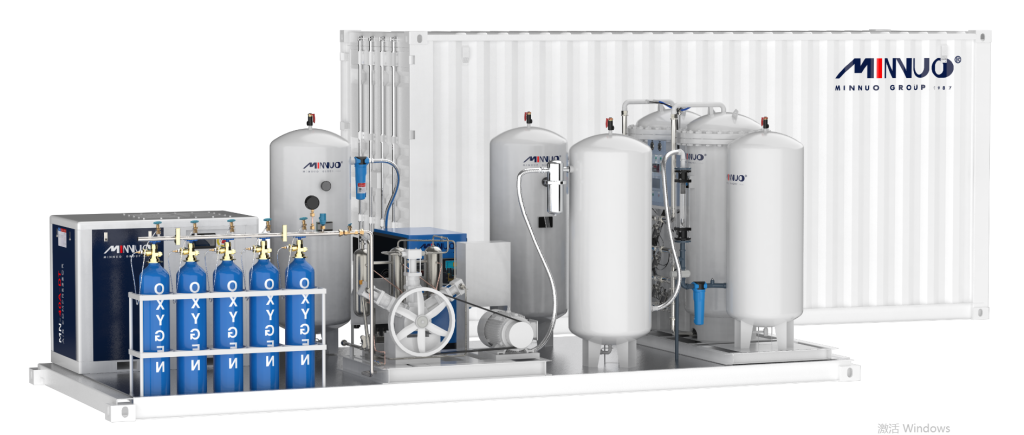
Beyond these system-level benefits, choosing the right on-site oxygen technology—PSA or VPSA—ensures your solution is tailored to your plant’s specific needs. Here’s a breakdown of the two most common technologies:
PSA vs VPSA: Which On-Site Oxygen Generator Is Right for Your Plant?
| Feature | PSA (Pressure Swing Adsorption) | VPSA (Vacuum Pressure Swing Adsorption) |
| Oxygen Purity | 93-95% | 90-95% |
| Capacity Range | Small to medium (1-20 tons/day) | Medium to large (10-100+ tons/day) |
| Energy Efficiency | Lower (higher kWh/ton of oxygen) | Higher (30-40% more energy-efficient) |
| Footprint | Compact (ideal for small plants) | Larger (better for municipal/industrial plants) |
| Best For | Small water plants (≤5 MGD), low oxygen demand | Municipal/industrial plants (≥5 MGD), high oxygen demand |
Case in Point & Addressing Common Concerns
Real-world results and transparent answers to common questions further validate on-site oxygen generators as the optimal choice for ozone water treatment. Let’s explore a proven success story and address the top concerns we hear from plant managers:
Case in Point: A Municipal Water Plant’s Success Story
- Challenge: A 10 MGD municipal water plant in the Midwest was spending over $120,000 annually on LOX for its ozone disinfection system, facing 15-20% annual price hikes and recurring winter delivery disruptions due to snowstorms.
- Solution: The plant installed a skid-mounted VPSA oxygen generator, sized to deliver 25 tons per day of 93% purity oxygen—perfectly matched to its ozone system’s demand.
- Results: Annual savings of over $65,000, eliminated all supply-related downtime, improved ozone generation efficiency by 12%, and achieved a full ROI in 22 months.
Addressing Common Concerns About On-Site Oxygen Generators:
- Concern 1: ‘The upfront cost is too high.’
- Reality: With 18-36 month ROI and 10-15 year lifespan, the total cost over time is far lower than LOX. Many suppliers offer flexible financing options.
- Concern 2: ‘Installation will disrupt plant operations.’
- Reality: Skid-mounted systems are pre-assembled. Most installations are completed in 1-2 weeks with minimal downtime.
- Concern 3: ‘We don’t have the technical team to maintain it.’
- Reality: Maintenance is minimal (annual filter changes, inspections) and most suppliers offer 24/7 technical support and annual maintenance contracts.
Policy Trend: The Strategic Shift to On-Site Supply for Ozone Generation
Many regions (e.g., EU, California, New York) are tightening regulations on carbon emissions and supply chain resilience. On-site oxygen generators for ozone water treatment reduce carbon footprints by eliminating LOX transportation (a major source of emissions) and align with ‘localized supply’ mandates for critical infrastructure. Investing in on-site generation not only saves money but also helps your plant comply with future regulatory requirements.
FAQ
Q1: What is the expected purity from an on-site oxygen generator, and is it sufficient for ozone disinfection in water treatment?
A1: VPSA systems typically produce 90-95% purity oxygen, while PSA systems can range from 93-95%. This is more than sufficient and highly desirable for ozone generation, directly improving efficiency.
Q2: How long does it take to install an on-site oxygen generator?
A2: Skid-mounted systems are pre-fabricated, so installation typically takes 1-2 weeks (including electrical/piping connections and commissioning), with minimal plant downtime.
Q3: Can on-site oxygen generators be scaled if our plant’s capacity grows?
A3: Yes—modular designs allow you to add additional units as your oxygen demand increases. This scalability makes on-site generation a long-term solution for growing plants.
Conclusion
The evidence is clear: modern on-site oxygen generation provides unparalleled supply security, dramatic long-term cost savings, and synergistic benefits for your ozone system. It is a proven and strategic investment for any water treatment facility looking to enhance its resilience and operational efficiency.
Making this transition requires a partner with proven expertise. At MINNUO, we specialize in engineering robust and cost-effective oxygen solutions tailored to the demanding requirements of the water treatment industry. Our systems are designed to deliver the reliability your plant depends on.
To explore how a customized on-site oxygen solution can benefit your plant, contact MINNUO’s team of experts for a complimentary, no-obligation assessment of your oxygen needs and potential savings.

 sales2:+86 17506119168