
A Paradigm Shift in oxygen generator for aquaculture
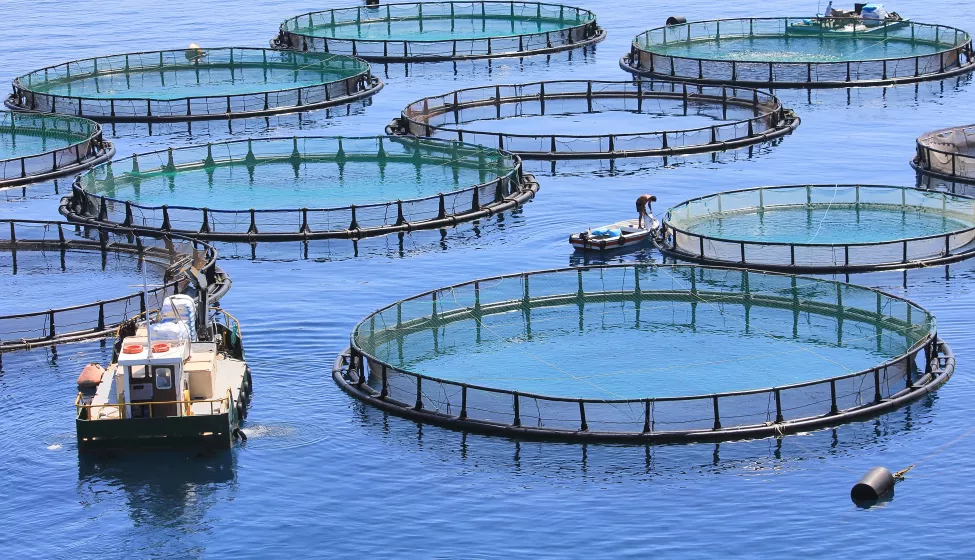
For the modern aquaculture industry, a stable, economical, and safe oxygen supply is critical to success. Practice has proven that on-site Oxygen Generators are a superior solution compared to traditional liquid oxygen, cylinders, or blowers. By separating oxygen directly from the air, they provide the most cost-effective, precisely controlled, and intrinsically safe oxygen source for fish and shrimp farming, significantly increasing stocking density, survival rates, and overall operational profitability.
In the pursuit of high-yield, efficient, and sustainable aquaculture, dissolved oxygen levels are the lifeline that determines success or failure. Traditional oxygenation methods, such as liquid oxygen, high-pressure cylinders, or simple airstone aeration, are often accompanied by high costs, unstable supply, or safety hazards.
According to the practical experience proven by leading global aquaculture research institutions and countless large-scale farms, adopting on-site oxygen generators for oxygenation has become an indispensable core technology for achieving controlled, intensive aquaculture. This article will delve into why an “Oxygen Generator for Aquaculture” is your wisest investment.
On-Site Oxygen Generators: A Disruptive Advantage Over Traditional Supply Methods
Compared to traditional oxygen supply methods, aquaculture-specific oxygen generators offer a fundamental paradigm shift. They do not store oxygen but produce high-purity oxygen on demand at your farm site.
Limitations of Traditional Oxygen Supply Methods
- Liquid Oxygen (LOX): Relies on periodic deliveries, risking supply chain disruptions; storage tanks have evaporation losses, leading to high long-term costs; requires large storage facilities with potential safety risks.
- High-Pressure Oxygen Cylinders: Suitable for very small scale or temporary use; frequent cylinder changes create significant logistical pressure and labor costs; the unit price of cylinder oxygen is extremely high, unsuitable for continuous large-scale use.
- Conventional Blowers/Aerators: Only increase air-water contact, with limited oxygenation efficiency (air contains only 21% oxygen), struggling to meet peak dissolved oxygen demands in high-density farming.
The Core Value Proposition of On-Site Oxygen Generators
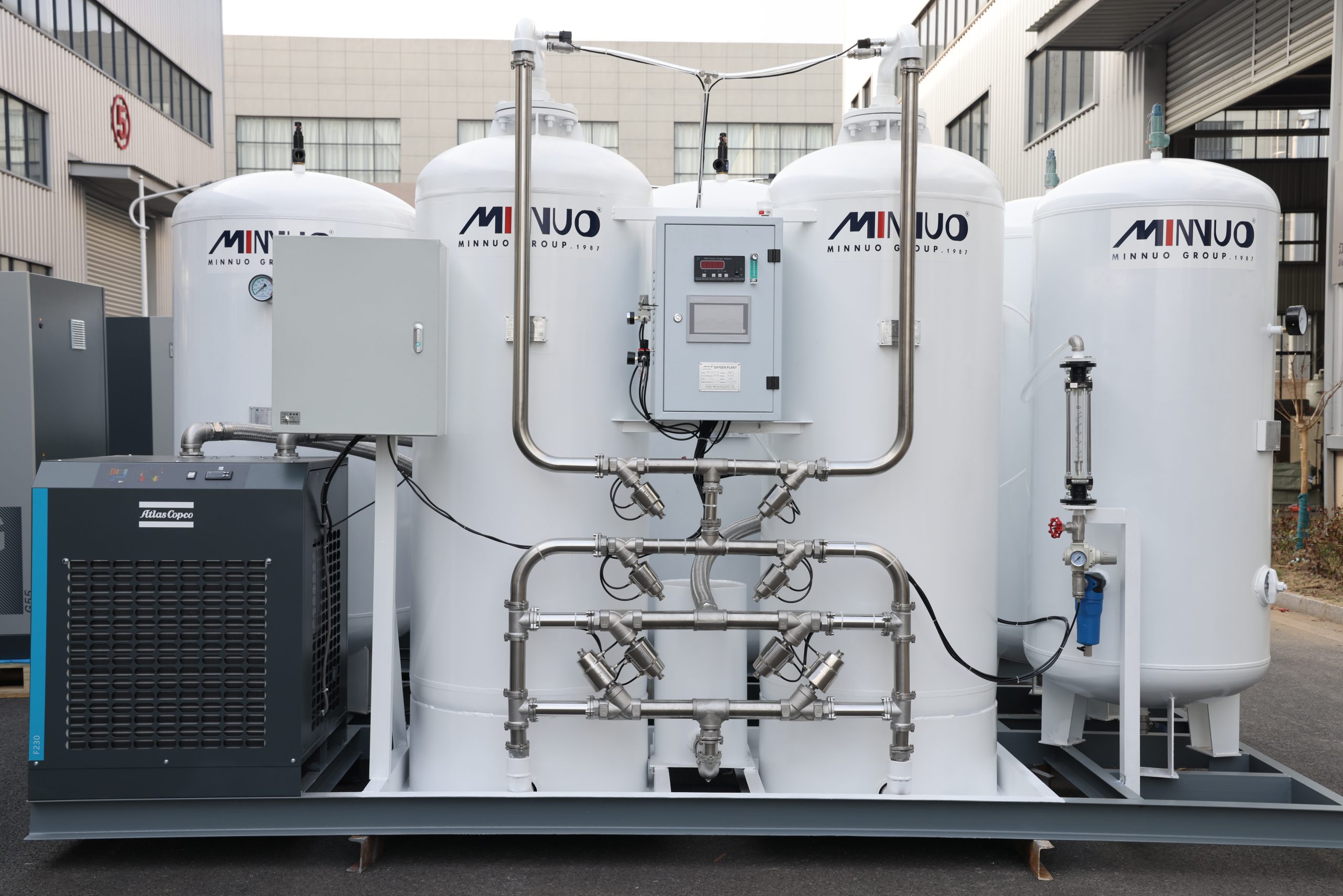
Our oxygen generators directly address all the above pain points. Using Pressure Swing Adsorption (PSA) technology, they continuously separate oxygen with purity over 93% from the inexhaustible air and deliver it directly via pipelines to culture tanks or oxygen cones. This means:
- Oxygen supply never runs out, with complete autonomous control.
- Eliminates logistics dependence and intermediary costs.
- Produces oxygen at a lower marginal cost, with enormous advantages, especially in high oxygen-demand scenarios.
Why Are Oxygen Generators the “Most Cost-Effective” Choice?
Cost-effectiveness is the primary concern for farmers. The economics of on-site oxygen generators are reflected in the total cost of ownership, not just the purchase price.
Operational Cost Comparative Analysis
| Cost Item | Liquid Oxygen (LOX) | High-Pressure Cylinders | On-Site Oxygen Generator |
| Oxygen Unit Cost | High, fluctuating with market prices and freight | Extremely High | Very Low (mainly electricity) |
| Logistics & Transport | Periodic deliveries, high cost | Frequent transport, loading/unloading, high cost & risk | Almost Zero (one-time installation) |
| Evaporation/Waste Loss | Yes (especially during idle periods) | No | No (on-demand production, immediate use) |
| Labor Management Cost | Medium (coordinating delivery, monitoring levels) | High (frequent changes, record-keeping) | Low (largely automated operation) |
| Long-Term Total Cost Trend | Continuous and uncontrollable operational expense | Grows exponentially with scale | Stable and predictable operating costs after initial investment |
Key Insight: For a medium to large-scale farm, the payback period for an on-site oxygen generator is typically 1-3 years. Thereafter, you benefit from oxygen costs far below market prices, with savings translating directly into profit.
Indirect Benefits from Efficiency Gains
- Increased Stocking Density: Stable, ample high-purity oxygen allows you to safely increase stocking density, yielding higher production within the same facilities.
- Improved Feed Conversion Ratio (FCR): Sufficient oxygen promotes fish metabolism and growth, lowering the feed coefficient.
- Reduced Mortality: Prevents hypoxic stress and surfacing events, providing reliable protection, especially during sudden weather changes or equipment failures.
Why Are Oxygen Generators the “Safest” Oxygen Source?
Safety is the lifeline of any farm. On-site oxygen generators enhance the safety of the entire oxygen supply system at its root.
Eliminating Storage Risks
- No High-Pressure Vessel Risk: Unlike cylinders filled with high-pressure oxygen, PSA generators operate at relatively lower internal pressures, with systems equipped with multiple safety valves and automatic pressure relief devices.
- No Cryogenic Hazards: Liquid oxygen storage is below $-183^{\circ}\text{C}$, posing risks of frostbite and material embrittlement. Oxygen generators operate at ambient temperature, eliminating this hazard.
- No Leakage/Explosion Risk: On-site production, minimal storage. Even in case of a pipeline leak, the system can shut down immediately, posing far less risk than a site storing tons of LOX or dozens of oxygen cylinders.
Operational Safety & Control
- Controllable Purity: Oxygen output purity can be adjusted according to the needs of different species (e.g., shrimp, salmon, grouper), avoiding potential stress from excessively high purity for some organisms.
- Automatic Monitoring & Alarms: Modern generators integrate PLC control systems, enabling real-time monitoring of oxygen purity, flow, pressure, and linkage with dissolved oxygen probes in culture tanks for automatic start/stop, preventing human error.
- Inherently Safe Design: Equipment is designed for humid, saline aquaculture environments using corrosion-resistant materials and sealed components.
FAQ: Deep Dive into Aquaculture Oxygen Generators
Five Key Questions About Aquaculture Oxygen Generators
Q1: What is the oxygen purity produced by the generator? Is it sufficient for aquaculture?
A: A typical PSA aquaculture oxygen generator produces 93%pm3% oxygen purity. This is significantly higher than the 21% oxygen in air and is entirely sufficient and efficient for all aquaculture applications, including hatcheries, nursery, and grow-out ponds. Higher purity (e.g., 99%) is not only unnecessary but also increases energy consumption.
Q2: Is the equipment very power-hungry? Is the operating noise loud?
A: Electricity is the main operating cost, but the savings compared to purchasing oxygen or LOX far exceed the electricity bill. Modern efficient models focus on energy-saving design. Regarding noise, the main unit operates at a sound level similar to a large air conditioner outdoor unit and can typically be installed in a separate equipment room, causing no disturbance to animals or staff.
Q3: What size oxygen generator do I need?
A: This depends on your total water volume, stocking density, species oxygen consumption rate, and target dissolved oxygen level. Our technical team will perform professional calculations based on your specific parameters (e.g., maximum biomass, water temperature) to recommend the most suitable model, avoiding over-sizing or under-supply.
Q4: Is maintenance complicated?
A: Daily maintenance is very simple, primarily involving regular replacement of the inlet air filter (to prevent dust clogging) and checking drainage devices. The core molecular sieve adsorbent typically lasts several years. We provide clear operation manuals and remote support.
Q5: What happens during a power outage?
A: This is a challenge for any electrical equipment. We recommend equipping critical farms with backup generators. Oxygen generators start quickly; once power is restored, they can resume operation immediately, buying valuable rescue time. In contrast, supply chains for externally delivered LOX are more vulnerable during severe weather.
Conclusion & Next Steps
Choosing an on-site oxygen generator is not just about purchasing a piece of equipment; it’s about building a reliable, independent, low-cost core life support system for your aquaculture operation. It represents a shift in thinking from “buying a consumable” to “investing in a productivity tool.”
Your Next Steps:
- Self-Assessment: Calculate your total spending on oxygen (LOX/cylinders) over the past year, including transport, rental, and labor management costs.
- Data Preparation: Gather specific data about your farm: number of ponds/tanks, water volume, current and planned stocking densities, main species cultured.
- Professional Consultation: Contact our aquaculture oxygenation solution specialists. We will provide you with a detailed Return on Investment analysis report and a customized system design proposal based on your data.
Start planning your on-site oxygen generation system today. Transform your oxygen cost into a controllable capital investment, laying a solid foundation for long-term profitability and risk resilience for your farm.
Source Statement
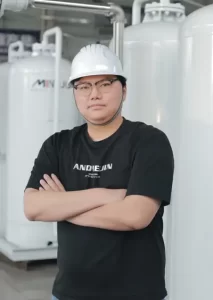
This article was authored by a Senior Aquaculture Systems Integration Engineer and Aquaculture Oxygen Solutions Consultant. The information is based on relevant research from the Global Aquaculture Alliance (GAA) and UN Food and Agriculture Organization (FAO) aquaculture reports, as well as the summary of practical experience and performance data from our team’s decade-long work designing and deploying on-site oxygen generation systems for over 200 large-scale shrimp and fish farms worldwide. Our recommendations aim to provide practical, reliable professional insights to help farmers make informed technological decisions.

 sales2:+86 17506119168