
For hospitals, clinics, and healthcare institutions with medical oxygen needs, the PSA (Pressure Swing Adsorption) oxygen plant has become a core piece of equipment for ensuring a stable, economical, and self-sufficient oxygen supply. A PSA medical oxygen plant is an on-site oxygen generation system that produces high-purity medical-grade oxygen directly from ambient air via molecular sieve technology. It provides a continuous, reliable supply of oxygen meeting pharmacopeia standards, fundamentally addressing the cost, logistical, and safety challenges associated with traditional oxygen cylinders or liquid oxygen supply.
How Does a PSA Medical Oxygen Plant Work? Demystifying the Core Technology
The PSA technology is the heart of the system. Its working principle is not chemical synthesis but physical adsorption separation, a clean and efficient process.
The Four-Step Cyclical Process
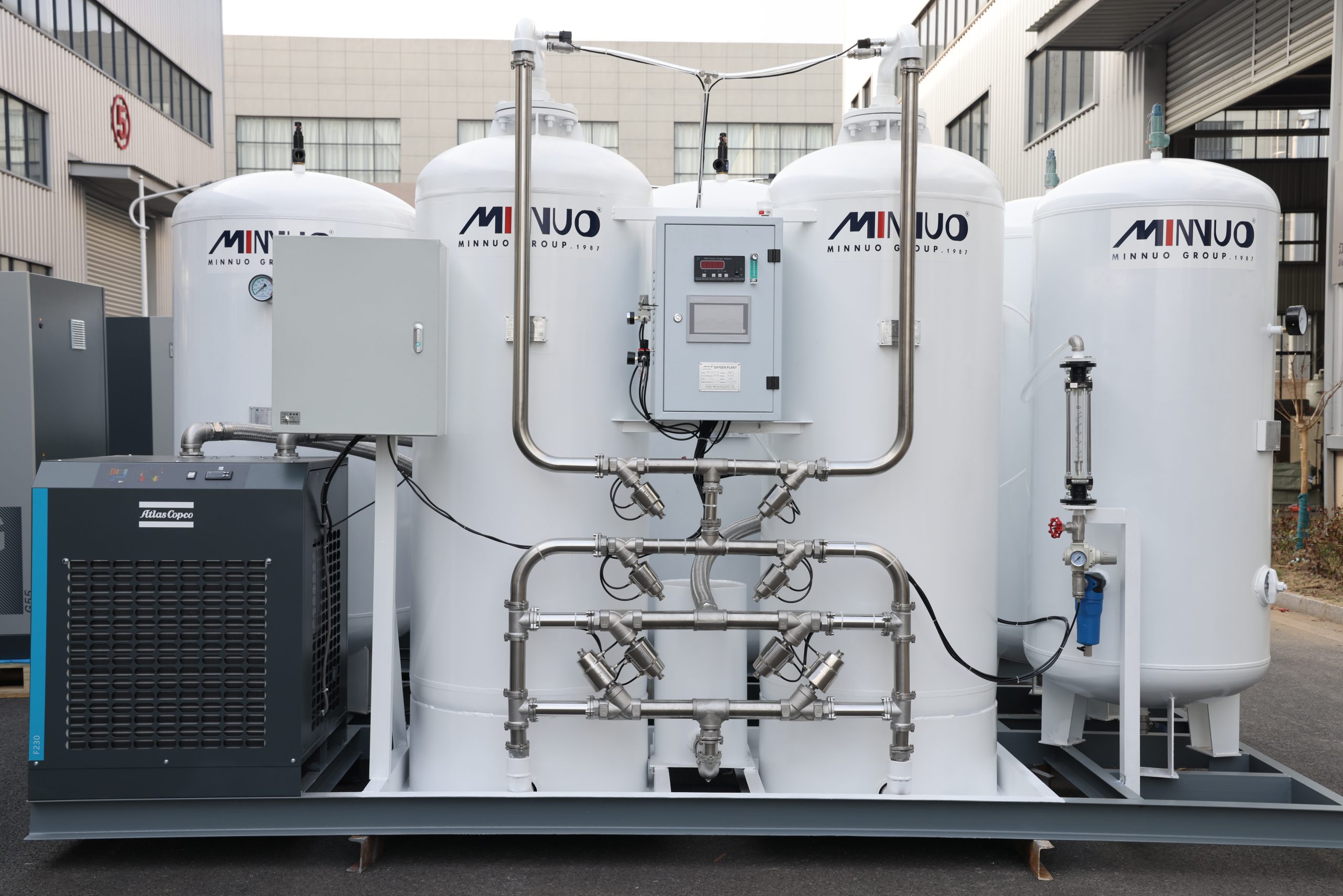
- Compression & Purification: Ambient air is compressed by an oil-free compressor and passed through cooling and filtration systems to remove moisture, oil, and particulates.
- Adsorption & Separation: The clean, compressed air enters an adsorber tower filled with Molecular Sieves . The sieve has a high affinity for adsorbing nitrogen, while oxygen molecules pass through, resulting in a stream of oxygen-enriched gas collected at the outlet.
- Depressurization & Desorption: When one adsorber tower becomes saturated, the system automatically switches to the other tower to continue production. Simultaneously, the saturated tower is rapidly depressurized to desorb and vent the trapped nitrogen, regenerating the molecular sieve.
- Pressure Stabilization & Storage: The produced oxygen (typically 93% $\pm$ 3% purity) is passed through a precision pressure regulating valve, stabilized, and then delivered to an oxygen buffer tank or directly into the hospital’s pipeline distribution system.
The entire process is automatically cycled by an intelligent controller, ensuring 24/7 uninterrupted oxygen production.
Comparison with Traditional Oxygen Supply Methods
| Feature | PSA Medical Oxygen Plant | Oxygen Cylinders | Liquid Oxygen (LOX) Tank |
| Supply Mode | On-site, on-demand production | External procurement, periodic delivery | External procurement, bulk storage |
| Operational Cost | Low (primarily electricity) | High (includes gas, transport, rental) | Moderate, but with evaporation losses |
| Safety | High (no large storage, moderate pressure) | Medium (high-pressure vessels, handling risks) | Medium (cryogenic, storage risks) |
| Supply Reliability | Very High (independent of external supply chain) | Dependent on logistics, can be disrupted | Dependent on refills, risk of disruption |
| Long-Term Economy | Excellent (ROI in 1-3 years) | Poor (ongoing expenditure) | Moderate |
Why Choose a PSA System? Four Core Benefits for Healthcare Institutions
Investing in a PSA medical oxygen plant yields strategic and multifaceted benefits.
1. Significant Reduction in Long-Term Operational Costs
According to research reports from the World Health Organization (WHO) and various regional health projects, for healthcare facilities with moderate to high daily consumption, the cost of oxygen from a PSA plant can be 60-80% lower compared to cylinders. Major savings come from eliminating ongoing cylinder rental, transportation, and manual handling management fees. Electricity is the main cost, but the Total Cost of Ownership (TCO) is highly advantageous.
2. Ensures Uninterrupted Oxygen Supply Security
Oxygen is a life-support resource, and supply interruption is unacceptable. A PSA system achieves “oxygen self-sufficiency,” completely freeing the institution from dependence on external suppliers and fragile logistics chains. This is of paramount importance for remote hospitals, disaster preparedness, and responding to public health emergencies (like the global oxygen crisis during the COVID-19 pandemic).
3. Enhances Operational Safety and Convenience
The system runs automatically, reducing the risks of leaks, impacts, and explosions associated with manual handling of high-pressure cylinders. Oxygen is delivered directly to the patient bedside via pipelines, allowing medical staff to simply operate flow meters, making workflows safer and more efficient.
4. Meets Stringent Medical Standards and Purity Requirements
Modern PSA medical oxygen plants are designed to strictly adhere to medical device regulations. The output oxygen purity is consistently between 90%-96%, complying with standards such as the Chinese Pharmacopoeia, United States Pharmacopeia (USP), or Indian Pharmacopoeia (IP) for medical oxygen. The system includes multiple monitoring and alarm devices to ensure oxygen quality is always up to standard.
Key Considerations and Frequently Asked Questions
Several key points must be clarified when planning and procuring a PSA medical oxygen plant.
Three Critical Factors to Assess Before Purchase
- Daily Oxygen Demand: Calculate the peak and average flow rates (liters per minute or cubic meters per hour) for all hospital departments (wards, ICU, operating theaters, emergency rooms). This is the basis for determining plant capacity (e.g., 5 N
/h, 10N
/h, 20 N
/h).
- Installation Space & Conditions: The plant requires a clean, well-ventilated room with a stable power supply (typically three-phase). Consider compressor noise and heat dissipation.
- Brand & Service: Choose a reliable supplier with medical device qualifications, offering comprehensive installation, training, maintenance, and spare parts services. The responsiveness of after-sales service is critical.
Frequently Asked Questions (FAQ)
Q1: Can a PSA plant achieve 99% oxygen purity?
A: The economical purity range for standard medical PSA plants is 90%-96%. This purity fully meets the vast majority of medical applications (e.g., respiratory support, anesthesia). Special applications requiring ultra-high purity above 99% (e.g., certain labs) typically require additional purification technologies, which are not necessary for routine medical scenarios.
Q2: Is the plant energy-intensive? Is it noisy?
A: The air compressor is the main power consumer, but compared to the total long-term cost of purchased oxygen, electricity expenses remain much lower. Modern silent oil-free compressors and acoustic enclosures can keep noise at acceptable levels (typically <75 \ dB), suitable for hospital environments.
Q3: What daily maintenance does the system require?
A: Routine maintenance mainly involves regular replacement of inlet air filters, checking drain valves, and logging operating parameters. Core components like molecular sieves can last several years. A comprehensive annual professional maintenance contract is key to ensuring long-term, stable operation.
Q4: What happens during a power outage?
A: This is a critical contingency plan. A backup power source, such as a diesel generator or UPS system, must be provided for the PSA plant to ensure uninterrupted oxygen supply to critical life-support areas during grid failure.
Q5: What is the main advantage of PSA compared to a liquid oxygen system?
A: The core advantages of PSA are operational autonomy and long-term cost control. It eliminates dependence on liquid oxygen tanker logistics and avoids the daily evaporation losses (“boil-off”) associated with LOX, making it significantly more economical over the long term.
Conclusion and Next Steps
For healthcare institutions seeking a reliable, economical, and safe oxygen supply, the PSA medical oxygen plant has evolved from an “option” to “strategic infrastructure.” It is not just a cost-control tool but a critical investment in enhancing healthcare service resilience and patient safety.
Your Next Steps:
- Internal Assessment: Convene clinical, facility management, and finance departments to quantify your institution’s current oxygen consumption and future growth projections.
- Market Research: Contact 3-4 reputable manufacturers or suppliers of PSA medical oxygen plants (e.g., minnuo group leading domestic medical device manufacturers) to obtain preliminary proposals and quotations tailored to your needs.
- Site Visits: Request suppliers to arrange visits to existing installations to discuss real-world operational experience and cost data with using hospitals.
- Plan Holistically: Plan and budget for equipment procurement, room modification, pipeline engineering, backup power, and maintenance services as one integrated project.
Source Statement
This article was authored by a senior consultant specializing in medical gas systems. The information is based on the latest research from the World Health Organization (WHO) guidelines on the production and distribution of medical oxygen, international medical gas system standards (e.g., ISO 7396-1), and the author’s professional practical experience in planning and implementing over 50 medical PSA oxygen plant projects for healthcare institutions across the Asia-Pacific region. All technical descriptions and comparative analyses are intended to provide objective, practical reference information. Specific decisions should be made in consultation with professional engineers and based on detailed project evaluation.


 sales2:+86 17506119168