
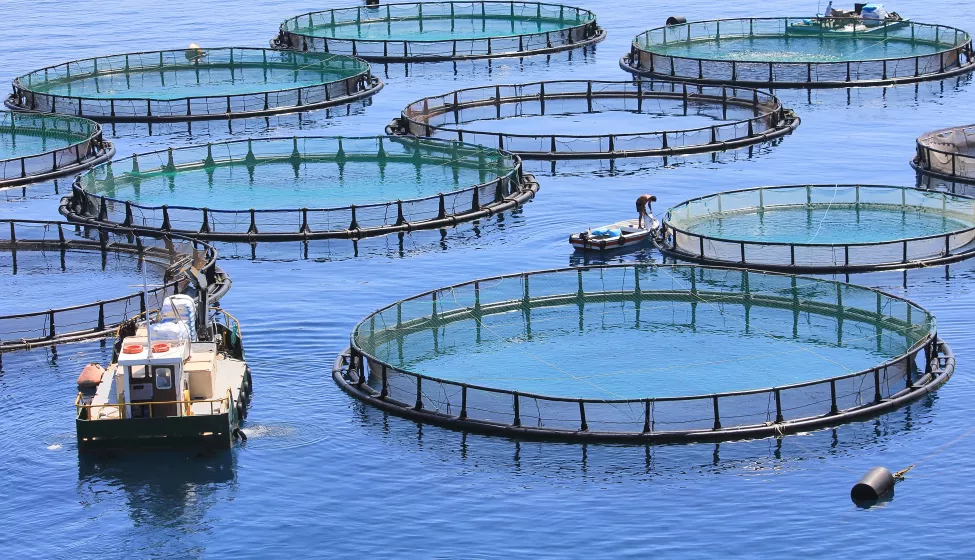
For aquaculture operations, oxygen is not just a utility—it’s the lifeline of your stock. Undersupply leads to stress, disease, and mortality, while oversizing your oxygen generation system wastes capital and energy.
Selecting the correct oxygen generator size is the most critical technical decision you’ll make. This guide provides a clear, step-by-step framework to calculate your farm’s precise oxygen demand and translate that into a generator specification, ensuring you invest in a system that is both adequate and efficient for RAS (Recirculating Aquaculture Systems), ponds, or hatcheries.
Core Principle: It’s About Oxygen Mass, Not Just Air Flow
First, a crucial distinction: Oxygen generators produce high-purity oxygen gas (90-95% O₂), not just aerated air (21% O₂). Therefore, your primary specification is Oxygen Output (in kg/hour or pounds/day), not the air flow into the generator.
Your calculation follows this logic:
Your Farm’s Total Oxygen Demand (kg/h) → Required Oxygen Generator Output (kg/h)
Step 1: Calculate Your Farm’s Total Oxygen Demand
You need to account for all oxygen-consuming elements in your system. Use this formula:
Total O₂ Demand (kg/h) = (Biomass O₂ Consumption) + (Nitrogen Biofilter Demand) + (Other Processes)
A. Biomass Oxygen Consumption
This is the largest factor. The consumption rate depends on species, size, water temperature, and feeding level.
Basic Formula:
Biomass O₂ (kg/h) = Total Biomass (kg) × Specific Oxygen Consumption Rate (kg O₂/kg fish/day) ÷ 24 h
Key Consumption Rates (Examples):
- Salmonids (Trout, Salmon): 0.2 – 0.35 kg O₂ / tonne fish / hour
- Tilapia: 0.15 – 0.25 kg O₂ / tonne fish / hour
- Shrimp: 0.05 – 0.15 kg O₂ / tonne biomass / hour
- Sea Bass/Bream: 0.18 – 0.3 kg O₂ / tonne fish / hour
Important: Consumption doubles for every 10°C rise in water temperature. Always use rates for your maximum operating temperature.
Calculation Example:
A 50-tonne tilapia tank at 28°C.
50 tonnes × 0.25 kg O₂/tonne/hour = 12.5 kg O₂/hour from biomass.
B. Nitrogen Biofilter Oxygen Demand (Critical for RAS)
In RAS, the biofilter converting ammonia consumes significant oxygen: ~4.6 kg of O₂ is required to oxidize 1 kg of ammonia-N.
Estimation Formula:
Biofilter O₂ Demand (kg/h) ≈ Daily Feed (kg) × Protein Content (%) × 0.09
(Assumes 16% of feed protein is excreted as ammonia, and full nitrification)
Example: 500 kg feed/day with 40% protein.
500 kg × 0.40 × 0.09 = 18 kg O₂/day ≈ 0.75 kg O₂/hour
C. Other Processes & Safety Factor
- Ozone Reactor Demand (if used): Add 0.5-1 kg O₂/hour per reactor.
- Hatchery/Larval Tanks: Can have very high specific demands.
- Safety Factor: Always add a 15-25% design margin to account for peak feeding, future stock increase, or filter load spikes.
Total Demand Example (Tilapia RAS):
- Biomass: 12.5 kg O₂/h
- Biofilter: 0.75 kg O₂/h
- Other/Safety (20%): (12.5+0.75)×0.2 = 2.65 kg O₂/h
- TOTAL O₂ DEMAND: ≈ 15.9 kg O₂/hour
Step 2: Match Demand to Oxygen Generator Specifications
Now, translate your 15.9 kg O₂/h demand into a generator model.
Key Generator Specs to Evaluate:
- Oxygen Output Purity (90-95%): Standard for PSA generators.
- Outlet Pressure (4-6 bar common): Must be sufficient to overcome water depth and pipe losses to your dissolution system (e.g., venturi, U-tubes).
- Power Rating: A generator producing ~20 kg O₂/h typically requires a 25-35 kW power supply.
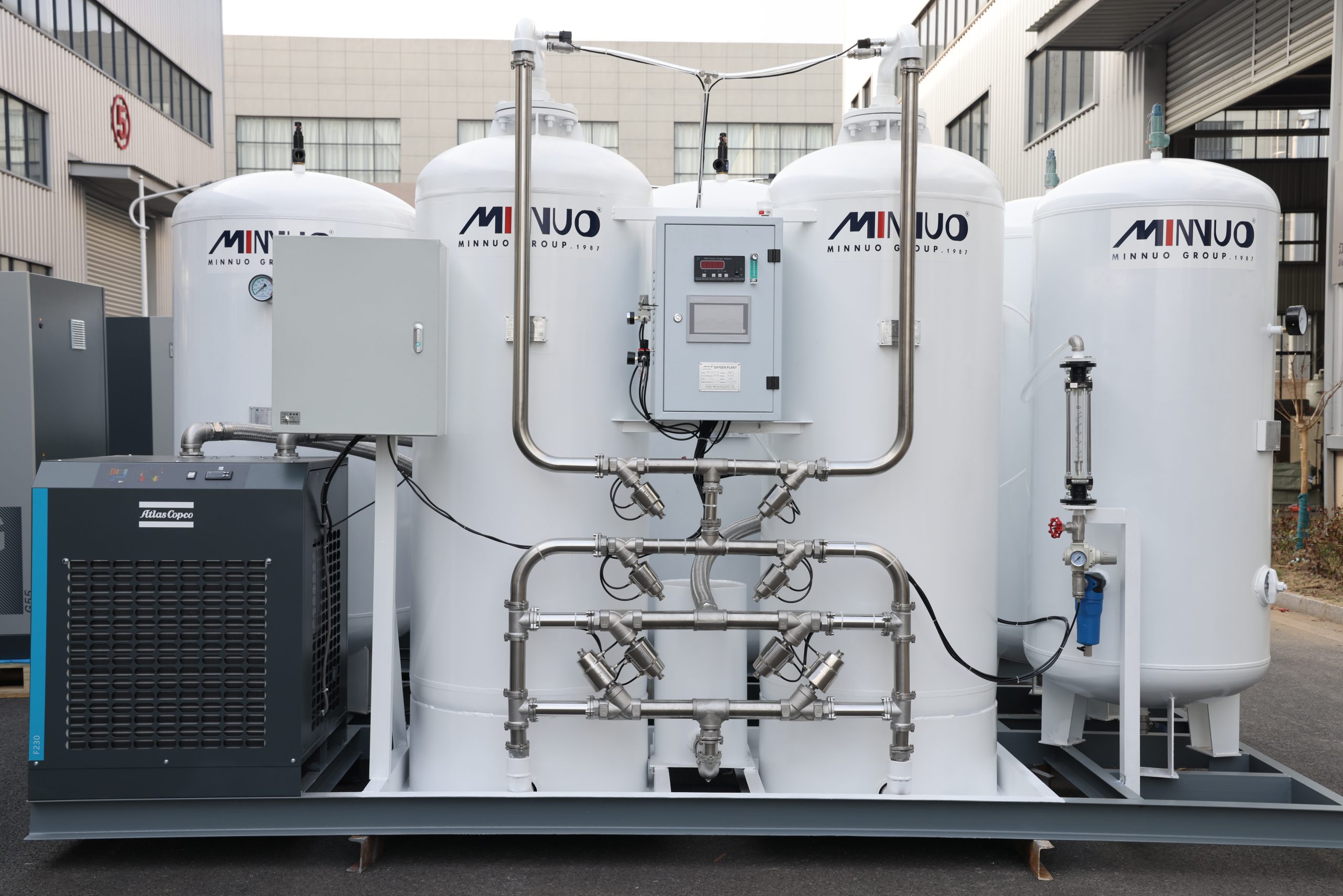
Critical Sizing Insight: Generators are often rated at specific inlet conditions. A PSA oxygen generator rated at 20 kg/h is designed to deliver that output continuously at the stated purity, provided it has a stable feed air supply. Generators equipped with high-efficiency Zeolite molecular sieves typically have lower purge losses, meaning a greater proportion of the compressed air is converted into usable O₂. This higher efficiency can, in some cases, reduce the required capacity of the supporting air compressor.
Step 3: Don’t Forget the Dissolution System & Compressed Air Supply
Your oxygen generator is only part of the system.
- Dissolution Efficiency: You need efficient oxygen injection (e.g., low-pressure venturis, U-tubes, or down-flow contactors). If your injector is only 60% efficient, you must produce 15.9 kg/h ÷ 0.6 = 26.5 kg/h of gaseous O₂ to get the required dissolved amount.
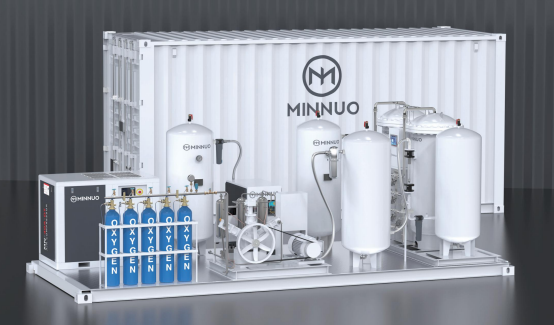
- Compressed Air Supply: The PSA generator itself requires clean, dry compressed air. The air flow needed is roughly 8-10 times the oxygen output (e.g., for 20 kg/h O₂, you need ~160-200 Nm³/h of air). This is a major capex and opex factor.
System Comparison Table for Different Farm Scales
| Farm Type | Approx. Biomass | Typical O₂ Demand (kg/h) | Recommended O₂ Gen. Size | Key Considerations |
| Hatchery/Nursery | 1-5 tonnes | 0.5 – 3 kg/h | 5 – 10 kg/h unit | Purity stability is critical for larvae. Often uses pure O₂ in oxygenation cones. |
| Medium RAS (Tilapia) | 50 tonnes | 12 – 20 kg/h | 20 – 30 kg/h unit | Must account for heavy biofilter load. Requires robust dissolution (U-tubes). |
| Large Pond Supplementation | 100+ tonnes | 5 – 15 kg/h (peak) | 10 – 20 kg/h unit with storage | Used for nighttime/drought stress. Liquid O₂ or generator with oxygen storage tank common. |
| Coldwater RAS (Trout) | 30 tonnes | 15 – 25 kg/h | 25 – 40 kg/h unit | High biomass O₂ demand due to species and cold, oxygen-rich water target. |
FAQ: Aquaculture Oxygen Generator Sizing
Q1: What’s the main difference between an oxygen generator and an aerator?
A1: An aerator mixes air (21% O₂) into water, limited by saturation levels. An oxygen generator produces 90-95% pure O₂ gas, allowing you to achieve supersaturation and deliver 5x more oxygen per volume of gas, which is essential for high-density systems.
Q2: Can I use one generator for multiple, separate tanks?
A2: Yes, with a proper manifold and flow control system. You must ensure the generator’s total output meets the sum of peak demands from all tanks simultaneously. A central generator with a distribution loop is common in large facilities.
Q3: How do water salinity and altitude affect my sizing?
A3: Saline water holds ~20% less oxygen than freshwater. High altitude locations have lower atmospheric pressure, reducing the driving force for oxygen dissolution. In both cases, you likely need to increase your calculated O₂ demand by 10-25% to compensate.
Q4: Should I include an oxygen storage tank?
A4: Strongly recommended for most farms. A storage tank (a buffer vessel for gas or a liquid oxygen dewar) allows you to:
- Run the generator at constant, optimal efficiency 24/7.
- Handle short-term peak demands that exceed the generator’s instantaneous output.
- Provide a critical safety backup during power or generator maintenance outages.
Conclusion: Precision Sizing Secures Stock and Investment
Sizing an aquaculture oxygen generator is a foundational engineering task. An undersized system risks your stock during critical periods, while an oversized system burdens you with unnecessary capital and operating costs.
By methodically calculating your biomass and biofilter oxygen demand, adding a prudent safety margin, and accounting for dissolution efficiency, you can specify a system that delivers reliability and value.
For operations where margins are tight and risk is high, a professional audit is invaluable. At MINNUO, our aquaculture specialists can review your stocking plans, system design, and operational goals to recommend a perfectly sized and integrated oxygen generation solution—including generator, air supply, and dissolution technology—ensuring your oxygen foundation supports growth and profitability.

 sales2:+86 17506119168