
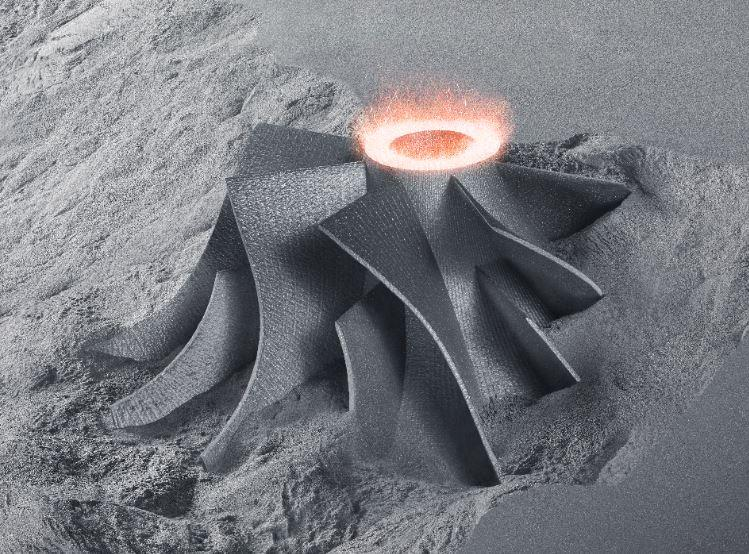
Metal additive manufacturing builds components layer by layer from powdered metal. But at the temperatures required to melt titanium, aluminum, or stainless steel—typically 1,200°C to 1,900°C —these metals react violently with oxygen. A single oxygen molecule contacting molten metal forms an oxide inclusion that becomes a crack initiation site, a porosity defect, or a stress concentration point. The inert atmosphere that prevents these reactions is not optional—it is fundamental to part integrity. PSA nitrogen generation provides the continuous, high-purity inert gas supply that metal additive manufacturing demands.
I. Why Metal Additive Manufacturing Requires Inert Atmosphere
The physics of powder-bed fusion and directed energy deposition make oxygen exclusion essential.
1. The Oxidation Problem at Melting Temperature
| Metal | Melting Point | Reaction with Oxygen at Melt Temperature |
| Titanium (Ti-6Al-4V) | 1,660°C | Ignites in air; forms brittle alpha-case layer |
| Aluminum (AlSi10Mg) | 570-630°C | Rapid oxidation; oxide inclusions |
| Stainless steel (316L) | 1,370-1,400°C | Chromium oxide formation; carbon burn-out |
| Inconel 718 | 1,260-1,336°C | Selective oxidation of alloying elements |
| Maraging steel | 1,410-1,450°C | Decarburization; oxide scale |
Even trace oxygen concentrations produce measurable degradation in mechanical properties. Titanium alloys are particularly sensitive—oxygen levels above 500 ppm in the build chamber produce alpha-case embrittlement that can render parts unusable.
2. Beyond Oxidation: Moisture and Nitrogen Pickup
| Contaminant | Effect on Process | Effect on Part |
| Oxygen | Melt pool oxidation, spatter | Reduced fatigue life, porosity, discoloration |
| Moisture | Hydrogen porosity, unstable melt pool | Hydrogen embrittlement, lack of fusion |
| Excess nitrogen | Nitride formation in reactive metals | Embrittlement in titanium, altered properties |
3. Industry Standards and Specifications
| Standard | Oxygen Limit (Build Chamber) | Application |
| ASTM F2924 (Ti-6Al-4V) | <1,000 ppm O₂ | Titanium PBF-LB |
| ASTM F3301 (Inconel 718) | <1,000 ppm O₂ | Nickel alloy PBF-LB |
| ASTM F3184 (316L) | <1,000-2,000 ppm O₂ | Stainless steel PBF-LB |
| Typical aerospace requirement | <500 ppm O₂ | Critical rotating components |
II. PSA Nitrogen Purity Requirements by Material
Different materials demand different nitrogen purity levels, creating distinct nitrogen supply requirements.
1. Titanium and Titanium Alloys
Titanium is the most demanding common AM material for atmosphere control.
Challenge: Titanium dissolves both oxygen and nitrogen at elevated temperatures. Above 500°C, titanium absorbs oxygen, forming a hard, brittle surface layer (alpha-case). Above 800°C, it absorbs nitrogen, forming titanium nitride inclusions.
| Parameter | Requirement |
| Chamber oxygen | <500 ppm (0.05%) for critical parts; <1,000 ppm general |
| Nitrogen purity required | 99.9-99.95% minimum |
| Dew point | -60°F or lower |
| Typical PSA configuration | High-purity option (99.9%+) or post-purification |
2. Aluminum Alloys
Aluminum forms tenacious oxides that impede fusion between layers.
Challenge: Aluminum oxide (Al₂O₃) melts at 2,072°C—far above aluminum’s processing temperature. Oxide skins on the melt pool prevent proper interlayer bonding.
| Parameter | Requirement |
| Chamber oxygen | <1,000 ppm (0.1%) typical |
| Nitrogen purity required | 99.5-99.9% |
| Dew point | -40°F or lower |
| Typical PSA configuration | Standard PSA (99.5%+) |
3. Stainless Steels and Tool Steels
These materials tolerate higher oxygen levels than reactive metals.
Challenge: Chromium and other alloying elements oxidize preferentially at melt temperatures, causing surface discoloration and potential loss of corrosion resistance.
| Parameter | Requirement |
| Chamber oxygen | <2,000 ppm (0.2%) for 316L; <1,000 ppm for maraging |
| Nitrogen purity required | 99-99.5% |
| Dew point | -40°F |
| Typical PSA configuration | Standard PSA (99-99.5%) |
4. Nickel Superalloys
Inconel and similar alloys demand tight atmosphere control to preserve mechanical properties.
Challenge: Selective oxidation of aluminum, titanium, and niobium at grain boundaries degrades creep and fatigue properties.
| Parameter | Requirement |
| Chamber oxygen | <500-1,000 ppm |
| Nitrogen purity required | 99.5-99.9% |
| Dew point | -60°F |
| Typical PSA configuration | High-purity PSA or standard PSA with polishing |
5. Material-Specific Purity Summary
| Material | PSA Purity | Chamber O₂ Target | Dew Point |
| Titanium alloys | 99.9%+ | <500 ppm | -60°F |
| Aluminum alloys | 99.5%+ | <1,000 ppm | -40°F |
| Stainless steel 316L | 99%+ | <1,000-2,000 ppm | -40°F |
| Maraging steel | 99.5%+ | <1,000 ppm | -40°F |
| Inconel 718 | 99.9%+ | <500-1,000 ppm | -60°F |
III. PSA Nitrogen System Configuration for AM Applications
On-site PSA nitrogen generation for additive manufacturing requires specific system features beyond standard industrial configurations.
1. Required Nitrogen Purity Tier Selection
| PSA Configuration | Achievable Purity | Suitable Materials |
| Standard PSA | 99-99.5% | Stainless steels, aluminum, tool steels |
| High-purity PSA | 99.5-99.9% | Titanium, Inconel, maraging steel |
| PSA + post-purification | 99.95-99.99% | Critical titanium aerospace parts |
| PSA + catalytic oxygen removal | 99.999%+ | Specialty reactive metals |
2. Air Treatment Requirements for AM-Grade Nitrogen
Feed air quality directly determines achievable nitrogen purity and PSA system reliability.
| Treatment Stage | Specification | Purpose |
| Coalescing filter | 0.01 micron | Remove oil aerosol and sub-micron particles |
| Activated carbon tower | Residual oil vapor <0.003 mg/m³ | Protect CMS from oil poisoning |
| Desiccant dryer | -40°F or -60°F dew point | Prevent moisture degradation of CMS |
| Final particulate filter | 1 micron | Capture desiccant fines |
3. Buffer Storage and Supply Stability
AM builds last hours to days. Interruption of nitrogen supply mid-build typically results in part rejection.
| Component | Recommendation |
| Nitrogen buffer tank | Minimum 15-30 minutes of peak flow |
| Dew point monitoring | Continuous with alarm at -20°F |
| Oxygen monitoring | Continuous at PSA outlet and build chamber |
| Backup nitrogen supply | Liquid nitrogen or high-pressure cylinder manifold for critical builds |
4. Flow Rate Sizing for AM Facilities
| AM Machine Type | Typical N₂ Flow Rate |
| Single laser PBF-LB | 15-30 Nm³/hr during purging; 5-10 Nm³/hr during build |
| Multi-laser PBF-LB | 30-60 Nm³/hr during purging; 15-30 Nm³/hr during build |
| Large-format PBF-LB | 60-120 Nm³/hr during purging; 30-50 Nm³/hr during build |
Flow is highest during initial chamber purge and lowest during steady-state build. Size the PSA system for peak sustained demand —typically the build phase for multiple machines operating simultaneously.
IV. Integration with Additive Manufacturing Systems
PSA nitrogen generation must interface seamlessly with AM machine requirements.
1. Nitrogen Delivery to AM Machines
| Delivery Method | Advantage | Consideration |
| Dedicated line per machine | Simple control; no cross-contamination | Higher piping cost |
| Common header with individual regulators | Lower cost; centralized monitoring | Flow disturbance when machines start/stop |
| Ring main distribution | Pressure stability; redundancy | Highest installation cost |
2. Oxygen Monitoring and Control
Continuous oxygen measurement provides the ultimate verification of atmosphere quality.
Sensor placement:
- PSA nitrogen outlet (verify generator performance)
- Buffer tank outlet (verify storage integrity)
- AM machine chamber or supply line (verify delivery purity)
Alarm strategy:
- Early warning: Chamber O₂ exceeds 50% of specification limit
- Action: Chamber O₂ exceeds 75% of specification limit—investigate and pause build if needed
- Build abort: Chamber O₂ exceeds specification limit—nitrogen supply failure or chamber leak
3. Purging Strategy Integration
AM machines purge their build chambers before and during operation. PSA nitrogen must meet both peak purge flow and steady-state build flow.
| Build Phase | Nitrogen Demand | Duration |
| Initial chamber purge | Maximum flow | 5-15 minutes |
| Preheating and conditioning | Moderate flow | 10-30 minutes |
| Build | Continuous steady flow | Hours to days |
| Cool-down | Reduced flow | 30-60 minutes |
4. Multiple Machine Installations
Facilities operating multiple AM machines benefit from a centralized nitrogen system with individual machine flow control. Size the generator for simultaneous peak demand (if all machines may be in initial purge simultaneously) or maximum sustained demand (if purge sequencing prevents overlap).
V. Quality Assurance and Documentation
Aerospace, medical, and automotive AM applications require documented atmosphere control.
1. Continuous Monitoring Records
| Parameter | Recording Frequency | Retention Period |
| PSA outlet purity | Continuous (1-minute intervals) | Duration of build + archive |
| Chamber oxygen | Continuous during build | Per part record |
| Nitrogen dew point | Continuous or per shift | Duration of build |
| PSA maintenance events | Date-stamped | Equipment life |
2. Part Traceability
For critical applications, atmosphere data links to individual part serial numbers, providing evidence that oxygen and moisture remained within specification throughout the build.
3. Preventive Maintenance Documentation
Auditors expect documented maintenance supporting atmosphere control:
- PSA desiccant and filter change records
- Oxygen sensor calibration certificates
- Nitrogen purity verification reports
FAQ
Q1: Can I use liquid nitrogen instead of PSA for AM applications?
A1: Yes. Liquid nitrogen provides 99.998%+ purity and is commonly used for AM. However, liquid nitrogen costs 3-5 times more per cubic meter than PSA-generated nitrogen. For facilities operating multiple AM machines continuously, PSA typically achieves payback within 18-24 months.
Q2: What happens if nitrogen purity drops during a build?
A2: The consequence depends on material and the extent of purity loss. Titanium parts are most sensitive—even brief oxygen excursions can produce alpha-case that requires chemical milling to remove, or may cause part rejection. Stainless steel parts tolerate brief, minor excursions better but may show discoloration or reduced corrosion resistance.
Q3: How often should PSA nitrogen purity be verified for AM?
A3: Continuous monitoring with an oxygen analyzer is standard for production AM. Independent verification with a calibrated portable analyzer is recommended monthly or per quality system requirements. Analyzer calibration should follow manufacturer intervals—typically semi-annually.
Q4: Is PSA nitrogen compatible with all AM machine brands?
A4: Yes. Most AM machine manufacturers specify required nitrogen purity and pressure at the machine inlet. As long as the PSA system delivers nitrogen meeting these specifications, compatibility is assured. Verify your specific machine’s inlet pressure requirement—some require 7-10 bar, achievable with standard PSA or a booster.
Q5: What size PSA nitrogen generator do I need for a small AM facility?
A5: A facility with one or two single-laser PBF-LB machines typically requires 15-30 Nm³/hr nitrogen generation capacity. This supports initial purging and continuous build atmosphere for both machines with reasonable margin. Include buffer storage sized for peak purge demand.
Q6: Does the PSA nitrogen dew point matter for AM?
A6: Yes. Moisture in the build chamber contributes to hydrogen porosity in aluminum and titanium alloys. It can also condense on optical components when chamber temperature changes. Maintain nitrogen dew point at -40°F or lower, with -60°F preferred for titanium and critical applications.
Conclusion
PSA nitrogen generation provides the continuous, high-purity inert atmosphere essential for metal additive manufacturing. Material-specific purity requirements—from 99% for stainless steels to 99.9%+ for titanium alloys—determine the appropriate PSA configuration. Proper system integration includes feed air treatment, buffer storage, oxygen monitoring, and backup supply for critical builds. Documented atmosphere control supports the quality assurance requirements of aerospace, medical, and automotive AM production.
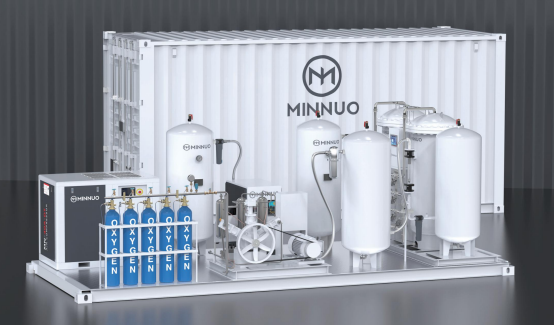
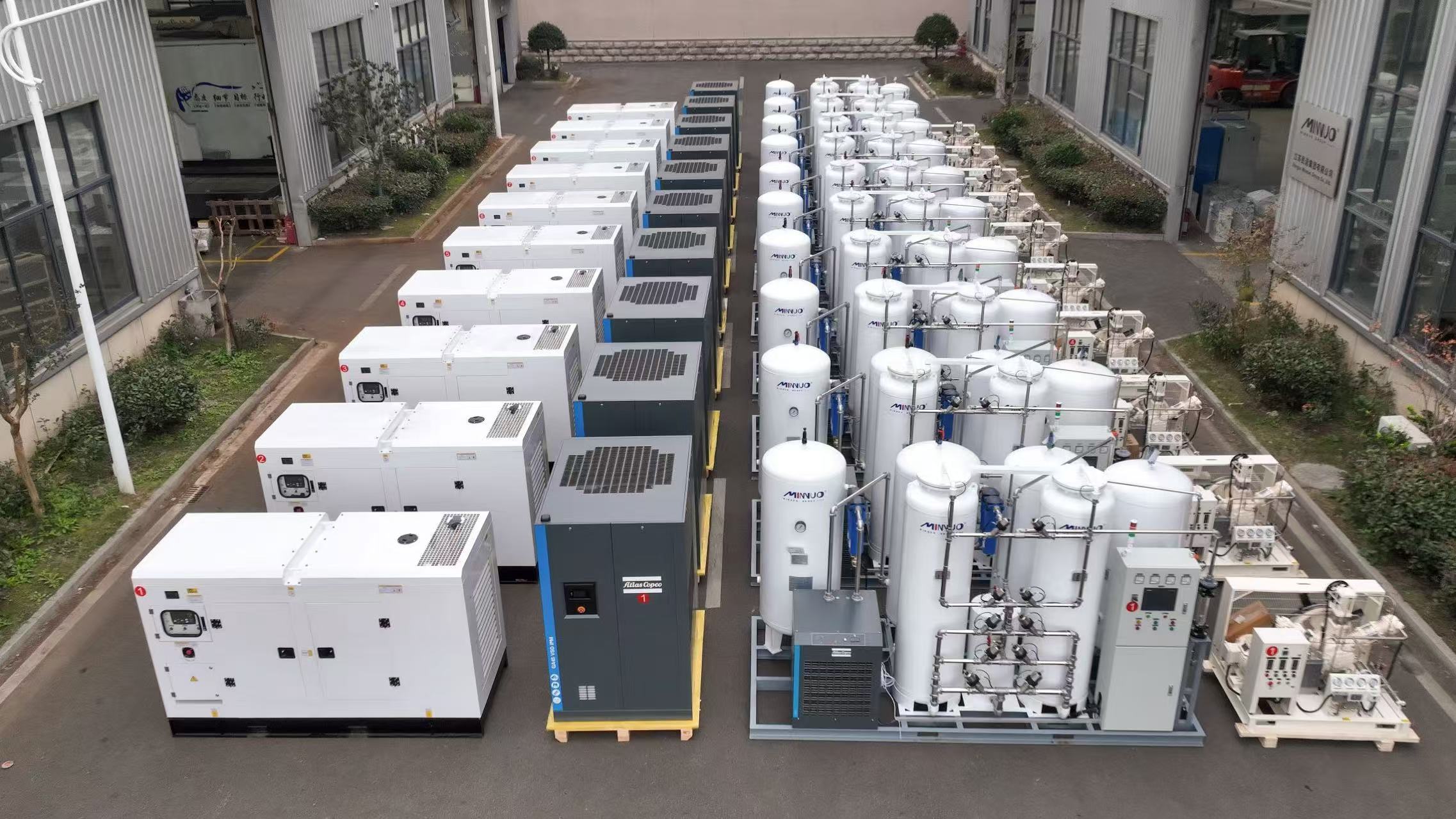
At MINNUO, our PSA nitrogen generators are configured specifically for additive manufacturing applications, delivering the purity, flow rate, and pressure required by modern PBF-LB and DED systems. From single-machine installations to multi-machine production facilities, our engineering team designs nitrogen supply solutions with integrated oxygen monitoring, buffer storage, and backup capability. Whether you are processing reactive titanium alloys demanding sub-500 ppm oxygen or stainless steels with standard requirements, MINNUO provides the reliable on-site nitrogen supply that protects your AM investment and ensures part quality.


 sales2:+86 17506119168