I. Introduction
Every year, an estimated 10-15% of the world’s grain harvest is lost to spoilage, pests, and mold. For smallholder farmers, the numbers can be even higher. In developing countries, post-harvest losses often exceed 30%.
The causes are well known: insects, fungi, rodents, and simple spoilage. Traditional solutions include chemical fumigants, but these are increasingly regulated, harmful to workers, and losing effectiveness as pests develop resistance.
There is another way: nitrogen.
By displacing oxygen in grain storage silos, nitrogen creates an inert atmosphere where insects cannot survive and mold cannot grow. The grain stays fresh for months or years without chemicals. The only ongoing cost is the electricity to run the nitrogen generator.
This guide explains how nitrogen grain storage works, what equipment is needed, and how to size a system for your operation.
II. Why Grain Spoils: The Role of Oxygen
To understand why nitrogen helps, first understand the enemies of stored grain.
Insects
Grain weevils, beetles, and moths are the most common storage pests. Adult insects lay eggs inside grain kernels. Larvae feed on the grain from the inside out. A single infestation can destroy thousands of bushels.
All insects require oxygen to survive. Reduce oxygen below 2-3%, and insects die—eggs, larvae, and adults alike. Unlike chemical fumigants, oxygen deprivation leaves no residue and creates no resistance.
Mold and fungi
Fungi like Aspergillus and Fusarium grow on stored grain with sufficient moisture and oxygen. They produce mycotoxins—some of the most potent naturally occurring toxins known. Aflatoxin, for example, is a carcinogen that can contaminate entire grain lots.
Mold growth stops when oxygen is removed. The grain remains dry and safe.
Respiration and spoilage
Grains are living seeds. They respire, consuming oxygen and releasing carbon dioxide, water, and heat. High respiration rates cause grain to heat, spoil, and lose nutritional value.
Low oxygen slows respiration dramatically, preserving grain quality.
The solution: controlled atmosphere storage
By maintaining an atmosphere of 98-99% nitrogen (2-1% oxygen), all three problems are solved:
- Insects die (no oxygen)
- Mold stops growing (no oxygen)
- Respiration slows (preserves quality)
III. How Nitrogen Grain Storage Works
The system is elegantly simple.
The storage vessel
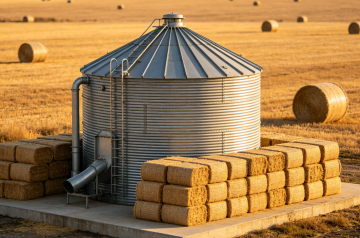
Grain is stored in a sealed silo or warehouse. The structure must be airtight—any leak allows oxygen to enter and nitrogen to escape. Typical systems use welded steel silos with sealed hatches, vents, and access points.
The nitrogen generator
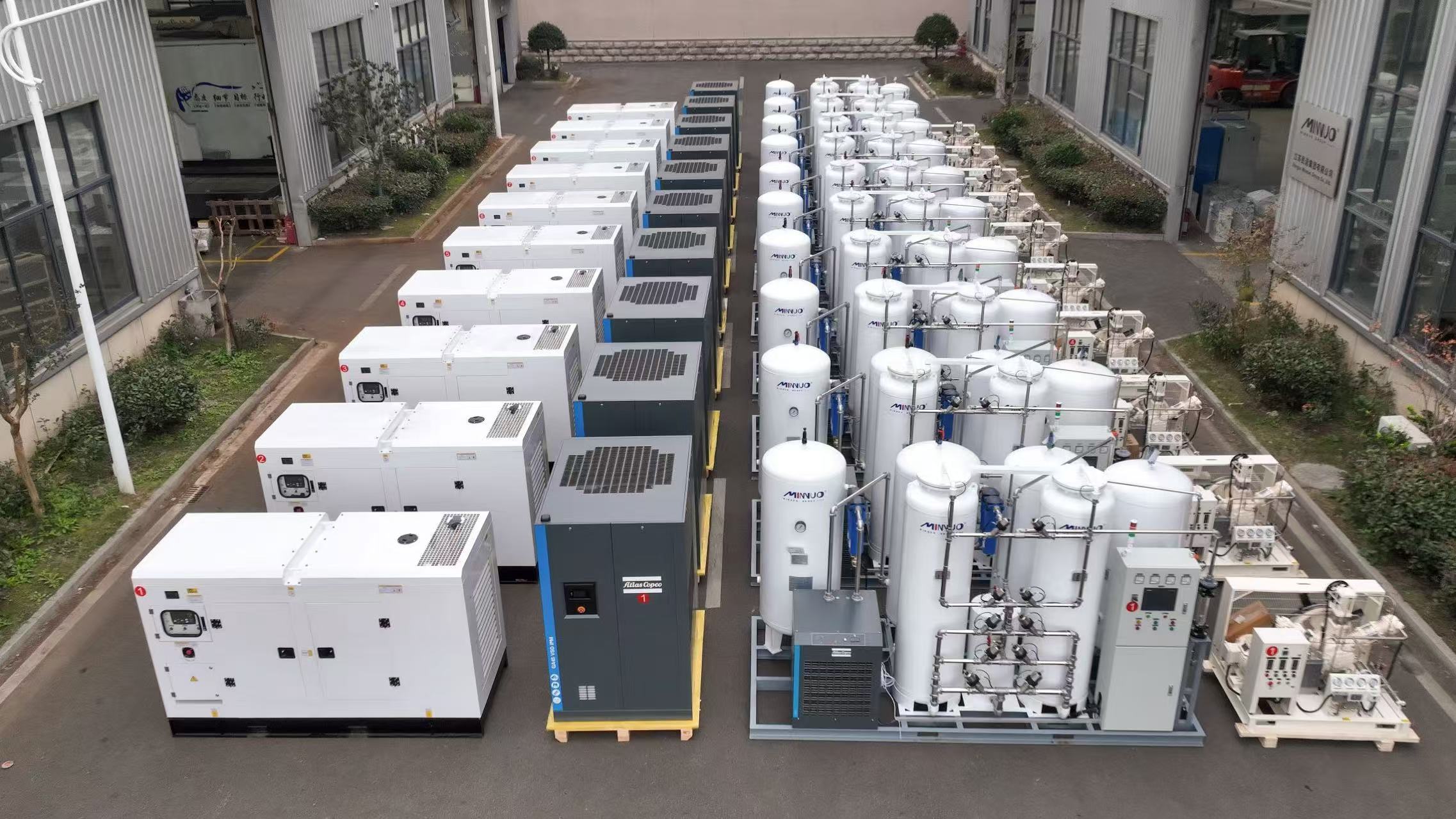
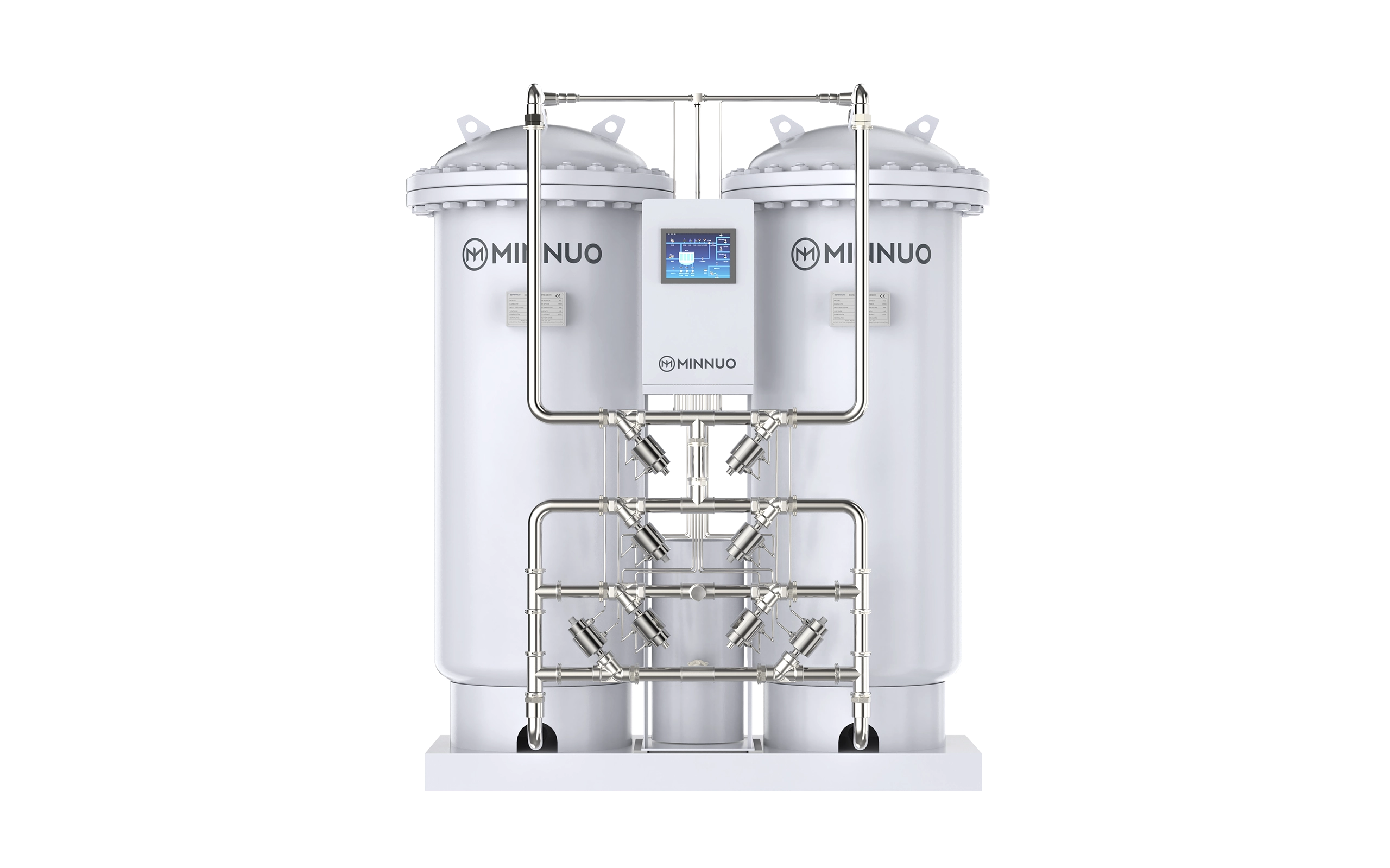
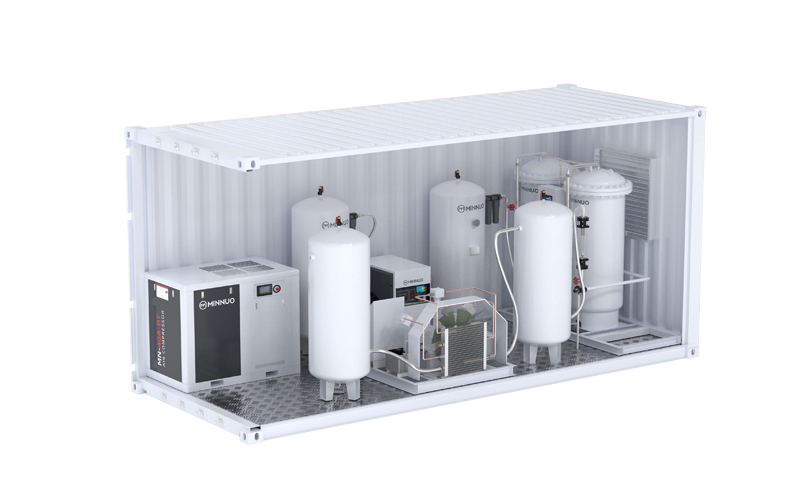
A membrane or PSA nitrogen generator produces 98-99% nitrogen from compressed air. The nitrogen is piped into the silo, displacing the oxygen-rich air.
The process
- Grain is loaded into the sealed silo
- Nitrogen is introduced, pushing air out through a vent
- When oxygen concentration drops to target (typically 1-2%), the system is sealed
- A small continuous flow maintains positive pressure and replaces any leakage
- The grain remains in nitrogen atmosphere for the entire storage period
Monitoring
Oxygen sensors inside the silo provide continuous feedback. When oxygen levels rise (due to leakage or grain respiration), the system automatically adds nitrogen to restore the target.
Retrofitting existing silos
Many grain storage facilities retrofit existing silos with:
- Airtight seals for doors and vents
- Nitrogen piping and distribution
- Oxygen monitoring and control systems
IV. Nitrogen Purity for Grain Storage
Grain storage has specific purity requirements.
Target oxygen concentration
| Pest | Lethal Oxygen Level |
| Most insects | Below 2-3% |
| Mold and fungi | Below 1-2% |
| Respiration suppression | Below 5% |
For complete protection, target 98-99% nitrogen (1-2% oxygen) . This kills all insects, stops mold growth, and preserves grain quality.
Is higher purity better?
99.9% nitrogen (0.1% oxygen) offers no additional benefit for grain storage. The insects are already dead at 2% oxygen. Higher purity simply increases operating cost.
Recommended technology
Membrane generators produce 95-99.5% nitrogen—ideal for grain storage. They are simple, reliable, and require minimal maintenance. PSA generators are unnecessary for this application.
V. Benefits of Nitrogen Grain Storage
The advantages go beyond pest control.
No chemical residues
Chemical fumigants leave residues on grain. Some countries have strict import limits on certain fumigants. Nitrogen leaves no residue—just pure, safe grain.
No pest resistance
Insects can develop resistance to chemical fumigants. They cannot develop resistance to the absence of oxygen.
Worker safety
Chemical fumigation requires trained applicators, personal protective equipment, and restricted access periods. Nitrogen is non-toxic. The only hazard is oxygen displacement, easily managed with proper ventilation.
Year-round protection
Once the silo is sealed and purged, the grain stays protected indefinitely. No reapplication needed. No “waiting periods” before grain can be used.
Quality preservation
Low oxygen slows grain respiration, preserving nutritional value, germination rates (for seed grain), and market quality.
Export compliance
Many international grain buyers require fumigation-free certification. Nitrogen-stored grain meets this requirement automatically.
VI. Sizing a Nitrogen Generator for Grain Storage
Sizing depends on silo volume and desired purge time.
Calculate silo volume
Volume (cubic feet) = Silo cross-section area × height
A typical 100,000-bushel silo (about 1.2 million cubic feet) is a common reference point.
Determine nitrogen required
To purge a silo from 21% oxygen to 2% oxygen, approximately 4-5 air changes are needed. Multiply silo volume by 4-5 for total nitrogen required.
Example: 1.2 million cubic feet × 4 = 4.8 million cubic feet of nitrogen
Determine flow rate
If you want to purge the silo in 24 hours:
Flow (CFM) = Total nitrogen required ÷ (24 × 60)
4.8 million ÷ 1,440 = 3,333 CFM
This is a high flow rate. Most grain storage systems take 2-5 days to purge a large silo, allowing a smaller generator.
Continuous purge (make-up)
After purging, the silo requires only a small continuous flow to maintain pressure and replace leakage. Typically 1-5% of initial purge flow.
Buffer storage
Some systems use a nitrogen receiver tank to store nitrogen produced during off-hours, releasing it during purge operations. This allows a smaller generator to serve a large silo.
Practical example
A grain elevator with 10 silos (1 million bushels total) might install:
- Membrane generator: 500-1,000 CFM
- Purge each silo over 2-3 days
- Maintain all silos with continuous low flow
VII. Installation and Operation Considerations
A few practical points.
Airtightness is essential
Nitrogen storage only works if the silo is truly airtight. Every leak wastes nitrogen and allows oxygen to enter. Before installing a system, seal doors, hatches, vents, and any other openings. Test with a pressure decay test.
Moisture control
Nitrogen is dry. It does not add moisture to grain. However, if grain is already wet, nitrogen won’t dry it. Grain should be properly dried before storage.
Safety
Nitrogen is not toxic, but it displaces oxygen. Silos under nitrogen purge are oxygen-deficient. Workers must not enter without self-contained breathing apparatus. Post warning signs and implement lockout procedures.
Economics
A nitrogen generator for grain storage typically costs $20,000-$100,000 depending on capacity. Annual operating costs are electricity and filter changes. Compared to chemical fumigation (repeated applications, labor, downtime), payback is often 1-3 years.
FAQ
Q1: Will nitrogen kill all insects in stored grain?
A1: Yes. Insects require oxygen to survive. At oxygen levels below 2%, all life stages—eggs, larvae, pupae, and adults—die within days. Unlike chemical fumigants, there is no resistance.
Q2: What purity of nitrogen is needed for grain storage?
A2: 98-99% nitrogen (1-2% oxygen) is sufficient. Higher purity offers no additional benefit and increases operating cost. Membrane generators are ideal for this application.
Q3: How long does grain stay fresh in nitrogen storage?
A3: Indefinitely, as long as the nitrogen atmosphere is maintained. Grain stored for 5+ years has been documented to emerge in excellent condition.
Q4: Does nitrogen affect grain germination?
A4: No. Low oxygen puts grain into a dormant state but does not kill the embryo. When removed from storage and exposed to air, germination rates remain high. Nitrogen storage is actually preferred for seed grain preservation.
Q5: Is nitrogen storage more expensive than chemical fumigation?
A5: Upfront cost is higher, but operating cost is lower. A nitrogen generator pays for itself in 1-3 years through eliminated fumigant purchases, reduced labor, and no downtime for reapplication. For large-scale storage, nitrogen is more economical.
Q6: Can I retrofit my existing silos for nitrogen storage?
A6: Yes, but airtightness is critical. Existing silos may require sealing of doors, vents, and hatches. Pressure testing confirms readiness. Most commercial silos can be retrofitted successfully.
Q7: Is nitrogen-stored grain considered organic?
A7: Nitrogen itself is allowed in organic production. The key question is whether any prohibited substances were used elsewhere in the production chain. For grain that is otherwise organic, nitrogen storage preserves organic status.
Conclusion
Grain loss to insects, mold, and spoilage is a persistent problem worldwide. Chemical fumigants are losing effectiveness, facing stricter regulations, and raising safety concerns.
Nitrogen storage offers a clean alternative. By creating an oxygen-free atmosphere, nitrogen kills insects, stops mold, and preserves grain quality—all without chemicals, residues, or resistance.
The technology is proven. Membrane nitrogen generators produce the ideal purity (98-99%) with simple, reliable operation. Silos can be retrofitted. And the economics are compelling for any facility storing grain for more than a few months.
For grain elevators, food processors, and seed producers, nitrogen storage is not just an alternative to chemicals—it’s an upgrade.
At MINNUO, we help agricultural facilities implement nitrogen generation for grain storage. From membrane generators to system controls, we focus on solutions that preserve your harvest and your bottom line. Because we know that the best grain storage isn’t just about keeping grain—it’s about keeping quality.