
In the field of insured transportation, the safe transit of special goods vulnerable to damage, deterioration and failure under low temperatures—such as biological samples, precision instruments, high-end reagents and cold-chain pharmaceuticals—has always been a core pain point of the industry. Once such goods are damaged due to temperature fluctuations, it will not only cause huge economic losses, but also trigger a series of cascading problems including insurance claim disputes and customer trust crises. Boasting the core advantages of ultra-low temperature precise temperature control and safe and stable operation, the liquid nitrogen generator acts as a mobile low-temperature safe for special goods in insured transportation. It provides full-process safety escort for all kinds of high-value and highly sensitive goods, and redefines the low-temperature protection standards for insured transportation.
I. Core Principle: Unlock the Underlying Logic of Ultra-Low Temperature Freshness Preservation
The core working principle of the liquid nitrogen generator is to simulate a low-temperature environment and leverage the ultra-low temperature characteristics and excellent thermal conductivity of liquid nitrogen (the liquid form of nitrogen with a boiling point of -196°C) to achieve constant temperature protection for transported goods. Its complete workflow consists of four core stages, balancing efficient liquid production and stable temperature control to meet the stringent requirements of insured transportation.
The first stage is air pretreatment. The equipment intercepts impurities such as dust and oil mist in the air through multi-stage filters, and then reduces the air dew point to an extremely low level via a dryer, completely eliminating the hidden danger of icing during subsequent low-temperature cooling and laying a foundation for the preparation of pure nitrogen. The next is air separation. Adopting pressure swing adsorption technology with high-quality carbon molecular sieve as the adsorbent, oxygen and nitrogen are separated by the difference in their diffusion rates in the micropores of the molecular sieve, yielding high-purity nitrogen (purity ranging from 95% to 99.999%, customizable according to the needs of insured goods transportation).
It is followed by the liquefaction stage. The purified high-purity nitrogen is compressed to a high pressure by a compressor, cooled by a cooler, and then decompressed through an expansion valve. The temperature drops sharply below -196°C, liquefying nitrogen into liquid nitrogen. The final stage is storage and temperature control. Liquid nitrogen is stored in vacuum Dewar vessels with excellent thermal insulation performance to minimize cold loss. Meanwhile, the intelligent control system of the equipment monitors the tank temperature in real time and dynamically adjusts the liquid nitrogen supply, ensuring the temperature remains within the preset range throughout transportation and fundamentally avoiding cargo damage risks caused by temperature fluctuations.
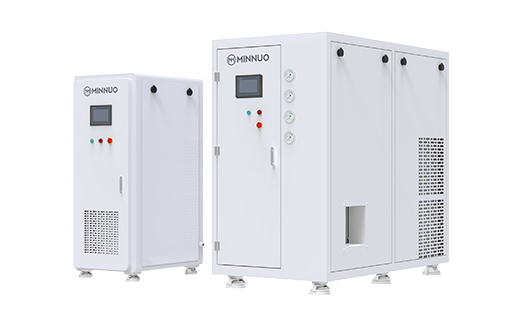
II. Core Functions: Precisely Adapt to Full-Scenario Demands of Insured Transportation
Targeting the core demands of safety, stability, efficiency and convenience in insured transportation, the liquid nitrogen generator is equipped with comprehensive core functions that integrate professionalism and practicality. It adapts to multiple transportation modes including highway, air and railway, providing customized low-temperature protection for different types of special goods.
- Ultra-Low Temperature Precise Temperature Control
It can flexibly set any constant temperature range from -150°C to -196°C with a temperature control accuracy error within ±1°C. It enables full-process constant temperature protection for temperature-sensitive biological vaccines as well as precision instruments requiring deep low-temperature preservation, preventing cargo failure and damage caused by temperature deviation. Built-in intelligent temperature sensors collect real-time tank temperature data and transmit it synchronously to the control console for real-time monitoring by transportation personnel.
- Safety Protection and Early Warning
Multiple safety interlock mechanisms are integrated into the device. Automatic acousto-optic alarms will be triggered and emergency protection procedures activated in case of abnormal tank pressure, excessive temperature, low liquid nitrogen level or potential leakage risks: automatic pressure relief for abnormal pressure, automatic liquid nitrogen replenishment for over-temperature, and automatic sealing for leakage, minimizing safety hazards during transportation. In addition, models adapted for air transportation adopt dry gas-phase storage technology. The adsorbent material inside the container can fully absorb liquid nitrogen, resulting in no overflow even if the container is tilted, complying with the exemption requirements of the International Air Transport Association (IATA) for dangerous goods transportation.
- High Efficiency, Energy Saving and Stable Operation
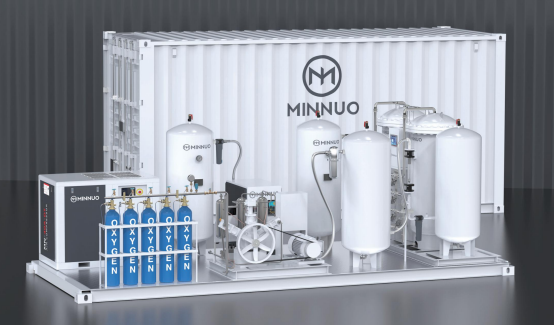
Adopting an integrated skid-mounted structure, it features a small footprint and easy installation, which can be directly mounted on various transport vehicles without complex modification. The equipment has low operating energy consumption, saving 10%-20% energy compared with similar products. Equipped with core components of well-known brands and fewer moving parts, it delivers strong operational stability and supports 24-hour unattended operation, reducing the operational burden on transportation staff. A venting device for unqualified nitrogen is also configured to ensure consistent liquid nitrogen quality.
- Flexible Adaptation and Easy Operation
Available in diverse specifications from small portable to large fixed types, it can be selected according to the quantity and volume of transported goods, meeting the short-distance transportation of a small number of high-value samples and the long-distance transit of large batches of cold-chain goods alike. It adopts fully automatic PLC+HMI control, with a color touch screen displaying real-time parameters such as liquid production rate, pressure and liquid level. It supports remote monitoring and data export, enabling transportation personnel to operate proficiently without professional training and lowering labor costs.
III. Core Role: Escort Insured Transportation and Reduce Full-Chain Risks
In insured transportation, the core role of the liquid nitrogen generator is to maintain the low-temperature baseline, reduce damage risks and cut down claim disputes. Its value runs through the entire transportation process, protecting cargo safety and benefiting insurance companies, transportation enterprises and cargo owners to achieve a win-win situation for all parties.
For cargo owners, the ultra-low temperature constant temperature protection of liquid nitrogen generators can maximally preserve the original quality of goods and avoid economic losses caused by cargo damage and failure due to temperature fluctuations. High-cost biological preparations, sophisticated electronic components and long-term preserved samples can all remain intact upon arrival, safeguarding the core interests of cargo owners.
For transportation enterprises, the safe and stable operation of liquid nitrogen generators reduces potential safety hazards in transit, cuts down complaints and claims arising from cargo damage, and improves service quality and market reputation. Meanwhile, its unattended and easy-to-operate design boosts transportation efficiency, reduces labor and operating costs, and enhances the core competitiveness of enterprises in the insured transportation sector.
For insurance companies, liquid nitrogen generators effectively lower the damage rate of special goods in transportation, reduce the number of insurance claims and cut compensation costs. They also drive the standardized development of the insured transportation industry, expand insurance business for high-value special goods, and foster a virtuous industry cycle. In addition, the equipment records temperature data in real time during operation to form a complete transportation temperature report, providing clear and accurate evidence for insurance settlement and avoiding claim disputes.
Furthermore, liquid nitrogen generators adapt to extreme transportation environments. They can stably maintain the constant temperature inside the tank regardless of sweltering heat or severe cold, unaffected by external ambient conditions. This solves the industry pain point of difficult low-temperature protection in extreme environments and provides reliable support for cross-regional and transnational transit of special goods.
IV. Application Method: Simple and Convenient for Full-Scenario Transportation
The application method of liquid nitrogen generators fits the actual scenarios of insured transportation with a concise and standardized operation process that requires no complicated procedures. Transportation personnel can master the operation with simple training, which is divided into three core steps: pre-transport preparation, in-transit operation and post-transport finishing to ensure full-process safety and efficiency.
- Pre-Transport Preparation
First, determine the constant temperature range and transportation duration according to the characteristics of goods, and select a liquid nitrogen generator and dedicated transport tank of appropriate specifications (storage tanks are prohibited from being used as transport tanks). Second, conduct a comprehensive inspection of the equipment, including tightness, pressure status, liquid nitrogen level and sensitivity of temperature sensors, to ensure fault-free and leak-free operation. Pre-cool the tank fully with liquid nitrogen and activate adsorbent materials in accordance with the operation manual. Finally, place and fix goods neatly in the constant temperature cabin of the liquid nitrogen generator to avoid collision and shaking during transportation. Mark the outer package clearly with labels such as “Dry Liquid Nitrogen Container”, “UN 1977 (Liquid Nitrogen, Refrigerated Liquid)” and upward arrows to comply with transportation regulations.
- In-Transit Operation
Fix the liquid nitrogen generator at the designated position of the transport vehicle with sponges or other soft cushions to prevent tipping. Start the equipment and set the preset constant temperature parameters via the touch screen, and the device will automatically enter the constant temperature operation mode. During transportation, personnel shall regularly check the operating status including temperature, pressure and liquid level, and verify the normal operation of the alarm device, handling abnormalities promptly in accordance with emergency procedures. For long-distance transportation, the remote monitoring function can be used to grasp equipment operation in real time without on-duty attendance throughout the journey. Avoid severe collision and vibration during transit. If elevator transfer is needed, priority shall be given to freight elevators; unattended transfer shall be adopted for loads exceeding the rated capacity with warning signs posted.
- Post-Transport Finishing
After the goods arrive at the destination, turn off the liquid nitrogen generator and wait for the equipment temperature to rise naturally (avoid rapid temperature rise which may damage the device). Then inspect the condition of the goods and take them out after confirming intactness. Finally, clean and inspect the liquid nitrogen generator, replenish liquid nitrogen if further use is needed, store it properly and record equipment operation for future use. Conduct a full inspection of the tank to ensure no damage or leakage for repeated subsequent use.
V. Conclusion: Empower High-Quality Development of Insured Transportation with Low-Temperature Technology
The core of insured transportation lies in safety, and low-temperature protection for special goods is the key to safe transportation. With its scientific working principle, comprehensive core functions, remarkable protective effects and convenient application methods, the liquid nitrogen generator breaks the limitations of traditional low-temperature transportation and provides an all-round, high-precision, safe and stable low-temperature protection solution for special goods in insured transportation.
Whether it is biological samples, precision instruments, cold-chain pharmaceuticals or high-end reagents, the liquid nitrogen generator delivers ultra-low temperature protection at -196°C to preserve cargo quality throughout transit, reduce transportation risks and mitigate claim disputes, providing solid escort for insurance companies, transportation enterprises and cargo owners alike. In the future, with the continuous development of the insured transportation industry, liquid nitrogen generators will be iteratively upgraded with more intelligent, energy-saving and convenient technologies to further adapt to various complex transportation scenarios. It will empower the high-quality development of insured transportation with low-temperature technology and write a new chapter for the safe transit of special goods.


 sales2:+86 17506119168