Mass concrete placements generate intense internal heat. When cement hydrates, it releases approximately 500 kJ of heat per kilogram—enough to raise concrete temperature by 50-70°C in large sections. The exterior cools rapidly while the interior remains hot, creating thermal gradients that crack the concrete from within. These cracks compromise structural integrity, create seepage paths, and require expensive remediation. Liquid nitrogen injection removes hydration heat directly from fresh concrete, maintaining uniform temperatures and preventing thermal cracking. This article explains how liquid nitrogen cooling protects mass concrete structures.
I. The Thermal Cracking Problem in Mass Concrete
Understanding why mass concrete cracks clarifies the value of liquid nitrogen cooling.
1. Hydration Heat Accumulation
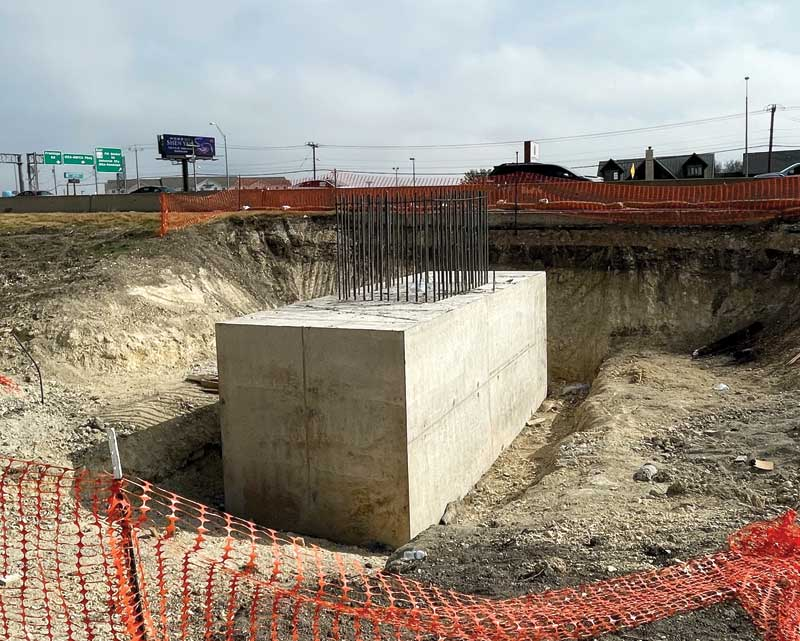
Cement hydration is exothermic. In thin sections—sidewalks, slabs, precast elements—hydration heat dissipates to the surroundings quickly. In mass concrete—dam sections, bridge piers, nuclear containment foundations, mat foundations exceeding 1 meter thickness —heat cannot escape. The interior temperature rises continuously for days after placement.
2. The Temperature Differential Mechanism
As the concrete core heats and expands, the cooler exterior restrains this expansion. When the core eventually cools and contracts, the exterior—now hardened—prevents contraction. Tensile stresses develop that exceed fresh concrete’s limited tensile strength. Cracks form, typically invisible from the surface but propagating through the structure.
3. Maximum Temperature Limits
Industry standards specify maximum allowable concrete temperatures and temperature differentials:
| Parameter | ACI 301 Limit | USACE / Bureau of Reclamation |
| Maximum placement temperature | 35°C (95°F) | 10-15°C (50-60°F) for dams |
| Maximum peak temperature | 70°C (158°F) | 50-60°C (122-140°F) |
| Maximum temperature differential | 20°C (36°F) | 14-17°C (25-30°F) |
Exceeding these limits risks thermal cracking and potential project rejection.
4. Consequences of Thermal Cracking
- Reduced durability: Cracks accelerate chloride penetration and reinforcement corrosion
- Water leakage: Dam galleries and basements develop seepage paths
- Structural compromise: Cracked sections cannot transfer design loads
- Expensive repairs: Epoxy injection, grouting, or complete section replacement
II. How Liquid Nitrogen Cooling Works in Concrete
Liquid nitrogen provides direct, controllable cooling unmatched by alternative methods.
1. Direct Injection into Fresh Concrete
Liquid nitrogen is injected directly into concrete during mixing or at placement. The LN2 vaporizes instantly upon contact with warm concrete, absorbing 199 kJ of heat per kilogram through latent heat of vaporization, plus additional sensible heat as the cold nitrogen gas warms to concrete temperature. Total cooling capacity approaches 430 kJ per kilogram of LN2.
2. Cooling Calculation
Each kilogram of liquid nitrogen can reduce the temperature of approximately 10 kg of concrete by 10°C. For a concrete placement requiring 20°C temperature reduction: LN2 dosage = (Concrete mass × 20°C) ÷ (10 kg concrete per kg LN2 per 10°C) = 0.2 kg LN2 per kg concrete, or roughly 20% of concrete mass.
In practice, LN2 dosage for mass concrete cooling ranges from 20-40 kg per cubic meter depending on initial concrete temperature, ambient conditions, and target temperature reduction.
3. Injection Methods
Batch plant injection: Liquid nitrogen is injected into the concrete mixer or truck drum at the batch plant. Advantages include:
- Uniform distribution throughout the mix
- Cooling before placement eliminates thermal shock at the pour
- Controlled environment for LN2 handling
On-site lance injection: A lance inserted into the placed concrete injects LN2 directly into the mass. Advantages include:
- Cooling at specific locations within large pours
- Supplemental cooling for hot spots detected by temperature sensors
- No modification to batch plant operations
4. Temperature Monitoring and Control
Thermocouples embedded in the concrete monitor temperature evolution in real time. Data feeds to a control system that modulates LN2 injection rate to maintain specified temperature profile. Modern systems achieve ±2°C control accuracy throughout the placement.
III. Liquid Nitrogen vs. Alternative Cooling Methods
Multiple methods exist for controlling mass concrete temperatures. Liquid nitrogen offers unique advantages.
| Cooling Method | Mechanism | Cooling Capacity | Cost | Best Application |
| Liquid nitrogen | Direct heat absorption | Highest | Higher per unit | Emergency cooling, peak summer conditions, rapid temperature reduction |
| Chilled water | Replace mix water | Moderate | Low | Base cooling, routine placements |
| Ice substitution | Replace mix water | Moderate | Low | Moderate temperature reduction |
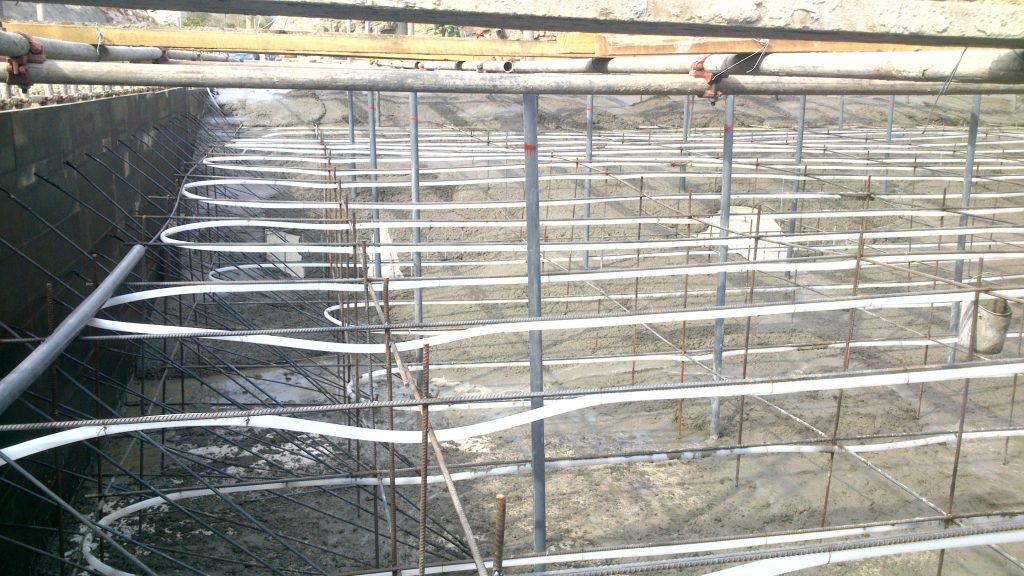
| Post-cooling pipes | Embedded pipes circulate cold water | Low, slow | Moderate capital | Very large structures (dams) |
| Precooled aggregates | Cool aggregates before mixing | Moderate | Moderate | Large volume, consistent production |
Combined approaches often yield optimal economics:
- Chilled water and ice: Provide base cooling at low incremental cost
- Liquid nitrogen: Provides supplemental cooling for peak summer conditions or unexpected temperature excursions
- Post-cooling pipes: Long-term temperature control for massive dam sections
IV. Applications of Liquid Nitrogen Concrete Cooling
1. Dam Construction
Massive gravity dams and arch dams contain millions of cubic meters of concrete. Each lift—typically 1.5 to 3 meters thick—requires temperature control to prevent cracking at lift joints. Liquid nitrogen cooling at the batch plant ensures placement temperature meets stringent specifications (often 10°C maximum). During record heat waves, LN2 provides the only practical means of meeting temperature limits.
2. Nuclear Power Plant Foundations
Nuclear containment basemats exceed 3-5 meters thickness and cover thousands of square meters. Thermal cracking in these foundations is unacceptable—cracks create preferential pathways for groundwater and complicate seismic analysis. Liquid nitrogen cooling maintains uniform temperature throughout the multi-day placement, preventing the thermal gradients that drive cracking.
3. Bridge Piers and Massive Foundations
Large bridge piers, tower foundations, and transfer girders contain reinforcing steel congestion that prevents effective post-cooling pipe installation. Liquid nitrogen cooling at the batch plant or point of placement provides the only viable temperature control method.
4. LNG Tank Foundations
Liquefied natural gas storage tanks sit on elevated concrete foundations to prevent frost heave. These foundations experience extreme thermal gradients during commissioning when cryogenic temperatures contact the upper surface. Precise temperature control during construction ensures the foundation can accommodate these service thermal stresses without cracking.
5. Emergency Temperature Control
When concrete arrives at the job site exceeding specified temperature limits, rejection and replacement costs thousands of dollars and delays construction. Liquid nitrogen injection at the site can reduce concrete temperature by 10-20°C within minutes , salvaging loads that would otherwise be rejected.
6. Mass Concrete in Hot Climates
Construction in the Middle East, Southeast Asia, and tropical regions faces ambient temperatures exceeding 40°C. Conventional cooling methods cannot achieve required placement temperatures. Liquid nitrogen provides the necessary cooling capacity to meet specifications regardless of ambient conditions.
V. Liquid Nitrogen Cooling System Design for Concrete Applications
Proper system design ensures safe, efficient LN2 delivery to the placement.
1. Storage and Supply
LN2 is stored on-site in vacuum-insulated cryogenic tanks sized for project consumption. A major dam project may install 20,000-50,000 gallon bulk tanks with daily or weekly deliveries. Smaller projects use portable 3,000-6,000 gallon tanks or LN2 micro-bulk systems.
2. Transfer and Injection Equipment
- Vacuum-jacketed piping: Transfers LN2 from storage to injection point with minimal boil-off
- Flow control valves: Modulate LN2 flow based on temperature feedback
- Injection lances: Designed for concrete immersion, with multiple orifices for uniform distribution
- Vapor management: Nitrogen gas generated during injection must safely vent away from personnel
3. Safety Systems
Liquid nitrogen operations on construction sites require specific safety measures:
- Oxygen monitoring: Portable and fixed monitors in work areas; alarm at 19.5% oxygen
- PPE: Cryogenic gloves, face shield, and loose-fitting protective clothing
- Ventilation: Outdoor placement naturally disperses nitrogen gas; confined spaces require mechanical ventilation
- Emergency procedures: Site-specific response plan for LN2 release or personnel exposure
4. Integration with Batch Plant Controls
For batch plant injection, the LN2 control system integrates with the concrete plant automation. LN2 dosage is calculated automatically based on:
- Desired concrete discharge temperature
- Measured aggregate and cement temperatures
- Ambient conditions
- Mix water temperature
VI. Case Example: Cooling a Nuclear Basemat Placement
A hypothetical 3,000 m³ nuclear containment basemat illustrates LN2 cooling requirements.
Placement parameters:
- Concrete volume: 3,000 m³
- Initial concrete temperature without cooling: 32°C
- Maximum specified placement temperature: 18°C
- Required temperature reduction: 14°C
LN2 dosage calculation:
- Standard dosage: 3 kg LN2 per m³ per °C temperature reduction
- Required LN2 = 3,000 m³ × 14°C × 3 kg/m³/°C = 126,000 kg LN2
System sizing:
- Placement duration: 24 hours continuous pour
- Average LN2 flow rate = 126,000 kg ÷ 24 hr = 5,250 kg/hr
- Liquid volume = 5,250 kg/hr ÷ 1.14 kg/L = 4,600 L/hr liquid nitrogen
A 20,000 gallon (75,000 liter) bulk tank provides approximately 16 hours of operation at this flow rate, requiring a mid-pour delivery or dual-tank installation.
VII. Quality Control and Documentation
Mass concrete projects require documented temperature control for regulatory and warranty compliance.
1. Pre-Placement Planning
Submit cooling plan including:
- Thermal modeling predicting peak temperatures and gradients
- LN2 dosage calculations
- Equipment specifications and redundancy
- Contingency plans for equipment failure or extreme weather
2. Real-Time Monitoring
During placement, monitor and record:
- Concrete temperature at batch plant discharge
- LN2 injection rate and total consumption
- Embedded thermocouple readings (multiple depths)
- Ambient temperature and weather conditions
3. Post-Placement Analysis
After concrete reaches thermal equilibrium, compare actual temperature history to model predictions. Document compliance with specification limits. This data supports project closeout and provides reference for future placements.
Frequently Asked Questions
Q1: Does liquid nitrogen injection affect concrete strength or durability?
A1: No. Properly executed LN2 cooling does not alter concrete’s hardened properties. The nitrogen vaporizes and escapes, leaving no chemical residue. Extensive testing by the U.S. Bureau of Reclamation and Corps of Engineers confirms that LN2-cooled concrete meets all strength and durability requirements.
Q2: Can liquid nitrogen freeze the concrete?
A2: With proper injection control, no. LN2 vaporizes instantly upon contacting warm concrete. Localized freezing occurs only if LN2 pools without mixing—a condition prevented by proper injection lance design and placement procedures.
Q3: How does LN2 cooling compare in cost to chilled water and ice?
A3: On a per-degree cooling basis, LN2 costs approximately 2-3 times chilled water or ice. However, LN2 provides cooling capacity when conventional methods cannot meet specifications—during hot weather, for emergency temperature reduction, or when ice plants are unavailable. The cost of rejected concrete or thermal cracking remediation far exceeds incremental LN2 expense.
Q4: Is liquid nitrogen cooling practical for small concrete placements?
A4: Generally no. The mobilisation cost for LN2 equipment makes it uneconomical for placements under 500 m³ unless specifications absolutely require it. For smaller mass placements, chilled water and ice are more cost-effective.
Q5: What safety training do construction workers need for LN2 concrete cooling?
A5: Workers handling LN2 require:
- Cryogenic safety awareness training
- PPE donning and doffing procedures
- Emergency response for cryogenic exposure and oxygen deficiency
- Site-specific procedures for LN2 injection operations
Training documentation must be maintained per OSHA requirements.
Q6: Can liquid nitrogen be used with any concrete mix design?
A6: Yes, but mix adjustments may optimize LN2 cooling. Lower cement content reduces hydration heat generation. Supplementary cementitious materials (fly ash, slag) also reduce heat. The concrete mix should be designed for the specific cooling method and placement conditions.
Conclusion
Liquid nitrogen provides the ultimate cooling capacity for mass concrete temperature control. When conventional methods cannot achieve specified placement temperatures—during summer construction, in tropical climates, or for emergency temperature correction—LN2 injection ensures compliance and prevents thermal cracking. Proper system design integrating cryogenic storage, controlled injection, and real-time temperature monitoring delivers precise, reliable cooling for the world’s most demanding concrete structures.
At MINNUO, we supply complete liquid nitrogen systems for mass concrete cooling applications. Our systems include cryogenic storage tanks, vacuum-jacketed transfer piping, automated injection controls, and temperature monitoring integration. Whether you are constructing a dam, nuclear facility, bridge foundation, or commercial high-rise mat, our engineering team configures LN2 cooling solutions matched to your placement volume, temperature specifications, and site logistics. Every MINNUO system includes commissioning support, operator training, and ongoing technical assistance throughout your project.