
Yes—inlet air quality directly determines PSA nitrogen purity, and poor feed air is the single most common cause of premature purity decline. Carbon molecular sieve selectively adsorbs oxygen based on molecular size differences, but this precision separation mechanism is easily disrupted by contaminants that either compete for adsorption sites or physically damage the sieve material. Understanding how each contaminant affects the process allows operators to specify appropriate air treatment and protect their nitrogen generation investment.
I. Water Vapor: The Most Common and Destructive Contaminant
Water vapor in compressed air feed causes both reversible and irreversible damage to carbon molecular sieve, depending on exposure severity and duration.
1. Competitive Adsorption Mechanism
Carbon molecular sieve adsorbs water vapor far more strongly than it adsorbs oxygen. When moist air enters the PSA vessels, water molecules occupy adsorption sites intended for oxygen removal. The sieve’s oxygen selectivity plummets, and nitrogen purity drops—often within hours of a dryer malfunction. This explains why a failed refrigerated dryer or saturated desiccant bed causes immediate purity degradation.
2. Reversible vs. Irreversible Damage
Mild, short-duration moisture exposure may be partially reversible. Operating the PSA system with very dry feed air can slowly desorb water from the sieve, restoring some lost capacity. However, prolonged exposure or liquid water ingress causes permanent damage. Water dissolves trace minerals from the sieve matrix, altering pore structure. More critically, wet-dry cycling causes sieve particles to fracture, generating dust that blocks gas flow paths and increases pressure drop.
3. The Dew Point Requirement
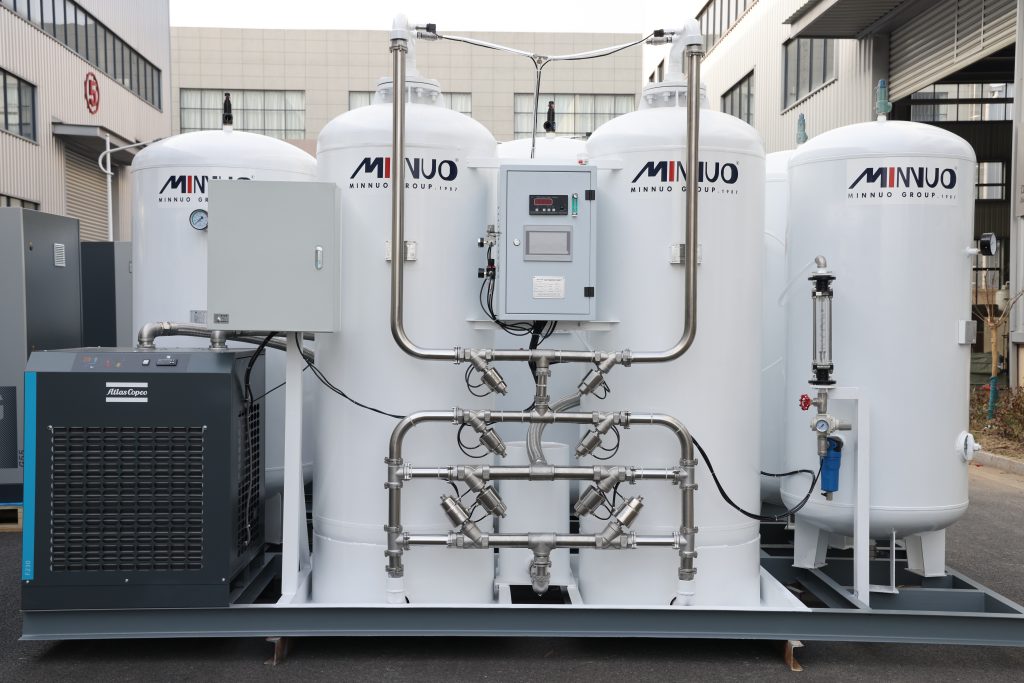
To prevent water damage, feed air must maintain a pressure dew point of -40°F or lower at the PSA inlet. This ensures no liquid water condenses during pressure changes within the vessels. Facilities using refrigerated dryers alone typically achieve +35°F to +39°F dew points—insufficient for PSA protection. A desiccant dryer is standard for PSA nitrogen feed air.
II. Oil Aerosol and Vapor: Permanent Sieve Poisoning
Oil contamination causes irreversible damage to carbon molecular sieve and represents the most expensive feed air quality failure.
1. How Oil Destroys Molecular Sieve
Compressor lubricant, even in trace aerosol form, coats the surface of carbon molecular sieve particles. Unlike water, oil does not desorb under normal PSA operating conditions. The oil film physically blocks micropores, permanently reducing the surface area available for oxygen adsorption. A sieve bed exposed to oil carryover loses capacity progressively and cannot be regenerated—replacement is the only remedy.
2. Sources of Oil Contamination
Oil enters PSA feed air from several sources:
- Oil-lubricated air compressors with failed coalescing filters
- Atmospheric hydrocarbons drawn into the compressor intake (vehicle exhaust, facility emissions)
- Oil vapor migration through inadequately sized activated carbon filters
3. Protection Requirements
PSA nitrogen systems demand oil-free feed air meeting ISO 8573-1 Class 1 for oil content (≤0.01 mg/m³). This requires:
- Oil-free air compressor, OR
- Oil-lubricated compressor with redundant coalescing filtration plus activated carbon adsorber
- Continuous oil vapor monitoring for critical applications
Activated carbon filters require replacement based on time in service not differential pressure—once saturated, they pass oil vapor without indicating pressure drop.
III. Particulate Matter: Mechanical Damage and Flow Restriction
Solid particles in feed air damage PSA system components and degrade performance through multiple mechanisms.
1. Valve Seat Erosion and Leakage
Particulates passing through PSA process valves become trapped between sealing surfaces during closure. Each valve cycle grinds these particles into the seat and seal, creating leakage paths. Valve leakage then compromises the pressure swing cycle, reducing purity and increasing air consumption. Exhaust valves are particularly vulnerable because they handle particle-laden waste gas during regeneration.
2. Sieve Bed Fluidization and Attrition
High-velocity particles impact sieve granules, causing surface erosion and fracture. The resulting fines accumulate at the vessel bottom and migrate into downstream components. This reduces active sieve volume and increases pressure drop. In severe cases, channeling develops—preferential flow paths that bypass most of the sieve bed, dramatically reducing separation efficiency.
3. Filtration Requirements
PSA nitrogen generators require feed air filtration to ISO 8573-1 Class 1 for particulates (≤0.1 mg/m³). Typical filtration train:
- Pre-filter: 3-5 micron general purpose
- Coalescing filter: 0.01 micron for oil and sub-micron particles
- Activated carbon: For vapor-phase hydrocarbons
- Dust filter: 1 micron downstream of desiccant dryer to capture desiccant fines
IV. Inlet Air Temperature: The Overlooked Variable
Feed air temperature significantly impacts PSA nitrogen generator performance, independent of contaminant content.
1. Adsorption Capacity Temperature Dependence
Carbon molecular sieve adsorbs less oxygen at elevated temperatures. Feed air entering at 100°F produces measurably lower nitrogen purity than air entering at 70°F, all other conditions equal. The effect is reversible—purity returns when temperature normalizes—but operators may misdiagnose the purity drop as sieve degradation.
2. Compressor Aftercooler Performance
Air-cooled aftercoolers typically achieve approach temperatures of 15-30°F above ambient. On a 95°F summer day, PSA feed air may arrive at 110-120°F. This temperature rise reduces sieve capacity by 10-15% compared to winter operation. Facilities in hot climates should consider water-cooled aftercoolers or refrigerated dryers with integral cooling to maintain consistent feed air temperature year-round.
3. Temperature Specification
For optimal PSA performance, feed air temperature should remain below 100°F and ideally below 80°F . Temperature consistency matters almost as much as absolute value—fluctuating inlet temperature complicates cycle optimization and may require seasonal adjustment of PSA operating parameters.
V. ISO 8573-1 Air Quality Recommendations for PSA Nitrogen
The ISO 8573-1 standard defines compressed air purity classes. For reliable PSA nitrogen generator operation, the following minimum feed air quality is recommended:
| Contaminant | ISO 8573-1 Class | Specification |
| Solid Particles | Class 1 | ≤0.1 mg/m³, 0.1-0.5 micron |
| Water (Dew Point) | Class 1 or 2 | ≤-40°F or ≤-94°F |
| Total Oil | Class 1 | ≤0.01 mg/m³ |
This specification is commonly written as ISO 8573-1 Class 1.4.1 or 1.2.1 depending on dew point requirement. For pharmaceutical or food-grade nitrogen applications, Class 0 oil-free certification may be required with additional validation.
VI. Practical Solutions for Improving PSA Feed Air Quality
When purity issues trace to inlet air quality, several corrective paths exist.
1. Air Dryer Upgrade
If dew point measurements exceed -40°F, upgrade from refrigerated to desiccant drying. Heatless desiccant dryers achieve -40°F to -100°F dew points reliably. Heated purge and blower-purge designs reduce purge air consumption for larger systems.
2. Filtration Enhancement
Add or upgrade filtration elements based on contaminant analysis:
- Coalescing filter upgrade: Higher efficiency elements capture sub-micron oil aerosol
- Activated carbon addition: Required if any oil-lubricated compression exists upstream
- Point-of-use filtration: Final filter before PSA inlet captures any piping-derived particles
3. Compressor Intake Relocation
Atmospheric contaminants enter through the compressor intake. Relocating the intake away from:
- Cooling tower drift (water and chemical carryover)
- Vehicle traffic and loading docks (hydrocarbons)
- Chemical process vents (corrosive gases)
- Dust-generating operations (cement, grain, minerals)
provides free improvement in feed air quality.
4. Condensate Management
Automatic condensate drains on aftercoolers, dryers, and filters must function reliably. Failed drains allow liquid water accumulation that migrates downstream during pressure changes. Electronic level-sensing drains offer greater reliability than float-type or timer drains.
5. Air Quality Monitoring
Permanent monitoring validates air treatment effectiveness:
- Dew point transmitter with alarm at -20°F
- Oil vapor detector for critical applications
- Differential pressure gauges across each filter stage
FAQ
Q1: Can a PSA nitrogen generator recover from water-damaged molecular sieve?
A1: Mild water exposure may partially reverse with extended operation using very dry feed air. However, once liquid water contacts the sieve or moisture exposure persists beyond several hours, permanent capacity loss occurs. There is no chemical regeneration method for water-damaged carbon molecular sieve. Replacement is the reliable solution.
Q2: How can I tell if my PSA purity problem is from inlet air or sieve aging?
A2: Check dew point and oil content of feed air first. If both meet specification, temporary operation at reduced flow should restore some purity if the problem is aged sieve. If feed air quality is confirmed good and reduced flow does not improve purity, suspect valve issues or sieve contamination from historical air quality events.
Q3: What is the minimum dew point acceptable for PSA nitrogen feed air?
A3: -40°F pressure dew point is the minimum recommended. Warmer dew points allow water vapor to condense during the pressure drop of PSA cycling. Some manufacturers claim -20°F is acceptable, but this leaves minimal safety margin. The incremental cost of -40°F drying is small compared to sieve replacement cost.
Q4: Do oil-free air compressors eliminate the need for activated carbon filtration?
A4: No. Oil-free compressors eliminate lubricant-derived oil, but atmospheric hydrocarbons still enter through the intake. Activated carbon filtration remains recommended for food, pharmaceutical, and high-purity applications regardless of compressor type.
Q5: How often should I replace PSA feed air filter elements?
A5: Replace coalescing and particulate filters annually or when differential pressure reaches manufacturer limit, whichever occurs first. Activated carbon filters require 6-month replacement regardless of pressure drop—they saturate and pass hydrocarbons without external indication.
Q6: Can high inlet air temperature alone cause purity loss with no contaminants present?
A6: Yes. Elevated feed air temperature reduces oxygen adsorption capacity of carbon molecular sieve. This effect is reversible when temperature returns to normal, but during hot weather or aftercooler underperformance, purity may drop 1-3% without any contamination present.
Conclusion
Inlet air quality directly and profoundly affects PSA nitrogen purity. Water vapor competes for adsorption sites and damages sieve structure. Oil aerosol permanently poisons sieve pores. Particulates erode valves and disrupt gas flow. Feed air temperature alters adsorption equilibrium. Protecting a PSA nitrogen generator requires feed air meeting ISO 8573-1 Class 1.4.1 minimum—dry, oil-free, and filtered. Investing in proper air treatment upstream pays dividends in stable nitrogen purity, extended sieve life, and reduced maintenance downtime.
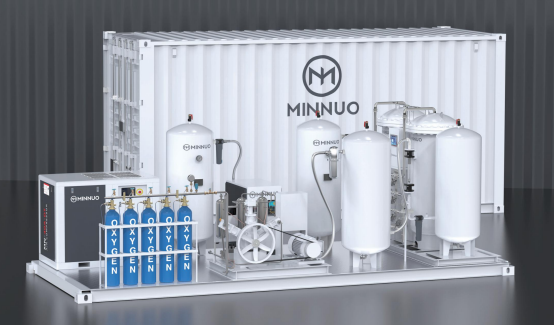
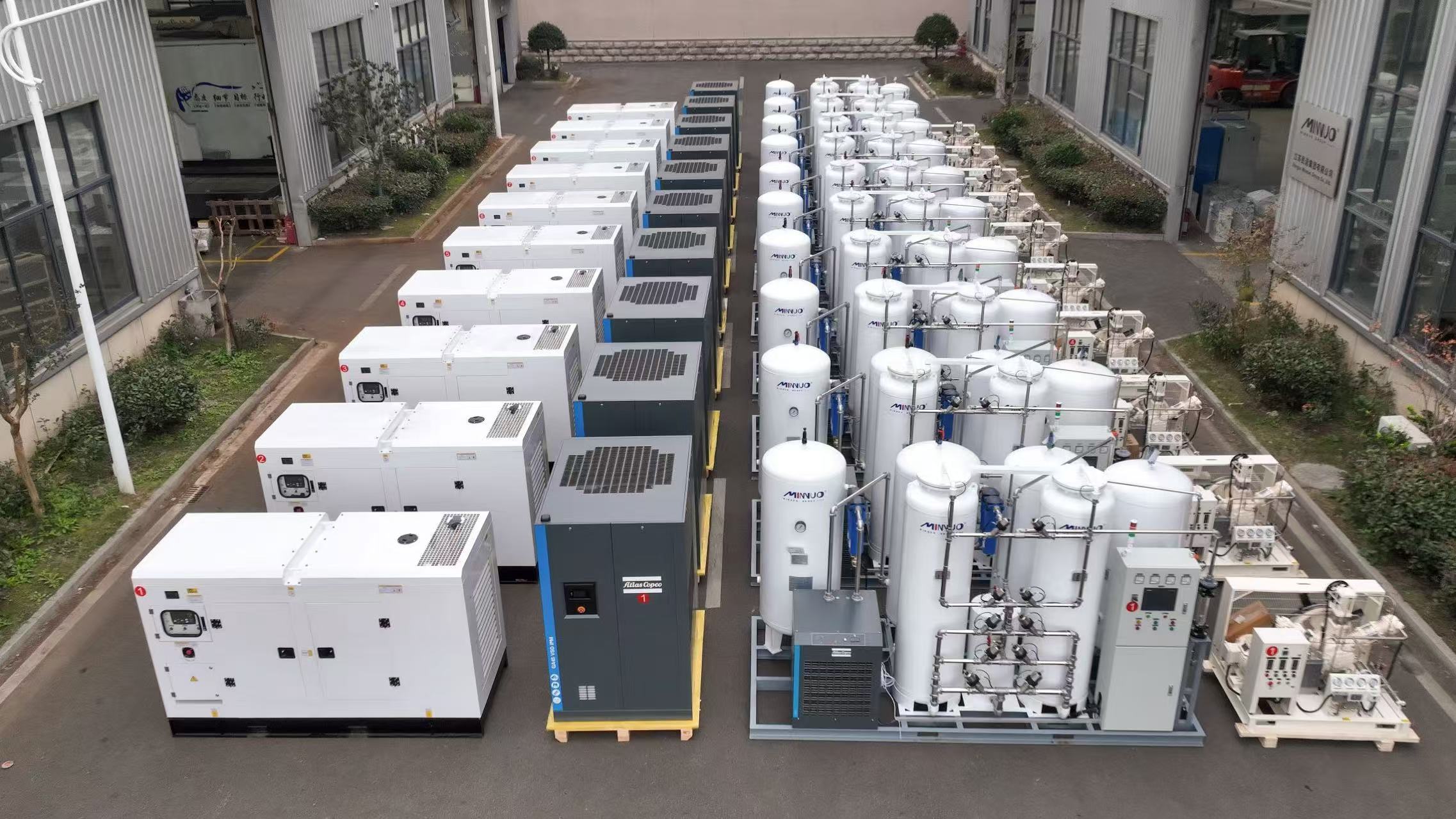
At MINNUO, our PSA nitrogen generators are engineered with integrated air treatment systems that deliver ISO 8573-1 compliant feed air quality as standard. For customers experiencing purity issues traced to inlet air quality, we offer system audits, air treatment upgrades, and remote diagnostic support. Every MINNUO system includes warranty coverage, and our engineering team can recommend filtration and drying solutions matched to your specific operating environment and purity requirements.


 sales2:+86 17506119168