
The Big Picture: Grinding Precision Is a Capital Allocation Decision, Not a Procurement Event
Every part of a gas plant ends at a surface that has to hold: a sealing face, a flange end, a valve seat, a compressor bore. Those surfaces are grinding results. For a gas equipment factory, in-house grinding decides whether a vessel ships on time and whether a seal holds in the field — not a nice-to-have, but a capability decision.
The good news is that the machines behind that precision carry most of their value in the spindle and guideways — properties that do not age on the same clock as a control system or the latest feature set. That is why a well-maintained used grinder can still hold a spec a new entry-level machine cannot, at a fraction of the price. For gas equipment manufacturers, the used market is not a shortcut; it is a capital allocation decision.
This guide answers three questions: why precision grinding belongs in a gas plant, how to verify a used grinder so you do not buy a gamble, and where to source machines you can actually trust.
Why: Precision Grinding Belongs in a Gas Plant — and Used Machines Fit the Work
A gas plant is built on pressure boundaries. PSA vessels, separators, heat exchangers, valve bodies, compressor components, pump shafts, and instrument fittings all finish at a sealing face or mating surface that has to hold. Flatness on a flange face, the finish on a valve seat, the roundness of a compressor bore: these are grinding results that milling and turning alone cannot deliver.
Because gas-plant grinding work is repetitive and process-stable — the same flange families, valve seats, and compressor parts run again and again — the demands are well understood and do not chase the newest technology. Rigidity and repeatability matter more than novelty, which is exactly the profile of work a used machine handles comfortably.
Compare grinders the way you compare any capital asset: on achievable accuracy over the part’s life, not on the nameplate year.
- Accuracy ceiling. A quality surface or cylindrical grinder from Japan, Switzerland, or Germany — even at 10–20 years old — was built to a tolerance class most entry-level new machines do not target. Flange flatness, valve-seat finish, and compressor-bore roundness come from guideway geometry and spindle bearing condition. If those are intact, the machine holds spec.
- Real price. The used market typically prices grinders at a fraction of new-machine cost. As a reference point, UsedUltra’s Okamoto guide documents surface grinders selling in the 20–35% range of new-equipment prices, with a verified case of a 2012 PSG-63DX paying back its total purchase-and-installation investment in about a month and a half of production. You can review the detailed price, reconditioning cost, and 12-month ROI data in UsedUltra’s Okamoto guide.
- Depreciation and resale. The steepest depreciation on grinding equipment is taken by the first owner. A plant entering at the used stage captures the asset at a defensible price and retains meaningful resale value downstream.
The calculation is not “used is cheaper,” it is “what sealing accuracy per dollar can I sustain for the next ten years.”
How: The Inspection Checklist That Separates a Grinder from a Gamble
The biggest risk in the used market is not the price. It is the gap between the listing and the actual machine. On grinders, focus on four things:
- Spindle. Run it, listen, and measure. Radial and axial run-out, vibration at speed, and temperature rise under load tell you the bearing story quickly.
- Guideways. This is the grinder’s real value. Check for visible wear, gib adjustments, and — critically — demand a straightness/flatness test. An on-site laser-interferometer acceptance test is the difference between a nameplate and a proof.
- A test grind. Ask for a witness test or a trial cut with measurement records. A machine that can show you a finished part within tolerance is worth more than any brochure.
- Control and electrical. Age of control hardware, alarm history, and availability of spare parts. An old but sound grinder beats a new one with an orphaned control.
Work through this checklist with the same discipline you apply to a pressure-vessel spec. You are not inspecting a machine; you are auditing a ten-year cost.
Where: Sourcing Used Grinding Machines You Can Trust
The sourcing question is really a verification question. Anyone can sell you a photo; the difference is who will let an independent engineer verify the machine before you pay.
For gas equipment manufacturers comparing options across Japan, Switzerland, and Germany — the markets that built the world’s serious grinding iron — evaluating used grinding machines from a certified marketplace is a practical starting point. A credible platform should offer three things: a documented inspection report from its own engineers, test-run evidence, and honest logistics and after-sales support. Treat any listing that cannot produce all three as an incomplete candidate.
The Bottom Line: Buy the Accuracy You Can Sustain, Not the Cheapest Listing
To bring it back to where we started: a gas plant is built on surfaces that have to hold, and grinding is what makes them hold. Whether you buy new or used, buying a grinder is a capital allocation decision, not a procurement event. Define the sealing accuracy you actually need, price the realistic options, verify the machine as if your ten-year cost depends on it (it does), and only then commit.
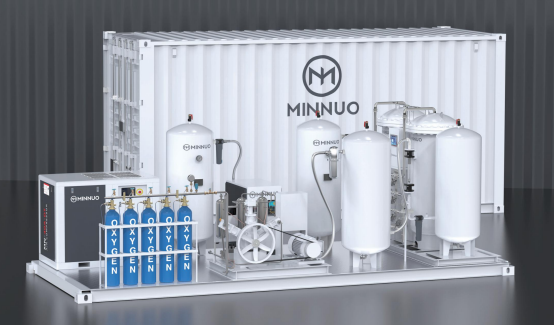
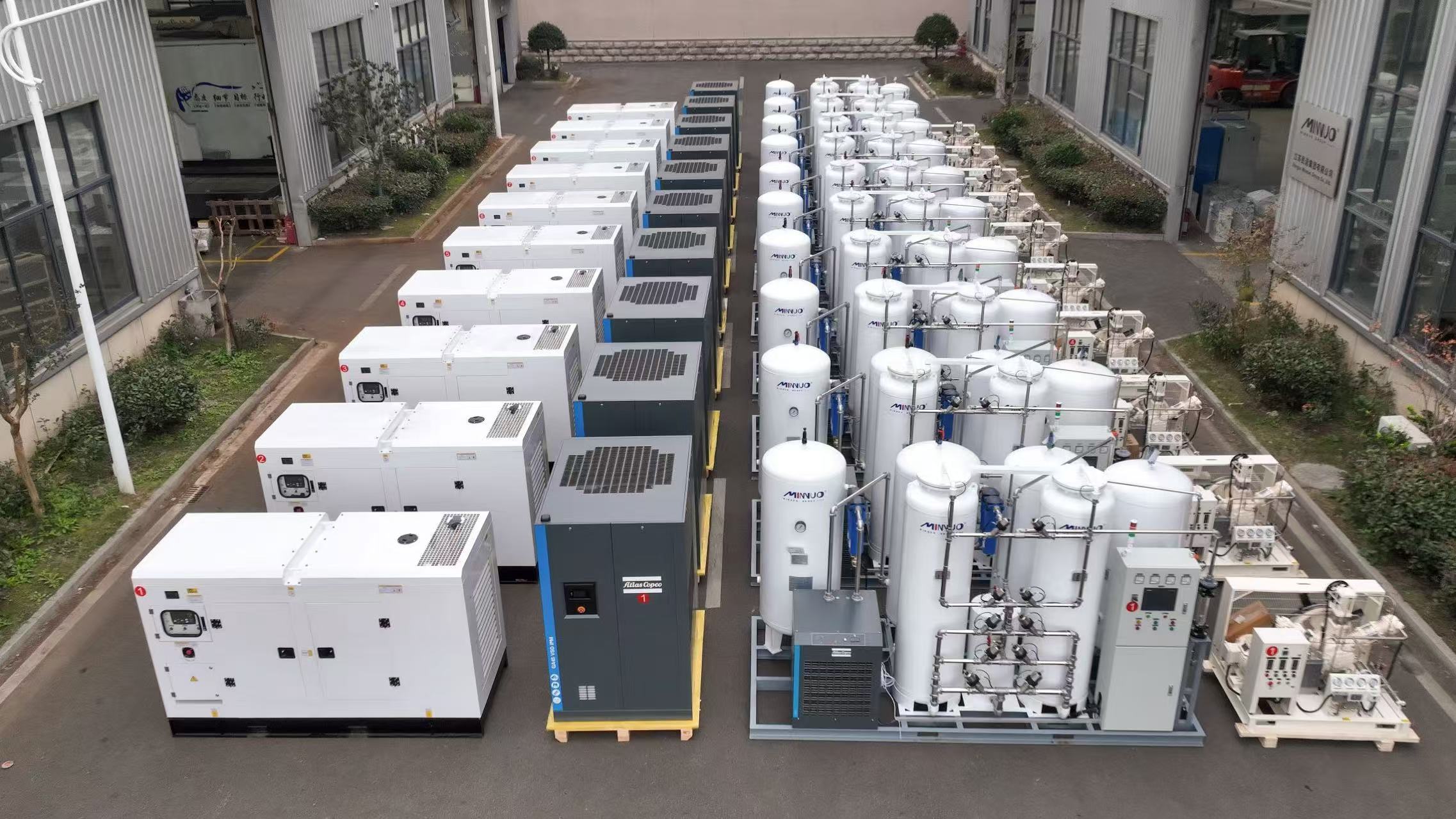
At MINNUO, we design and manufacture gas plant components to exactly this standard — from PSA vessels to precision-machined assemblies — and we know the tolerance battles our own machining floor fights every day. If you are planning in-house grinding capacity or expanding your machining capability, send us your component list and utility requirements, and we will prepare a free system sizing proposal based on your actual production needs.
FAQ
Q: Why would a gas equipment factory need its own grinder?
A: Because sealing faces, flange ends, valve seats, and compressor bores are grinding results. For repetitive gas-plant components, in-house grinding controls the quality and lead time that outsourcing cannot.
Q: Are used grinding machines as accurate as new ones?
A: In many cases yes — sometimes more so. Grinding accuracy lives in guideway geometry and spindle condition, which survive well if maintained. A used Swiss, German, or Japanese grinder often holds a higher accuracy class than a new entry-level machine.
Q: How much can we realistically save?
A: Used surface grinders commonly price at 20–35% of equivalent new machines. ROI depends on utilization; documented cases show full payback in a few months of continuous work.
Q: What inspection should we insist on?
A: Spindle run-out and temperature, guideway wear and straightness (ideally a laser-interferometer test), a test grind with measurement records, and control age plus spare-part availability.
Q: Which grinding machine brands should a gas plant focus on?
A: The brands that built the accuracy classes your parts need — typically Japanese (Okamoto, Toyo, Taiyo Koki), Swiss (Studer, Kellenberger, Voumard), and German (Mikromat, Reform) — are the deep inventory markets for used grinders.
Q: Do grinders need special utilities in a gas plant?
A: Yes — clean, dry compressed air and stable coolant are non-negotiable for spindle and wheel dressing systems. A gas plant that already produces its own dry compressed air has a natural advantage here. Plan the utility tie-in before the machine arrives.

 sales2:+86 17506119168