
Key answer: At standard atmospheric pressure, liquid nitrogen reaches approximately −196 °C (−321 °F). In a biobank, the temperature at each sample position depends on the storage arrangement and liquid level. To select an on-site supply system, calculate daily liquid nitrogen demand, then match the nitrogen generator, liquefier and backup supply to that demand.
Why Does Liquid Nitrogen Temperature Matter for Biobank Storage?
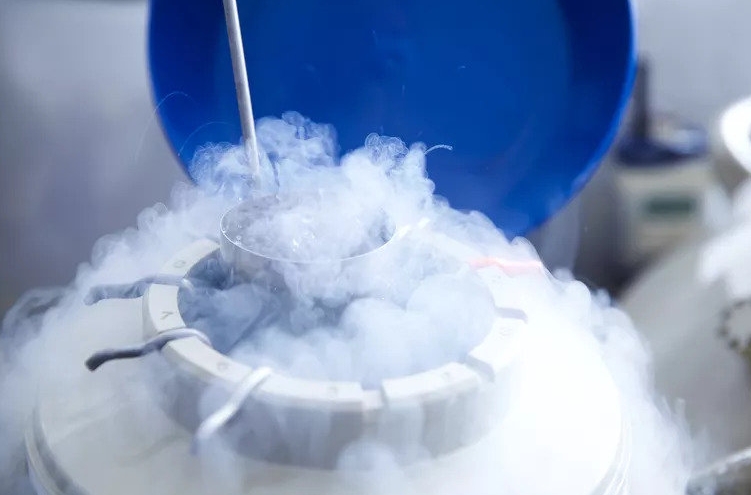
Liquid nitrogen provides a low-temperature environment for biological samples. At standard atmospheric pressure of 101.325 kPa, nitrogen boils at approximately 77.34 K, or −195.81 °C.
Vapor-phase storage keeps samples above the liquid surface. Temperatures in this space can change with storage height, liquid level and lid opening, so operators should measure temperatures at the sample positions rather than assume they match the liquid nitrogen temperature.
Different samples also need different storage conditions. One CDC biorepository protocol, for example, lists −80 °C storage for certain serum and plasma samples and liquid nitrogen storage for peripheral blood mononuclear cells. CDC sample storage conditions
A reliable system needs more than low temperatures. Purchasers should also plan for daily consumption, refill peaks, equipment downtime and backup supply.
How to Select a Nitrogen Generator and Liquefier for a Biobank
Calculate Daily Liquid Nitrogen Demand
Start with delivery or refill records that cover normal operations. Include vessel evaporation, transfer losses, piping losses and planned expansion. If the records already include a loss, do not add it again.
Use this formula for an initial estimate:
Target liquefaction capacity (L/h) = Daily liquid nitrogen demand (L/day) × Capacity allowance factor ÷ Available production hours per day
The following examples assume 20 production hours per day and a 20% capacity allowance:
| Application | Daily liquid nitrogen demand | Preliminary liquid output | Theoretical nitrogen gas requirement |
|---|---|---|---|
| Small biobank | 10 L/day | 0.60 L/h | Approx. 0.39 Nm³/h |
| Medium biobank | 30 L/day | 1.80 L/h | Approx. 1.16 Nm³/h |
| Multi-vessel facility | 100 L/day | 6.00 L/h | Approx. 3.87 Nm³/h |
At 0 °C and 101.325 kPa, 1 L of liquid nitrogen corresponds to approximately 0.645 Nm³ of nitrogen gas by mass. The actual generator must also supply nitrogen for system losses, so ask the liquefier supplier to specify its required inlet flow. NIST cryogen properties, NIST nitrogen density data
Before finalizing capacity, account for startup time, maintenance, peak refills and the time needed to rebuild the reserve after an interruption.
Match Nitrogen Purity to the Liquefier
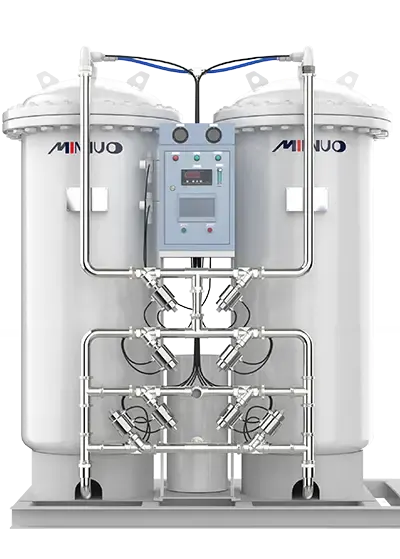
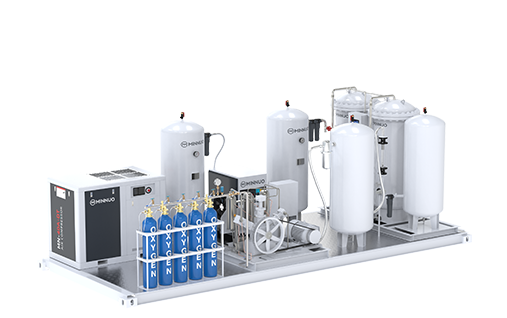
A conventional PSA nitrogen generator produces gaseous nitrogen. A separate liquefier, or the liquefaction stage in an integrated system, then cools that gas to produce liquid nitrogen.
Give suppliers these requirements when requesting a quotation:
- Generator outlet: Required nitrogen flow, pressure and purity or oxygen content.
- Liquefier inlet: Permitted moisture, oil and particles, plus the dew-point measurement conditions.
- Liquid nitrogen delivery: Quality requirements for the storage protocol.
- Alarm response: How the system responds when purity or dew point moves outside the agreed limits.
For reference, the Asynt CNP20 datasheet lists a built-in nitrogen generator purity of ≥99.9% and liquid nitrogen production of ≥20 L/day. Select the final specification to suit the liquefier and sample-storage requirements.
Compare Liquid Nitrogen Generator Capacity and Power
| Equipment reference | Published liquid nitrogen output | Published power | What to confirm |
|---|---|---|---|
| Asynt CNP20 | ≥20 L/day | 3.6–4.8 kW, steady state at 50 Hz | Test conditions and delivered output |
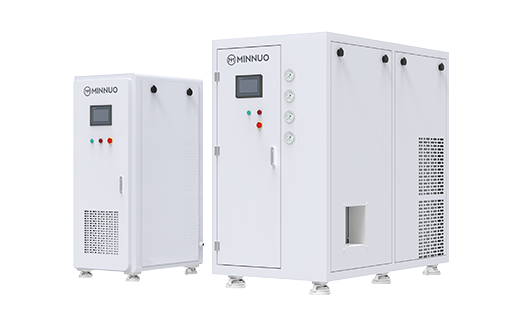
| MINNUO MNLN-20 | 0.8–1 L/h | 4.5 kW | Output at the required purity and ambient conditions |
| MINNUO MNLN-40 | 1.6–2 L/h | 7.5 kW | Guaranteed output and total electrical-load boundary |
| MINNUO MNLN-80 | 3 L/h | 12.5 kW | Storage and backup-supply configuration |
Sources: Asynt CNP20 and MINNUO compact liquid nitrogen generator. Manufacturers may use different test conditions and power boundaries, so the table does not provide a direct energy-efficiency comparison.
MINNUO’s product page also lists 40–50 L/day for the MNLN-40. Its hourly range of 1.6–2 L/h converts to 38.4–48 L over 24 hours. Ask the supplier to confirm the guaranteed output and measurement conditions.
Plan Backup Liquid Nitrogen Supply
A reserve gives staff time to respond to maintenance, power loss or equipment failure. For a facility that uses 30 L/day and plans for a three-day interruption:
Theoretical net reserve = 30 L/day × 3 days = 90 L.
The storage plan should also account for usable withdrawal volume, reserve-vessel evaporation, transfer losses and the time needed to restore supply.
When comparing on-site production with delivered liquid nitrogen, include equipment cost, electricity, maintenance, backup deliveries and supply reliability.
Specify Temperature Monitoring and Safety Equipment
- Temperature monitoring: Place sensors at the least favorable sample positions and validate low-level, lid-opening and recovery conditions. ISBER biorepository best practices
- Oxygen monitoring and ventilation: Design both around the site risk assessment and local requirements. OSHA considers an atmosphere below 19.5% oxygen oxygen-deficient. OSHA guidance
- Pressure relief: Protect vessels and isolatable pipe sections where liquid nitrogen could become trapped.
- Storage containers: Follow the sample and container protocol. CDC recommends vapor-phase storage of ampoules where possible to reduce the risk of liquid nitrogen entering imperfectly sealed containers. CDC laboratory safety guidance
How to Verify System Performance Before Acceptance
Agree on acceptance conditions with the supplier before ordering. These records give the biobank a basis for checking system performance:
| Acceptance item | Record | Check against |
|---|---|---|
| Nitrogen supply | Flow, reference conditions, pressure, oxygen content and dew point | Liquefier inlet requirements |
| Liquid nitrogen output | Operating hours, ambient temperature and delivered liquid volume | Guaranteed delivered L/h |
| Sample-storage temperature | Temperature, liquid level, lid opening and recovery | Approved storage limits |
| Backup supply | Alarm time, usable reserve and switchover time | Time available to restore supply |
Sizing Example: A Biobank Using 30 L per Day
This example uses 30 L/day demand, 20 production hours per day and a 20% allowance:
| Item | Calculation | Result |
|---|---|---|
| Preliminary liquid output | 30 × 1.20 ÷ 20 | 1.8 L/h |
| Theoretical nitrogen gas requirement | 1.8 × 0.645 | Approx. 1.16 Nm³/h |
| Three-day theoretical net reserve | 30 × 3 | 90 L |
The supplier can use these figures as a starting point, then account for actual gas losses, peak demand and operating conditions. The biobank should validate the backup supply and temperature-alarm response.
FAQs About Liquid Nitrogen Storage and Equipment
Q: Is the sample temperature the same as the liquid nitrogen temperature?
A: Not necessarily. Vapor-phase temperature varies with position, liquid level and lid opening. Monitor the least favorable sample positions against the approved storage limits.
Q: Can a generator be selected on purity alone?
A: No. Confirm flow, pressure and dew point at the required purity, as well as the liquefier’s inlet and the storage protocol’s quality requirements.
Q: Is the number of stored vials enough to size the system?
A: No. Also consider vessel models, refill records, evaporation, transfer losses, access frequency and planned expansion.
Q: Why is actual inlet flow higher than the liquid nitrogen mass conversion?
A: The theoretical conversion excludes startup, purge, exhaust and leakage losses. Ask the liquefier supplier for the inlet flow needed to guarantee output.
Q: Can an on-site generator replace the backup supply?
A: Plan a separate reserve or another validated contingency arrangement around the facility’s sample risk and recovery time. Test alarm and switchover procedures as part of that plan.
Explore MINNUO On-Site Nitrogen and Liquefaction Solutions
Biobanks evaluating on-site supply can explore MINNUO nitrogen generation and liquid nitrogen solutions. Share daily demand, vessel count, operating hours and backup requirements with the supplier to obtain a suitable configuration and quotation.
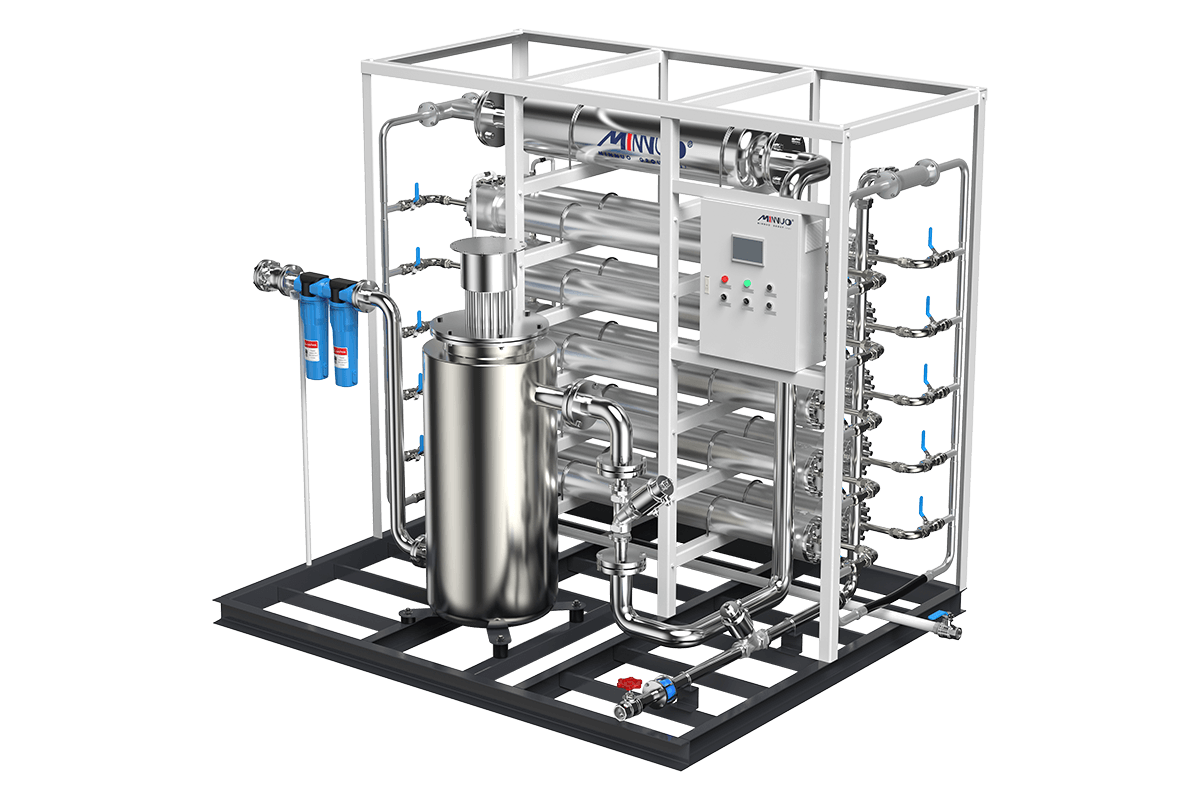
MINNUO offers PSA nitrogen generation and liquid nitrogen equipment. Before purchasing, confirm delivered output, nitrogen purity, electrical-load boundary and service support under the intended operating conditions. MINNUO liquid nitrogen generator specifications


 sales2:+86 17506119168