I. Introduction
There’s a moment every brewer knows: the first taste of a new batch, fresh from the fermenter. It’s bright, vibrant, full of the hop character and malt flavor you worked so hard to create.
The challenge is keeping it that way.
From the moment fermentation ends until the beer is poured, oxygen is trying to ruin it. Oxidation turns fresh flavors stale, destroys hop aroma, and shortens shelf life. For craft breweries competing on quality, oxygen is enemy number one.
That’s where nitrogen comes in.
Nitrogen generators are becoming standard equipment in forward-thinking breweries. They provide an endless supply of inert gas for two critical jobs: blanketing tanks to keep oxygen out, and transferring beer without the damage caused by pumps.
This guide explains how nitrogen is used in brewing, why it matters, and how a generator can pay for itself while improving your beer.
II. Why Oxygen Is the Enemy of Beer
To understand why nitrogen matters, you first need to understand what oxygen does to beer.
Oxidation reactions:
When beer is exposed to oxygen, chemical reactions begin:
- Hop compounds break down, losing aroma and creating “cheesy” or “skunky” notes
- Malt flavors flatten, developing papery or cardboard-like tastes
- Colors can darken
- Haze can form
- Shelf life shortens dramatically
When oxygen attacks:
The most vulnerable periods are:
- After fermentation, when beer is most susceptible
- During transfers between tanks
- During packaging (canning, bottling, kegging)
- In headspace of storage tanks
The challenge:
Even tiny amounts of oxygen cause damage. The industry standard for packaged beer oxygen is measured in parts per billion—not parts per million. At those levels, every exposure matters.
The solution:
Replace oxygen with something inert. Nitrogen is the perfect choice—it’s odorless, tasteless, and doesn’t react with beer.
III. Blanketing: Protecting Beer in Tanks
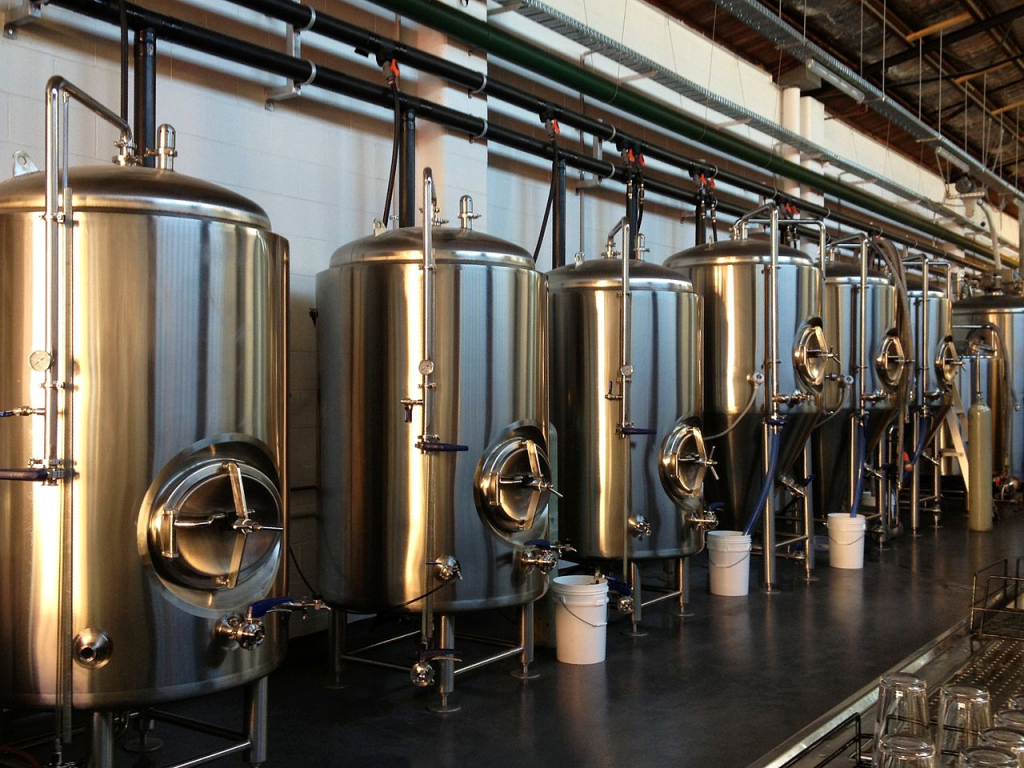
The first major use of nitrogen in breweries is blanketing—creating a protective layer of inert gas above the beer in tanks.
What is blanketing?
After fermentation, beer is stored in tanks—bright beer tanks, brite tanks, serving tanks. These tanks aren’t completely full; there’s headspace at the top. In that headspace, air contains oxygen that will slowly dissolve into the beer and cause oxidation.
Blanketing means filling that headspace with nitrogen instead of air.
How it works:
- After filling or transferring beer, the tank headspace is purged with nitrogen
- A slight positive pressure of nitrogen is maintained (typically 1-3 PSI)
- As beer is drawn out, nitrogen fills the space, never letting oxygen in
- The nitrogen blanket stays in place until the tank is emptied
Which tanks need blanketing:
- Bright beer tanks: Critical—beer may sit here for days or weeks
- Serving tanks: Especially important in brewpub settings
- Fermenters: After crashing and before transferring
- Yeast brinks: If storing yeast, protect it too
- Any tank with headspace: If air is in, oxidation is happening
The result:
Beer that stays fresh from the day it’s made until the day it’s poured—not just for weeks, but for months.
IV. Transfer: Moving Beer Without Damage
The second major use is transfer—using nitrogen pressure to move beer instead of pumps.
The problem with pumps:
Centrifugal pumps, commonly used in breweries, have several issues:
- Shear forces: Pumps can tear apart delicate proteins, affecting head retention and mouthfeel
- Oxygen pickup: Pump seals can leak, drawing in air
- Cleaning: Pumps must be cleaned and sanitized thoroughly
- Foaming: Pump action can cause foaming, which means beer loss
How nitrogen transfer works:
- A tank of beer is connected to a destination tank with sanitary piping
- Nitrogen is introduced at the top of the source tank at low pressure (2-10 PSI)
- Pressure pushes beer gently through the pipe
- The destination tank is vented or has its own nitrogen blanket
- Beer moves smoothly, without turbulence, without pumps
Advantages of nitrogen transfer:
- No shear: Beer structure stays intact
- No oxygen pickup: Closed system, no air exposure
- Gentle on carbonation: Less foaming, less CO2 loss
- Simpler cleaning: Just pipes, no pump teardown
- Quieter: No pump noise in the brewery
When to use it:
- Fermenter to bright tank
- Bright tank to packaging line
- Between blending tanks
- Any time you’d normally use a pump
V. Nitrogen Purity for Brewing
What purity of nitrogen does a brewery need? The answer might surprise you.
It doesn’t need to be ultra-pure.
Unlike electronics manufacturing or pharmaceutical applications, breweries don’t need 99.999% nitrogen. The goal is to displace oxygen, not to achieve absolute purity.
Typical requirements:
- Blanketing: 99% to 99.5% nitrogen (0.5% to 1% residual oxygen) is plenty
- Transfer: Same range—the small amount of residual oxygen isn’t significant
- Packaging: Some canning lines may benefit from higher purity, but 99.5% still works
Why lower purity is OK:
- The goal is to exclude air (21% oxygen). Replacing it with 99.5% nitrogen means 0.5% oxygen—far better than 21%
- Multiple purges (in packaging) further reduce oxygen
- Beer is already sensitive—every reduction in oxygen exposure helps
The trade-off:
Higher purity costs more to produce. For breweries, 99% or 99.5% is the sweet spot—effective protection without overspending on equipment.
VI. Onsite Generation vs. Nitrogen Sources
Breweries have options for getting nitrogen.
Nitrogen cylinders:
- High-pressure cylinders delivered by gas supplier
- Simple to start—just rent cylinders and connect
- But: ongoing cost, cylinder handling, running out at worst moments
- Works for tiny breweries, but impractical at scale
Liquid nitrogen (LN2):
- Delivered in Dewars or mini-tanks
- Very high purity
- Boil-off losses mean you pay for gas you don’t use
- Delivery logistics, tank rental
- Common in mid-sized breweries before switching to generation
Onsite nitrogen generator:
- Produces nitrogen from compressed air
- Brewery owns the equipment
- Only cost: electricity and maintenance
- No deliveries, no boil-off, no running out
- Lower cost per cubic foot after payback
The breakeven:
For a brewery using 2-3 cylinders per week, a generator pays for itself in 18-36 months. For larger breweries, even faster.
Additional benefits:
- Never run out during a packaging run
- Consistent supply, consistent quality
- No waiting for deliveries
- Space savings (no cylinder storage)
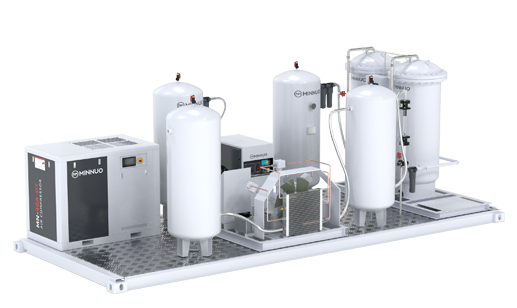
VII. Sizing a Nitrogen Generator for Your Brewery
If you’re considering a generator, here’s how to size it.
Step 1: Estimate usage
Calculate how much nitrogen you use or will use:
- Blanketing: A 10-barrel tank might need 5-10 cubic feet after each fill, plus small ongoing flow to maintain pressure
- Transfer: Depends on transfer speed and frequency
- Packaging: Canning lines can be big users during operation
Simpler method:
Track your current cylinder usage. If you use 4 cylinders per week at 250 cubic feet each, that’s 1,000 cubic feet per week—about 6 CFM continuous equivalent.
Step 2: Consider peak demand
A generator sized for average use may struggle when multiple transfers happen at once. Add a buffer tank to handle peaks.
Step 3: Choose technology
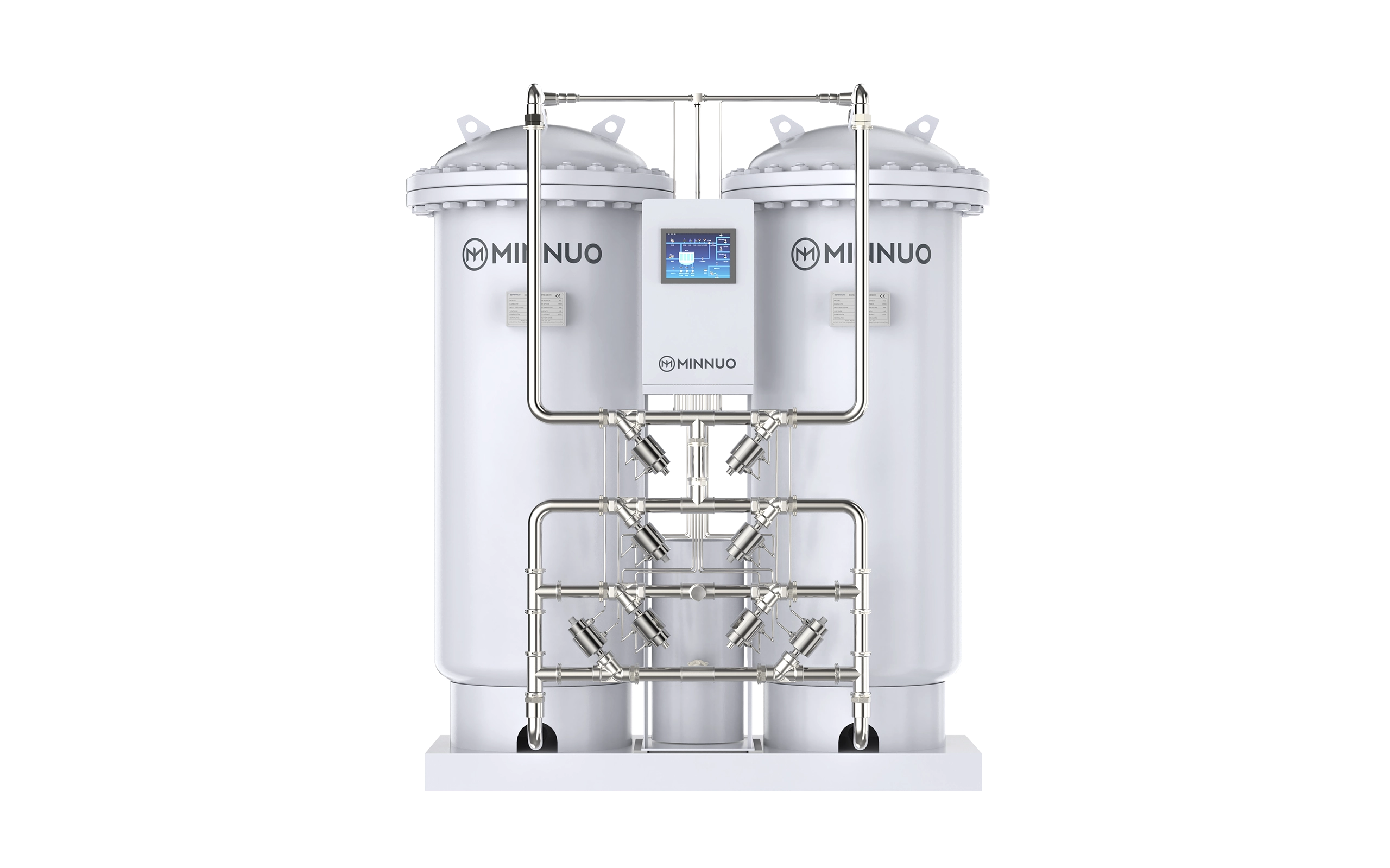
- Membrane generators: Simpler, fewer moving parts, good for 99-99.5% purity. Ideal for most breweries.
- PSA generators: Higher purity if needed, but usually not necessary for brewing.
Step 4: Plan installation
- Requires compressed air (clean, dry)
- Needs space (about refrigerator-sized for most breweries)
- Electrical connection (standard power for smaller units)
Example sizing:
A 10-20 CFM membrane generator with a 200-gallon buffer tank serves most small to mid-sized breweries well.
FAQ
Q1: What purity of nitrogen does a brewery need?
A1: 99% to 99.5% nitrogen (0.5% to 1% residual oxygen) is sufficient for blanketing and transfer. Higher purity isn’t necessary and costs more. Membrane generators are perfect for this range.
Q2: How much nitrogen does a brewery use?
A2: It varies widely. A 10-barrel brewpub might use 1-2 cylinders per week. A 30-barrel production brewery might use 5-10 cylinders weekly. Track your current usage to size a generator.
Q3: Do I need a compressor for a nitrogen generator?
A3: Yes. Nitrogen generators need compressed air to work. If you already have a good air compressor for your brewery, you’re set. If not, factor that into the investment.
Q4: How long does a nitrogen generator last?
A4: With proper maintenance, 10-15 years. Membrane modules typically last 5-10 years before needing replacement. Compressor maintenance is separate.
Q5: Will nitrogen affect the flavor of my beer?
A5: No. Nitrogen is odorless, tasteless, and inert. It doesn’t react with beer. It simply displaces oxygen, preserving the flavors you worked to create.
Q6: How do I know if my blanketing is working?
A6: Measure dissolved oxygen in your beer at various stages. If levels are low and consistent, your blanketing is effective. Also, taste—fresh beer should stay fresh longer.
Q7: Is a nitrogen generator worth it for a small brewpub?
A7: If you’re using 1-2 cylinders per week, the payback might be 2-3 years—still worth it for many. Beyond convenience, the quality benefit of always having nitrogen available for proper blanketing is hard to quantify but real.
Conclusion
For breweries serious about quality, nitrogen isn’t optional—it’s essential. From the moment fermentation ends until beer reaches the glass, nitrogen protects against the oxidation that ruins flavor and aroma.
Blanketing keeps oxygen out of tank headspace. Transfer moves beer gently without pumps. Together, they preserve the freshness you worked so hard to create.
And when you generate your own nitrogen onsite, you never run out, never pay delivery fees, and never compromise because you’re “almost out of gas.” The equipment pays for itself, then keeps saving money year after year.
At MINNUO, we help breweries of all sizes make the switch to onsite nitrogen generation. Whether you’re a 5-barrel brewpub or a 100-barrel production facility, we can help you size and install a system that protects your beer—and your reputation. Because we know that in craft brewing, freshness is everything.