
As the wave of retired power batteries continues to grow, the lithium battery recycling industry is developing rapidly toward large-scale operation, automation and higher safety standards. The whole process of lithium battery dismantling, pyrolysis and material recycling faces multiple hidden dangers: electrolyte volatilization, combustible dust diffusion, battery thermal runaway and oxidation deterioration of metal materials. PSA (Pressure Swing Adsorption) nitrogen generators can continuously produce high-purity inert nitrogen on-site, providing core protection including inerting and explosion prevention, anti-oxidation, carrier gas delivery and drying for lithium battery recycling production lines. As an indispensable supporting equipment, it meets the production demands of small, medium and large-scale recycling lines.
I. Working Principle of PSA Nitrogen Generators
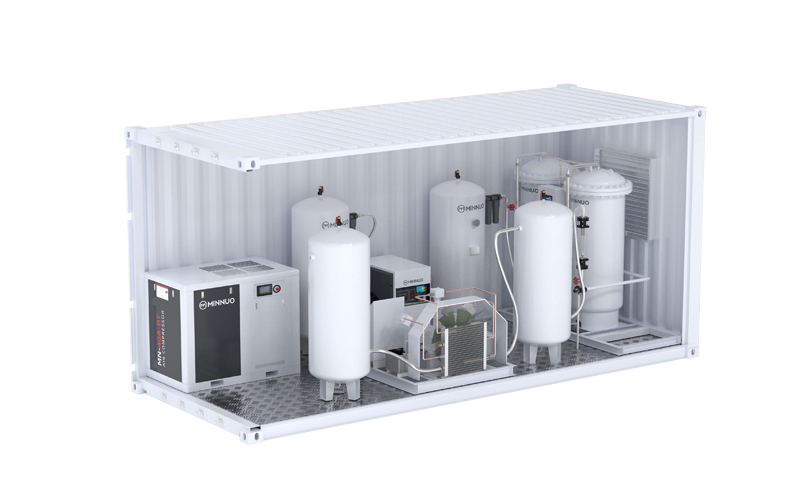
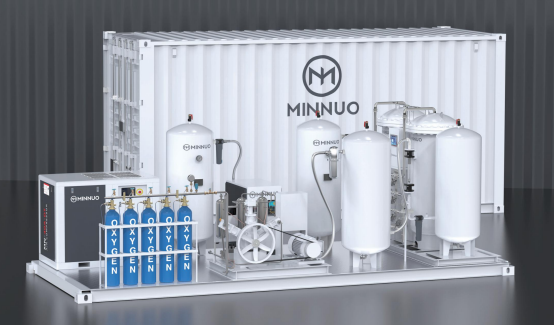
PSA nitrogen generation technology takes compressed air as raw material. Leveraging the difference in oxygen and nitrogen adsorption rates of carbon molecular sieves, it realizes nitrogen-oxygen separation through cyclic processes of adsorption under pressure and desorption under reduced pressure. No chemical agents or cryogenic liquefaction are required.
The equipment can generate nitrogen quickly after startup. Operators can accurately adjust nitrogen purity, pressure and flow according to production requirements. It supports 24/7 continuous and stable gas supply, perfectly adapting to the non-stop continuous production mode of lithium battery recycling.
II. Application Scenarios of PSA Nitrogen Generators in the Whole Lithium Battery Recycling Process
High-purity nitrogen produced by PSA nitrogen generators covers all working procedures including waste lithium battery warehousing, pre-treatment, dismantling and crushing, high-temperature pyrolysis, solvent recovery, material purification and finished product storage, targeting safety risks and quality loss in each link.
Waste Battery Warehousing and Standing: Pre-safety Prevention
During the stacking and storage of retired lithium batteries, internal micro-short circuits and slow thermal runaway may occur, and the electrolyte will volatilize gradually to produce combustible gas. Filling sealed warehouses and battery standing bins with nitrogen keeps the ambient oxygen content within a safe range, inhibits the accumulation of combustible gas and effectively avoids spontaneous combustion and deflagration of batteries. Meanwhile, the inert atmosphere isolates moisture in the air, preventing battery casings and pole piece semi-finished products from dampness and oxidation, and reducing the difficulty of subsequent material purification.
Battery Discharging, Dismantling and Crushing: Explosion Prevention & Material Quality Improvement
Deep discharging and mechanical crushing are high-risk procedures in lithium battery recycling. A large amount of lithium battery powder and metal dust from pole pieces will be generated during crushing, accompanied by massive electrolyte volatilization, which easily forms explosive mixed gas and may trigger explosions when encountering static electricity or mechanical sparks.
Continuous nitrogen filling into sealed crushing bins and discharging boxes displaces internal air and builds an inert protective environment, fundamentally eliminating hidden dangers of dust explosion and gas deflagration. Isolation from oxygen also prevents copper foil, aluminum foil and cathode active materials from oxidation, blackening and deterioration, greatly improving the recovery rate and purity of subsequent metal materials and lithium battery powder. In addition, nitrogen acts as an anti-static carrier gas to assist the conveying of pole piece powder and avoid static accumulation during transportation.
Parameters for this scenario: Nitrogen purity ≥ 99.9%, pressure 0.6–0.8 MPa, dew point ≤ -40℃.
High-temperature Pyrolysis and Roasting: Core Process Protection
Pyrolysis of lithium battery pole pieces and roasting for organic degumming are core procedures for pole piece regeneration and material purification. Metal powder and active materials are prone to oxidation under high temperature, which will directly degrade the performance and recycling value of regenerated materials.
Continuous delivery of high-purity nitrogen into pyrolysis furnaces and roasting furnaces creates an oxygen-free inert high-temperature environment. It prevents precious metals such as nickel, cobalt and lithium as well as cathode materials from oxidation and failure, guarantees the electrochemical performance of regenerated lithium battery materials. It also stabilizes the furnace atmosphere, avoids deflagration of combustible pyrolysis gas at high temperature and improves process stability and finished product yield. Ultra-high purity nitrogen of 99.99% and above is adopted for high-end material recycling.
Electrolyte Solvent Recovery: Safe Sealed Recycling
The electrolyte of waste lithium batteries contains flammable carbonate organic solvents. During distillation and recovery, the mixture of organic solvent vapor and air tends to form explosive substances, and the solvents are susceptible to oxidation and deterioration at high temperature. As an inert protective gas, nitrogen inertizes distillation towers and condensation recovery systems in a sealed state to isolate air, eliminate combustion and explosion risks of solvents, prevent solvent oxidation, improve the purity and recovery rate of electrolyte, and reduce secondary pollution.
Recycled Material Storage and Sorting: Finished Product Protection
Finished materials such as copper-aluminum powder, lithium battery powder and regenerated cathode materials after crushing and sorting feature large specific surface area and high activity, which are easy to oxidize and absorb moisture when exposed to air. Nitrogen protection for material storage bins and sorting equipment cavities can isolate oxygen and moisture for a long time, maintain the purity and activity of recycled materials, and ensure the product quality of subsequent metallurgical purification and material regeneration.
III. Core Advantages of PSA Nitrogen Generators for Lithium Battery Recycling
High Safety for High-risk Working Conditions
The whole lithium battery recycling process is high-risk, and nitrogen inerting is recognized as the core safety protection method in the industry. PSA nitrogen generators can supply nitrogen with stable purity in real time and continuously, and precisely control the oxygen content in each process cavity, so as to completely eliminate explosion risks caused by crushing dust, electrolyte vapor and high-temperature pyrolysis gas, and prevent the spread of battery thermal runaway.
The equipment can be equipped with explosion-proof configurations to fully meet the explosion-proof production standards of lithium battery workshops. Compared with purchased liquid nitrogen and cylinder nitrogen, it avoids leakage risks of high-pressure storage tanks and transportation hazards, delivering higher production safety.
Cost Reduction & Efficiency Improvement with Excellent Long-term Cost Performance
PSA nitrogen generators use free air as raw material and only consume a small amount of electricity. There is no cost for liquid nitrogen procurement, cylinder leasing and logistics transportation, as well as no evaporation loss of liquid nitrogen (the traditional liquid nitrogen loss rate reaches 5%-8%).
Data shows that the long-term operating cost of on-site PSA nitrogen production is only 20%-30% of purchasing liquid nitrogen, which greatly cuts gas consumption costs for enterprises. The gas output can be adjusted on demand to avoid gas waste and adapt to fluctuating production line loads. Compared with cryogenic air separation equipment, it requires lower initial investment and faster startup, making it suitable for lithium battery recycling enterprises of all sizes.
Stable Gas Supply for Continuous Production
The equipment has few frequently damaged moving parts. The adsorption and regeneration cycle of carbon molecular sieves operates stably, supporting 24/7 non-stop nitrogen production. The gas supply pressure, purity and dew point remain constant, with no sudden gas cut-off, unstable supply of liquid nitrogen or seasonal supply fluctuations. It perfectly matches the assembly line operation mode of lithium battery recycling and prevents production line shutdown caused by interrupted gas supply, ensuring stable production efficiency.
High Automation & Convenient Operation and Maintenance
Modern PSA nitrogen generation systems are equipped with intelligent control systems, realizing automatic start-stop, automatic purity adjustment, automatic fault alarm and remote monitoring. No full-time on-duty staff is required, which greatly reduces labor and maintenance costs. Featuring compact structure and small floor space, the equipment is easy to install and commission, and can be directly connected with sealed cavities of production lines, adapting to the integration requirements of automatic dismantling and intelligent recycling lines.
Quality Improvement & Higher Recycling Benefits
Full-process inert nitrogen protection maximally prevents oxidation, moisture absorption and deterioration of core recycled materials including copper, aluminum, nickel, cobalt and lithium. It effectively increases the metal recovery rate and the purity of regenerated materials, and reduces waste loss. The stable oxygen-free environment optimizes the effects of pyrolysis and solvent recovery processes, improves the quality of finished materials, and directly raises the production capacity and economic benefits of recycling enterprises.
Eco-friendly & Compliant with Industry Regulations
PSA nitrogen generation is a purely physical separation process with no chemical reactions, pollutant discharge, waste liquid or residue. Replacing the traditional liquid nitrogen and cylinder gas supply mode reduces the storage and transportation of hazardous chemicals, lowering environmental and safety compliance risks. It conforms to the development requirements of green production and safety compliance in the lithium battery recycling industry.
IV. Key Selection Parameters of PSA Nitrogen Generators for Lithium Battery Recycling Industry
- Conventional dismantling and warehousing protection: Nitrogen purity ≥ 99.9%, pressure 0.6–0.8 MPa, dew point ≤ -40℃
- High-temperature pyrolysis and high-end material regeneration: Nitrogen purity 99.99%–99.999%, ultra-low dew point ≤ -50℃, equipped with carbon deoxidation and purification modules
- Working condition adaptation: Support explosion-proof design, fully automatic unattended operation, remote monitoring and adjustable gas volume for continuous production lines
V. Summary
With core advantages including explosion prevention, quality improvement, cost reduction, stable gas supply and environmental compliance, PSA nitrogen generators are fully applicable to the whole process of lithium battery recycling including warehousing, pre-treatment, dismantling, pyrolysis and material purification.
Compared with traditional nitrogen supply methods, it better adapts to the high-risk, continuous and refined production characteristics of lithium battery recycling. It not only builds a solid safety barrier for production lines, but also greatly reduces operating costs and increases the value of recycled materials. Currently, it is the optimal nitrogen supply solution and core supporting equipment for the standardization and large-scale development of the lithium battery recycling industry.
FAQ
Q1: What is the main function of PSA nitrogen generators in lithium battery recycling?
A1: It mainly provides inert nitrogen for explosion prevention, anti-oxidation, dust conveying and drying protection. It eliminates combustion and explosion risks in production, and prevents recycled metal and electrode materials from oxidation and deterioration.
Q2: What nitrogen purity is required for different working procedures?
A2: General warehousing, dismantling and crushing require nitrogen purity ≥ 99.9%; high-temperature pyrolysis and high-end material regeneration need ultra-high purity nitrogen of 99.99% to 99.999%.
Q3: Why choose on-site PSA nitrogen generator instead of liquid nitrogen or gas cylinders?
A3: On-site PSA nitrogen production has lower long-term operating cost (only 20%-30% of liquid nitrogen cost), no evaporation loss, no transportation and storage risks of hazardous goods, and realizes 24/7 stable gas supply without sudden gas cut-off.
Q4: Can the equipment be used in explosion-proof workshops of lithium battery factories?
A4: Yes. We can provide customized explosion-proof models that fully meet the explosion-proof standards for lithium battery production workshops.
Q5: What are the requirements for nitrogen dew point and pressure in this industry?
A5: Conventional working conditions require pressure of 0.6–0.8 MPa and dew point ≤ -40℃; high-end processes need ultra-low dew point ≤ -50℃.
Q6: Is the PSA nitrogen generator easy to operate and maintain?
A6: The equipment adopts fully automatic intelligent control, supporting remote monitoring and automatic fault alarm, basically unattended. It has a compact structure, few vulnerable parts and low daily maintenance difficulty.
Q7: Does PSA nitrogen production process produce pollutants?
A7: No. It is a pure physical air separation technology, with no chemical reaction, no waste liquid, waste residue and exhaust emission, which is green and environmentally friendly.
Q8: Can the gas output of the nitrogen generator be adjusted according to production load?
A8: Yes. The flow rate, pressure and purity of nitrogen can be adjusted flexibly to match the fluctuating operating load of the recycling production line and avoid gas waste.

 sales2:+86 17506119168