
For the global oil and gas industry, the greatest challenges often lie not in finding new fields, but in maximizing what’s already been discovered. How do you recover more oil from a mature reservoir after primary production declines? How do you perform complex, hazardous well interventions with absolute safety? The answer to both questions increasingly involves an invisible, inert workhorse: nitrogen gas (N₂).
Far more than just a purging agent, nitrogen has become a strategic engineering fluid in modern hydrocarbon operations. Its unique properties make it a powerful tool for Enhanced Oil Recovery (EOR) and a critical safety component in a wide array of well services. This guide delves into the science and engineering behind nitrogen’s role in the oilfield, from deep within the reservoir to the wellhead, and explores the advanced on-site generation technologies that make its large-scale use practical and economical.
Why Nitrogen? Key Properties for Oilfield Applications
Nitrogen’s suitability for oilfield duty stems from a combination of inherent characteristics:
- Inertness: Nitrogen is non-flammable and does not support combustion. This makes it the perfect medium to displace explosive or oxygen-rich atmospheres in wells, pipelines, and vessels, eliminating fire and explosion risks.
- Availability & Purity: Constituting 78% of the atmosphere, nitrogen is virtually inexhaustible. It can be separated on-site at high purities (typically 95-99.9%), eliminating long, vulnerable supply chains.
- Reservoir Performance: Under the high pressures found in many oil reservoirs, nitrogen is highly compressible. It can expand significantly, providing excellent drive energy. For certain light oil reservoirs, it can achieve miscibility—mixing completely with the oil to drastically reduce its viscosity and surface tension, making it far easier to produce.
- Economic & Environmental Profile: Compared to other EOR gases like carbon dioxide (CO₂) or natural gas, nitrogen often offers cost stability (price is not tied to hydrocarbon markets) and requires no extensive pipeline infrastructure. Environmentally, it poses no greenhouse gas threat upon production or use.

Application 1: Enhanced Oil Recovery (EOR) – Nitrogen Injection
When primary (natural pressure) and secondary (water flooding) recovery methods are exhausted, Nitrogen Injection is a tertiary recovery technique used to mobilize and produce additional, stranded oil.
How Nitrogen EORWorks:
The process involves injecting high-pressure nitrogen into the reservoir through injection wells. Its mechanisms are multifaceted:
- Pressure Maintenance & Gas Drive: The injected nitrogen re-pressurizes the reservoir, providing the energy to push additional oil towards production wells. It acts as a expanding “gas cap” that sweeps the oil downward (in dipping formations) or laterally.
- Miscible Displacement (for suitable reservoirs): In deep, high-pressure reservoirs containing light oil, nitrogen can become miscible with the crude. At the high-pressure Minimum Miscibility Pressure (MMP), nitrogen and oil mix into a single, low-viscosity fluid phase. This miscible front effectively “solvents” the residual oil, achieving recovery factors that can be 10-20% higher than immiscible methods.
- Gravity Stabilization: Due to its low density, injected nitrogen tends to rise to the top of the reservoir formation. In a correctly managed project, this creates a stable, expanding gas cap that pushes oil down and forward in a controlled manner, improving sweep efficiency.
Ideal Candidate Reservoirs:
Nitrogen EOR is most effective in deep (>2,500 meters), high-pressure, low-permeability reservoirs containing light to medium-gravity crude oil. These conditions favor achieving miscibility and minimize nitrogen’s tendency to “finger” through the oil unevenly.
Application 2: Well Services & Operations – Safety and Efficiency
Beyond EOR, nitrogen is indispensable for day-to-day oilfield safety and efficiency.
1. Well Purging and Inerting:
This is the foundational safety application. Before any operation where the wellbore is opened or tools are inserted, nitrogen is used to displace hazardous gases.
- During Drilling/Completions: After drilling but before running production tubing, nitrogen purges the wellbore of drilling mud and any accumulated hydrocarbons, creating a safe, inert environment.
- During Workovers/Abandonment: For well maintenance (workovers) or permanent plugging (abandonment), nitrogen ensures no explosive mixture remains in the tubulars, protecting personnel and equipment.
2. Nitrogen Lift:
In low-pressure or depleted wells, the natural reservoir energy is insufficient to lift fluids to the surface. Nitrogen lift involves injecting high-pressure nitrogen into the production tubing. The nitrogen mixes with the fluid column, dramatically reducing its density and bottom-hole pressure, “unloading” the well and restoring or boosting production. It’s a flexible, temporary artificial lift method.
3. Fracturing and Stimulation:
Nitrogen revolutionizes stimulation treatments, especially in sensitive formations.
- Foam Fracturing: Nitrogen is used to create energized foam fracturing fluids. These foams, where nitrogen is the internal phase (typically 65-90% quality), have superior properties: they carry proppant effectively, have very low fluid loss (minimizing formation damage), and clean up rapidly after the job due to gas expansion. This is critical for water-sensitive, low-pressure, or shale formations.
- Flowback Assistance: After any fracturing or acidizing job, injected nitrogen expands as pressure is released at the wellhead. This provides immediate energy to help kick off and sustain flowback of treatment fluids, speeding up the well’s return to production and improving ultimate recovery.
4. Pipeline and Vessel Purging :
Prior to commissioning or during maintenance of pipelines, storage tanks, and process vessels, nitrogen is used for inerting—replacing oxygen to prevent explosive atmospheres—and purging—displacing hydrocarbon gases for safe entry.
On-Site Nitrogen Supply: Technologies for the Oilfield
The scale and pressure required for oilfield applications (often demanding millions of standard cubic feet per day at thousands of psi) necessitate specialized supply solutions.
1. Cryogenic (Liquid Nitrogen) Units:
The traditional method involves trucking liquid nitrogen (LN₂) to location, where it is pumped to high pressure and vaporized.
- Advantages: Capable of achieving the highest pressures (10,000+ psi) and very large, instantaneous flow rates. Ideal for short-duration, high-intensity operations like well fracturing or testing.
- Disadvantages: Logistically dependent and costly. Supply is subject to weather, road conditions, and market price volatility. Continuous operation requires a constant stream of tankers. Evaporation losses also occur.
2. Mobile & Skid-Mounted PSA Nitrogen Generators:
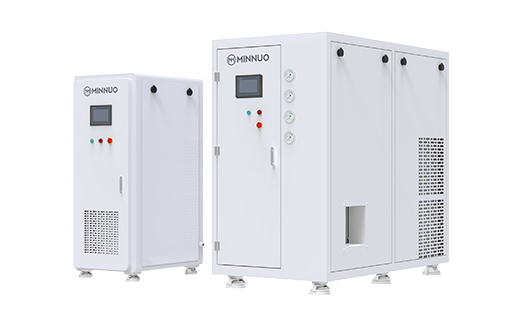
This is the paradigm shift for long-term or large-volume applications. A self-contained nitrogen plant is mounted on a trailer or skid, containing an air compressor, purification system, Pressure Swing Adsorption (PSA) nitrogen generator, and a high-pressure booster compressor.
- Advantages:
- Independence & Predictability: Produces nitrogen from air on-demand, eliminating logistics headaches and price volatility.
- Lower Lifecycle Cost: For projects lasting more than a few weeks or requiring continuous injection (like EOR), the total cost of ownership is typically 30-50% lower than purchasing LN₂.
- Remote Operation: Can be deployed to offshore platforms or remote land locations where LN₂ delivery is impractical or prohibitively expensive.
- Specifications: Modern units can produce over 5 million standard cubic feet per day (MMSCFD) of nitrogen at purities up to 99.5%, with discharge pressures configurable for the application (e.g., 1,500 psi for injection, 10,000 psi for fracturing).
3. Hybrid Systems:
The most optimized approach combines a base-load PSA nitrogen generator with a liquid nitrogen peak-shaving unit. The PSA handles the continuous demand, while the LN₂ system covers short-term peaks, offering an optimal balance of reliability, flexibility, and cost.
Key Considerations for Designing a Nitrogen Injection System
Selecting the right supply method is a critical engineering decision based on:
- Reservoir/Job Engineering Parameters: Required flow rate (MMSCFD) and injection pressure (psi) are the primary drivers.
- Project Duration and Location: Short-term jobs favor LN₂; long-term EOR projects or remote locations overwhelmingly favor mobile generators.
- Nitrogen Purity: EOR and pipeline inerting typically require >95% purity to prevent oxygen corrosion and bacterial growth. Some well servicing applications can tolerate lower purity (90-95%).
- Total Cost of Ownership (TCO) Analysis: A detailed comparison must include all costs: for LN₂ (commodity price, transportation, rental, evaporation loss) vs. on-site generation (equipment capital/lease, fuel for power generation, maintenance).
Safety and Environmental Notes
- Asphyxiation Hazard: The paramount risk when working with nitrogen is oxygen displacement. Strict confined space entry procedures and area monitoring with oxygen detectors are mandatory.
- Equipment Certification: All generators, pumps, and piping must be rated for the extreme pressures and comply with oilfield safety standards (e.g., API, ASME, and area-specific classifications like ATEX for explosive atmospheres).
- Environmental Impact: Nitrogen EOR is considered a “green” technique as it utilizes atmospheric gas and, when managed properly, sequesters nitrogen underground without harmful emissions.
FAQ
Q1: What purity of nitrogen is required for EOR?
A1: For most EOR applications, a purity of 95% to 99.5% is standard. Higher purity minimizes the risk of introducing oxygen, which can cause corrosion in downhole equipment and pipelines, and can promote the growth of bacteria that sour the reservoir.
Q2: How does nitrogen compare to CO2 for enhanced oil recovery?
A2: CO2 is miscible with oil at lower pressures and is better for heavier oils. However, it is corrosive, requires extensive pipeline networks, and its supply/price is variable. Nitrogen is better for deep, light oil reservoirs, is non-corrosive, can be generated on-site, and has stable operating costs. The choice is strictly reservoir-specific.
Q3: Can on-site nitrogen generators operate in remote offshore or arctic environments?
A3: Yes, with proper engineering. Offshore units are built on compact, marinized skids with strict safety systems. Arctic packages include enclosed, heated compartments for process equipment and specially formulated fluids to operate in extreme cold. Reliability is the key design criterion.
Q4: What is the typical cost saving of using a mobile nitrogen generator versus liquid nitrogen for a 6-month well stimulation campaign?
A4: While site-specific, savings of 25-40% are common for a 6-month campaign. The savings come from eliminating the massive ongoing cost of liquid nitrogen purchases and transportation. The longer the project, the greater the financial advantage of on-site generation.
Q5: How is the injection rate and pressure controlled during a nitrogen EOR project?
A5: It is managed by a sophisticated Supervisory Control and Data Acquisition (SCADA) system. The system automatically adjusts the speed of the booster compressors and control valves based on real-time downhole pressure sensors and reservoir models to maintain the optimal injection profile for maximizing oil recovery.
Conclusion
Nitrogen has transcended its role as a simple utility gas to become a cornerstone of modern, efficient, and safe hydrocarbon production. Its dual capability—as a powerful reservoir engineer for Enhanced Oil Recovery and as an indispensable safety agent for Well Services—makes it a unique asset across the entire oilfield lifecycle.
The strategic shift from purchasing nitrogen as a commodity to producing it on-site as a controlled utility represents a significant operational and financial optimization. It provides energy independence, cost predictability, and logistical freedom, especially for long-term or remote projects.
At MINNUO, we specialize in engineering robust, high-capacity mobile and skid-mounted PSA nitrogen generation systems designed for the harsh realities of oilfield service. From supporting a single fracturing crew to supplying a multi-year, full-field EOR project, our solutions deliver the reliable, high-purity nitrogen flow that upstream operations depend on, turning atmospheric air into a direct contributor to energy security and project profitability.


 sales2:+86 17506119168