
If you’re reading this, you probably already know that buying liquid nitrogen in dewars or bulk tanks is expensive—and getting more so every year. You’ve likely started exploring the idea of producing your own liquid nitrogen on-site. The next question is obvious: how much does a liquid nitrogen generator cost?
The short answer: a complete system typically ranges from $50,000 for a small laboratory unit to over $500,000 for an industrial-scale plant. But the real cost depends on capacity, purity, configuration, and a dozen other factors. This guide breaks down every component of liquid nitrogen generator pricing, helping you budget accurately and understand what drives the numbers.
I. First, Understand What a “Liquid Nitrogen Generator” Actually Is
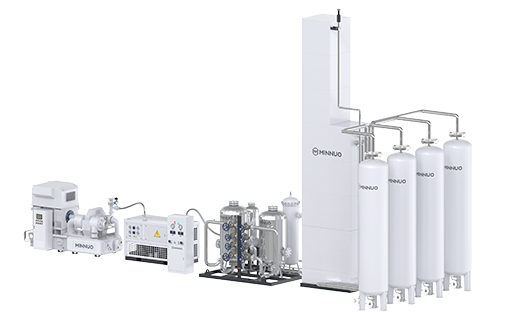
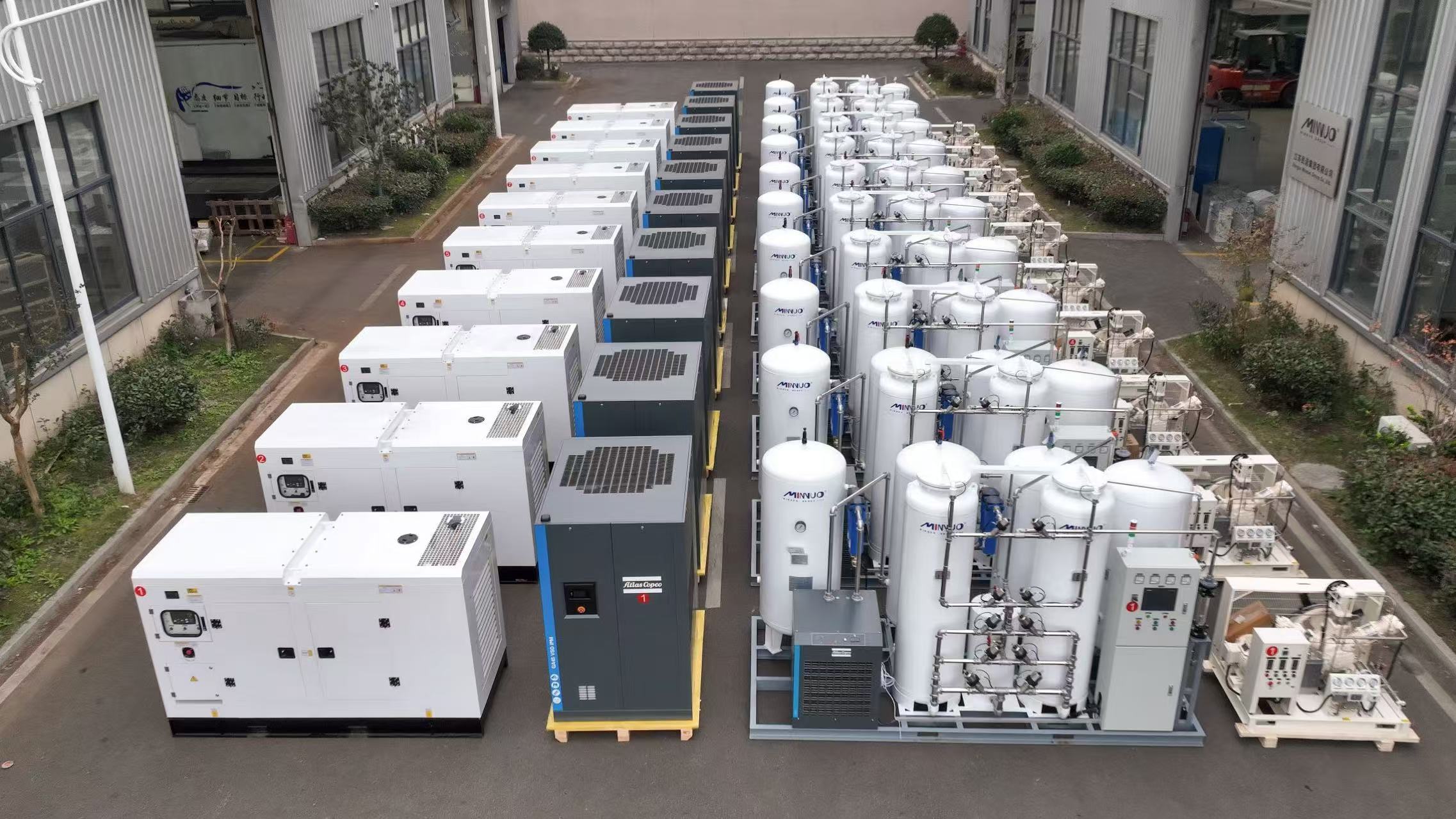
Before diving into costs, it’s essential to understand what you’re buying. A liquid nitrogen generator isn’t a single machine—it’s an integrated system with several major components.
1. The Core Components
- Air Compressor: Provides the compressed air feed. Usually oil-free, often the largest single energy consumer.
- Air Treatment Package: Dryers and filters to remove moisture, oil, and particulates.
- Nitrogen Gas Generator: PSA (Pressure Swing Adsorption) or membrane system that produces high-purity gaseous nitrogen (typically 95-99.5%).
- Liquefier (Cryocooler): The heart of the system—cools nitrogen gas to -196°C, turning it into liquid.
- Storage Tank: Vacuum-insulated cryogenic tank for storing the produced LN2.
- Control System: PLC with touchscreen, remote monitoring capabilities.
2. Why This Matters for Pricing
You’re not buying a “box that makes liquid nitrogen.” You’re buying an engineered plant. The price reflects the integration of these components into a reliable, automated system.
II. Cost Ranges by System Type and Capacity
Let’s look at real-world price brackets. These are estimates based on current market data and should be used as guidelines.
| System Type | Typical LN2 Output | Cost Range (Installed) | Best For |
| Laboratory/Research | 5 – 20 liters/day | $50,000 – $120,000 | University labs, research institutes, small-scale R&D |
| Small Industrial | 30 – 100 liters/day | $120,000 – $250,000 | Medical facilities, small manufacturing, food processing |
| Medium Industrial | 150 – 500 liters/day | $250,000 – $450,000 | Hospitals with high demand, medium manufacturers, service centers |
| Large Industrial | 600 – 2,000+ liters/day | $450,000 – $800,000+ | Major hospitals, industrial gas suppliers, large-scale manufacturing |
Real-world examples:
- A 20 L/day laboratory system with a small oil-free scroll compressor and a compact cryocooler might cost around $75,000 – $95,000.
- A 100 L/day system for a regional hospital or food processing plant typically falls in the $180,000 – $230,000 range.
- A 500 L/day industrial plant with redundant compressors and large storage tanks can easily reach $400,000 – $550,000.
III. Breaking Down the Cost: Where Does the Money Go?
Understanding the cost components helps you evaluate quotes and avoid surprises.
1. The Liquefier (Cryocooler) – 40-50% of Total Cost
This is the most technologically sophisticated part. It uses a Stirling cycle, Gifford-McMahon, or Brayton cycle to achieve cryogenic temperatures. Cost depends on:
- Cooling capacity (measured in watts at 77K)
- Reliability features (redundancy, industrial-grade components)
- Brand and origin (Western vs. Asian manufacturers)
A high-quality industrial cryocooler alone can cost $100,000 – $300,000.
2. The Nitrogen Gas Generator – 20-30%
- PSA systems are more common for larger capacities, typically $40,000 – $150,000.
- Membrane systems are simpler but less efficient for liquefaction; $20,000 – $80,000.
3. The Air Compressor – 10-15%
- Oil-free scroll (small systems): $15,000 – $40,000
- Oil-free screw (large systems): $50,000 – $150,000
4. Storage Tank – 5-10%
- Vacuum-insulated cryogenic tanks: $15,000 – $60,000 depending on size (500L to 5,000L).
5. Installation, Commissioning, and Freight – 10-15%
This is often underestimated. Costs include:
- Site preparation (concrete pad, electrical upgrades)
- Crane rental for tank placement
- Piping and connections
- Factory-trained technician travel and time
- Performance testing
Budget $20,000 – $80,000 for installation depending on system size and site conditions.
IV. Factors That Can Double (or Halve) Your Cost
1. Purity Requirements
- 99% pure LN2 is sufficient for many industrial applications (cryogenic grinding, some food freezing).
- 99.99%+ pure LN2 is required for medical, pharmaceutical, and semiconductor applications.
Higher purity demands more advanced PSA systems and sometimes additional purification steps, adding 20-40% to the cost.
2. Ambient Conditions
If you’re in a hot, humid climate (tropical regions, desert areas), your system needs:
- Larger air dryers
- More robust cooling
- Possibly derated capacity
This can add 10-25% to equipment costs.
3. Redundancy and Reliability
For critical applications (hospitals, continuous manufacturing), you may want:
- N+1 compressor configuration (one extra unit for backup)
- Dual PSA modules
- Uninterruptible power supply (UPS) for controls
Redundancy typically adds 20-50% to the base price.
4. Automation and Remote Monitoring
Basic systems have local PLC control. Advanced systems offer:
- Remote monitoring via cloud
- Automatic purity adjustment
- Predictive maintenance alerts
- Integration with facility SCADA
Add $10,000 – $30,000 for advanced control packages.
5. Geographic Location
- North America/Europe: Higher equipment costs but better service support.
- Asia (China, India): Lower manufacturing costs but potential quality variation.
- Africa/Middle East: Higher freight and installation costs due to logistics.
Always get quotes from multiple regions and factor in local service availability.
V. The Hidden Costs: Beyond the Purchase Price
1. Electricity (The Ongoing Cost)
Liquefying nitrogen is energy-intensive. A rule of thumb: 0.5 – 1.0 kWh per liter of liquid nitrogen produced. For a 100 L/day system, that’s 18,000 – 36,000 kWh annually. At $0.10/kWh, that’s $1,800 – $3,600 per year in electricity alone.
2. Maintenance
- Annual maintenance contract: 3-5% of equipment cost per year.
- Major overhauls: Every 5-8 years, the cryocooler may need rebuilds ($20,000 – $50,000).
- Filter replacements: $2,000 – $5,000 annually.
3. Liquid Nitrogen as Backup
Even with a generator, most facilities keep a liquid nitrogen storage tank as backup. The tank itself is included in the capital cost, but you’ll need to keep it filled during startup and any maintenance periods. Budget for initial fill: $2,000 – $10,000.
VI. The Business Case: When Does On-Site LN2 Generation Make Sense?
1. Compare to Delivered Liquid Nitrogen
- Delivered LN2 cost: Typically $1 – $3 per liter depending on location and volume.
- On-site generation cost (including capital recovery): $0.30 – $0.80 per liter.
2. Payback Period Examples
| Daily Usage | Annual Delivered Cost | System Cost | Annual Operating Cost | Annual Savings | Payback |
| 20 L/day | $14,600 | $80,000 | $4,000 | $10,600 | 7.5 years |
| 100 L/day | $73,000 | $200,000 | $18,000 | $55,000 | 3.6 years |
| 500 L/day | $365,000 | $500,000 | $90,000 | $275,000 | 1.8 years |
3. When It Makes Sense
- Consumption above 50 L/day (payback under 5 years)
- Remote locations with high delivery costs
- Critical applications where supply security is paramount
- Long-term facilities (10+ year horizon)
VII. How to Get an Accurate Quote: What You Need to Tell Suppliers
To get meaningful prices, you must provide:
- Required LN2 output (liters/day) – be realistic about growth
- Required purity (99% vs. 99.99%)
- Storage capacity needed (days of backup)
- Site conditions (ambient temperature range, humidity, altitude)
- Power availability (voltage, phase, available amperage)
- Installation location (indoor/outdoor, space constraints)
- Any special requirements (redundancy, remote monitoring, certification)
FAQ: Liquid Nitrogen Generator Costs
Q1: What’s the cheapest liquid nitrogen generator I can buy?
A1: The smallest complete systems start around $50,000 – $60,000 for 5-10 L/day output. These are typically laboratory-scale units with limited automation. Be cautious—very cheap systems may have high operating costs or poor reliability.
Q2: Can I buy a used liquid nitrogen generator to save money?
A2: Yes, but proceed with extreme caution. Used cryocoolers may have thousands of hours of runtime and be near major overhaul. Insist on:
- Complete service history
- Factory inspection or certified third-party evaluation
- Warranty (even 90 days)
- Availability of spare parts
Used systems can be 30-50% cheaper but carry higher risk.
Q3: Does a liquid nitrogen generator require special installation?
A3: Yes. Requirements typically include:
- Reinforced concrete pad (cryogenic tanks are heavy)
- Three-phase power (for most systems above 50 L/day)
- Adequate ventilation (for compressor and cryocooler heat rejection)
- Water supply (for water-cooled systems)
- Access for crane/forklift during installation
Q4: How much space do I need?
A4: A complete system typically occupies:
- Laboratory scale: 10-20 m² (110-220 ft²)
- Industrial scale: 30-100 m² (330-1,100 ft²)
Plus additional space for the storage tank and maintenance access.
Q5: How long does delivery and installation take?
A5: Typical timeline:
- Quotation and engineering: 4-8 weeks
- Manufacturing: 12-20 weeks (depending on complexity)
- Shipping: 2-6 weeks (international)
- Installation and commissioning: 1-3 weeks on-site
Total from order to operation: 5-9 months.
Q6: What warranties come with a liquid nitrogen generator?
A6: Industry standard:
- Cryocooler: 12-24 months
- Compressor: 12-24 months
- PSA module: 12-24 months
- Storage tank: 5-10 years (against vacuum loss)
Extended warranties are often available at additional cost.
Q7: Can I finance a liquid nitrogen generator?
A7: Yes. Many suppliers offer:
- Lease-to-own options (3-7 year terms)
- Equipment financing through third-party lenders
- Energy performance contracts (savings-based financing)
In some regions, government grants or green energy incentives may be available for on-site generation.
Conclusion
A liquid nitrogen generator is a significant investment—typically $50,000 to $500,000+ depending on your needs. But for facilities consuming more than 50 liters per day, it’s also one of the most financially sound investments you can make. With payback periods of 2 to 5 years and equipment lifetimes of 15-20 years, the long-term savings are substantial.
The key to a successful project is knowing your numbers—your actual consumption, your current delivered price, and your future needs. Armed with that information, you can work with suppliers to size a system that delivers the right capacity, purity, and reliability at a price that makes economic sense.
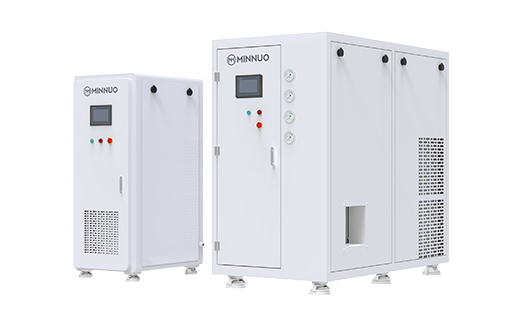
At MINNUO, we provide liquid nitrogen generation systems tailored to your specific requirements—from compact laboratory units to full-scale industrial plants. Contact us for a detailed feasibility study and a customized quote based on your actual consumption and site conditions.

 sales2:+86 17506119168