
— How Oxygen Enrichment Technology Can Reclaim 5-10% in Margins and Emission Reductions
Introduction: If We Don’t Adapt, Next Year Will Be Even Tougher
Fellow industry colleagues, let’s be realistic. After reviewing the CELIOS 2025 report, we all know the score: the era of “extensive development” is running out of time.
As the world’s fourth-largest steel exporter, Indonesia’s steel industry looks impressive on paper, but a crisis is looming. The European Union’s Carbon Border Adjustment Mechanism (CBAM) is about to get real. Our production model, dominated by coal power and blast furnaces, risks being labeled “High Carbon.” This means either paying unmanageable tariffs or losing orders entirely. That’s not to mention coke prices, which ride a rollercoaster that eats into our thin margins with every fluctuation.
Today, I’m not talking about hydrogen metallurgy, which is still a decade away. Let’s talk about something deployable now—Oxygen Enrichment Technology. This is the most practical means available to achieve a 5-10% emission reduction and significantly lower coke costs without dismantling furnaces or halting production.
Why Is “Oxygen” the Lifeline for Our Blast Furnaces?
In our daily operations, what causes the biggest headache? The Coke Rate. Coke is expensive, and we rely heavily on imports.
Swapping Expensive Coke for Cheap Pulverized Coal (PCI)
The core logic of oxygen enrichment is simple: let the blast furnace “breathe pure oxygen.”
Ordinary air contains only 21% oxygen; the remaining 78% is nitrogen. Nitrogen does not participate in combustion but carries away a massive amount of heat from the furnace—this is pure waste.
By using on-site oxygen generation equipment to increase the oxygen content of the blast by a few percentage points, the hearth temperature rises immediately. This allows us to significantly increase the Pulverized Coal Injection (PCI) rate.
- The Financial Calculation: Coal powder is much cheaper than coke. According to industry field tests, every 1% increase in oxygen enrichment allows for higher coal injection, reducing the coke rate by 10-15kg per ton of iron.
- The Emission Calculation: Using less coke means fewer emissions. This aligns exactly with the “process optimization” emphasized in the CELIOS report.
Solving the “Capacity Bottleneck”
For our brothers in the industry still using Electric Arc Furnaces (EAF) or Rotary Kiln Electric Furnaces (RKEF) for nickel pig iron, oxygen-assisted melting can shorten Tap-to-Tap time.
- Efficiency Boost: Shortening smelting time by 10% means squeezing out several extra heats per day.
- Electricity Savings: Industrial electricity in Indonesia isn’t cheap. Reducing power-on time saves money directly.
Stop Buying Liquid Oxygen! On-site Generation Is the New Standard
We operate in the “Emerald of the Equator”—an archipelago nation. We all know the logistics nightmare here. Buying Liquid Oxygen (LOX) is not only expensive but unreliable.
On-site Generation vs. Purchasing LOX — Let’s Do the Math
| Comparison Item | Purchasing Liquid Oxygen (LOX) | Using On-site Generation (VPSA) | Our Frontline Experience |
|---|---|---|---|
| Supply Stability | Poor (Affected by storms, traffic, shipping schedules) | Very High (If there’s power, there’s gas) | No more shutdowns due to gas shortages. |
| Operational Cost | High (Includes liquefaction + transport + vaporization fees) | Low (Electricity only, approx. 0.3-0.4 kWh/m³) | The savings are pure profit. |
| Carbon Emissions | High (Tanker trucks driving hundreds of km count as your Scope 3) | Low (Zero logistics emissions) | Helps pass environmental audits. |
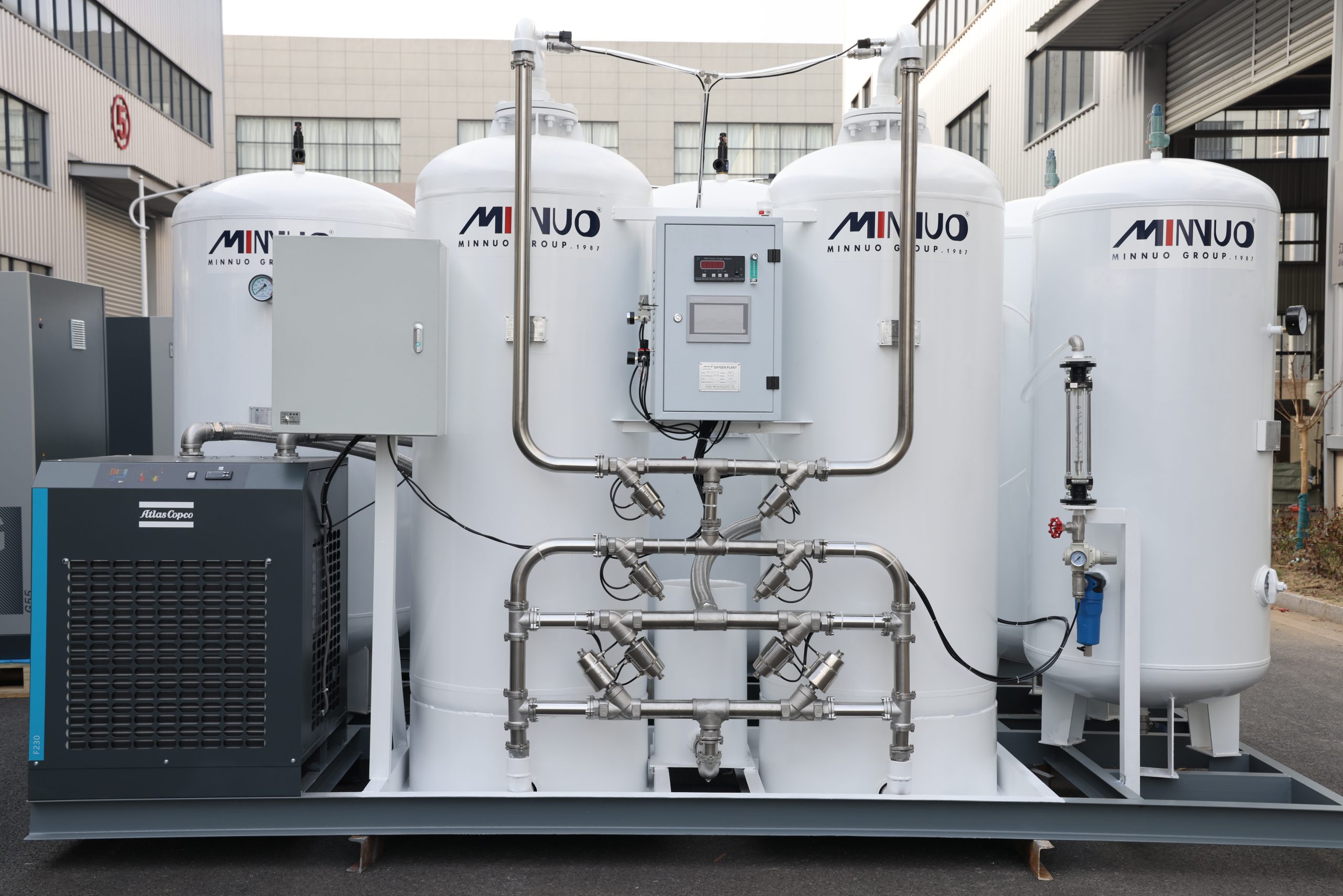
| Maintenance | No maintenance, but tanks take up massive space. | Requires maintenance, but Minnuo’s systems are one-button automated. | Modern equipment isn’t as fragile as before. |
Can Oxygen Generators Handle Indonesia’s Hot and Humid Weather?
This is the most common concern. Many European and American brands fail in Sulawesi or Kalimantan because the high humidity and heavy salt spray cause the molecular sieves to fail rapidly.
Minnuo Group’s PSA systems have been specifically optimized for the Southeast Asian environment:
- Specialized Molecular Sieves: It’s like putting a “raincoat” on the equipment; adsorption efficiency is unaffected by high humidity.
- Anti-Corrosion Design: Pipes and valves undergo special treatment to withstand coastal salt spray.
FAQ: Questions from the Frontlines
As an industry practitioner, I know what you are hesitating about:
Q1: Will high oxygen enrichment burn out the tuyeres and furnace lining?
A: It depends on control. We aren’t blindly adding oxygen. Minnuo’s technical team calculates the precise oxygen flow and pressure based on the blast furnace volume (whether or ). Reasonable enrichment (usually a 3%-5% increase) does not damage the furnace; in fact, it often leads to smoother furnace operation and reduces hanging .
Q2: How long do we need to shut down for installation?
A: You basically don’t need a major shutdown. Modern PSA equipment is modular, like LEGO blocks. The equipment is assembled nearby, and the final piping connection can be done during a routine maintenance gap.
Q3: Is the Return on Investment (ROI) really that fast?
A: Let’s calculate based on current coke prices. If your annual output is 1 million tons and you reduce the coke rate by 20kg via oxygen enrichment, the money saved on coke typically covers the cost of the oxygen generator in 12-18 months. This doesn’t even account for the extra revenue from increased capacity.
Conclusion: Don’t Wait for Policy to Hit—Proactively Cut Costs
To summarize:
The CELIOS report isn’t trying to scare us; it’s a reminder that the wind is changing. Given Indonesia’s energy structure, expecting an immediate switch to hydrogen steelmaking is unrealistic. Oxygen Enrichment is currently the only solution that is presentable, affordable, and quick to yield results.
Advice for Factory Managers and Chief Engineers:
- Check the Books: Look at how much you spent on liquid oxygen last month, then calculate your current coke rate.
- Find the Experts: Don’t just buy generic equipment. Contact a manufacturer like Minnuo (Minnuogas) who understands metallurgical processes, and have them do an on-site proposal.
- Take Action: Those who lower their carbon costs first will be the ones who survive the export quota battles next year.
[Source Declaration]
This article was written by an Industrial Gas Technology Consultant specializing in the Southeast Asian market. The content is based on the CELIOS 2025 Indonesia Steel Decarbonization Report and operational data from multiple Minnuo Group field projects.
- Technology Source: Minnuo VPSA Process Parameter Manual & Argonne National Laboratory LCA Model.
- Industry Insight: Based on the latest market dynamics from the Indonesian Iron and Steel Industry Association (IISIA).
- CELIOS 2025 Indonesia Steel Decarbonization Report

 sales2:+86 17506119168