
In the high-stakes worlds of chemical synthesis and pharmaceutical manufacturing, industrial gases are far more than mere utilities—they are active process ingredients and critical safety components. A stable, pure, and reliable supply of nitrogen or oxygen can mean the difference between a successful batch and a costly failure, between a safe operation and a catastrophic event. As these industries evolve towards greater continuity, precision, and regulatory scrutiny, the traditional model of purchasing gases in cylinders or bulk liquid is increasingly seen as a vulnerability.
Enter on-site gas generation: a paradigm shift that transforms gas from a purchased commodity into a self-controlled, on-demand utility. This strategic approach directly addresses the core imperatives of modern process industries: uncompromising safety, absolute quality control, supply chain resilience, and operational cost predictability. This guide explores why on-site generation is becoming the gold standard for chemical and pharmaceutical plants, detailing its applications, technological fit, and the rigorous system design required for success.
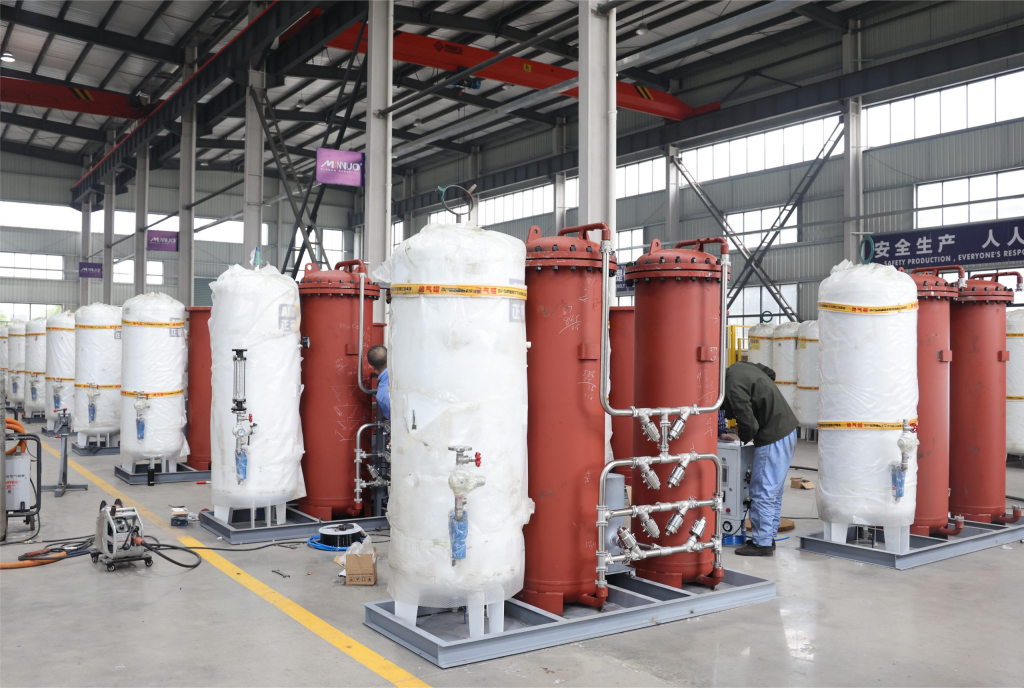
The Critical Role of Gases in Chemical & Pharma Operations
Industrial gases are woven into the fabric of chemical and pharmaceutical processes, serving multiple vital functions:
1. Inerting and Blanketing (The Safety Shield):
- Reactor & Vessel Inerting: Before introducing flammable solvents or oxygen-sensitive reactants, air is purged from vessels with high-purity nitrogen. This creates an inert atmosphere, preventing explosive mixtures (flammability protection) and shielding products from oxidative degradation. This is repeated after batches and during transfers.
- Storage Tank Blanketing: A blanket of nitrogen is maintained in the headspace of solvent and intermediate storage tanks. This prevents air (oxygen and moisture) ingress, reducing evaporation losses, minimizing oxidation, and maintaining a safe, non-flammable environment above the liquid.
2. Material Handling & Processing (The Process Enabler):
- Pneumatic Conveying: Nitrogen is used as the conveying gas for powders that are flammable, toxic, hygroscopic, or prone to oxidation (e.g., catalysts, active pharmaceutical ingredients – APIs, polymers). It eliminates explosion risks from dust clouds and prevents product degradation.
- Filtration and Drying Purge: Dry nitrogen is used to blow down filter cakes or purge drying equipment like tray dryers or fluid bed dryers. This enhances drying efficiency, prevents clogging, and avoids contamination from ambient air.
3. Process Gas & Reaction Agent (The Active Ingredient):
- Oxygen as a Reactant: Used in controlled oxidation reactions, fermentations for antibiotic production, and as a feed gas for on-site ozone generators in water purification.
- Ultra-High Purity (UHP) Nitrogen for Purification: Serves as a carrier gas in gas chromatography (GC), a purge gas for sensitive analytical instruments, and as a blanketing and environment control gas in sterile manufacturing (e.g., inside lyophilizers, isolators, and filling lines).
4. Safety & Emergency Systems (The Protective Layer):
- Purging of Lines and Equipment: Before maintenance or between product campaigns, pipelines and equipment are purged with nitrogen to remove hazardous or pyrophoric residues.
- Instrument Air Backup: In some designs, nitrogen generators provide backup for instrument air systems, ensuring control valves and safety systems remain operational.
Why Traditional Supply Falls Short: Risks in a High-Stakes Industry
Reliance on delivered gas poses significant and often underestimated risks:
- Supply Chain Vulnerability: Production is hostage to logistics. Weather, traffic, or supplier issues can halt a continuous process, leading to ruined batches, reactor fouling, and massive financial losses.
- Quality and Consistency Variability: Trace impurities can vary between cylinder batches or liquid nitrogen deliveries. For sensitive catalysis or stringent pharmaceutical processes, this undermines batch-to-batch consistency, a cornerstone of Current Good Manufacturing Practice (cGMP).
- Inherent Safety Hazards: Frequent handling of high-pressure cylinders introduces drop, crush, and valve-shearing risks. Liquid nitrogen storage tanks pose potential leak and asphyxiation hazards.
- Uncontrolled Costs and Hidden Waste: Gas costs are a volatile variable expense. For liquid nitrogen, “boil-off” losses (typically 0.3-2% per day) represent pure waste, paid for but never used.
- Documentation and Traceability Gaps: Maintaining perfect chain-of-custody and quality documentation for hundreds of individual cylinders is cumbersome and prone to gaps, posing a challenge during regulatory audits.
The On-Site Generation Advantage: Control, Safety, and Compliance
Shifting to on-site production turns these risks into strengths:
- Unmatched Supply Security: Gas production becomes a controlled, in-house utility. It runs 24/7, independent of external deliveries, supporting continuous operations and flexible production scheduling.
- Precision and Stability: Purity, pressure, and dew point can be set to exact specifications (e.g., 99.999% N₂, -70°C dew point) and maintained with unwavering consistency, ensuring process reproducibility and product quality.
- Enhanced Intrinsic Safety:
- Eliminates cylinder handling from the plant floor.
- Generators typically produce gas at lower, safer pressures.
- Systems can be integrated with process control systems for automatic inert gas backup in case of power or pressure fluctuations.
- Superior Economics and Predictability: Converts a variable cost into a predominantly fixed cost (capital depreciation + electricity + maintenance). The Total Cost of Ownership (TCO) over 5-10 years is typically 30-50% lower than purchasing gas, with a clear, fast ROI.
- Streamlined Compliance: A single, validated source simplifies quality assurance. Comprehensive data logging from integrated analyzers provides effortless audit trails for FDA, EMA, or other regulatory bodies.
Matching Technology to Application: PSA vs. Membrane vs. VPSA
The choice of technology depends on gas type, purity, and volume:
| Application & Requirement | Recommended Technology | Key Reason |
| Ultra-High Purity Nitrogen (99.999%+) for catalyst protection, GC, sterile processes | Pressure Swing Adsorption (PSA) Nitrogen Generator | PSA is uniquely capable of delivering and stably maintaining such high purity levels consistently. |
| Large Volume, High Purity Nitrogen (95-99.9%) for tank blanketing, reactor inerting | Large-Capacity PSA or Cryogenic Air Separation Plant | For very high flows (>500 Nm³/h), cryogenic plants may be more efficient. PSA is ideal for mid-to-large scale. |
| Moderate Purity Nitrogen (95-99.5%) for general purging, non-critical blanketing | Membrane Nitrogen Generator | Simpler, lower maintenance, excellent for remote or hazardous areas (ATEX certified modules available). |
| Large Volume Oxygen (90-95%) for oxidation reactions, wastewater treatment | Vacuum Pressure Swing Adsorption (VPSA) Oxygen Generator | The most energy-efficient and cost-effective method for producing large volumes of industrial-grade oxygen on-site. |
System Design & Integration: Beyond the Generator
A reliable on-site system is an engineered ecosystem:
- Quality Assurance Monitoring: Mandatory in-line analyzers for oxygen content and dew point (for N₂) or purity (for O₂). Alarms and automatic shutoffs protect downstream processes. Data is logged for audit trails.
- Redundancy and Backup: For mission-critical applications, designs include N+1 compressors, standby generators, or a tie-in to a small backup liquid gas supply.
- Distribution Piping & Materials: Piping must match gas purity. For UHP applications, electropolished stainless steel tubing with orbital welds is standard. Systems require proper cleaning, passivation, and pressure testing before commissioning.
- Hazardous Area Compliance: Equipment for installation in classified zones (e.g., near solvent handling areas) must be certified for the specific zone (e.g., ATEX Zone 1 or 2, Class I Div 2).
- Smart Control & Integration: Modern systems feature PLC/SCADA controls for remote monitoring, predictive maintenance alerts, and seamless integration with the plant’s Distributed Control System (DCS) for optimal process interplay.
Meeting Regulatory and Quality Standards
On-site systems in these industries must be designed and documented with regulatory rigor:
- cGMP (for Pharma): The entire system, from air intake to point of use, is subject to Validation (DQ/IQ/OQ/PQ). This includes documented procedures for operation, calibration, maintenance, and change control.
- Pressure Equipment Safety: Vessels and piping must comply with PED (EU), ASME (US), or GB (China) codes, with appropriate certifications.
- Industry Standards: Design should reference ISA, NFPA 55, and other relevant safety and instrumentation standards.
Calculating ROI: A Pharmaceutical Case Example
Scenario: A biologic drug manufacturer uses large volumes of liquid nitrogen (LN₂) for sparging bioreactors and blanketing purification columns.
- Current Annual Cost (LN₂): $280,000 (including delivery and 1.5% daily boil-off loss).
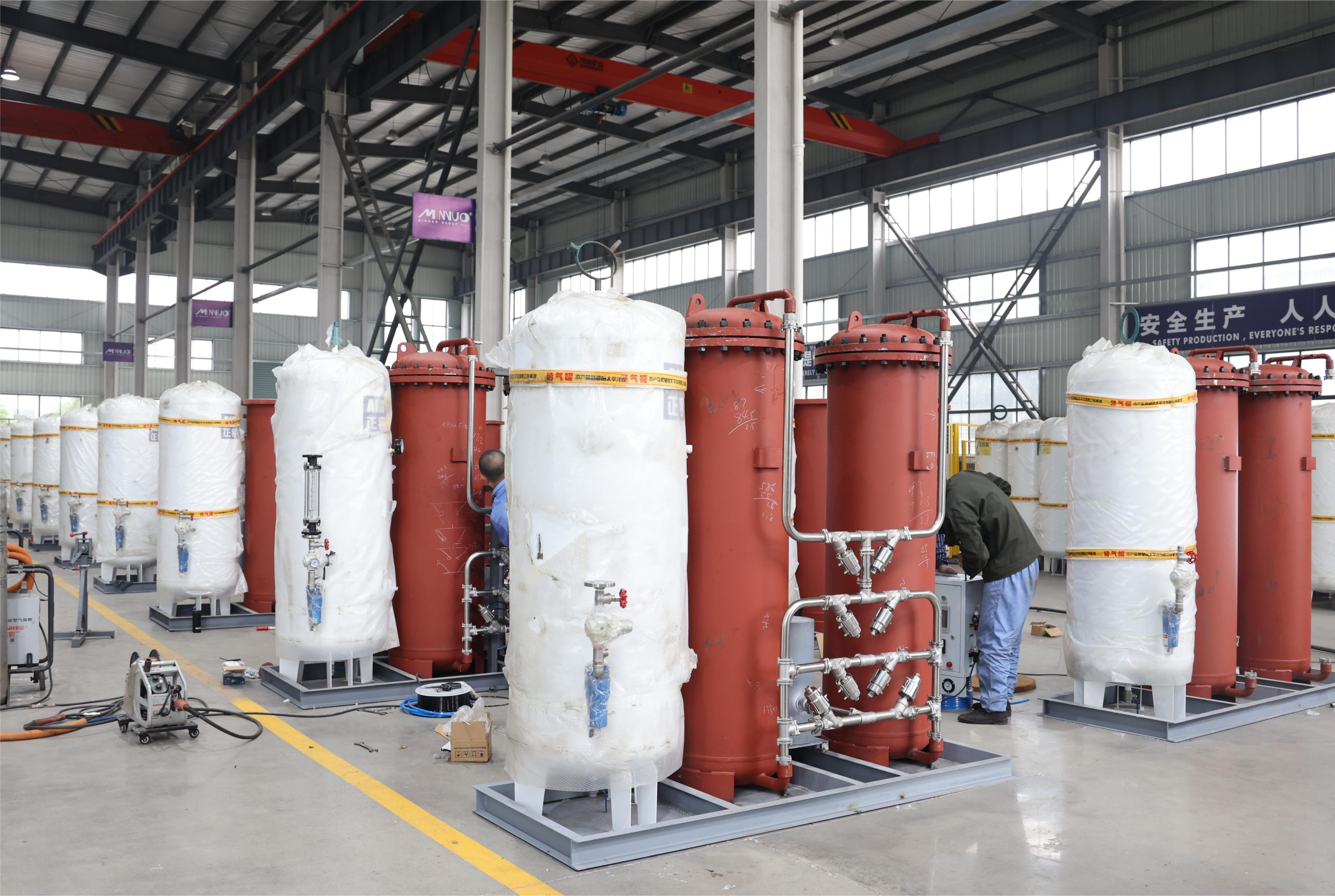
- On-Site Solution: A 300 Nm³/h PSA Nitrogen Generator (99.5% purity) with backup.
- Capital Investment: $450,000 (fully installed).
- Annual Operating Cost: $65,000 (electricity + maintenance).
- Annual Savings: $280,000 – $65,000 = $215,000.
- Simple Payback Period: $450,000 / $215,000 ≈ 2.1 years.
- Intangible Value: Eliminated risk of a single batch loss (valued at >$1M) due to LN₂ delivery failure. Guaranteed purity for cell culture processes.
Conclusion
For the chemical and pharmaceutical industries, investing in on-site gas generation is a strategic decision that transcends equipment procurement. It is an investment in process integrity, inherent safety, and operational sovereignty. By internalizing this critical utility, companies gain unprecedented control, turning a potential vulnerability into a pillar of resilience and quality.
In an era where supply chains are fragile and quality standards are non-negotiable, the ability to produce your own high-purity gases on demand is a decisive competitive advantage. It represents the evolution from reactive consumption to proactive, engineered supply.
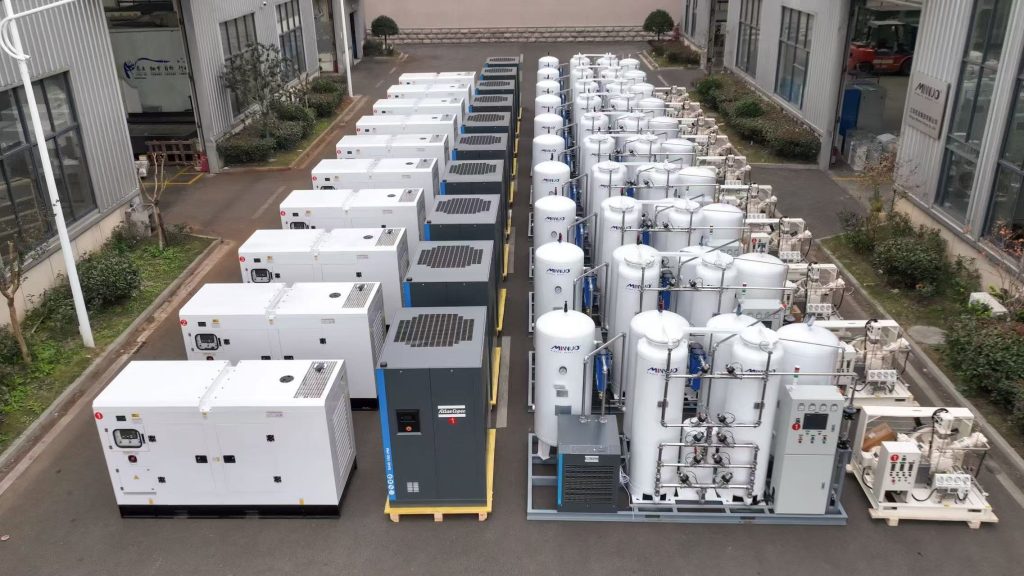
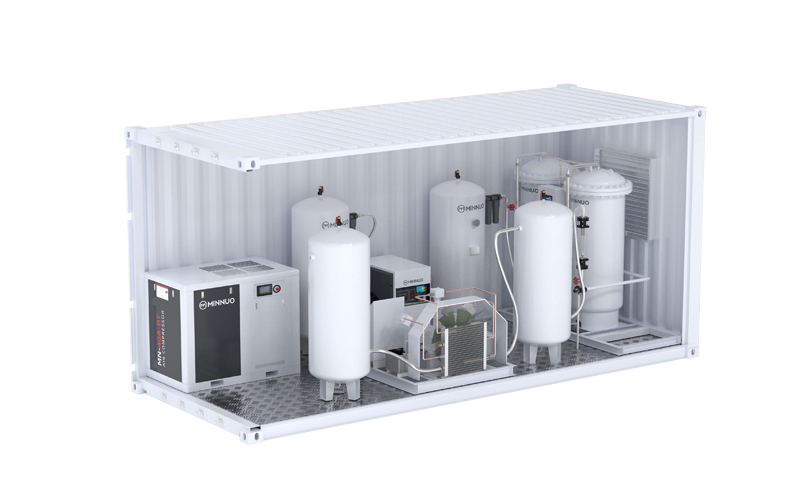
At MINNUO, we understand the exacting demands of process industries. We engineer on-site gas solutions that are not only efficient and reliable but are also designed and documented to meet the stringent validation and safety standards of cGMP and hazardous environments. From initial consultation to system validation and lifelong support, we partner with you to ensure your gas supply is a foundation of your success, not a point of failure.


 sales2:+86 17506119168