
I. Core Working Principle of PSA Oxygen Generators in Aquaculture Scenarios
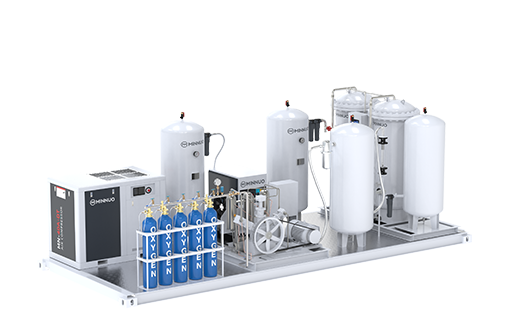
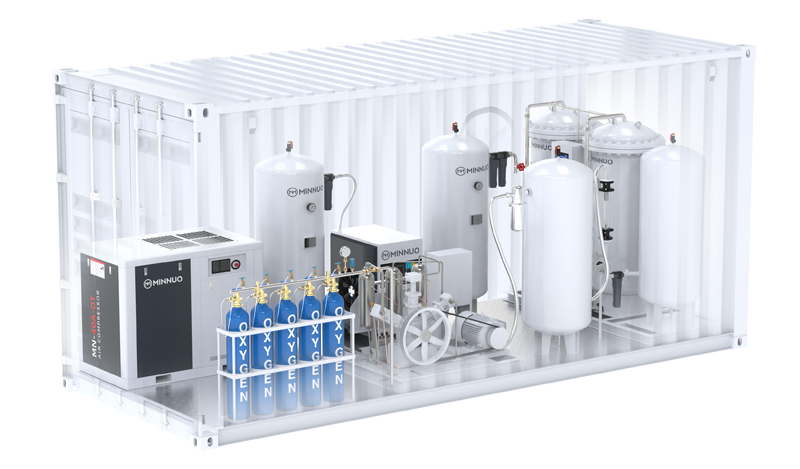
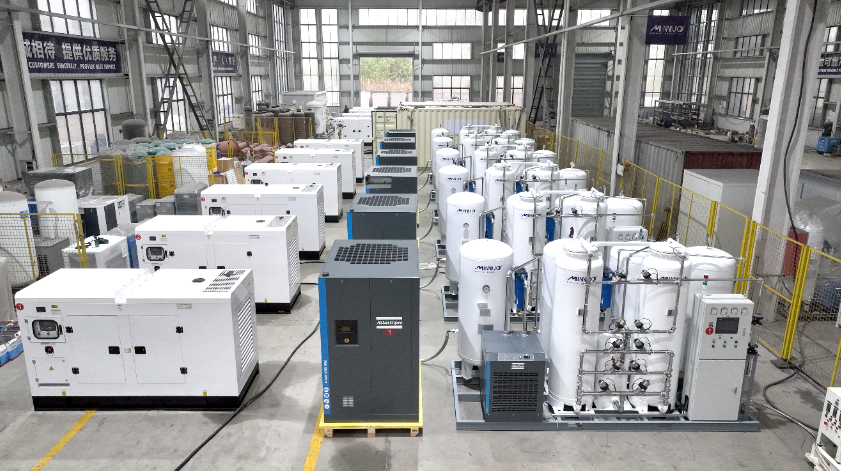
As the core dissolved oxygen equipment for aquaculture, PSA (Pressure Swing Adsorption) oxygen generators realize air separation based on the selective adsorption characteristics of molecular sieves. The entire system consists of three modules—air pretreatment, pressure swing adsorption and oxygen output—that form a continuous operation system, adapting to the stable oxygen supply demands of various aquaculture scenarios:
- Air pretreatment stage: Ambient air passes through an air intake filter to remove dust and particulates (with a precision of 1μm), then enters a compressor and is pressurized to 0.4-0.8MPa. It is further cooled to below 40℃ by a cooler and dehydrated to a dew point of ≤-40℃ by an adsorption dryer, completely eliminating harmful substances such as oil, water and impurities. This prevents contamination of molecular sieves and ensures subsequent separation efficiency and equipment service life.
- Core pressure swing adsorption stage: Pretreated compressed air enters a double adsorption tower (equipped with high-quality zeolite molecular sieves). Under high-pressure conditions, molecular sieves have a strong adsorption capacity for gas molecules such as nitrogen and carbon dioxide, locking them in first; while oxygen molecules have weak adsorption capacity and quickly penetrate through the gaps of molecular sieves to form high-purity oxygen. When one tower is saturated with adsorption, the system automatically switches to the other tower for continuous oxygen production through a PLC controller, and the saturated tower is decompressed to normal pressure to release adsorbed impurities such as nitrogen, completing the regeneration of molecular sieves. The two towers alternate in circulation (each cycle takes 10-60 seconds) to achieve continuous and stable oxygen supply.
- Oxygen output and adaptation stage: The separated oxygen (with a purity of 90%-95%) is stabilized by a buffer tank and then transported to the aquaculture water body through pipelines. Equipped with microporous aeration discs, jet mixers and other devices, oxygen is converted into micro-nano bubbles, which increases the contact area with the water body and improves the dissolved oxygen efficiency, ultimately stabilizing the dissolved oxygen (DO) of the water body within the range required for aquaculture.
II. Key Operating Parameters: The “Dissolved Oxygen Assurance Code” of Purity and Pressure
In aquaculture, the oxygen purity and output pressure of PSA oxygen generators directly determine the dissolved oxygen effect, aquaculture survival rate and equipment energy consumption, and the two cooperate to adapt to the needs of aquaculture scenarios:
Purity index: The “core threshold” for aquaculture safety
The oxygen purity required for aquaculture is 90%-95% for conventional scenarios, and ≥93% for seedling raising and high-density aquaculture. High-purity oxygen can quickly increase the dissolved oxygen concentration of the water body and avoid fish and shrimp floating heads and pond overturning caused by insufficient oxygen content. When the dissolved oxygen in the water body is ≥5mg/L, the feeding rate of fish and shrimp increases by 30%, the digestion and absorption rate increases by 50%, and the disease incidence rate decreases by 40%. If the purity is lower than 85%, the dissolved oxygen efficiency drops significantly, which cannot meet the oxygen consumption demand of medium and high-density aquaculture, and the accumulation of impurities such as nitrogen may also affect water quality. Minnuo PSA oxygen generators realize real-time monitoring through on-line purity sensors with a precision control of ±1%, ensuring that the output oxygen always meets aquaculture standards.
Pressure parameter: The “dynamic key” for dissolved oxygen efficiency
The output pressure needs to be dynamically adjusted according to aquaculture scenarios, with a conventional range of 0.1-0.6MPa. For pond aquaculture with microporous aeration, the pressure is controlled at 0.2-0.3MPa, which can generate microbubbles with a diameter of ≤0.1mm, and the dissolved oxygen efficiency reaches 2.5kg/kWh (twice that of traditional mechanical aeration). Recirculating aquaculture systems in industrialized farms require 0.4-0.6MPa, and jet devices are used to achieve rapid oxygenation of the water body to ensure uniform dissolved oxygen at the bottom. Excessively high pressure will lead to larger bubbles, lower oxygen utilization rate and increased energy consumption; excessively low pressure will result in slow bubble rising speed, failing to cover the deep water body, and the problem of “oxygen enrichment in the upper layer and oxygen deficiency in the bottom layer” is prone to occur especially in high-density aquaculture.
III. Impact of Environmental Factors on Equipment Operation and Adaptation Requirements
The stability of PSA oxygen generators is highly dependent on environmental conditions. Aquaculture is mostly carried out in outdoor or semi-outdoor scenarios, and the following factors need to be focused on:
1. Temperature impact and control standards
- Optimal operating temperature: 15-30℃; Allowable range: 5-40℃.
- Hazards of low temperature (<5℃): Difficult compressor startup, 15%-20% decrease in molecular sieve adsorption efficiency, and reduced oxygen production.
- Hazards of high temperature (>35℃): Decreased equipment heat dissipation efficiency, increased bed temperature of adsorption towers, easy pulverization and aging of molecular sieves with a 30% shortened service life. At the same time, excessively high compressed air temperature will further reduce dissolved oxygen efficiency (for every 10℃ increase in water temperature, the dissolved oxygen capacity of water body decreases by 10%-15%).
- Optimization scheme: Equip with equipment insulation covers and electric heating devices in low-temperature environments, and install forced ventilation systems or industrial air conditioners in high-temperature scenarios to ensure the stable operating ambient temperature of the equipment.
2. Basic requirements for the surrounding environment
- Installation site: Select a flat and well-ventilated area, far away from water sources such as fish ponds and rivers (to avoid humid corrosion), and reserve a maintenance channel of ≥1.5m around the equipment.
- Humidity control: Relative humidity ≤85% to avoid short circuit of electrical components and moisture absorption of molecular sieves caused by high-humidity environment.
- Dust and corrosion: Keep away from dusty and corrosive gas environments such as feed processing areas and sewage outlets to prevent filter blockage and equipment shell rust.
- Power supply guarantee: The voltage is stabilized at 380V±10% to avoid compressor failure caused by voltage fluctuation, and rainproof and lightning protection devices must be equipped for outdoor installation.
IV. Aquaculture Scenario Adaptation: Water Quality Requirements and Aquaculture Pond Construction Standards
The operation effect of PSA oxygen generators is closely related to water quality and aquaculture pond conditions, and different scenarios require targeted adaptation:
1. Core water quality requirements
- Dissolved oxygen target: ≥5mg/L for conventional aquaculture, ≥6mg/L for seedling raising, and not less than 4mg/L at the lowest at night.
- Auxiliary indicators: pH value 7.0-8.5, ammonia nitrogen ≤0.2mg/L, nitrite ≤0.1mg/L, organic matter content ≤10mg/L. Deteriorated water quality will increase the oxygen consumption of the water body, leading to excessive load of the oxygen generator, and impurities are easy to block the aeration device and affect the dissolved oxygen effect.
- Water quality optimization: Change water regularly (1/3 of the water volume each time), use oxidative bottom modifiers to decompose residual bait and feces to reduce oxygen-consuming substances; match probiotics to regulate the water microbial community, inhibit the reproduction of harmful bacteria and reduce oxygen consumption pressure.
2. Pond construction conditions for different aquaculture scenarios
- Natural lake/river aquaculture: Select areas with a water depth of 2-5m, gentle water flow and clear water quality (transparency 25-70cm), away from sewage outlets and waterways; set up net cages with a spacing of ≥5m to ensure uniform oxygen diffusion, and equip with mobile oxygen generation equipment to deal with sudden oxygen deficiency.
- Artificial pond aquaculture: Single pond area of 3333-6667 square meters (5-10 mu), water depth of 1.5-2.5m, pond bottom slope of 1:2.5 for easy sewage discharge; lay microporous aeration pipelines at the bottom of the pond with a spacing of 3-5m to cover the entire pond bottom; reserve installation platforms for oxygenation equipment around the pond, ≥1m away from the pond edge to avoid splashing water wetting the equipment.
- Industrialized aquaculture ponds: Adopt concrete or FRP materials, single pond area of 10-50㎡, water depth of 1-1.5m, equipped with recirculating water systems and on-line water quality monitoring devices; the oxygen generator is linked with the aeration device to automatically adjust the oxygen supply according to dissolved oxygen data. The pond is designed as a circle or octagon to promote water circulation and avoid dissolved oxygen dead zones.
V. Engineer’s Perspective: Professional Suggestions for Efficient Equipment Operation
Combined with the more than 10 years of service experience of Minnuo‘s engineer team in aquaculture equipment, optimization suggestions are given from three dimensions: operation, maintenance and adaptation:
1. Operation level: Follow the principle of “oxygen supply on demand”
Turn on all equipment from 1:00 to 6:00 a.m. on sunny days (the lowest dissolved oxygen value), and run intermittently from 18:00 to 22:00 p.m. (oxygen consumption peak); run all day on rainy, cloudy and high-temperature days; extend the operation by 2-3 hours during seedling raising and feeding peak periods. Real-time monitor dissolved oxygen data through mobile APP or control cabinet to avoid no-load or over-load operation of the equipment.
2. Maintenance level: Establish a mechanism of “daily inspection – regular maintenance – quarterly calibration”
Check equipment pressure, purity and temperature indicators daily and clean the dust of the air intake filter; check whether the aeration pipeline is blocked and clean the sediment at the bottom of the pond weekly; replace the filter element of the adsorption dryer monthly and check the operation status of molecular sieves; calibrate the purity sensor and dissolved oxygen meter through third-party testing quarterly to ensure accurate data.
3. Adaptation level: Select models according to aquaculture density and varieties
For low-density ponds (5,000-10,000 tails/mu), select equipment with an oxygen production capacity of 5-10Nm³/hr, matched with 1-2 impeller aerators; for medium and high-density intensive culture ponds (20,000-30,000 tails/mu), select equipment with 15-30Nm³/hr, combined with a microporous aeration system; for industrialized aquaculture (50,000-100,000 tails/㎡), select equipment with 30-50Nm³/hr, linked with the recirculating water system to achieve precise oxygenation.
VI. Industry Future Planning and Minnuo’s Technical Layout
With the transformation of the aquaculture industry from “scale expansion” to “quality and efficiency”, high-efficiency oxygenation technology has become the core support for industry upgrading, and the future will present three major development trends:
1. Technology upgrading direction
Develop special molecular sieves resistant to high temperature (>40℃) and humidity to improve adaptability to extreme environments; integrate AI intelligent algorithms to realize the whole-process intellectualization of “dissolved oxygen prediction – automatic adjustment – fault early warning”, dynamically optimize oxygen supply according to data such as aquaculture varieties, density and water temperature, and further reduce energy consumption by more than 30%.
2. Green and energy-saving trend
Promote the “photovoltaic + PSA oxygen generation” composite system to solve the power supply problem in remote aquaculture areas and reduce carbon emissions by 20%-35%; develop oxygen recovery and utilization technology to increase oxygen utilization rate to more than 95% and reduce resource waste.
3. Scenario customization trend
Provide customized solutions for the special needs of high-value-added varieties (such as salmon, grouper, prawns). For example, salmon aquaculture requires low temperature (≤18℃) and high dissolved oxygen (≥8mg/L), with supporting low-temperature adaptive oxygen generators and precise temperature control systems; prawn seedling raising requires stable dissolved oxygen (±0.5mg/L), equipped with high-precision sensors and fast response devices.
Following the industry trend, Minnuo has achieved three core technological breakthroughs: first, independently developed moisture-resistant molecular sieves with a 25% longer service life than the industry average; second, built an IoT intelligent monitoring platform supporting remote control, data traceability and fault prediction; third, launched modular equipment adapted to diverse aquaculture scenarios such as ponds, industrialized farms and net cages, shortening the installation cycle by 50%.
VII. Minnuo’s Full-Cycle Service Assurance: Professional Team and After-Sales Support
To ensure continuous and stable oxygen supply in aquaculture, Minnuo has established a full-cycle service system of “technical consultation – installation and commissioning – operation and maintenance guarantee – lifelong service”:
1. Senior engineer team
Core technical personnel all have more than 8 years of R&D and service experience in aquaculture oxygenation equipment, and have participated in more than 200 aquaculture projects nationwide (covering ponds, industrialized farms, net cages and other scenarios). They can provide professional services such as on-site investigation, working condition analysis and customized model selection to solve oxygen supply problems in various complex aquaculture scenarios.
2. All-round service process
- Pre-sales: Free on-site investigation of aquaculture sites, and issue equipment model selection reports and installation plans according to water quality, aquaculture density, varieties and other data.
- In-sales: Provide free installation and commissioning, and operator training (covering equipment operation, daily maintenance and emergency treatment) to ensure the rapid commissioning of equipment.
- After-sales: Establish a 24-hour emergency response mechanism, set up more than 30 service outlets nationwide, and realize 12-hour on-site maintenance in coastal aquaculture concentration areas; conduct regular on-site inspections (once a quarter), free calibration of sensors and testing instruments, and free replacement of core components (molecular sieves, compressors, etc.) within the warranty period.
3. Equipment testing and guarantee capabilities
Equipped with a professional testing team and a third-party certified laboratory, each piece of equipment undergoes a 72-hour continuous operation test before leaving the factory to ensure that indicators such as oxygen production, purity and pressure meet the Safety Requirements for Oxygenation Equipment in Aquaculture (GB/T 41062-2021); provide lifelong equipment maintenance services, establish equipment operation files, and put forward optimization suggestions according to usage data to reduce customers’ operation and maintenance costs.

 sales2:+86 17506119168