
Air is a uniform mixture of gases—until you need just one of them. The ability to pluck high-purity nitrogen or oxygen from the atmosphere on demand is a cornerstone of modern industry, enabling everything from preservative-free food packaging to life-saving medical oxygen. At the heart of this capability lies a remarkably elegant and efficient physical process: Pressure Swing Adsorption (PSA).
But how can a machine use “pressure swings” to separate invisible gases? What magic material performs this separation, and why has PSA become the dominant technology for on-site gas generation? This guide goes beyond product brochures to explain the fundamental engineering and chemistry behind PSA. Whether you’re operating a nitrogen generator, specifying an oxygen system, or simply curious about the technology, understanding PSA is key to unlocking its full potential and reliability.
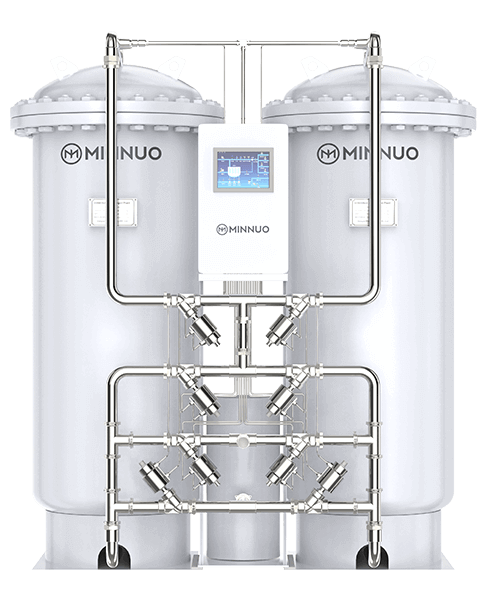
What is Pressure Swing Adsorption (PSA)? A Definition
Let’s break down the name:
- Adsorption: This is the process where gas molecules adhere to the surface of a solid material (the adsorbent). It’s a surface attraction, not to be confused with absorption, where a substance is taken into the bulk of another.
- Pressure Swing: This refers to the cyclical manipulation of system pressure to control the adsorption process. High pressure promotes adsorption; low pressure (or vacuum) reverses it, releasing the captured gases.
Therefore, Pressure Swing Adsorption (PSA) is a cyclical physical process that separates gas mixtures by selectively capturing certain components onto a porous solid material (adsorbent) under high pressure, and then releasing them by lowering the pressure. It’s a batch process made continuous through clever engineering with multiple adsorption vessels.
The Heart of the System: The Adsorbent (Molecular Sieve)
The true hero of the PSA process is the adsorbent, commonly a Molecular Sieve. This is a highly engineered porous material with a massive internal surface area (often hundreds of square meters per gram). The two most common types in gas separation are:
- Carbon Molecular Sieve (CMS): The standard for nitrogen generation. CMS particles have a network of ultra-fine pores. Their separation is based primarily on kinetics—the difference in diffusion speed of gas molecules. Oxygen molecules are slightly smaller and diffuse into the CMS pores much faster than nitrogen molecules. Under pressure, O₂ is preferentially adsorbed, while N₂ passes through as the product gas.
- Zeolite Molecular Sieve: Often used for oxygen generation, drying, and other separations. Zeolites are crystalline aluminosilicates with uniformly sized pores. They separate gases based on molecular size and polarity (equilibrium separation). Certain zeolites have a strong affinity for polar molecules like nitrogen (N₂) over oxygen (O₂) at high pressure. When air is passed through, N₂ is adsorbed, and O₂ is collected as the product.
Key Adsorbent Properties:
- Selectivity: Its ability to preferentially attract and hold one gas over another.
- Adsorption Capacity: How much gas it can hold per unit mass, which increases with pressure.
- Kinetics: The rate at which gases are adsorbed and desorbed.
- Regenerability: The ability to completely release adsorbed gases when pressure is reduced, allowing for thousands of cycles.
The PSA Cycle: A Step-by-Step Breakdown (Two-Tower System)
A typical PSA system uses at least two vessels (towers) packed with adsorbent, operating 180 degrees out of phase to ensure a continuous flow of product gas. Here’s the cycle for a PSA Nitrogen Generator using CMS:
- Adsorption (Production):
- Clean, dry compressed air is fed into Tower A at its design pressure (e.g., 7-10 bar).
- As the air flows through the CMS bed, oxygen, water vapor, and carbon dioxide rapidly diffuse into the pores and are adsorbed onto the internal surfaces.
- Nitrogen, which diffuses much more slowly, largely bypasses the adsorption sites and exits the top of the tower as high-purity product gas. This stream is directed to the customer’s process and a storage buffer.
- Pressure Equalization (Energy Recovery):
- Just before Tower A’s CMS becomes saturated with impurities (a point determined by time or a purity sensor), the inlet air flow is switched to Tower B.
- Crucially, before Tower A is depressurized, the two towers are briefly connected. High-pressure, nitrogen-rich gas from the top of Tower A flows to the top of Tower B, raising its pressure partway. This recovers energy and saves compressed air, significantly boosting system efficiency.
- Desorption (Regeneration):
- Tower A is now isolated from the feed and product lines.
- The tower is rapidly depressurized to atmospheric pressure (or even to a vacuum in more advanced VPSA systems). This sudden pressure drop drastically reduces the adsorption capacity of the CMS.
- The adsorbed oxygen and other impurities are released (desorbed) from the pores and vented out of the system through an exhaust silencer.
- Purge (Final Cleaning):
- To ensure Tower A is perfectly clean for the next cycle, a small stream of pure product nitrogen from the now-adsorbing Tower B is introduced at the outlet of Tower A and flows in reverse (counter-current).
- This “purge” gas sweeps out any remaining impurities from the bed, ensuring the highest possible purity in the next production step.
- Tower A is now fully regenerated, repressurized, and ready to switch back to adsorption mode when Tower B nears saturation.
This four-step cycle repeats continuously, with the towers alternating roles every few minutes, providing an uninterrupted supply of gas.
Key Design Variables & Their Impact on Performance
The performance of a PSA system is fine-tuned by manipulating several critical variables:
- Adsorption Pressure: Higher pressure increases the adsorbent’s capacity, allowing for a more compact vessel or higher flow rate. However, it also increases compressor energy costs.
- Purge-to-Produce Ratio: The amount of product gas used to purge the bed. A higher purge ratio yields higher product purity but reduces the net amount of gas available to the customer (recovery rate). It’s a fundamental trade-off.
- Cycle Time: The duration of each adsorption step. Shorter cycles can make the system more responsive but may not allow for full utilization of the adsorbent bed. Longer cycles improve recovery but can lead to purity decay as the bed saturates.
- Bed Configuration: More complex systems with 3, 4, or even more towers and additional equalization steps can achieve higher product recovery (e.g., >50% for N₂, >90% for O₂) and purity stability, at the cost of higher valve complexity and capital expense.
PSA vs. Alternative Gas Separation Technologies
PSA vs. Membrane Separation:
- PSA: Uses a solid adsorbent bed and pressure cycling. Excels at producing high-purity gas (95-99.9995%) and handling variable flow rates. More complex mechanically due to switching valves.
- Membrane: Uses hollow polymer fibers. Gas separation is continuous and passive. Best for moderate purities (95-99.5%) and stable flow rates. Extremely simple with minimal maintenance. PSA generally wins where high purity is non-negotiable.
PSA vs. Cryogenic Distillation:
- PSA: Operates at ambient temperatures. Ideal for small to medium-scale production of gaseous product. Lower capital cost, faster startup, modular.
- Cryogenic: Operates at temperatures below -150°C. The only method for producing large volumes of liquid gases (LIN, LOX) or ultra-high-purity gases at massive scale. Higher capital and energy intensity. PSA wins for on-site, gaseous needs below a certain scale threshold.
Primary Industrial Applications of PSA Technology
- Nitrogen Generation: The largest application. Used for inerting and blanketing in chemical processing, food & beverage packaging (MAP), electronics soldering, and pharmaceutical manufacturing.
- Oxygen Generation: Producing 90-95% purity oxygen for medical facilities (VPSA), wastewater treatment (for aeration), ozone generation, and metal cutting/welding.
- Other Gases: Hydrogen purification in refineries, drying compressed air (desiccant dryers), and biogas upgrading (separating CH₄ from CO₂).
Advantages and Limitations of PSA Systems
Advantages:
- Proven & Reliable: Simple physical process with a long track record.
- Quick Startup/Shutdown: Can reach full purity within minutes from a cold start.
- Excellent Purity Control: Purity can be easily adjusted and is highly stable.
- Low Operating Cost: After the initial compression, energy use is minimal. No chemicals are consumed.
- Scalability & Modularity: Systems can be sized from a few Nm³/h to thousands.
Limitations:
- Adsorbent Aging: Molecular sieves degrade over time (5-10 years) and require replacement, a significant maintenance cost.
- Sensitive to Feed Contaminants: Oil, water, and particulates in the feed air can poison or clog the adsorbent bed, necessitating excellent air pretreatment.
- Product Recovery: Not all feed gas is converted to product; a portion is lost during purge and venting (recovery rates for N₂ are typically 30-50%).
FAQ
Q1: What’s the difference between PSA and VPSA for oxygen generation?
A1: Both are adsorption processes. PSA typically operates at higher pressures (4-8 bar) and uses atmospheric-pressure desorption. VPSA (Vacuum Pressure Swing Adsorption) operates at lower adsorption pressure (0.5-1.5 bar) and uses a vacuum pump to achieve deeper desorption. VPSA is more energy-efficient for large-scale oxygen production, while PSA is common for smaller, higher-pressure systems.
Q2: How long does the molecular sieve last, and what affects its lifespan?
A2: A well-maintained sieve can last 5 to 15 years. Lifespan is shortened by: 1) Oil contamination from the compressor, 2) Incomplete regeneration due to short cycle times or insufficient purge, 3) Mechanical attrition from excessive gas velocity or pressure cycling, and 4) Water ingress if pre-filtration fails.
Q3: Can a PSA nitrogen generator also produce oxygen?
A3: Not simultaneously from the same unit. The adsorbent (CMS vs. Zeolite) and cycle are optimized for one specific gas. However, some plants can be designed with separate modules or switched between products with a significant changeover procedure, but this is not standard.
Q4: Why is clean, dry compressed air so critical for a PSA system?
A4: The adsorbent beds are extremely vulnerable. Oil coats the pores, permanently destroying capacity. Liquid water causes capillary condensation, blocking pores and causing bed fracture during freezing. Particulates physically clog the bed, increasing pressure drop. Investing in proper filtration (coalescing, activated carbon, desiccant) is non-negotiable for PSA reliability.
Q5: What are the main factors that determine the purity of the product gas?
A5: 1) Adsorbent Selectivity, 2) Adequate Bed Size (to prevent breakthrough), 3) Sufficient Purge Gas ratio, 4) Proper Cycle Timing, and 5) Integrity of the Vessel and Valves (preventing gas bypass).
Conclusion
Pressure Swing Adsorption is a masterpiece of applied chemical engineering—a process that leverages the subtle physical attraction between gases and solids, controlled by the simple parameter of pressure, to perform industrially vital separations. Its elegance lies in its cyclic, regenerative nature, allowing for continuous operation from a batch process.
For industries that rely on nitrogen or oxygen, understanding PSA is more than technical knowledge; it’s insight into the core of a critical utility. It explains the importance of air quality, the reality of adsorbent life, and the trade-offs between purity, recovery, and cost. This understanding empowers users to demand better systems, perform smarter maintenance, and achieve greater reliability from their on-site gas plants.
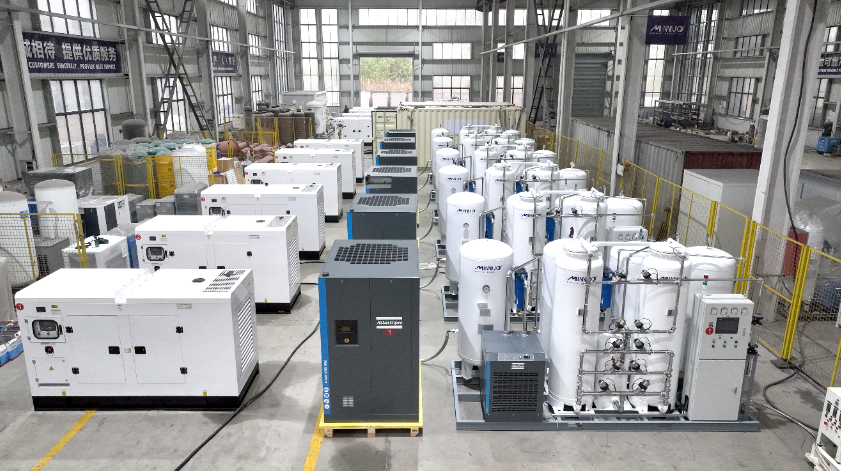
At MINNUO, our expertise is rooted in a deep mastery of PSA technology—from selecting the highest-grade molecular sieves and engineering optimal cycle designs to manufacturing robust valve skids that withstand millions of cycles. We don’t just sell gas generators; we provide optimized adsorption solutions engineered for longevity, efficiency, and unwavering performance, ensuring your operations have a foundation of reliable gas supply you can count on.



 sales2:+86 17506119168