
Investing in a Pressure Swing Adsorption (PSA) oxygen or nitrogen generator is a strategic move for energy and supply chain independence. However, the performance and longevity of these sophisticated systems are entirely dependent on one often-overlooked factor: the quality of the feed air. Ambient air is saturated with water vapor, which, if not removed, becomes the number one enemy of your PSA generator. This article explains why a dedicated air dryer is not an optional accessory but a critical component, detailing how moisture causes damage, the types of dryers available, and how to select the right one to protect your on-site gas generation plant.
I. The Destructive Impact of Moisture on PSA Generators
PSA technology relies on the selective adsorption of gases by a desiccant material, typically zeolite molecular sieves. Water vapor interferes with this process at multiple levels, leading to direct mechanical damage and operational failure.
1. Poisoning of the Molecular Sieve Beds
Zeolite sieves have a very high affinity for water molecules—even higher than for nitrogen or oxygen. When humid air enters the PSA towers, water vapor is preferentially and irreversibly adsorbed onto the sieve pores. This process, known as “sieve poisoning,” permanently reduces the material’s capacity to separate nitrogen or produce oxygen. The result is a rapid and irreversible decline in product gas purity and flow rate, necessitating premature and costly sieve replacement.
2. Corrosion and Ice Formation in the Air Pathway
Compressed air cools as it expands through valves and piping. If not dried sufficiently, this cooling causes water to condense inside the system. This liquid water leads to:
- Corrosion: Rust formation in air buffer tanks, pipelines, and valve bodies, which can flake off and damage sensitive pneumatic components.
- Ice Blockage: In cold environments or during rapid gas expansion, condensed water can freeze, blocking solenoid valves, pressure regulators, and instrument lines, causing sudden system shutdowns.
- Bacterial Growth: Wet, dark piping is an ideal breeding ground for microbes, which can contaminate the system and, in medical oxygen applications, pose a serious health risk.
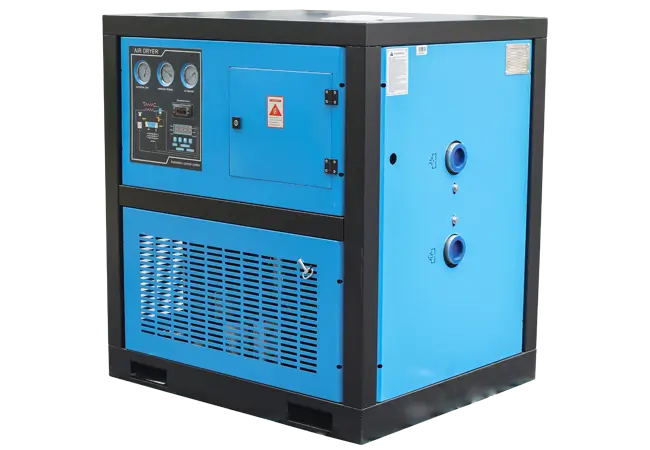
II. Types of Air Dryers: Choosing the Right Defense
Selecting the correct dryer type and specification is essential for reliable operation. The choice hinges on the required Pressure Dew Point (PDP)—the temperature at which water condenses at line pressure.
1. Refrigerated Air Dryers: The Standard for General Protection
This is the most common and energy-efficient type for most industrial applications.
- How it Works: It cools the compressed air to a temperature near +3°C (+37°F) using a refrigeration circuit, causing the water vapor to condense. The liquid water is then separated and drained away.
- Performance: Delivers a PDP of +3°C to +10°C. This is sufficient to protect downstream equipment from liquid water in most climate-controlled environments.
- Best For: General industrial PSA nitrogen generators and oxygen generators where the air lines are in a temperature-stable room and the PDP requirement is not extreme.
2. Adsorption (Desiccant) Air Dryers: For Maximum Dryness and Critical Applications
These dryers are mandatory for applications requiring very dry air or operating in challenging conditions.
- How it Works: They use a hygroscopic desiccant material (like alumina or silica gel) to adsorb water vapor from the air. They typically come in twin towers: one dries the air while the other is regenerated using a purge of dry air or external heat.
- Performance: Can achieve extremely low PDPs, such as -20°C, -40°C, or even -70°C. This ensures no condensation can occur, even if piping runs through cold areas.
- Best For:
- Critical Gas Purity: High-purity nitrogen (≥99.999%) or medical oxygen systems.
- Cold Environments: Plants where air lines run through unheated spaces.
- High Humidity Regions: Coastal or tropical locations where ambient humidity is consistently high.
III. Key Specifications for Selecting a Dryer for Your Gas System
Beyond the type, several specifications must match your PSA generator’s requirements.
1. Matching Capacity: Flow Rate and Inlet Conditions
The dryer must be rated for the maximum flow rate (in CFM or Nm³/h) and the inlet air temperature and pressure of your compressor. An undersized dryer will be bypassed or fail, allowing moisture through.
2. Understanding Pressure Dew Point(PDP) Requirements
Your required PDP should be at least 10°C below the lowest ambient temperature your compressed air system will be exposed to. For example, if a pipe runs through a warehouse that can drop to 5°C in winter, you need a dryer capable of a PDP of -5°C or lower to prevent condensation.
3. Energy Efficiency Considerations
- Refrigerated Dryers: Look for units with non-cycling thermal mass designs for stable operation under varying loads.
- Desiccant Dryers: Heatless (purge regeneration) models are simpler but consume 15-20% of product air for regeneration. Heated or blower purge models use external energy to reduce this purge air loss, saving significant energy for larger systems.

IV. System Integration and Maintenance Best Practices
Proper installation and upkeep ensure the dryer performs as intended.
1. Optimal Installation Sequence
The correct order in your air treatment line is: Compressor → Aftercooler/Moisture Separator → Air Receiver Tank → Air Dryer → Point-of-Use Filter. Placing the receiver tank before the dryer helps stabilize air flow and temperature, improving dryer efficiency and acting as a secondary moisture knockout.
2. Essential Maintenance to Ensure Dry Air
- Daily: Check and drain all automatic drains on the dryer, pre-filters, and receiver tank.
- Quarterly: Inspect and clean the pre-filters and after-filters. For refrigerated dryers, clean the condenser coils.
- Annually: For desiccant dryers, check the desiccant bed for dusting or degradation. For all dryers, calibrate dew point sensors if equipped.
FAQ: Air Dryers for Gas Generation Systems
Q1: Can I use my PSA nitrogen generator to provide purge air for a desiccant dryer?
A1: This is an excellent and efficient setup. Using a small portion of your generated, ultra-dry nitrogen to regenerate the desiccant dryer creates a closed-loop system that eliminates the energy waste of using compressed air for purge. It is a highly recommended configuration for large-scale or high-purity nitrogen plants.
Q2: How do I know if my current air dryer is failing or undersized?
A2: Signs of failure include: visible liquid water downstream of the dryer in filters or drains, a rapid increase in the pressure drop across the dryer, increased moisture content in your product gas (affecting purity readings), or, in desiccant units, the outlet air feeling warm (indicating poor regeneration).
Q3: Is a water-cooled refrigerated dryer better than an air-cooled one?
A3: It depends on your facility. Water-cooled models are more compact, quieter, and less affected by high ambient temperatures, but they require a cooling water supply and have associated water treatment costs. Air-cooled models are more common, easier to install, and have lower operating costs if installed in a well-ventilated area.
Q4: What is the typical lifespan of desiccant in an adsorption dryer?
A4: With proper pre-filtration (removing oil and liquid water), desiccant beads can last 3 to 5 years or more. Lifespan is shortened by oil contamination (from oil-lubricated compressors) and frequent cycling into high temperatures. Regular dew point monitoring is the best way to gauge desiccant health.
Q5: Do I still need filters if I have a high-quality dryer?
A5: Absolutely. Filters and dryers have different, complementary roles. You need a coalescing pre-filter before the dryer to remove liquid oil and water aerosols, protecting the dryer’s internals. An after-filter post-dryer is also recommended to catch any desiccant dust (from adsorption dryers) or oil vapor that passes through.
Conclusion
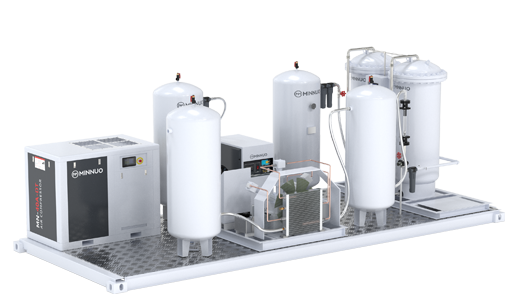
An air dryer is the indispensable guardian of your PSA oxygen or nitrogen generator. By aggressively removing water vapor from the feed air, it prevents the irreversible poisoning of molecular sieves, safeguards against corrosion and ice blockages, and ensures the consistent purity and flow rate that justify your investment in on-site gas generation. Choosing between a refrigerated dryer for cost-efficiency and an adsorption dryer for ultimate protection is a critical decision based on your location, application, and purity requirements. At MINNUO, we understand this synergy deeply; our integrated gas solutions are designed with matched air treatment systems, ensuring that every component—from the compressor and dryer to the PSA generator—works in concert to deliver guaranteed performance and longevity.



 sales2:+86 17506119168