
Composting is a race against time measured in oxygen molecules. Every gram of organic matter converted to stable humus requires microorganisms to consume oxygen. When oxygen is abundant, aerobic bacteria dominate, decomposing waste rapidly and producing carbon dioxide, water, and heat as their primary byproducts. When oxygen runs short, anaerobic bacteria take over, slowing decomposition and generating the volatile organic compounds, hydrogen sulfide, and ammonia that give composting its reputation as a smelly neighbor. The difference between a high-throughput composting facility that operates without complaint and one that generates odor violations often comes down to a single variable: whether the microbial population ever runs out of breath. PSA oxygen injection ensures it never does.
I. The Oxygen Appetite of Aerobic Decomposition
The oxygen demand of composting is immense and often underestimated. Converting one tonne of organic waste to finished compost requires approximately 1.5 to 2.0 tonnes of oxygen, equivalent to roughly 1,000 to 1,400 normal cubic meters of oxygen gas. This oxygen must be supplied continuously throughout the active composting period, which may extend from three to eight weeks depending on the feedstock, the process configuration, and the desired product quality.
Oxygen demand varies dramatically over the composting cycle. The initial phase of active composting, lasting approximately one to three weeks, sees the highest consumption rates as readily degradable compounds are rapidly metabolized. A commercial compost windrow containing 100 tonnes of material may consume 50 to 150 normal cubic meters of oxygen per hour during this peak period. As the compost matures and the remaining organic matter becomes more recalcitrant, oxygen demand declines to perhaps 20% to 30% of the peak rate.
Temperature is both a consequence and a driver of oxygen demand. Thermophilic microorganisms generate heat as they metabolize organic matter, raising the pile temperature to 55 to 70 degrees Celsius. At these elevated temperatures, metabolic rates increase, driving oxygen demand higher. But if the pile cannot reject heat faster than it is being generated, temperature rises to levels that suppress or kill the microorganisms themselves. The compost enters a feedback loop where oxygen demand exceeds supply, anaerobic conditions develop, and the process stalls. Maintaining adequate oxygen supply through the pile is essential both for driving decomposition and for preventing thermal runaway.
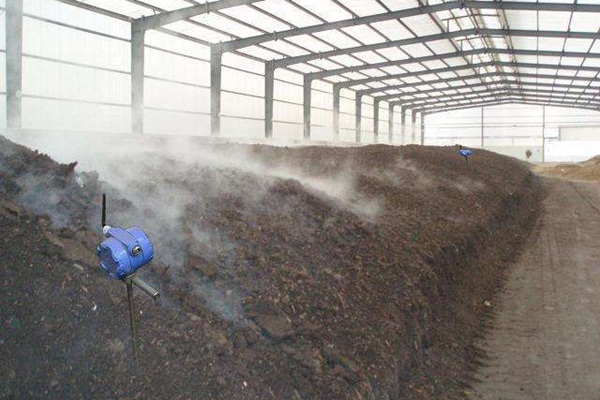
II. Why Conventional Aeration Falls Short
Turning and forced aeration are the standard methods for supplying oxygen to compost piles. Both have fundamental limitations that constrain process performance.
Mechanical turning lifts and mixes the compost, exposing fresh surfaces to atmospheric oxygen. The equipment is expensive to own and operate. A single windrow turner for a large commercial facility costs several hundred thousand dollars and consumes substantial diesel fuel per hour of operation. More critically, turning provides only intermittent oxygen replenishment. After a turn, the oxygen concentration in the pile’s interior may be near atmospheric levels. Within hours, microbial respiration depletes that oxygen, and the pile interior goes anaerobic again until the next turn. The compost cycles between aerobic and anaerobic conditions, neither of which is optimal for rapid decomposition.
Forced aeration systems blow or draw air through the compost pile continuously, addressing the intermittency problem of turning. Below-ground perforated pipes or above-ground aeration floors distribute air through the material. The system provides a continuous oxygen supply, but the air’s oxygen content is only 21%. The remaining 79% is nitrogen that does nothing for the composting process. Moving this volume of air through the pile requires significant fan energy, and the air itself must be conditioned in some climates to prevent excessive cooling or drying of the compost.
Both approaches share a common limitation: the oxygen concentration available to microorganisms is the atmospheric concentration of 21%. This is the maximum, not the maintained. As oxygen diffuses from air channels into the surrounding compost, the concentration drops rapidly with distance from the air source. Microorganisms at the center of compost aggregates may experience oxygen concentrations far below the bulk air concentration, limiting their metabolic rate.
III. How Oxygen Injection Changes Compost Microbiology
Injecting pure oxygen into the compost pile changes the physical and biological dynamics in ways that accelerate the entire process.
The most immediate effect is on the oxygen concentration gradient. When pure oxygen, rather than air, is the gas source, the driving force for oxygen diffusion into the compost matrix is multiplied nearly fivefold. The oxygen concentration at the gas-compost interface is not 21% but 90% or more. The oxygen penetrates deeper into the pile, reaching microorganisms that were previously oxygen-starved. The volume of actively composting material within the pile expands, increasing the effective processing capacity of the facility.
The shift in microbial population is equally important. When oxygen is abundant throughout the pile, aerobic bacteria outcompete facultative anaerobes for available substrate. The aerobic metabolism is more energetically efficient, generating more heat and decomposing organic matter more completely. The metabolic byproducts are primarily carbon dioxide and water, neither of which contributes to odor. The volatile organic acids, reduced sulfur compounds, and amines that characterize anaerobic metabolism are produced at far lower levels.
The heat generation from vigorous aerobic metabolism raises the pile temperature more quickly and maintains it more consistently in the thermophilic range. This accelerates pathogen kill and weed seed destruction, producing a compost that meets regulatory standards for sanitization in less time. The high-temperature phase that requires weeks with conventional aeration may be completed in days with oxygen-enhanced composting.
IV. Odor Control Through Oxygen Management
Odor is the single most common cause of composting facility shutdown, neighbor complaints, and regulatory enforcement. Oxygen injection addresses odor at its source rather than attempting to capture and treat it after it forms.
The volatile organic compounds that create composting’s characteristic smell are produced by anaerobic and facultatively anaerobic microorganisms. When oxygen is limiting, these organisms partially oxidize organic matter, generating short-chain fatty acids, aldehydes, ketones, and reduced sulfur compounds as metabolic waste products. Many of these compounds have odor thresholds measured in parts per billion, meaning that even trace production creates a detectable smell.
Maintaining aerobic conditions throughout the pile eliminates the metabolic pathway that generates these compounds. The microorganisms that would produce them are outcompeted by strict aerobes that oxidize the same substrates completely to carbon dioxide and water. The odor that does exist is the earthy smell of healthy soil, not the sharp, sour, or putrid odors that trigger complaints.
Ammonia, a significant odor and air quality concern from composting nitrogen-rich feedstocks, is also affected by oxygen management. Under aerobic conditions, ammonia is more likely to be assimilated into microbial biomass or oxidized to nitrate than to volatilize as free ammonia gas. While oxygen injection does not eliminate ammonia emissions entirely—the nitrogen cycle in composting is complex—it does reduce the conditions that favor ammonia volatilization.
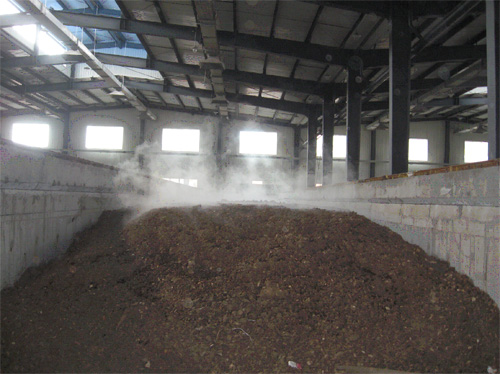
V. PSA Oxygen Supply for Composting Facilities
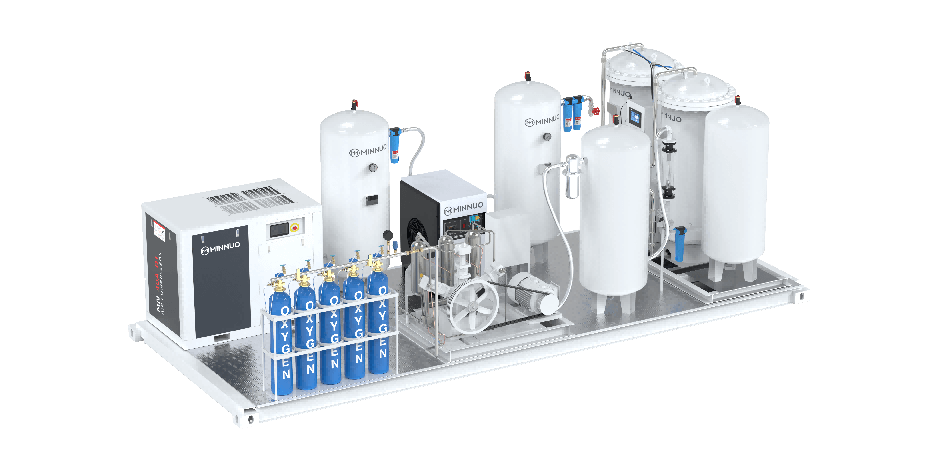
On-site PSA oxygen generation aligns well with the operating profile of commercial composting facilities. These operations run continuously during the active composting season, which for many facilities extends year-round.
Oxygen demand for a commercial composting operation depends on the feedstock volume, the process configuration, and the desired cycle time. A facility processing 50 tonnes of organic waste per day may require 50 to 150 normal cubic meters of oxygen per hour during the initial high-rate composting phase. The PSA oxygen generator is sized for the peak demand, with the understanding that demand will decline as the compost matures.
PSA oxygen at 90% to 93% purity is more than adequate for composting applications. The residual argon and nitrogen are inert and have no effect on the biological process. Higher purity provides no measurable benefit to composting rate or product quality. The oxygen is delivered at low pressure—typically 1 to 3 bar—for injection into the forced aeration system or directly into the compost pile.
The PSA system can be integrated with the facility’s existing aeration infrastructure. For forced aeration systems, oxygen is injected into the aeration piping upstream of the distribution manifold, enriching the air stream to the desired oxygen concentration. The injection rate is controlled by the oxygen demand of the compost, as indicated by temperature and oxygen concentration measurements within the pile. For facilities without forced aeration, simple perforated lances or buried distribution hoses provide direct oxygen delivery to the pile interior.
VI. Implementation and Economics
The economic case for oxygen-enhanced composting rests on three pillars: increased facility throughput, reduced odor management costs, and avoidance of regulatory penalties.
Increased throughput from shorter composting cycles is the primary economic driver. A facility that reduces its active composting phase from six weeks to four weeks increases its annual processing capacity by approximately 50% using the same pad area, the same turning equipment, and the same labor force. The capital cost of the PSA oxygen system is recovered through the additional revenue from processing more material.
Reduced odor management costs provide a second economic benefit. Facilities that have invested in biofilters, chemical scrubbers, or enclosed composting buildings with air handling systems may find that oxygen injection reduces the odor load on these systems, extending media life and reducing chemical consumption. Facilities facing odor complaints may avoid the cost of retrofitting odor control measures by addressing the odor at its source.
The capital cost of a PSA oxygen system for composting is modest relative to the facility’s overall investment. A system sized for 50 to 100 normal cubic meters per hour of oxygen typically costs $50,000 to $120,000 installed. This is comparable to the cost of a single large windrow turner and substantially less than the cost of enclosing a composting operation in a building with air handling and biofiltration.
FAQ
Q1: What oxygen purity does composting require?
Oxygen purity of 90% to 93%, as produced by a standard PSA oxygen generator, is fully adequate for composting. The residual argon and nitrogen are biologically inert and pass through the compost pile without effect. Higher purity provides no measurable benefit and costs more to produce.
Q2: Is oxygen injection safe in a composting environment?
Yes, when properly implemented. The oxygen is injected directly into the compost pile or into the aeration system, not into the open air of the facility. The oxygen concentration in the pile may be locally elevated during injection, but the continuous microbial consumption rapidly draws the concentration down. The facility atmosphere remains at normal oxygen levels. Standard compressed gas safety practices, including oxygen-cleaned piping and separation from combustible materials, apply to the oxygen supply system.
Q3: How much faster does composting complete with oxygen injection?
Results vary by feedstock and process configuration, but typical experience shows a 25% to 40% reduction in the active composting phase. A process that previously required six weeks to reach maturity may achieve the same level of stabilization in four weeks. The primary acceleration occurs during the initial high-rate phase when oxygen demand is highest and conventional aeration is most limiting.
Q4: Can oxygen injection be retrofitted to an existing composting facility?
Yes. The PSA oxygen generator is installed on a prepared pad or in an equipment enclosure. For facilities with forced aeration, oxygen is injected into the existing aeration piping. For windrow facilities, oxygen distribution lances or hoses are placed in the windrow during formation or inserted after turning. The retrofit can typically be completed without disrupting ongoing operations.
Q5: Does oxygen injection affect the quality of the finished compost?
The finished compost quality is equal to or better than compost produced with conventional aeration. The more consistent aerobic conditions produce a more uniform product. The higher temperatures achieved during the thermophilic phase improve pathogen and weed seed destruction. The compost maturity, as measured by respiration rate and stability tests, is at least equivalent to conventionally aerated material.
Q6: How does the cost of PSA oxygen compare to the savings from reduced turning or shorter cycles?
The operating cost of PSA oxygen—dominated by electricity for the air compressor—is typically $0.03 to $0.06 per normal cubic meter of oxygen. For a facility consuming 100 normal cubic meters per hour, the annual oxygen cost is approximately $15,000 to $30,000 for continuous operation. This cost is offset by reduced fuel and maintenance for turning equipment, reduced odor control chemical consumption, and the value of additional throughput from shorter cycles. Most commercial facilities achieve payback within 18 to 36 months.
Conclusion
Composting is an aerobic process, and its success depends on maintaining oxygen supply to billions of microorganisms across every cubic meter of decomposing material. Conventional aeration provides oxygen at the atmospheric concentration of 21%, which limits the rate and depth of oxygen penetration into the compost matrix. Pure oxygen injection elevates the driving force for oxygen transfer nearly fivefold, sustaining aerobic metabolism deeper into the pile, accelerating decomposition, and suppressing the anaerobic conditions that generate nuisance odors. On-site PSA oxygen generation provides the oxygen supply at a cost that makes enhancement economically viable for commercial composting facilities, with the investment recovered through increased throughput, reduced operational costs, and freedom from the odor complaints that threaten the social license to operate.
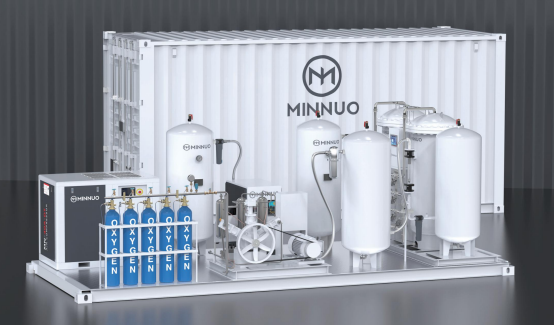
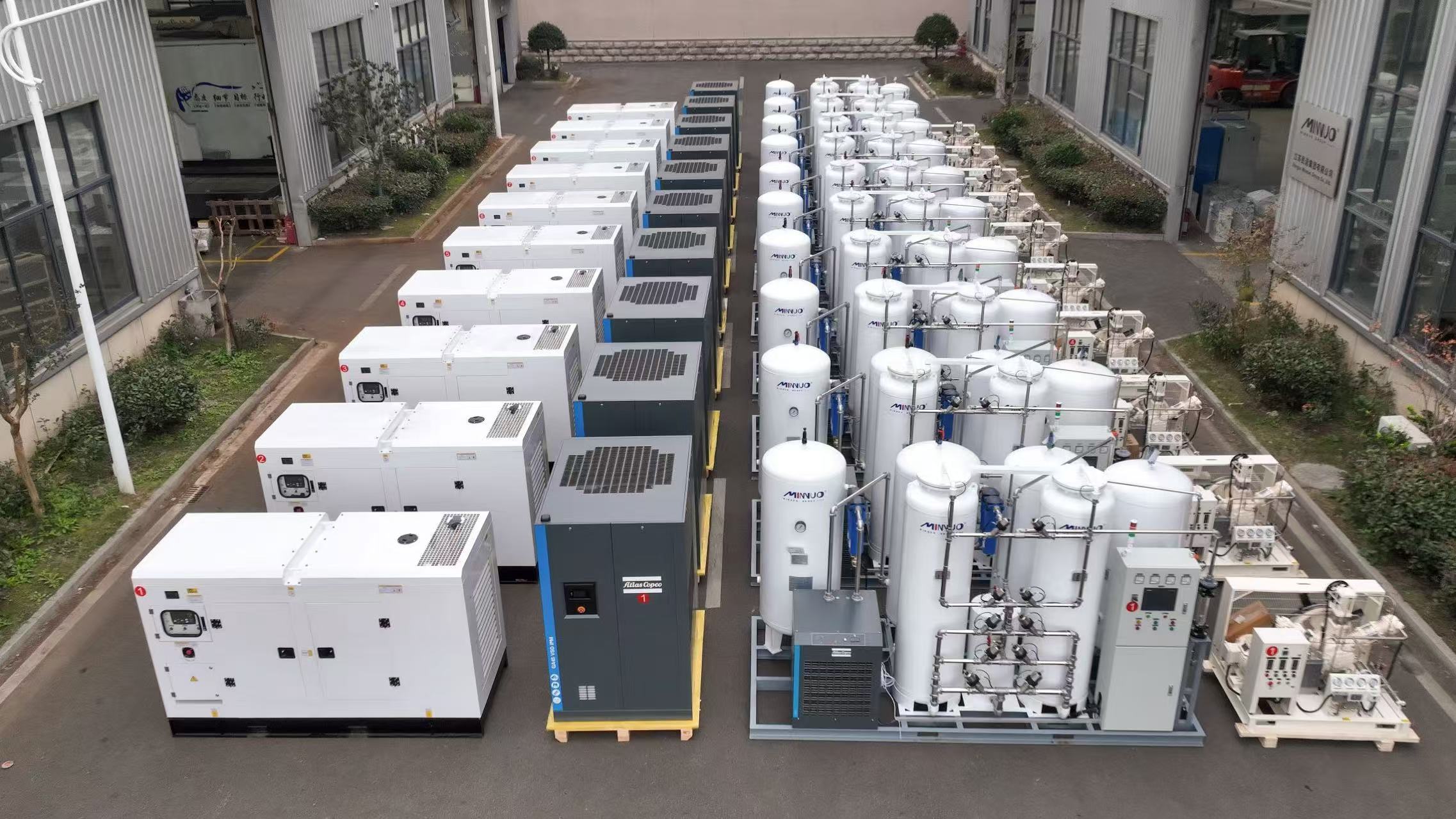
At MINNUO, our PSA oxygen generators are configured for the unique demands of composting applications. Our systems deliver the oxygen purity, flow rate, and pressure required for direct injection or aeration system enrichment, with automated controls that respond to pile temperature and oxygen feedback. Whether you operate a windrow facility, an aerated static pile system, or an in-vessel composting operation, MINNUO provides the reliable on-site oxygen supply that accelerates your process and protects your community relations. Every MINNUO system includes commissioning support, operator training, and ongoing technical assistance.


 sales2:+86 17506119168