
Abstract
Cryogenic air separation liquid nitrogen plants and small liquid nitrogen generators are two mainstream on-site liquid nitrogen production devices with completely different technical routes. Cryogenic air separation relies low-temperature rectification to produce high-purity nitrogen, oxygen and argon in large output; liquid nitrogen generators adopt PSA/membrane separation with compact structure and flexible startup for small-scale demand. This article compares their technical principles, advantages & drawbacks, core parameters and matching scenarios in detail, and attaches concise FAQ to help enterprises and laboratories select suitable liquid nitrogen production equipment.
I. Core Definition & Technical Principle Differences
1. Cryogenic Air Separation Liquid Nitrogen Plant (Cryogenic Separation Unit)
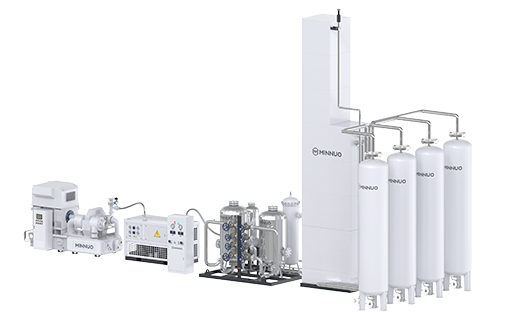
It adopts cryogenic rectification technology: air is compressed and purified, then deeply cooled to -170℃ ~ -190℃ for liquefaction. Nitrogen and oxygen are separated by their different boiling points (liquid nitrogen: -196℃, liquid oxygen: -183℃). The system can simultaneously produce nitrogen, liquid oxygen and rare gases such as argon. Core components: rectifying tower, cold box, expander and other integrated heavy-duty structures with complex overall layout.
2. On-Site Liquid Nitrogen Generator
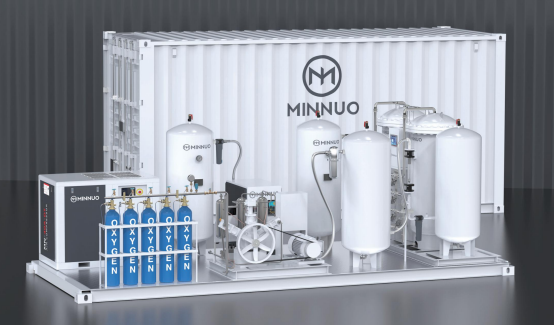
Centered on PSA or hollow fiber membrane separation technology, it skips deep air liquefaction. Compressed air is separated selectively via adsorbents or membrane modules to output nitrogen directly; partial models support small-volume liquid nitrogen storage & liquefaction. The whole set adopts modular compact design.
II. Pros & Cons Comparison
2.1 Advantages & Disadvantages of Cryogenic Air Separation Liquid Nitrogen Plant
| Advantages | Disadvantages |
| 1. Ultra-high nitrogen purity: 99.995% ~ 99.999%, stable output without fluctuation, meets electronic & pharmaceutical high-purity standards | 1. Heavy upfront investment: Mid & small units cost 20%–50% more than liquid nitrogen generators; large-scale plants require multi-million-dollar capital input |
| 2. Large production capacity: Liquid nitrogen output 100~2000L/h, gaseous nitrogen 200~8000Nm³/h, suitable mass continuous industrial production | 2. Large floor area: Occupies 85~410 square meters, special civil engineering & cold box support required, poor mobility |
| 3. Valuable by-products: Synchronously produces ≥99.5% purity liquid oxygen and argon to create extra economic benefits | 3. Complex start-stop procedure: Needs 12–24h pre-cooling purification; repeated restart brings high extra operation cost |
| 4. Low unit energy consumption under full load: As low as 0.35kWh/Nm³, superior cost efficiency for long-term large-volume operation | 4. High maintenance expense: Regular replacement of molecular sieve and expander overhaul; professional technical team mandatory, maintenance cost accounts for over 10% of total expenditure |
2.2 Advantages & Disadvantages of Liquid Nitrogen Generator
| Advantages | Disadvantages |
| 1. Low investment threshold: Small units cost a moderate amount, no complicated civil construction, affordable for small factories & labs | 1. Limited maximum purity: Standard output 90%~99.9%; extra purification system required to reach 99.99%, sharply raising total cost with unstable purity |
| 2. Compact & flexible: Mini mobile lab models available; installation cycle short, startup only 3~30 mins, supports intermittent operation | 2. Restricted production capacity: Liquid nitrogen output 3~50L/h only, not economical for mass industrial demand |
| 3. Simple daily maintenance: No complicated moving parts, basic routine inspection enough, remote monitoring supported, low labor cost | 4. No valuable by-products: Only nitrogen produced, lower raw material utilization rate than cryogenic air separation |
| 4. Wide applicable scenarios: Fit labs, medical aesthetics, small food factories, eliminate liquid nitrogen transportation hazards | 3. High cost to achieve ultra-high purity: Additional multi-stage separation equipment needed for ≥99.99% nitrogen, total cost exceeds cryogenic units |
III. Core Performance Parameter Comparison Table
| Comparison Item | Cryogenic Air Separation Liquid Nitrogen Plant | On-Site Liquid Nitrogen Generator |
| Nitrogen Purity | ≥99.995%, max 99.999% | 90%~99.9%; 99.99% requires customized extra purification |
| Liquid Nitrogen Output | 100 ~ 2000 L/h | 3 ~ 50 L/h |
| Startup Time | 12 ~ 24 hours | 3 ~ 30 minutes |
| Floor Space | 85 ~ 410 ㎡ | 10 ~ 50 ㎡; mini lab models movable |
| Full-Load Power Consumption | 0.35 ~ 0.4 kWh/Nm³ | 5 ~ 40 kW (varies by output capacity) |
| Matching Purity Demand | Ultra-high purity ≥99.99% | Medium & low purity ≤99.9% |
| Initial Investment Level | High (large plants cost millions) | Low (small units with low capital outlay) |
IV Precise Matching of Application Scenarios
Cryogenic Air Separation Liquid Nitrogen Plant — Preferred Scenarios
Steel smelting, petrochemicals, semiconductor manufacturing, large-scale food quick-freezing and other industries. Demands: Daily liquid nitrogen consumption over 1000L, stable demand for ≥99.99% high-purity nitrogen, long-term continuous production, enterprises that can bear large upfront investment.
On-Site Liquid Nitrogen Generator — Preferred Scenarios
Laboratory scientific research, biomedical sample storage, catering molecular cooking, medical cold therapy and decentralized small-scale workshops. Demands: Daily liquid nitrogen consumption ≤500L, nitrogen purity requirement ≤99.9%, intermittent production or mobile on-site gas supply required.
V FAQ
Q1 What is the maximum nitrogen purity of ordinary liquid nitrogen generators?
A1 Standard models produce 90%–99.9% nitrogen; 99.99% purity needs customized additional purification modules.
Q2 How long does a cryogenic air separation plant take to start up?
A1 It takes 12 to 24 hours for pre-cooling and purification before stable liquid nitrogen output.
Q3 Which equipment is more cost-effective for large factories with daily liquid nitrogen consumption above 1000L?
A1 Cryogenic air separation liquid nitrogen plant is the optimal choice with low full-load unit power consumption and by-product oxygen/argon revenue.
Q4 Can liquid nitrogen generators be moved for laboratory temporary use?
A2 Yes, small integrated liquid nitrogen generator models support mobile deployment for lab intermittent experiments.
Q5 What are the main by-products of cryogenic air separation units?
A3 High-purity liquid oxygen and argon can be produced simultaneously to increase comprehensive factory income.
VI Conclusion
Cryogenic air separation liquid nitrogen plants and small liquid nitrogen generators serve two completely segmented market demands. Cryogenic separation equipment excels in large output, ultra-high purity and by-product benefits, suited for heavy industrial mass production; liquid nitrogen generators feature low investment, flexible startup and small footprint, perfectly matching labs and small decentralized manufacturers. Enterprises should select liquid nitrogen production equipment based on daily consumption volume, required nitrogen purity and production continuity to balance investment cost and long-term operation expenditure.


 sales2:+86 17506119168