
Remote mines, offshore platforms, and isolated industrial facilities share a common challenge: they need oxygen, and they need it without interruption. Yet the skilled technicians required to operate a PSA oxygen plant—monitoring purity, adjusting cycle timing, troubleshooting alarms—are increasingly difficult to recruit and retain for remote postings. The solution emerging across the industry is the autonomous PSA oxygen plant: a system that monitors itself, adjusts its own operating parameters, predicts its own maintenance needs, and alerts human operators only when their judgment is genuinely required. This is not a futuristic concept. It is being built today using industrial internet of things sensor networks and edge computing platforms that process data locally, respond in real time, and operate independently of cloud connectivity.
I. The Limits of Traditional PSA Plant Monitoring
To understand what autonomy means for a PSA oxygen plant, it helps to start with what conventional monitoring actually delivers—and where it falls short.
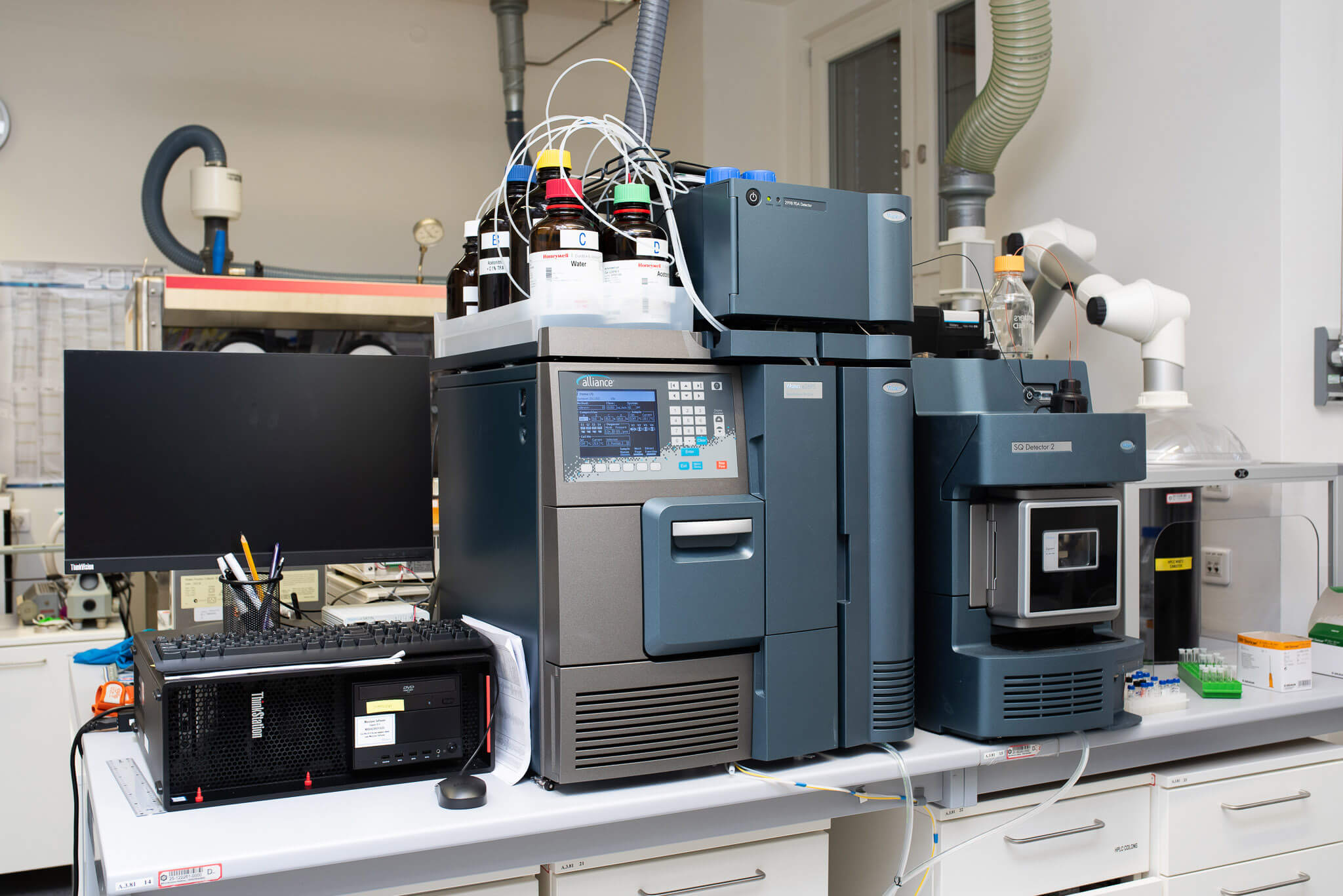
A standard PSA plant includes local instrumentation: pressure transmitters on the adsorber vessels and buffer tank, a temperature sensor on the compressor discharge, an oxygen analyzer on the product line, and flow meters on the oxygen outlet and sometimes the feed air inlet. The plant controller uses this data to execute the PSA cycle and trigger alarms when readings exceed preset limits. If a pressure is too high, an alarm activates. If oxygen purity drops below specification, an alarm activates. The controller does not interpret trends. It does not correlate data across sensors. It simply compares each reading to a threshold and reacts.
Remote monitoring, where installed, typically transmits a subset of this data to a central control room or a cloud dashboard. Operators can view plant status from a distance, but they are still required to interpret the data, diagnose problems, and decide on corrective actions. If the remote connection drops—a regular occurrence at sites relying on satellite or cellular backhaul—the plant continues operating but the remote visibility disappears.
The fundamental limitation of this approach is that the plant’s intelligence resides with human operators who may be hundreds or thousands of kilometers away, or who may be present but distracted by other duties. The plant generates data continuously. Human attention is intermittent. The gap between when a problem begins to develop and when someone notices is where avoidable failures occur.
II. What an Autonomous PSA Plant Does Differently
An autonomous PSA oxygen plant closes this gap by embedding decision-making capability within the plant itself. It does not simply send data and wait for instructions. It analyzes, decides, and acts.
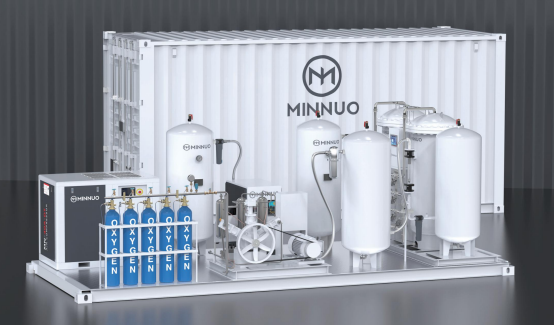
At the core of the autonomous plant is an edge computing platform—an industrial computer installed in the plant control cabinet that runs analytics software on a real-time data stream. The edge platform receives every sensor reading, at full resolution, and processes them locally. It is not dependent on cloud connectivity for analysis or control decisions. The cloud, if connected, serves as a long-term data repository and a user interface for off-site personnel. But the plant can operate fully autonomously with or without the cloud link.
The edge platform performs several functions that distinguish it from a conventional plant controller. It builds a dynamic model of normal plant behavior based on historical operating data, learning what pressures, temperatures, and purity values are normal for this specific plant at this specific site under current ambient conditions. It compares real-time data against this model to detect deviations that are too small or too slow to trigger conventional threshold alarms—a gradual increase in compressor power consumption, a subtle shift in the pressure equalization curve, a slow decline in recovery efficiency. It analyzes trends across multiple sensors to identify the root cause of developing problems, distinguishing between a purity decline caused by aging zeolite, one caused by a leaking valve, and one caused by a change in ambient temperature. And it generates work orders or alert notifications when its analysis indicates that human intervention is needed, providing the operator with not just an alarm but a probable diagnosis and a recommended course of action.
III. The Sensor Foundation: What Gets Measured
Autonomy begins with data, and the quality of autonomous decisions depends on the quality and breadth of the data collected. A conventional PSA plant might have eight to twelve sensors. An autonomous plant has more, and they are selected to enable specific diagnostic and predictive capabilities.
Pressure sensing is extended beyond the standard vessel and buffer tank measurements. Differential pressure transmitters across the inlet filter, the oil separator, and the intercooler provide real-time indication of fouling or blockage. Pressure transmitters on the exhaust silencer track the depressurization profile, which reveals changes in bed resistance. A pressure transmitter on the compressor interstage, for multi-stage machines, indicates interstage cooler condition and valve performance.
Temperature sensing extends beyond the standard compressor discharge measurement. Temperature sensors on each compressor bearing housing provide early warning of bearing degradation. Sensors on the oil cooler inlet and outlet enable oil cooler performance tracking. Ambient temperature and humidity sensors provide the context needed to distinguish between seasonal performance variations and actual equipment problems. For air-cooled machines, a sensor on the cooling air discharge detects cooler fouling before it affects compressor performance.
Vibration sensing provides the earliest possible warning of mechanical degradation. Accelerometers on the compressor airend detect bearing deterioration, rotor imbalance, and developing gear problems weeks or months before these faults produce measurable changes in pressure or temperature. Vibration sensors on the PSA switching valves detect changes in valve actuation speed that precede sticking or leakage.
Oxygen analysis extends beyond the product line. An additional analyzer at the adsorber outlet, before the buffer tank, captures transient purity variations that the buffer tank averages out. This data enables the edge platform to detect cycle-specific purity issues—one vessel performing differently than the other, or purity dipping during specific cycle phases.
Power monitoring at the compressor motor provides the data needed to calculate specific power and track efficiency trends. A gradual increase in power for the same oxygen output, absent other changes, signals developing compressor or process problems.
IV. Edge Computing: Why Local Processing Matters
The edge computing approach is not simply a preference for local processing. For autonomous industrial control, it is an operational necessity driven by latency, reliability, and security requirements.
The latency demand is absolute. A PSA cycle lasts 60 to 120 seconds. Pressure equalization between vessels completes in a few seconds. A valve opening sluggishly must be detected and addressed within the current cycle, not after a round trip to a cloud server that may take several seconds even under ideal conditions and much longer under degraded network conditions. The edge platform analyzes sensor data and issues commands within milliseconds—fast enough to intervene in the current cycle, not the next one.
Network reliability at remote industrial sites is inherently limited. Satellite connections suffer latency and weather-related degradation. Cellular coverage may be intermittent or non-existent. Even wired connections are subject to accidental damage during construction or maintenance activities. A control architecture that depends on continuous cloud connectivity for essential functions will fail when the connection drops. An edge-based architecture continues operating at full capability regardless of network status. The cloud connection, when available, enables remote visibility and data backup, but it is not required for safe, efficient operation.
Data security considerations favor edge processing as well. The data streams from an industrial oxygen plant—production rates, purity levels, maintenance alerts—are operationally sensitive. Processing this data locally and transmitting only summarized results or exception reports to the cloud reduces the volume of data exposed to network interception and reduces the attack surface presented by cloud-connected industrial equipment. The edge platform’s local data storage ensures that operational data is preserved even during extended network outages, enabling compliance with regulatory data retention requirements.
V. Predictive Maintenance: From Scheduled to Condition-Based
The most transformative autonomous capability is predictive maintenance. Traditional maintenance is calendar or hour-based. Oil is changed every 2,000 hours. Filters are replaced every 4,000 hours. Valves are rebuilt every 16,000 hours. These intervals are averages derived from fleet experience. They do not account for the specific operating conditions of a particular plant. A plant operating in clean, cool conditions may safely extend intervals well beyond the standard recommendations. A plant operating in hot, dusty conditions may need more frequent attention.
Predictive maintenance replaces fixed intervals with condition-based decisions. The edge platform continuously analyzes sensor data to estimate the remaining useful life of critical components. Oil condition is inferred from trending of compressor discharge temperature, bearing vibration, and specific power—parameters that change measurably as oil degrades. The platform recommends an oil change when the oil needs changing, not when a calendar date arrives.
Zeolite condition is tracked through the purity-recovery relationship over thousands of cycles. As zeolite ages and loses nitrogen capacity, the cycle timing required to maintain target purity changes predictably. The platform detects this shift and estimates remaining zeolite life, providing months of advance notice before the bed needs replacement. This allows the operator to budget for the expense, schedule the work during a planned outage, and avoid the purity excursions that occur when a depleted bed is operated beyond its useful life.
Valve condition is inferred from the actuators’ stroke time, the pressure profiles during switching, and vibration signatures. A valve that takes incrementally longer to open fully, or that produces a different vibration pattern during actuation, is flagged for inspection. The platform distinguishes between normal variation and developing problems, reducing unnecessary valve inspections while ensuring that genuinely degrading valves are caught before they fail.
VI. The Implementation Path: From Remote Monitoring to Full Autonomy
Deploying an autonomous PSA oxygen plant does not require a greenfield installation. The capabilities can be implemented incrementally, with each stage adding value independently.
The foundation stage adds the sensor infrastructure and a basic remote monitoring platform. Additional sensors are installed on existing equipment. Data is collected and displayed on a dashboard accessible from any location. Alarms are configured and routed to appropriate personnel. This stage alone reduces the need for on-site operator rounds and enables off-site troubleshooting.
The analytics stage adds the edge computing platform and builds the plant’s normal behavior model. The platform begins analyzing trends and generating predictive alerts. Maintenance shifts from calendar-based to condition-based for components where sensor data supports reliable predictions. Operators still make the final decisions, but they now have diagnostic information and recommendations rather than raw data.
The autonomous control stage enables the platform to make and execute certain operational decisions independently. Cycle timing adjusts automatically in response to ambient conditions and zeolite condition. The plant starts and stops in response to demand signals. Purity is maintained at the target setpoint without operator intervention. The operator’s role shifts from continuous monitoring to exception management—intervening only when the platform escalates an issue it cannot resolve autonomously.
Full autonomy, the final stage, enables the plant to operate indefinitely without human intervention under normal conditions. The platform handles all routine operational decisions, manages all normal startups and shutdowns, and coordinates with downstream processes for oxygen demand management. Human operators are notified of abnormal conditions with sufficient lead time to respond deliberately rather than reactively.
FAQ
Q1: What sensors are essential for basic autonomous operation?
At minimum, pressure transmitters on both adsorber vessels, the buffer tank, the compressor discharge, and across key filters and separators; temperature sensors on the compressor discharge and at the dryer inlet; an oxygen analyzer on the product line with a second analyzer before the buffer tank if cycle-specific purity data is desired; vibration sensors on the compressor airend and the PSA switching valves; a power meter on the compressor motor; and an ambient temperature and humidity sensor for context. This sensor set enables the core predictive and adaptive capabilities described in this article.
Q2: Can an existing PSA plant be upgraded with autonomous capabilities?
Yes. The edge platform and additional sensors can be retrofitted to most PSA plants manufactured within the last ten to fifteen years. The retrofit involves adding the specified sensors, installing the edge computing hardware in the control cabinet, configuring the data connections, and building the plant-specific behavioral model from historical and commissioning data. The existing PLC and control system remain in place for basic cycle control. The edge platform provides the higher-level analytics and autonomy functions.
Q3: What happens if the edge computing hardware fails?
The PSA plant’s base control system—the PLC that executes the PSA cycle—continues to operate independently of the edge platform. If the edge hardware fails, the plant continues to produce oxygen under the control of the base PLC. The autonomous analytics and adaptive control functions are lost until the edge platform is restored, but the plant does not shut down. Edge platform redundancy, either through a hot-standby unit or a cloud-based backup that can assume essential analytics functions during an edge outage, is an option for critical installations.
Q4: How is cybersecurity addressed in an autonomous PSA plant?
Defense-in-depth principles apply. The edge platform is protected by a dedicated firewall that restricts network access to authorized devices and protocols. Communication between sensors, edge platform, and plant controller occurs on a segregated operational technology network, physically or logically separated from the business network and the internet. Remote access is through encrypted virtual private network connections with multi-factor authentication. Software updates are digitally signed and verified before installation. A cybersecurity assessment should be conducted as part of any autonomous system deployment.
Q5: What is the typical return on investment for autonomous capability?
The savings come from several sources. Predictive maintenance reduces unplanned downtime and extends component life. Autonomous purity control reduces oxygen waste and energy consumption. Reduced operator rounds and remote diagnostics lower labor costs. The specific return depends on plant size, site accessibility, and labor cost structure. For remote sites where a service visit costs thousands of dollars in travel alone, the elimination of a single unnecessary emergency callout can justify a significant portion of the autonomous system investment.
Q6: Does an autonomous plant still require human operators?
In most regulatory environments, a responsible operator must be designated for any industrial pressure system regardless of automation level. The autonomous plant does not eliminate the operator role, but it fundamentally changes it. Instead of monitoring the plant continuously and responding to alarms as they occur, the operator receives predictive notifications with diagnostic information and recommended actions. The operator can manage multiple plants from a central location, intervening only when the autonomous system escalates an issue. This is the essence of lights-out operation: the plant runs itself, and the operator manages by exception.
Conclusion
The autonomous PSA oxygen plant is not science fiction. It is the logical extension of sensor, computing, and analytics technologies that are already proven in other industrial applications. The value proposition is strongest for remote sites—mines, offshore platforms, isolated communities—where the cost of on-site technical labor is highest and the consequences of unplanned downtime are most severe. But the underlying principle applies universally: a plant that analyzes its own data, adjusts its own operation, and predicts its own maintenance needs will outperform a plant that depends on intermittent human attention.
At MINNUO, our PSA oxygen plants are available with integrated IIoT and edge computing platforms designed specifically for autonomous and remote operation. From entry-level remote monitoring to fully autonomous control with predictive maintenance, our systems scale to match your operational requirements and digital transformation roadmap. Every MINNUO autonomous system includes cybersecurity documentation, operator training for the new autonomous operating model, and a scalable architecture that protects your investment as technology evolves.

 sales2:+86 17506119168