
Cable manufacturers consume nitrogen on an industrial scale. Cross-linked polyethylene insulation, the standard for medium and high-voltage power cable, requires continuous nitrogen blanketing during the vulcanization process. A single continuous vulcanization line producing 20 meters of cable per minute can consume 30 to 80 cubic meters of nitrogen per hour. For decades, the default supply method was liquid nitrogen—delivered by truck, stored in bulk tanks, vaporized on demand. The arrangement is simple and has worked for years, so many cable plants never question it. They should. On-site PSA nitrogen generation consistently reduces nitrogen costs by 40% to 60% compared to delivered liquid nitrogen, with the capital investment typically recovered within 12 to 24 months. The case for switching is quantitative, not theoretical.
I. The True Cost of Liquid Nitrogen
Liquid nitrogen pricing appears straightforward. The supplier quotes a price per tonne or per hundred cubic meters of gas equivalent. The invoice arrives monthly. The cost is accepted as a production expense. The reality is that the quoted price represents only a fraction of what the cable plant actually pays for nitrogen service.
The delivered liquid nitrogen price embeds multiple costs that are invisible to the buyer. The supplier’s energy cost for cryogenic air separation—approximately 0.5 to 0.8 kilowatt-hours per normal cubic meter of nitrogen produced—is passed through in the product price. The transportation cost from the air separation plant to the cable factory, which may be hundreds of kilometers, is embedded in the delivery charge or the per-unit price. The bulk tank rental, often itemized separately, adds a monthly fixed cost regardless of consumption. Environmental and fuel surcharges add further layers.
Liquid nitrogen boil-off represents a cost that is real but rarely measured by the customer. A well-maintained vacuum-insulated bulk tank loses 0.3% to 0.5% of its contents daily to heat ingress. Over a month, 10% to 15% of delivered liquid nitrogen vents to atmosphere before reaching the cable line. Production schedules amplify this loss. A cable plant running five days per week with weekend shutdown loses nitrogen through boil-off during the 48 hours when production is idle. The boil-off loss is proportional to the tank size and the ambient temperature—both of which are outside the cable manufacturer’s control.
Contract terms compound the economic disadvantage. Liquid nitrogen supply agreements typically include minimum purchase commitments, annual price escalation clauses tied to energy or inflation indices, and termination provisions that make changing suppliers difficult. A cable plant locked into a five-year agreement with 3% annual escalation pays progressively more for nitrogen each year while the supplier’s underlying production costs may be stable or declining. The customer absorbs the price risk.
II. PSA Nitrogen Cost Structure
On-site PSA nitrogen generation restructures the cost of nitrogen from an externally-priced commodity to an internally-controlled utility.
The primary operating cost is electricity. A PSA nitrogen generator producing 99.5% purity nitrogen consumes approximately 0.35 to 0.55 kilowatt-hours per normal cubic meter of nitrogen, depending on the plant size and the required delivery pressure. At an industrial electricity rate of $0.08 per kilowatt-hour, the electricity cost per cubic meter ranges from $0.028 to $0.044. For a cable plant consuming 50 normal cubic meters per hour over 6,000 operating hours annually, the annual electricity cost is $8,400 to $13,200.
Maintenance costs are predictable and modest. The PSA system has two primary consumables: carbon molecular sieve, which is replaced every 8 to 12 years depending on feed air quality and operating conditions, and filter elements, which are replaced annually. The amortized annual cost of sieve replacement and filter changes for a mid-sized PSA plant is typically $3,000 to $6,000. Labor for routine maintenance is minimal—filter changes, condensate drain checks, and annual inspections require perhaps 40 hours of technician time per year.
The capital cost of the PSA system depends on the nitrogen flow rate, purity, and delivery pressure required. For a cable plant application, a PSA system sized for 50 normal cubic meters per hour of 99.5% nitrogen typically costs $60,000 to $120,000 installed, including the generator, air compressor, dryer, filtration, buffer tank, and commissioning. Larger systems serving multiple cable lines are proportionally less expensive per unit of capacity.
The total cost per cubic meter of PSA nitrogen, including electricity, maintenance, and capital amortization over 10 years, ranges from $0.035 to $0.065. This is 35% to 60% less than the typical delivered liquid nitrogen price of $0.10 to $0.18 per cubic meter equivalent for industrial users.
III. Head-to-Head Cost Comparison
A modeled comparison for a representative medium-voltage cable plant quantifies the savings from switching to PSA nitrogen.
The plant operates one continuous vulcanization line consuming 50 normal cubic meters per hour of nitrogen at 99.5% purity. The line runs 6,000 hours per year. Annual nitrogen consumption is 300,000 normal cubic meters.
Liquid nitrogen delivered price is $0.14 per normal cubic meter equivalent, including product, delivery, tank rental, and surcharges. Boil-off losses are estimated at 12% of delivered volume based on a 6,000-liter bulk tank in a temperate climate with weekend shutdowns. The effective consumption including boil-off is 341,000 normal cubic meters. Annual liquid nitrogen cost is $47,700.
PSA nitrogen capital cost for a 50 normal cubic meter per hour system is $90,000 installed. Annual electricity cost at $0.08 per kilowatt-hour and 0.45 kilowatt-hours per normal cubic meter is $10,800. Annual maintenance cost including consumables amortization is $4,500. Capital amortization over 10 years at 6% cost of capital is $12,200 per year. Total annual PSA nitrogen cost is $27,500.
Annual savings are $20,200. Simple payback is 4.5 years on this conservative estimate. For a plant with higher electricity costs offset by higher liquid nitrogen prices, or a plant operating more hours per year, the payback shortens. A two-shift operation consuming nitrogen for 8,000 hours per year achieves payback in approximately 3 years. A plant operating three shifts, 8,400 hours per year, achieves payback in under 3 years.
IV. Beyond Unit Cost: Additional Economic Advantages
The cost-per-cubic-meter comparison captures the most visible benefit of PSA nitrogen but understates the total economic advantage.
Supply security value resists quantification but is real. A liquid nitrogen delivery delayed by weather, traffic, or supplier allocation issues can halt cable production. A single lost production day on a cable line generating $15,000 of margin per day equates to approximately six months of liquid nitrogen expense. PSA nitrogen eliminates this risk. The nitrogen plant operates when the cable line operates, independent of external supply chains.
Price predictability transforms nitrogen from a variable cost that rises with energy prices and supplier escalation clauses into a fixed cost that rises only with the plant’s own electricity rate. The cable manufacturer gains control over its nitrogen cost trajectory. When liquid nitrogen prices spike during energy crises or supply disruptions, the PSA plant’s cost structure is unaffected.
Quality control is an operational benefit with economic implications. PSA nitrogen purity is consistent and monitored continuously. Liquid nitrogen purity is certified at the supplier’s plant but may degrade during transfer and storage. A PSA plant that produces 99.5% nitrogen today will produce 99.5% nitrogen tomorrow, giving the cable manufacturer confidence that nitrogen quality variations are not contributing to insulation quality issues.
V. Implementation Path
The transition from liquid nitrogen to on-site PSA generation follows a structured process that minimizes production disruption.
The liquid nitrogen system remains in place during PSA installation and commissioning. The PSA plant is installed on a prepared pad or in an equipment room, connected to the nitrogen distribution header, and commissioned to deliver nitrogen at the specified purity and pressure. The existing liquid nitrogen system serves as backup during this phase, exactly as it will continue to serve as backup during normal PSA operation.
The cutover to PSA nitrogen occurs after commissioning is complete and the PSA system has demonstrated stable operation for a specified period, typically one to two weeks. The nitrogen header is transitioned from liquid-supplied to PSA-supplied with the liquid system held in hot standby. If any issue arises with the PSA system during the initial operating period, the liquid system resumes supply within minutes.
The liquid nitrogen system is retained after PSA commissioning as a backup supply. The bulk tank rental continues, but the liquid nitrogen consumption drops to near zero. The backup system is activated periodically to verify readiness and consumes minimal nitrogen. The combined cost of PSA operation plus liquid backup is still substantially less than the previous all-liquid cost.
FAQ
Q1: What nitrogen purity does XLPE cable production require?
XLPE cable manufacturing typically requires nitrogen purity of 99.5% to 99.9%, depending on the voltage class of the cable being produced and the specific vulcanization process parameters. Standard PSA nitrogen generators achieve 99.5% purity, with 99.9% available from high-purity PSA configurations or post-purification. The residual gas is primarily argon, which is inert in the vulcanization process.
Q2: Is the PSA nitrogen capital cost affected by the required delivery pressure?
Yes. Nitrogen for cable vulcanization is typically required at 6 to 10 bar gauge. Standard PSA systems deliver nitrogen at 5 to 7 bar, which is adequate for most cable lines. If higher pressure is required, a nitrogen booster compressor adds to the capital cost but typically represents 10% to 15% of the total system investment.
Q3: How does a PSA system handle fluctuating nitrogen demand during cable production?
A properly sized nitrogen buffer tank smooths demand fluctuations. The PSA system operates at a steady output, filling the buffer tank during periods of lower demand and allowing the tank to supplement PSA output during demand peaks. The buffer tank is sized for 10 to 15 minutes of peak flow to provide adequate surge capacity.
Q4: What happens if the PSA plant requires maintenance?
Routine maintenance—filter changes, oil changes on the air compressor—is performed during scheduled production downtime or while the liquid nitrogen backup system supplies the cable line. Major maintenance, such as carbon molecular sieve replacement after 8 to 12 years, is scheduled during a plant turnaround when the cable line is idle.
Q5: How do ambient conditions affect PSA nitrogen production for cable plants?
Ambient temperature and humidity affect PSA nitrogen output. High ambient temperatures reduce compressor mass flow and may require a slightly larger compressor for the same nitrogen output. High humidity increases the moisture load on the air dryer, requiring appropriate dryer sizing. Cable plants in tropical or desert locations should specify the PSA system for the expected site ambient conditions.
Q6: Is the quality of PSA nitrogen consistent enough for high-voltage cable production?
Yes. PSA nitrogen generators with properly maintained feed air treatment systems deliver nitrogen purity within a narrow band around the design setpoint. Continuous oxygen monitoring verifies purity in real time and can divert off-specification nitrogen to atmosphere automatically if purity drops below the acceptable threshold. High-voltage cable manufacturers worldwide use PSA nitrogen for vulcanization with consistent results.
Conclusion
The nitrogen that protects cable insulation during cross-linking is a production cost. Delivered liquid nitrogen makes that cost externally controlled, variable with energy markets, and inflated by logistics. On-site PSA nitrogen generation brings the cost under the cable manufacturer’s control, fixes it to the local electricity price, and eliminates the delivery dependency that threatens production continuity. The cost savings are consistent across cable plant scales and geographies: 40% to 60% reduction in per-unit nitrogen cost, with capital recovery in two to four years under conservative assumptions. For cable manufacturers who have relied on liquid nitrogen for years, the question is not whether the economics work. The question is whether they can afford to continue paying more than necessary for a utility they could produce themselves.
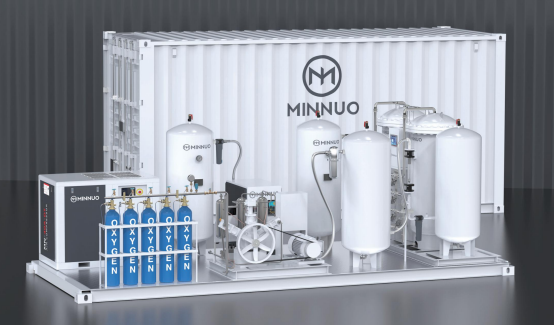
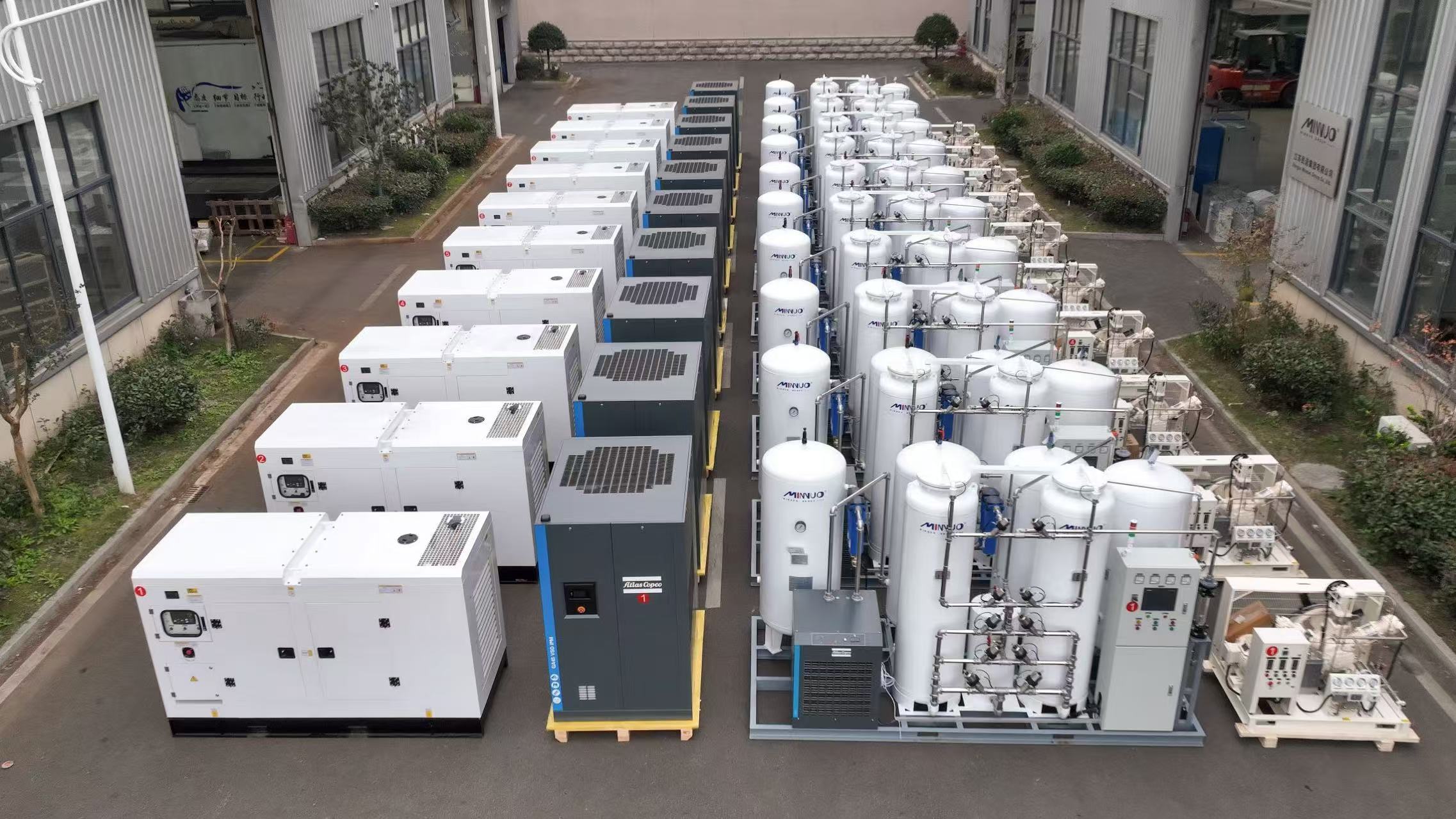
At MINNUO, we provide PSA nitrogen generation systems purpose-built for cable manufacturing applications. Our systems deliver the purity, pressure, and flow rate required for XLPE vulcanization, with integrated purity monitoring and liquid nitrogen backup interfaces for production security. Whether you operate a single CV line or a multi-line cable production facility, our engineering team sizes the nitrogen system to your specific production requirements and supports the transition from liquid nitrogen to on-site generation with commissioning, operator training, and ongoing technical support. Every MINNUO nitrogen system includes purity verification documentation and a production guarantee based on your actual operating conditions.


 sales2:+86 17506119168