Nitrogen serves as a widely used inert shielding gas across machinery processing, laser cutting, food packaging, chemical, pharmaceutical, electronics, heat treatment and most other industrial production sectors. At present, domestic enterprises adopt two mainstream nitrogen supply methods: traditional outsourced liquid nitrogen tank centralized gas supply, and on-site gas generation via PSA nitrogen generators. For a long time, many small and medium-sized enterprises have relied habitually on liquid nitrogen tank supply under the impression that it requires low upfront investment and no equipment operation and maintenance. However, during mass production, they commonly face persistent high gas costs, unstable supply, fluctuating nitrogen purity, abundant safety hazards and restricted production capacity.
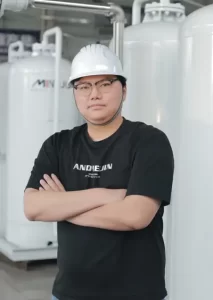
As a dedicated PSA nitrogen generator engineer at Jiangsu Minnuo Group with years of experience serving thousands of industrial customers, I have undertaken numerous renovation projects replacing liquid nitrogen supply with on-site PSA nitrogen generation. Drawing on real working condition data, cost calculations and on-site implementation experience, this article systematically breaks down the core strengths of PSA nitrogen generators over liquid nitrogen tanks, the gas flow thresholds for precise model selection, and applicable scenarios for both supply modes. It helps enterprises avoid blind selection and match the optimal nitrogen supply solution, delivering multiple benefits including safe production, maximum cost reduction and stable high-yield manufacturing.
A major model selection misconception among many enterprises is adopting liquid nitrogen supply regardless of nitrogen consumption volume or production conditions, resulting in massive long-term profit losses. In fact, clear thresholds for gas flow and scenario suitability distinguish PSA nitrogen generation and liquid nitrogen tank supply. Selecting the right solution can save enterprises hundreds of thousands of RMB annually in gas costs, while a poor match leads to sustained losses and hidden risks.

I. Universal Pain Points of Traditional Liquid Nitrogen Tank Supply
Liquid nitrogen tank supply was the mainstream nitrogen supply method in early industrial manufacturing. The workflow involves centralized liquid nitrogen production by gas suppliers, cryogenic transportation, on-site tank storage and vaporization for usage. While enterprises only bear tank rental or purchase costs without self-owned nitrogen generation equipment upfront, this approach conceals multiple irreversible drawbacks, the key reason why an increasing number of manufacturers are phasing out liquid nitrogen supply.
First, gas costs remain extremely high with unavoidable hidden losses. Liquid nitrogen is a deep-processed gas marked up by expenses for liquefaction, cryogenic transportation, tank depreciation, labor delivery and gas company profit margins, pushing its comprehensive unit price far above on-site nitrogen generation. Additionally, liquid nitrogen tanks incur natural static vaporization losses of 3%–8% daily even during production shutdowns, creating enormous waste over time. Coupled with seasonal gas price surcharges, delivery freight hikes and empty tank replacement fees, long-term gas expenditure keeps rising and severely squeezes product profit margins.
Second, unstable gas supply compromises product quality. Liquid nitrogen vaporized output is highly susceptible to ambient temperature, tank pressure and liquid level, leading to frequent fluctuations in delivery pressure and purity. For high-precision processes such as laser cutting, precision welding, food nitrogen filling and electronic packaging, minor variations in pressure or purity trigger surging defective rates, causing cutting slagging, oxidized welds, spoiled food and faulty electronic components. Moreover, delayed liquid nitrogen deliveries caused by rain, snow, peak demand seasons or traffic control force production line shutdowns and direct capacity losses.
Third, prominent on-site safety hazards and compliance burdens. Liquid nitrogen is classified as a cryogenic hazardous chemical, and storage tanks count as pressure vessels subject to frequent safety supervision inspections. Cryogenic liquid nitrogen leakage can cause severe frostbite to staff, while unbalanced tank pressure carries explosion risks. Tanks occupy large spaces and require isolated, compliant storage zones with strict on-site management standards. Annual tank inspections, safety valve and pressure gauge calibrations are mandatory; inadequate supervision may result in rectification orders and fines.
Fourth, poor working condition adaptability and limited flexibility. Liquid nitrogen supply delivers fixed nitrogen purity that cannot be adjusted flexibly for diverse production lines or product categories. High-precision processes face insufficient gas purity while ordinary production wastes overqualified nitrogen, failing to meet modern enterprises’ demand for diversified, flexible manufacturing.
II. Six Core Advantages of Jiangsu Minnuo PSA Nitrogen Generators Over Liquid Nitrogen Supply
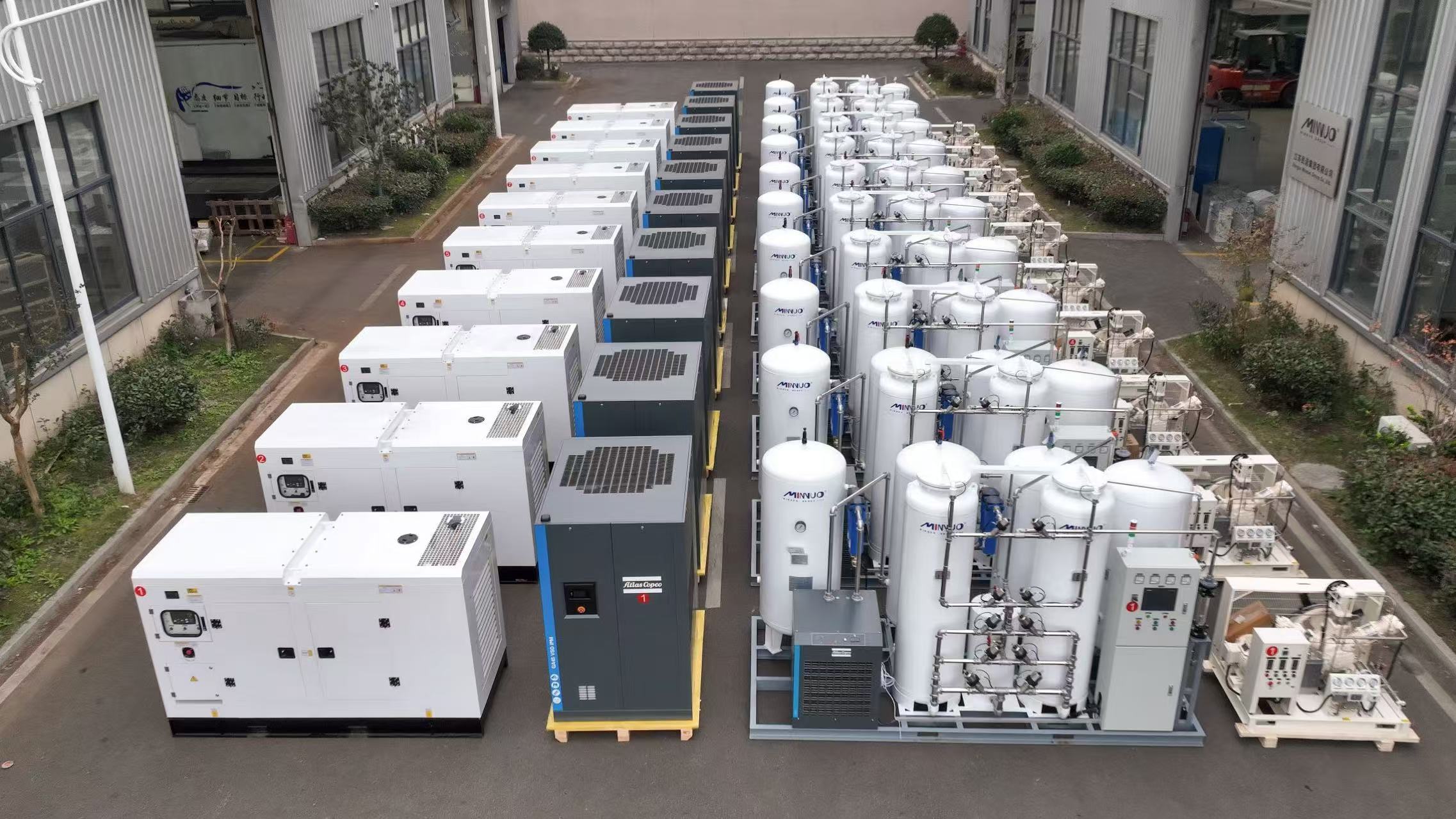
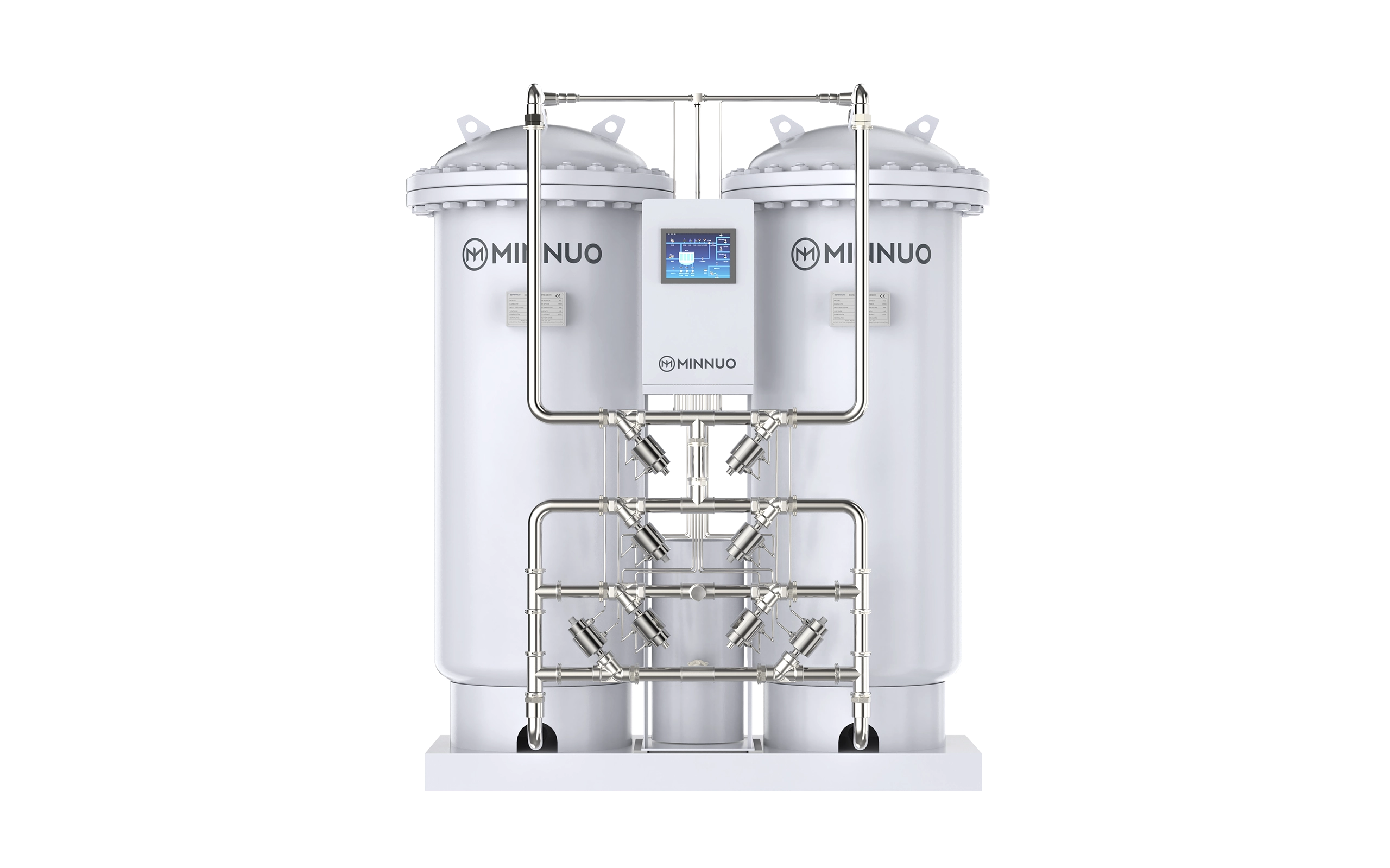
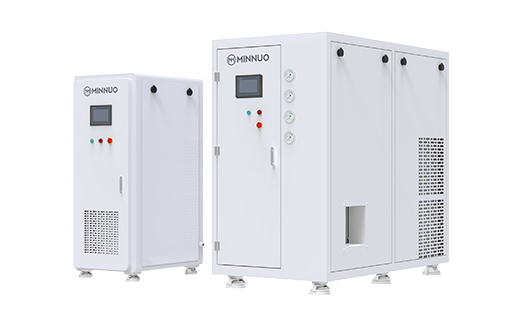
PSA pressure swing adsorption nitrogen generators produce nitrogen on-site at normal temperature and pressure using ambient air as raw material, eliminating all links of liquid nitrogen procurement, transportation and storage. This fundamentally resolves all pain points associated with liquid nitrogen supply. With over two decades of R&D experience in air separation equipment, Jiangsu Minnuo’s iteratively upgraded industrial PSA nitrogen generators outperform liquid nitrogen tank supply in six dimensions: dramatic cost reduction, stable gas output, independent production, enhanced safety & compliance, intelligent unattended operation and flexible expandability, making them the optimal nitrogen supply solution for large-scale industrial manufacturing.
Up to 70%–85% Reduction in Gas Operating Costs
This is the most direct and significant benefit for enterprises undergoing renovations. The comprehensive cost of liquid nitrogen ranges from 8–12 RMB per cubic meter, while Minnuo on-site PSA nitrogen generation only consumes minimal electricity with an all-in operating cost of merely 0.3–0.5 RMB per cubic meter, creating a dozens-fold cost gap. There are no raw material procurement fees, transportation charges, tank depreciation or natural vaporization waste. Based on data from completed projects, enterprises save 150,000–1,200,000 RMB in annual gas costs after renovation. The equipment payback period spans only 1–2 years, with a total service life of 15 years generating nearly pure profit in later operation, delivering unrivaled long-term economic benefits.
Constant Nitrogen Purity & Pressure to Eliminate Quality Defects
Minnuo PSA nitrogen generators are equipped with imported carbon molecular sieves and an intelligent pressure & purity stabilization system. Nitrogen purity can be steplessly adjusted between 95% and 99.999%, with purity fluctuation controlled within ±0.01% and consistent output pressure. The equipment fully accommodates high-precision processes including laser cutting, precision welding, food preservation, pharmaceutical encapsulation, chemical reactions and metal heat treatment, eradicating defective batches and rework caused by unstable liquid nitrogen supply. Qualified nitrogen is produced within 10–15 minutes after startup, supporting uninterrupted 24-hour two-shift and three-shift production without gas supply fluctuations or cutoffs.
Independent On-Site Generation Eliminates Reliance on Gas Suppliers
Traditional liquid nitrogen supply fully depends on third-party gas vendors, leaving manufacturers vulnerable to seasonal price hikes, stockouts and delivery delays. By installing Minnuo PSA nitrogen generators, enterprises achieve self-sufficient on-demand nitrogen production, unaffected by market gas prices, weather or transportation disruptions. Production shutdowns and capacity constraints caused by supply shortages are completely avoided, greatly boosting production autonomy and stability—especially suitable for large-scale continuous manufacturers.
Superior Safety Performance & Simplified Compliance
Minnuo PSA nitrogen generators operate at ambient temperature and pressure, with no cryogenic hazardous chemicals or high-pressure explosion-prone tanks. This fundamentally eliminates safety incidents such as frostbite and tank overpressure leakage. Hazardous chemical filing and frequent tank inspections are unnecessary, drastically lowering safety management workload and compliance risks. The equipment adopts 304 stainless steel clean pipelines and multi-stage water & oil removal filtration, delivering oil-free, water-free pure nitrogen that meets strict production standards across industries. Its safety and compliance level far surpass liquid nitrogen tank systems.
Intelligent Unattended Operation Cuts Labor Expenses
All Minnuo models feature PLC intelligent control with one-click startup and fully automatic unattended operation. The system monitors real-time nitrogen purity, pressure, flow and equipment status, with automatic fault alarms, self-protection and filter replacement reminders. No dedicated operators or staff coordination for gas deliveries and tank transfers are required, aligning with the operational demands of modern smart factories.
Flexible Production Adaptability & Convenient Capacity Expansion
Nitrogen purity and flow rates on Minnuo PSA generators can be adjusted on demand to match different production lines and processes, avoiding energy waste by separating high-precision and regular manufacturing requirements. The modular design allows parallel unit expansion as enterprises expand production lines, without full equipment replacement, fully accommodating long-term business development plans.
III. Engineer’s Standard: Gas Flow Thresholds for PSA Nitrogen Generator Renovation
Combining universal industrial economic models and thousands of Minnuo completed projects, clear flow benchmarks are provided below for enterprises to reference directly and avoid overinvestment or undersized equipment.
Economic Break-Even Point: ≥30 Nm³/h Hourly Nitrogen Consumption (Prioritize Full PSA Replacement)
30 cubic meters per hour is the widely recognized economic threshold for PSA nitrogen generation. Enterprises with stable continuous nitrogen consumption at or above this level suffer massive monthly losses from liquid nitrogen vaporization and supplier markups. Renovating with Minnuo PSA generators recovers full equipment investment within 12–18 months, with potential savings of millions of RMB over the 15-year equipment lifespan. This flow range covers most medium-sized machining, packaging, heat treatment, sheet metal laser cutting and chemical supporting manufacturers—the core target customer group for PSA nitrogen equipment.
Optimal Cost-Efficiency Range: ≥50 Nm³/h Hourly Consumption
Enterprises consuming over 50 cubic meters of nitrogen per hour with annual production hours exceeding 4,000 achieve maximum return on investment from PSA systems. Liquid nitrogen’s markup and vaporization costs rise exponentially under high continuous consumption. Large-flow Minnuo PSA generators deliver extreme cost savings of 300,000–800,000 RMB annually, with stable operation capable of supporting multiple parallel production lines.
Fluctuating Low-Consumption Scenarios: 20–30 Nm³/h Hourly Usage
Small Minnuo PSA nitrogen generators can be customized for manufacturers consuming 20–30 cubic meters per hour with intermittent production. Although the investment payback cycle extends slightly, overall long-term costs remain lower than liquid nitrogen supply. This solution suits enterprises with sufficient budgets, stable long-term production plans and a desire to eliminate gas supply outage risks.
IV. Suitable Scenarios Retaining Liquid Nitrogen Tank Supply
While PSA nitrogen generators hold comprehensive advantages, they are not universally applicable. As a professional engineer, I objectively outline niche scenarios where liquid nitrogen tanks remain appropriate to prevent idle capital investment from blind equipment procurement:
Ultra-Low & Intermittent Nitrogen Consumption
Micro-enterprises with hourly nitrogen consumption below 20 Nm³/h and annual production time under 2,000 hours with infrequent startup. Low total gas volume and short equipment runtime stretch PSA payback periods excessively, making small liquid nitrogen tanks a more cost-effective short-term solution without large capital expenditure.
Temporary Construction Sites & Short-Term Pilot Production
Liquid nitrogen supply is flexible for infrastructure auxiliary projects, temporary processing lines and transitional manufacturing operations lasting under one year. It avoids fixed asset idleness without permanent nitrogen generation equipment operation and maintenance obligations.
Ultra-High-Purity Laboratory Research & Instant Peak Demand
Certain laboratory testing and special precision processes require trace volumes of nitrogen above 99.999% purity, or production lines with irregular pulse-like instant peak nitrogen demand beyond conventional PSA generator capacity. Liquid nitrogen tanks can be deployed as auxiliary backup gas sources to guarantee stable supply under extreme working conditions.
Severe Site & Supporting Facility Limitations
Workshops lacking spare installation space, compressed air supply or power expansion capacity cannot accommodate complete PSA generator sets, air compressors and air storage tanks with no feasible site reconstruction options. Liquid nitrogen tank supply may be retained temporarily in such cases.
V. Industry’s Optimal Hybrid Solution: Main PSA Nitrogen Generator + Small Liquid Nitrogen Backup
For most medium and large enterprises, the optimal strategy is not a complete binary choice but a hybrid system: Minnuo PSA nitrogen generators as the primary supply with a small liquid nitrogen tank for emergency backup.
PSA systems cover all daily stable production to deliver low-cost, consistent nitrogen output, while liquid nitrogen tanks serve as standby gas for power outages, equipment maintenance and extreme peak demand.
This model eliminates long-term high gas costs and quality fluctuations while mitigating production shutdown risks during equipment downtime. It balances economy, stability and safety, and has become the standard configuration for large laser industrial parks, food manufacturing zones and chemical plants.
VI. Real Project Case Studies Demonstrating Renovation Benefits
Case 1: Sheet Metal Laser Cutting Factory in Jiangsu (Daily Nitrogen Consumption: 800 Nm³)
The factory originally operated two liquid nitrogen tanks with hourly nitrogen consumption of approximately 35 Nm³, meeting the PSA renovation threshold. Prior to the upgrade, annual liquid nitrogen costs exceeded 480,000 RMB, with frequent pressure fluctuations causing yellowed cross-sections and slag on stainless steel cutting parts and elevated defective rates. After installing a Minnuo 40 Nm³/h 99.99% purity PSA nitrogen generator in 2024, on-site self-generation reduced annual gas costs to merely 42,000 RMB, generating over 430,000 RMB in yearly savings with full investment recovered within 14 months. Consistent nitrogen purity and pressure lifted cutting yield rate to 99.8%, fully eliminating supply dependency and quality risks linked to liquid nitrogen delivery.
Case 2: Large Food Packaging Plant in Shandong (Hourly Nitrogen Consumption: 60 Nm³)
The facility operates 8 fully automatic packaging production lines running around the clock. Monthly liquid nitrogen procurement and vaporization losses previously exceeded 60,000 RMB. After switching to a food-grade Minnuo 60 Nm³/h PSA nitrogen generator, gas expenses dropped by 80% with annual savings surpassing 500,000 RMB. Sterile, stable nitrogen fully complies with food preservation standards and simplifies food quality inspection approvals, delivering dual gains of cost reduction and quality improvement.
FAQ
Q1: What hourly nitrogen flow is the critical threshold to switch to PSA nitrogen generator?
A1: Stable consumption ≥30 Nm³/h is the economic break-even point for PSA renovation.
Q2: How much can enterprises save by replacing liquid nitrogen with Minnuo PSA equipment?
A2: Gas operation costs drop by 70%–85%, saving 150,000 to 1.2 million RMB annually for most factories.
Q3: How long is the payback period of a PSA nitrogen generator?
A3: Normally 1–2 years, with a 15-year full service life for continuous profit afterward.
Q4: Can PSA nitrogen generators adjust nitrogen purity flexibly?
A4: Yes, purity can be steplessly tuned from 95% to 99.999% to fit different production processes.
Q5: Is a hybrid PSA + liquid nitrogen setup recommended for factories?
A5: Yes, PSA for daily production and small liquid nitrogen tanks as emergency backup is the most reliable solution.
Conclusion
Proper nitrogen supply selection relies on actual gas consumption, production schedules and long-term business plans. Factories with steady hourly usage above 30 Nm³/h will cut substantial expenses by adopting Minnuo PSA nitrogen generators, while low-consumption or temporary projects may stick with liquid nitrogen tanks to avoid idle assets.
Jiangsu Minnuo PSA nitrogen generators deliver low running costs, stable gas output and easy maintenance, making them the top upgrade alternative to liquid nitrogen supply. We offer free on-site surveys, gas consumption calculation and customized solution design to avoid improper investment.
Backed by decades of air separation expertise, Jiangsu Minnuo provides reliable equipment and full after-sales service to help manufacturers realize independent, cost-effective nitrogen production.