
Establishing an industrial gas production facility—whether utilizing Pressure Swing Adsorption (PSA) technology, Vacuum Pressure Swing Adsorption (VPSA), or cryogenic Air Separation Units (ASU)—requires substantial capital investment. Plant managers, engineering directors, and EPC (Engineering, Procurement, and Construction) contractors face the continuous challenge of minimizing upfront Capital Expenditure (CAPEX) while ensuring long-term operational reliability, high gas purity, and low lifecycle operating costs (OPEX).
While primary air separation units, high-pressure air compressors, and purification towers represent the core capital investment, secondary infrastructure, auxiliary workshop tools, and installation logistics frequently introduce unexpected budget overruns. Optimizing CAPEX requires a holistic engineering approach that evaluates both primary process machinery and supporting workshop capabilities.
1. Key Drivers of Gas Facility Construction Costs
To effectively streamline budget allocation without compromising safety or gas output quality, engineering teams must break down capital commitments into three primary categories:
- Core Gas Separation Equipment: High-pressure air compressors, PSA generator skids, molecular sieve adsorbers, gas buffer tanks, and cryogenic cold boxes.
- Civil Engineering & Piping Networks: Foundation construction, high-pressure stainless steel manifold lines, electrical distribution systems, and continuous gas purity monitoring units.
- Auxiliary Equipment & Maintenance Infrastructure: Dedicated workshop machinery, custom pipe flange tools, valve seating tools, and emergency repair equipment needed to support initial setup and continuous operation.
The table below outlines the budget impact when equipping an on-site auxiliary maintenance workshop during gas plant construction:
Table 1: Auxiliary Maintenance Machinery Sourcing & Cost Comparison
| Maintenance Equipment Type | Brand-New Equipment CAPEX | Certified Pre-Owned CAPEX | Budget Savings | Primary Role in Gas Plant Facilities |
|---|---|---|---|---|
| Precision CNC Lathe | $60,000 – $120,000 | $20,000 – $45,000 | ~60% – 65% | Custom fabrication of gas manifold fittings, pipe threads, and high-pressure valve seats. |
| Vertical Machining Center (VMC) | $80,000 – $150,000 | $30,000 – $60,000 | ~55% – 62% | Precision repair of compressor housings, complex valve blocks, and structural mounts. |
| Surface / ID Grinding Machine | $50,000 – $90,000 | $15,000 – $35,000 | ~60% – 70% | Mirror-finish grinding of valve cores and gas-tight sealing surfaces. |
2. Strategic Cost-Reduction Tactics for Modern Gas Facilities
A. Modular and Skid-Mounted Design Adoption
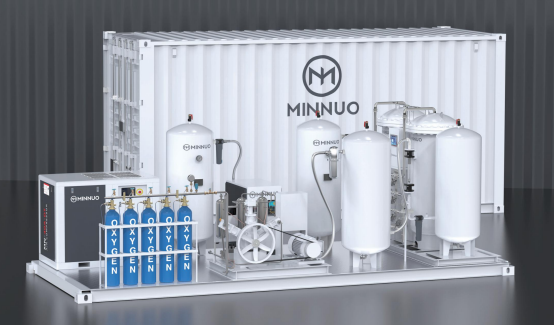
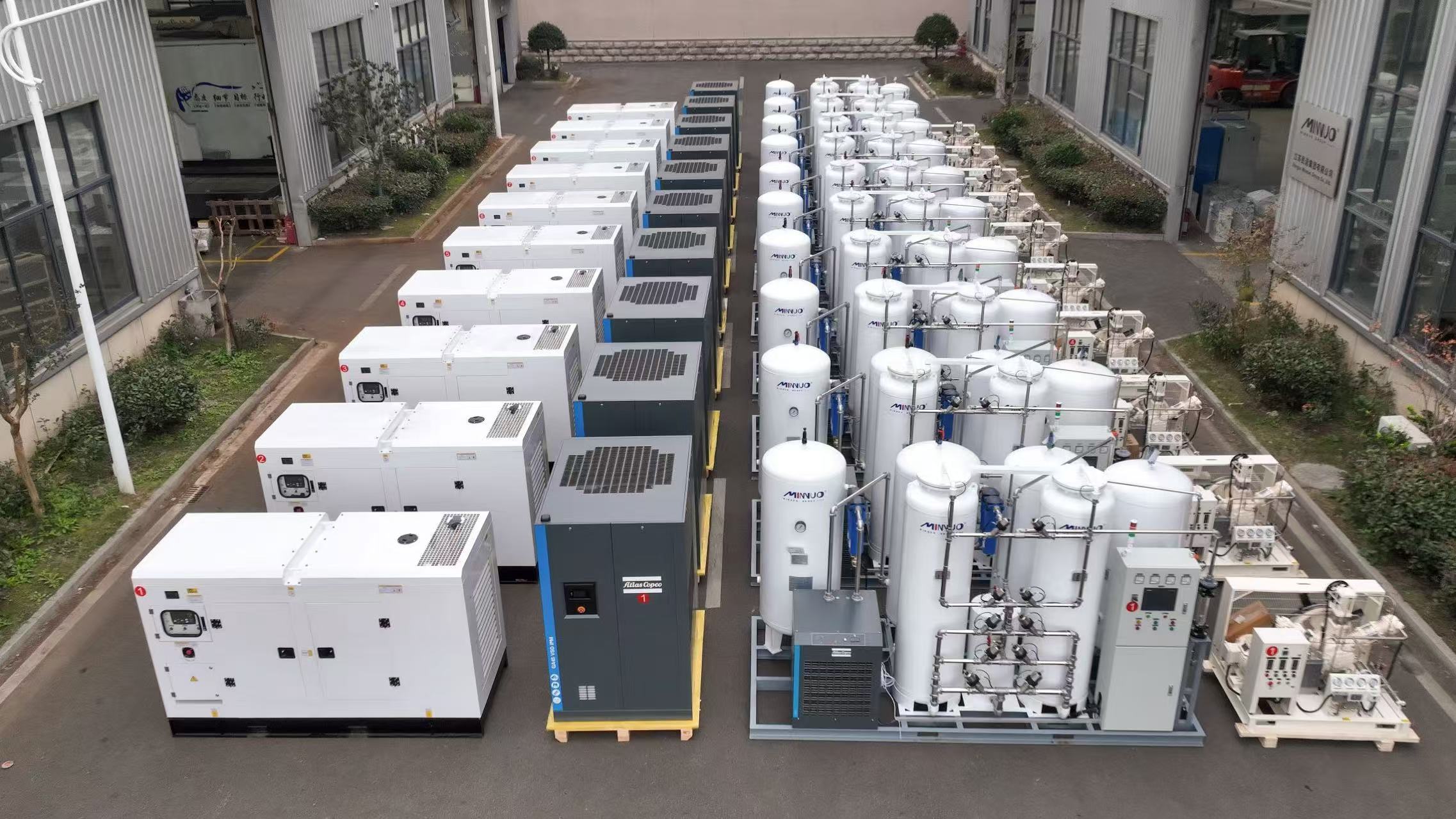
Containerized and skid-mounted PSA oxygen and nitrogen generators significantly reduce civil engineering lead times and local installation costs. By delivering pre-tested, plug-and-play assemblies, plant operators avoid expensive field welding and custom structural fabrication during plant commissioning.
B. Precision Sizing and Purity Allocation
Over-specifying gas purity is one of the most common causes of inflated initial expenditure. For instance, generating 93% purity oxygen for industrial combustion or aquaculture requires significantly less adsorbent material and lower compressor capacity than a 99.5% medical-grade application. Correctly matching gas purity to specific downstream end-uses optimizes equipment sizing and lowers initial procurement costs.
C. Optimizing Auxiliary Workshop Equipment Sourcing
Setting up a resilient industrial gas plant requires a fully equipped on-site machine shop. Technicians frequently need to fabricate custom manifold adaptors, machine valve seats, execute pipe threading, and perform precision maintenance on high-pressure gas compressors. Purchasing brand-new, high-end tooling machinery for auxiliary maintenance tasks can inflate workshop budgets unnecessarily.
To balance upfront capital expenditure with high operational precision, many plant engineering teams source certified used machinery—such as precision CNC lathes, vertical machining centers, and surface grinders—to equip their on-site maintenance workshops and custom component fabrication facilities at a fraction of the cost of brand-new equipment.
By integrating fully inspected secondary metalworking machines into the facility’s auxiliary workshop, plant owners can redirect significant financial resources toward upgrading primary air compression and purification technology, where efficiency yields direct electricity savings.
3. Frequently Asked Questions (FAQ)
Q1: Why is auxiliary maintenance machinery often overlooked during gas plant budget planning?
Answer: Most engineering teams concentrate over 80% of their initial budgeting efforts on core PSA modules, molecular sieve beds, and air compressors. Auxiliary workshop tools needed for pipeline installation and valve repairs are often considered late in the project, leading to sudden budget overruns or procurement delays.
Q2: Will integrating pre-owned metalworking machinery compromise gas plant safety or production quality?
Answer: No. Auxiliary workshop machinery is utilized for non-core component maintenance, custom fittings, and valve reconditioning rather than continuous gas separation processes. Choosing certified pre-owned machines that have undergone 100% physical performance testing and geometric accuracy checks ensures full precision while slashing capital expenditure.
Q3: What is the expected Return on Investment (ROI) timeline for a 20–50 m³/h PSA gas plant using modular setups and pre-owned auxiliary tools?
Answer: By optimizing system sizing and auxiliary equipment sourcing, total CAPEX can be reduced by 25%–40%. Compared to purchasing bottled gas or liquid gas from industrial vendors, a self-contained gas plant generally achieves full payback within 6 to 18 months.
4. Conclusion
Building a cost-effective industrial gas plant demands strategic financial allocation. By combining high-efficiency, factory-direct PSA gas generators with smart auxiliary equipment procurement—including certified pre-owned workshop machinery—manufacturers can achieve gas independence, reduce payback periods to 6–18 months, and maintain world-class operational reliability.

 sales2:+86 17506119168