
Choosing the right nitrogen generation system can significantly affect a rubber factory’s production efficiency, operating costs, and long-term equipment reliability. Among the available on-site nitrogen generation technologies, pressure swing adsorption (PSA) and membrane separation are two widely used options.
PSA nitrogen generators are generally better suited to high-purity requirements and substantial continuous nitrogen demand. Membrane nitrogen generators offer advantages in moderate-purity applications where compact installation, rapid start-up, and simpler maintenance are important.
For rubber manufacturers, however, the decision goes beyond nitrogen purity. Tire vulcanization, rubber hose production, and other nitrogen-dependent processes can have different pressure, flow, and operating requirements.
This guide compares PSA and membrane nitrogen technologies, explains their suitability for rubber manufacturing, and helps procurement managers choose a system that balances performance, reliability, and long-term cost.
1. PSA vs. Membrane Nitrogen: Which Is Better for Rubber Manufacturing?
PSA and membrane nitrogen generators both produce nitrogen from compressed air, but they use different separation methods.
PSA generators use carbon molecular sieves (CMS) to selectively adsorb oxygen and other gases under pressure. The system alternates between adsorption and regeneration cycles to produce nitrogen continuously.
Membrane systems use hollow-fiber membranes that allow oxygen and certain other gases to permeate faster than nitrogen, producing a nitrogen-enriched stream.
These differences influence nitrogen purity, compressed-air consumption, system footprint, and maintenance requirements.
Key Differences in Purity, Capacity, and Operation
| Feature | PSA Nitrogen Generator | Membrane Nitrogen Generator |
|---|---|---|
| Separation technology | Carbon molecular sieve adsorption | Hollow-fiber membrane separation |
| Nitrogen purity | Typically 95%–99.999% or higher in selected systems | Commonly 95%–99.5%; selected systems reach around 99.9% |
| High-purity performance | Strong advantage | Higher compressed-air demand |
| Continuous production | Often economical at higher purity | Suitable depending on purity and capacity |
| Start-up | Requires pressure stabilization | Generally rapid |
| Equipment footprint | Usually larger | Generally more compact |
| Main maintenance | Valves, filters, CMS and controls | Filters, air treatment and membrane modules |
| Capacity expansion | Additional PSA units | Additional membrane modules |
| Main advantage | High-purity capability and favorable operating economics | Compact design and simpler separation equipment |
When PSA Is the Better Choice
PSA systems are particularly attractive when a rubber factory requires:
- High-purity nitrogen with low residual oxygen.
- A substantial and continuous nitrogen supply.
- Centralized nitrogen generation for multiple production lines.
- Competitive energy consumption during long operating hours.
- Stable gas quality for oxygen-sensitive processes.
As nitrogen purity requirements increase, PSA frequently becomes more economical than conventional membrane separation.
When Membrane Nitrogen Makes More Sense
Membrane systems are worth considering when:
- Moderate nitrogen purity is sufficient.
- Available installation space is limited.
- Nitrogen consumption is relatively small or intermittent.
- Rapid start-up is desirable.
- The factory prefers a compact separation system with fewer cyclic mechanical components.
Both technologies can serve rubber manufacturing applications. The best choice depends on the actual operating requirements rather than factory size alone.
2. How Do Nitrogen Requirements Vary Across Rubber Factory Processes?
Nitrogen is used in selected rubber manufacturing processes to provide pressure, control oxygen exposure, or support particular production operations.
The required nitrogen quality and supply configuration vary significantly between applications.
Tire Vulcanization: High Pressure and Cyclic Nitrogen Demand
Tire vulcanization uses controlled temperature and pressure to develop the final properties of rubber compounds.
In certain tire-curing systems, steam provides initial heating, while nitrogen is subsequently used to maintain pressure inside the curing bladder.
This approach allows manufacturers to control curing pressure separately from some heating conditions.
A tire factory evaluating nitrogen generation should focus on three requirements.
High-pressure supply
Tire-curing equipment may require nitrogen at pressures considerably above the outlet pressure of a standard generator.
A nitrogen booster and high-pressure storage system may therefore be part of the complete installation.
Peak nitrogen consumption
When multiple curing presses operate simultaneously, nitrogen demand can rise sharply during filling cycles.
The generation and storage system must supply these peaks without excessive pressure fluctuations.
Continuous production reliability
Unexpected nitrogen shortages can interrupt curing operations and affect production schedules.
For large tire factories, reliable supply, buffer storage, and suitable backup arrangements are important purchasing considerations.
PSA may be attractive for substantial continuous demand, while membrane technology remains a possible option when its output quality and capacity match the curing system’s requirements.
Rubber Hose and Seal Production: Process-Specific Gas Requirements
Some rubber hose, seal, and specialty component manufacturing processes use nitrogen for purging, controlled atmospheres, or other gas-dependent operations.
These applications may require relatively small volumes of nitrogen or operate only during specific production stages.
For intermittent moderate-purity demand, a membrane generator can provide a compact solution.
A PSA system may be preferable when the process requires higher purity or supports multiple production lines.
The key is to match generator capacity to actual gas consumption instead of purchasing unnecessary capacity.
Raw-Material Tank Blanketing: Oxygen Control and Safety
Some rubber factories store materials that benefit from protection against oxygen exposure.
Nitrogen blanketing can help maintain a controlled tank atmosphere and limit oxygen ingress.
The system must provide enough nitrogen to compensate for tank breathing, liquid transfers, and normal operating losses.
For these applications, the required oxygen limit, gas consumption, and blanketing controls are more important than selecting PSA or membrane technology based on purity alone.
For a broader overview of nitrogen applications in rubber production, read Nitrogen Generator for Rubber Factories: A Full-Scenario Solution from Principle to Application.
3. What Nitrogen Purity Does a Rubber Factory Actually Need?
Nitrogen purity is a major factor affecting equipment performance and production costs.
Higher purity generally requires more compressed air per unit of nitrogen produced, increasing energy consumption and potentially equipment size.
However, not every rubber manufacturing process requires high-purity nitrogen.
PSA vs. Membrane Purity Ranges Compared
| Nitrogen purity | Technology consideration |
|---|---|
| 95% | Both PSA and membrane |
| 98% | Both technologies |
| 99% | Both technologies |
| 99.5% | Compare performance and compressed-air consumption |
| 99.9% | PSA often attractive; selected membrane systems are also available |
| 99.99% | PSA generally preferred |
| 99.999% | Specialized high-purity PSA systems |
These values are technology reference points, not universal nitrogen requirements for particular rubber products.
Nitrogen Purity vs. Residual Oxygen: What Buyers Must Check
Nitrogen generator specifications often express purity as the difference between 100% and the residual oxygen concentration.
Because nitrogen-enriched gas may also contain argon and other trace gases, nominal nitrogen purity is not always identical to the actual molecular nitrogen concentration.
For oxygen-sensitive applications, the maximum residual oxygen concentration is often the more useful technical specification.
A supplier quotation should clearly state the purity definition, oxygen limit, and guaranteed gas flow.
Why Higher Nitrogen Purity Can Increase Operating Costs
Consider a process that requires nitrogen with a maximum residual oxygen concentration of 1%.
Purchasing a system that produces nitrogen with 0.01% residual oxygen may not deliver any additional production benefit.
However, the higher purity requirement can increase compressed-air consumption and equipment costs.
Selecting nitrogen purity according to actual process requirements helps avoid unnecessary energy expenses while maintaining product quality.
The goal is to supply nitrogen at the purity the process needs—not simply the highest purity available.
4. How to Size a Nitrogen System for Rubber Factory Flow and Pressure Demands
Nitrogen generator capacity should reflect both average consumption and peak demand.
This is especially important for rubber factories operating multiple curing presses or equipment with intermittent gas consumption.
Average vs. Peak Nitrogen Flow in Tire Production
Consider an illustrative factory with the following demand profile:
| Parameter | Example requirement |
|---|---|
| Average nitrogen consumption | 60 Nm³/h |
| Peak nitrogen consumption | 120 Nm³/h |
| Production lines | 4 |
| Daily operating time | 20 hours |
A generator sized only for the average demand may struggle to maintain supply pressure during peak consumption.
The engineering team can address this through sufficient generator capacity, nitrogen storage, or a combination of both.
When Are Nitrogen Storage Tanks Necessary?
Nitrogen receivers help stabilize pressure and cover short-term fluctuations in demand.
For example, if consumption increases to 120 Nm³/h for five minutes while a generator produces 60 Nm³/h, the temporary nitrogen deficit is:
(120 − 60) × 5 ÷ 60 = 5 Nm³
The buffer system must supply this additional amount of usable nitrogen.
Actual receiver sizing depends on the storage pressure range, minimum delivery pressure, temperature, and allowable pressure drop.
For rubber factories with repeated demand peaks, storage also needs enough time to recover between cycles.
When Does a Rubber Factory Need a Nitrogen Booster?
A nitrogen booster is necessary when the production equipment requires higher pressure than the generator can supply directly.
A typical high-pressure supply arrangement may include:
- Air compressor and air treatment.
- PSA or membrane nitrogen generator.
- Low-pressure nitrogen receiver.
- Nitrogen booster compressor.
- High-pressure nitrogen storage and distribution.
A booster adds investment and electricity consumption, making it essential to compare complete system costs rather than nitrogen generator prices alone.
5. PSA vs. Membrane Nitrogen Energy Consumption: Which Is More Efficient?
Energy consumption is often one of the largest long-term expenses in on-site nitrogen production.
For both PSA and membrane technology, compressed-air generation represents a major energy input.
The most efficient option depends on nitrogen purity, feed-air requirements, compressor performance, and operating conditions.
Air-to-Nitrogen Ratio: What the Air Factor Tells You
The air factor measures how much compressed air a system uses to produce a specified amount of nitrogen.
Air Factor = Compressed-Air Flow ÷ Nitrogen Product Flow
Consider two illustrative systems producing 100 Nm³/h of nitrogen at the same required purity.
| Parameter | PSA | Membrane |
|---|---|---|
| Nitrogen output | 100 Nm³/h | 100 Nm³/h |
| Compressed-air input | 250 Nm³/h | 320 Nm³/h |
| Air factor | 2.5 | 3.2 |
In this example, PSA uses less compressed air.
The actual difference varies according to equipment design, required purity, operating pressure, and other conditions.
How Compressor Pressure Affects Electricity Consumption
Compressed-air pressure also affects operating costs.
A system requiring higher compressor discharge pressure may consume more electricity even when its air factor is relatively low.
Rubber factories should therefore consider:
- Compressor efficiency.
- Required inlet-air pressure.
- Filtration and dryer pressure losses.
- Generator operating conditions.
- Booster energy consumption.
- Performance during partial-load operation.
A complete energy comparison is more useful than evaluating the separation unit alone.
Comparing Total System Energy Use in kWh/Nm³
Specific energy consumption (SEC) provides a practical metric:
SEC = Total Electricity Consumption (kWh) ÷ Usable Nitrogen Delivered (Nm³)
For example, a complete system consuming 35 kWh while producing 100 Nm³ of nitrogen has:
SEC = 0.35 kWh/Nm³
This metric allows buyers to compare systems with different equipment configurations.
For high-pressure tire-curing applications, the energy calculation should include nitrogen boosting and other major auxiliary equipment.
6. PSA vs. Membrane Nitrogen Generator Costs: A Five-Year Comparison
Equipment price is only one part of a nitrogen generation system’s total cost.
Electricity consumption, maintenance, replacement components, and annual operating hours can substantially influence long-term economics.
Initial Investment vs. Long-Term Operating Costs
A complete rubber factory nitrogen supply system may include a generator, compressor, dryer, filters, storage vessels, booster, controls, and installation services.
Comparing complete system quotations helps avoid unexpected expenses.
Five-Year Cost Comparison for a Rubber Factory
Consider two hypothetical systems supplying 100 Nm³/h of nitrogen for 6,000 hours annually.
| Cost parameter | PSA system | Membrane system |
|---|---|---|
| Initial installed cost | $45,000 | $35,000 |
| Total electrical demand | 35 kW | 44 kW |
| Electricity price | $0.12/kWh | $0.12/kWh |
| Annual electricity cost | $25,200 | $31,680 |
| Annual maintenance allowance | $1,500 | $1,000 |
| Five-year total cost | $178,500 | $198,400 |
Illustrative comparison based on assumed prices and performance. Actual project costs will vary.
Under these conditions, the PSA system saves $19,900 over five years despite its higher initial investment.
The difference results primarily from lower assumed electricity consumption.
How Annual Operating Hours Change the Best Investment
If the same systems operate only 1,000 hours annually, the economic comparison changes.
| Cost parameter | PSA | Membrane |
|---|---|---|
| Initial investment | $45,000 | $35,000 |
| Five-year electricity cost | $21,000 | $26,400 |
| Five-year maintenance allowance | $7,500 | $5,000 |
| Five-year total | $73,500 | $66,400 |
In this lower-utilization scenario, membrane separation becomes less expensive.
This highlights an important purchasing principle:
Long operating hours increase the importance of energy efficiency, while shorter operating hours give initial investment greater weight.
For a reliable purchasing decision, use actual supplier quotations and the factory’s expected operating schedule.
7. Which Nitrogen System Is Easier to Install and Maintain?
Membrane nitrogen generators generally offer simpler separation equipment, while PSA systems include additional switching components.
However, both require proper compressed-air treatment and routine maintenance.
PSA Maintenance: Valves, Filters, and Carbon Molecular Sieves
Routine PSA maintenance typically includes:
- Checking switching valves and actuators.
- Replacing air filters.
- Inspecting dryer performance.
- Calibrating oxygen analyzers.
- Monitoring operating pressure and gas purity.
- Evaluating molecular sieve condition when performance changes.
With clean compressed air and appropriate maintenance, PSA systems can provide reliable long-term operation.
Membrane Maintenance: Filtration and Module Protection
Membrane systems contain fewer moving parts within the nitrogen separation unit.
Their maintenance focuses on protecting the membrane modules and maintaining suitable operating conditions.
Important tasks include filter replacement, moisture removal, inlet-temperature control, and gas-quality monitoring.
Contaminated compressed air can reduce membrane performance and increase replacement costs.
Compressed-Air Quality Requirements for Both Technologies
Oil, moisture, and particles can damage nitrogen separation equipment.
Both PSA and membrane systems therefore require suitable air dryers and filtration.
ISO 8573-1:2010 provides a recognized classification system for compressed-air purity.
The required cleanliness level depends on the selected nitrogen generator and should be included in the supplier’s technical specifications.
For an existing rubber factory, checking compressed-air quality and spare compressor capacity is an important part of installation planning.
8. Which Nitrogen Technology Fits Your Rubber Factory? A Selection Matrix
The most suitable nitrogen system depends on how the factory operates.
The following matrix summarizes the main purchasing considerations.
| Rubber factory requirement | Technology to prioritize | Reason |
|---|---|---|
| High-purity nitrogen | PSA | Better suited to low residual oxygen |
| Moderate-purity nitrogen | Compare both | Both technologies may be suitable |
| High continuous nitrogen demand | Evaluate PSA first | Potential energy-cost advantages |
| Limited equipment-room space | Membrane | Compact separation equipment |
| Intermittent nitrogen demand | Compare both | Initial cost and part-load operation matter |
| High-pressure tire curing | Complete system comparison | Booster and storage requirements |
| Multiple production lines | Modular PSA or membrane | Capacity and distribution design |
| Existing air compressor available | Compare both | Depends on spare capacity and air quality |
| Planned production expansion | Scalable configuration | Future nitrogen demand |
| Different purity requirements | Separate supply zones where economical | Avoid unnecessary high-purity generation |
Small Rubber Factory with Intermittent Nitrogen Demand
A small rubber components factory may use nitrogen periodically for purging or a specific controlled-atmosphere process.
If moderate purity is sufficient, a membrane system may provide a compact and economical solution.
Its relatively simple separation unit can be attractive where installation space and maintenance resources are limited.
Large Rubber Plant with Continuous High-Purity Demand
A large rubber manufacturing facility may require nitrogen continuously across several production lines.
If low residual oxygen is essential, PSA can provide an attractive combination of high-purity capability and operating efficiency.
The buyer should compare total system energy consumption and maintenance costs before selecting equipment.
Tire Factory with High-Pressure Nitrogen Requirements
A tire factory using nitrogen-assisted curing presses must evaluate pressure, flow variation, and system reliability.
The nitrogen supply may require storage and boosting regardless of whether PSA or membrane separation is used.
A well-designed system should maintain adequate pressure during peak consumption and support the production schedule.
9. What Should Rubber Factory Buyers Check Before Requesting a Nitrogen Generator Quote?
An accurate quotation begins with clear technical requirements.
Providing the same operating information to multiple suppliers makes it easier to compare equipment configurations, performance, and costs.
Essential Technical Specifications for an RFQ
| Technical requirement | Information to provide |
|---|---|
| Application | Tire curing, purging, blanketing, or another process |
| Nitrogen quality | Required purity and maximum residual oxygen |
| Nitrogen flow | Average and peak consumption |
| Delivery pressure | Minimum pressure at the point of use |
| Operating schedule | Hours per day and year |
| Existing utilities | Compressor capacity, air quality and electrical supply |
| Storage | Required buffer capacity |
| Automation | Gas-quality monitoring and alarms |
| Energy performance | Total system kWh/Nm³ |
| Maintenance | Service intervals and replacement components |
| Testing | Factory and site acceptance requirements |
| Future expansion | Expected additional nitrogen demand |
How to Compare Supplier Performance Guarantees
Manufacturers may advertise different maximum capacities and purity levels.
Buyers should request performance figures for the specific operating conditions of their factory.
The quotation should confirm nitrogen output, gas quality, delivery pressure, compressed-air requirements, and electricity consumption together.
This makes supplier comparisons more meaningful and helps identify differences in equipment scope.
What Safety Controls and Acceptance Tests Should Be Included?
Nitrogen generation systems may include oxygen analyzers, pressure monitoring, alarms, and automatic controls.
For processes where gas quality is critical, off-specification nitrogen may need to be diverted or isolated.
Factory Acceptance Testing (FAT) and Site Acceptance Testing (SAT) can help confirm that the equipment meets the agreed specifications.
Nitrogen also creates an oxygen-deficiency hazard if released into enclosed spaces, so suitable ventilation and operating precautions are important.
10. MINNUO PSA and Membrane Nitrogen Solutions for Rubber Manufacturing
MINNUO provides PSA and membrane nitrogen generation equipment for industrial gas supply applications.
Both technologies can be considered for rubber manufacturing facilities, depending on nitrogen purity, capacity, pressure, and operating requirements.
PSA Nitrogen Systems for Higher-Purity Requirements
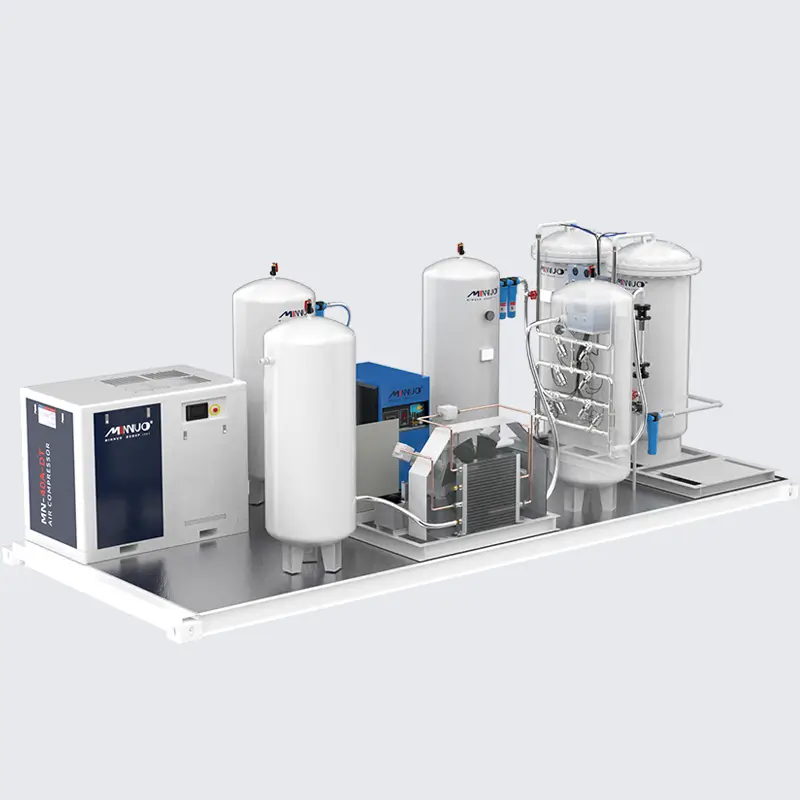
MINNUO’s PSA nitrogen generator portfolio includes:
- Nitrogen purity options from 95% to 99.9995%.
- Product capacities listed up to 5,000 Nm³/h.
- Automated control configurations.
- Gas-quality monitoring options.
- Configurable auxiliary equipment.
These are product-range specifications; individual configurations are selected according to the required operating conditions.
For rubber factories with higher-purity or substantial continuous nitrogen demand, MINNUO PSA systems provide an option for developing an on-site supply solution.
Explore MINNUO PSA Nitrogen Generators.
Membrane Nitrogen Systems for Compact Applications
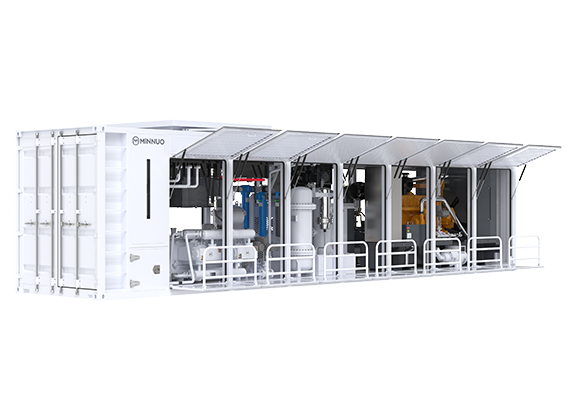
MINNUO also offers membrane nitrogen generation equipment with published purity options from approximately 90% to 99.9%.
Membrane systems can be considered for moderate-purity applications where compact design and relatively simple separation equipment are priorities.
Available configurations can be evaluated according to production capacity, compressed-air consumption, and installation requirements.
Explore MINNUO Membrane Nitrogen Generators.
Configuring a Complete Nitrogen Supply System
Rubber factories often require more than a nitrogen generator alone.
Depending on the application, the complete system may include air treatment, nitrogen receivers, pressure boosters, gas analyzers, and automated controls.
MINNUO can be consulted about equipment configuration based on the factory’s nitrogen purity, flow, pressure, production schedule, and available utilities.
A project-specific proposal helps buyers compare the technical scope and operating economics of different nitrogen supply options.
11. FAQs About PSA and Membrane Nitrogen Systems for Rubber Factories
Is PSA or Membrane Nitrogen Better for a Rubber Factory?
PSA is often preferable for higher-purity nitrogen and substantial continuous demand. Membrane systems can be attractive for moderate-purity applications requiring compact installation and simpler separation-unit maintenance.
Can Membrane Nitrogen Generators Reach 99.9% Purity?
Yes. Selected membrane nitrogen generators can reach approximately 99.9% nominal purity. Available flow and compressed-air consumption depend on the system design and operating conditions.
What Nitrogen Purity Is Required for Tire Vulcanization?
The required purity depends on the specific tire-curing equipment and process. Pressure stability and peak flow are also important factors when designing the nitrogen supply system.
Which Nitrogen Generator Has Lower Electricity Costs?
Neither technology is always more efficient. Compare complete system energy consumption at the same nitrogen quality, output flow, and delivery pressure.
Is a Membrane Nitrogen Generator Cheaper Than PSA?
Membrane systems may offer a lower initial investment for certain moderate-purity applications. PSA may provide lower lifecycle costs in high-purity or high-utilization operations.
Can a Rubber Factory Use Its Existing Air Compressor?
Yes, if the compressor has sufficient spare capacity and supplies air at the required pressure, temperature, and cleanliness.
Can PSA or Membrane Nitrogen Systems Be Expanded?
Both technologies support capacity expansion through additional generator units or modular configurations. The compressed-air supply, storage, and distribution network must also accommodate the increase.
What Specifications Matter Most When Buying a Nitrogen Generator?
The main specifications are nitrogen purity, residual oxygen concentration, output flow, delivery pressure, operating schedule, and total system energy consumption.
12. Final Recommendation: Choose PSA or Membrane Based on Production Requirements
The right nitrogen generation system for a rubber factory depends on its production processes, nitrogen demand, and long-term operating priorities.
PSA is often the stronger choice for higher-purity and substantial continuous nitrogen demand. Membrane separation can be more attractive when moderate purity, compact equipment, and simpler operation are the main priorities.
For tire manufacturing, high-pressure supply and peak consumption may influence system design as much as the separation technology itself.
For smaller or intermittently operating rubber factories, initial investment and operating flexibility can be especially important.
Before making a purchase, compare nitrogen purity, flow, pressure, energy consumption, and total system cost under the same operating conditions.
A properly selected system can provide dependable nitrogen supply while avoiding unnecessary equipment and operating expenses.
Looking for an on-site nitrogen generation solution for your rubber factory?
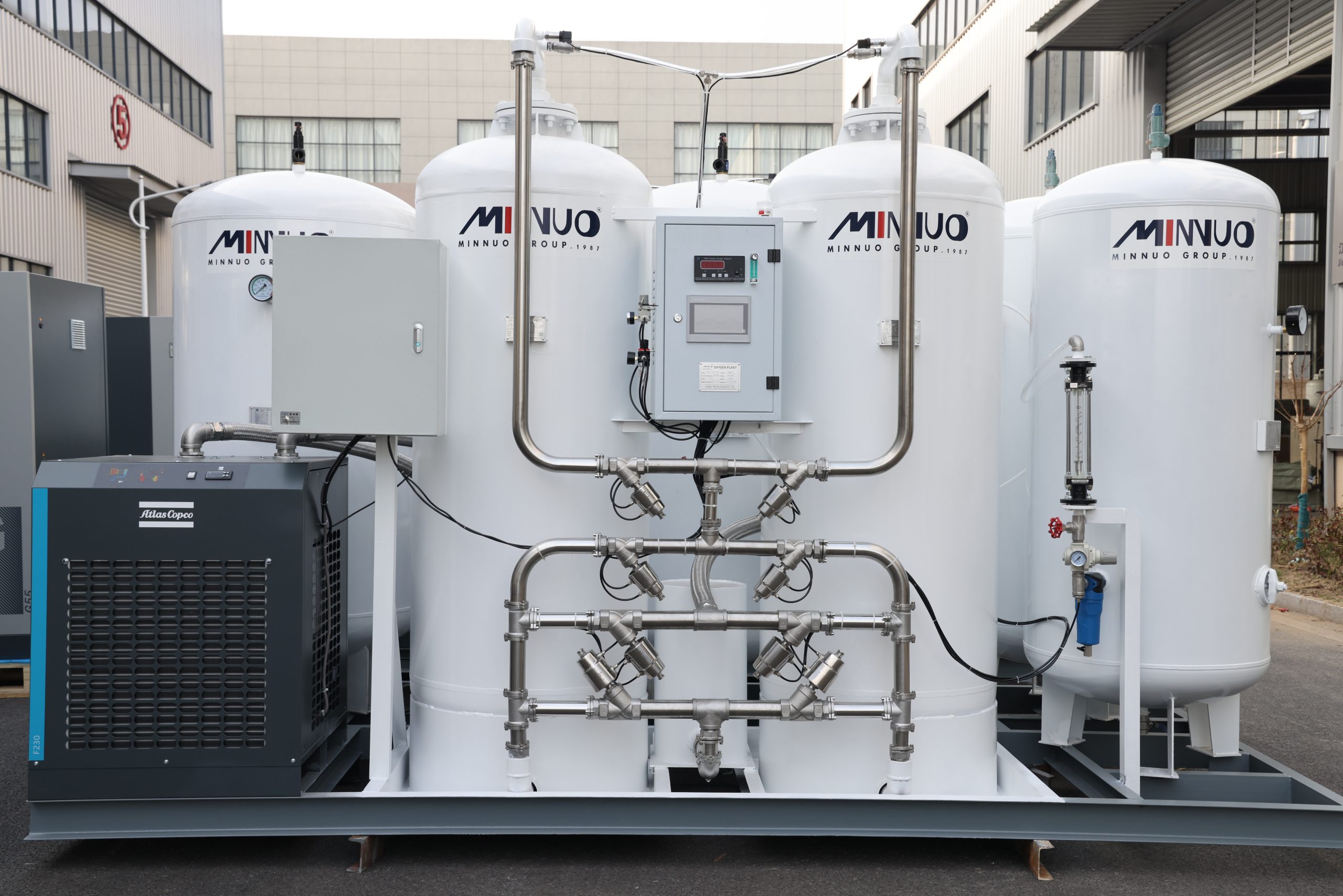
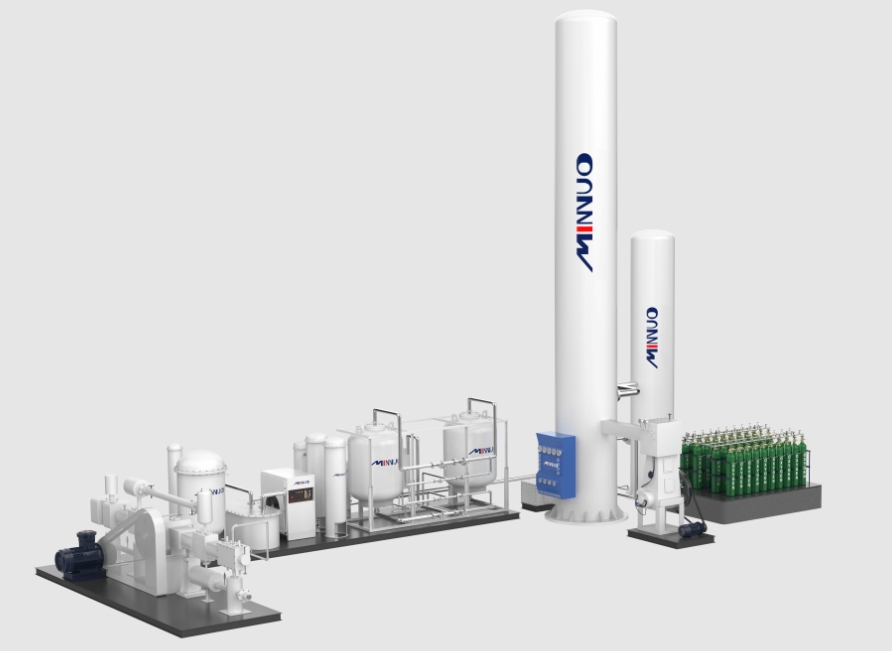
Visit MINNUO to explore PSA and membrane nitrogen generators and discuss a system configuration suited to your production requirements.


 sales2:+86 17506119168