
I. Introduction
In hospitals around the world, oxygen is as essential as electricity. It flows through pipelines, powers ventilators, and sustains patients in operating rooms and ICUs. But what happens when the electricity grid fails—or never reaches the hospital in the first place?
For millions of people in low- and middle-income countries, reliable oxygen is a luxury. Power outages are common. Diesel generators are expensive to run. And oxygen cylinders require supply chains that often don’t reach remote areas.
A new approach is emerging: renewable-powered medical oxygen generators. By combining solar panels, battery storage, and PSA oxygen generation, these systems produce medical-grade oxygen using only the sun. No grid connection. No diesel deliveries. No supply chain.
This guide explores how renewable-powered medical oxygen systems work, where they’re being deployed, and how they’re changing healthcare in off-grid communities.
II. The Oxygen Access Problem
Understanding the scale of the problem helps frame the solution.
The gap in oxygen access
The World Health Organization estimates that over half of healthcare facilities in low-income countries lack a reliable oxygen supply. In rural areas, the number is even higher. For patients with pneumonia, childbirth complications, or severe COVID-19, the absence of oxygen means preventable death.
Why traditional solutions fall short
Cylinder oxygen relies on supply chains that are often unreliable in remote areas. Cylinders may arrive weeks late—or not at all. Refilling requires transport over rough roads. Costs are high, and hospitals may ration oxygen during shortages.
Liquid oxygen requires infrastructure that doesn’t exist in many regions. Cryogenic tanks, specialized transport, and reliable suppliers are all prerequisites.
Conventional oxygen generators, powered by the grid or diesel, face their own challenges. Grid power in many regions is unreliable. Diesel is expensive—often consuming 10-20% of a rural hospital’s budget. And diesel generators produce emissions and require maintenance that may not be available locally.
The renewable opportunity
Solar power is abundant in many of the regions that need oxygen most. Sub-Saharan Africa, South Asia, and island nations all have high solar insolation. Combining solar with battery storage and PSA oxygen generation creates a system that can run independently of unreliable grids and expensive fuel.
III. How Solar-Powered Medical Oxygen Systems Work
The technology combines three proven components into an integrated system.
PSA oxygen generation
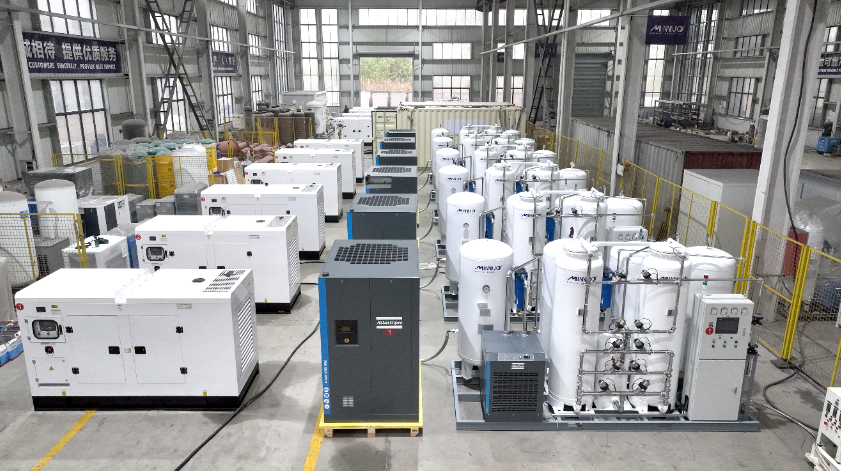
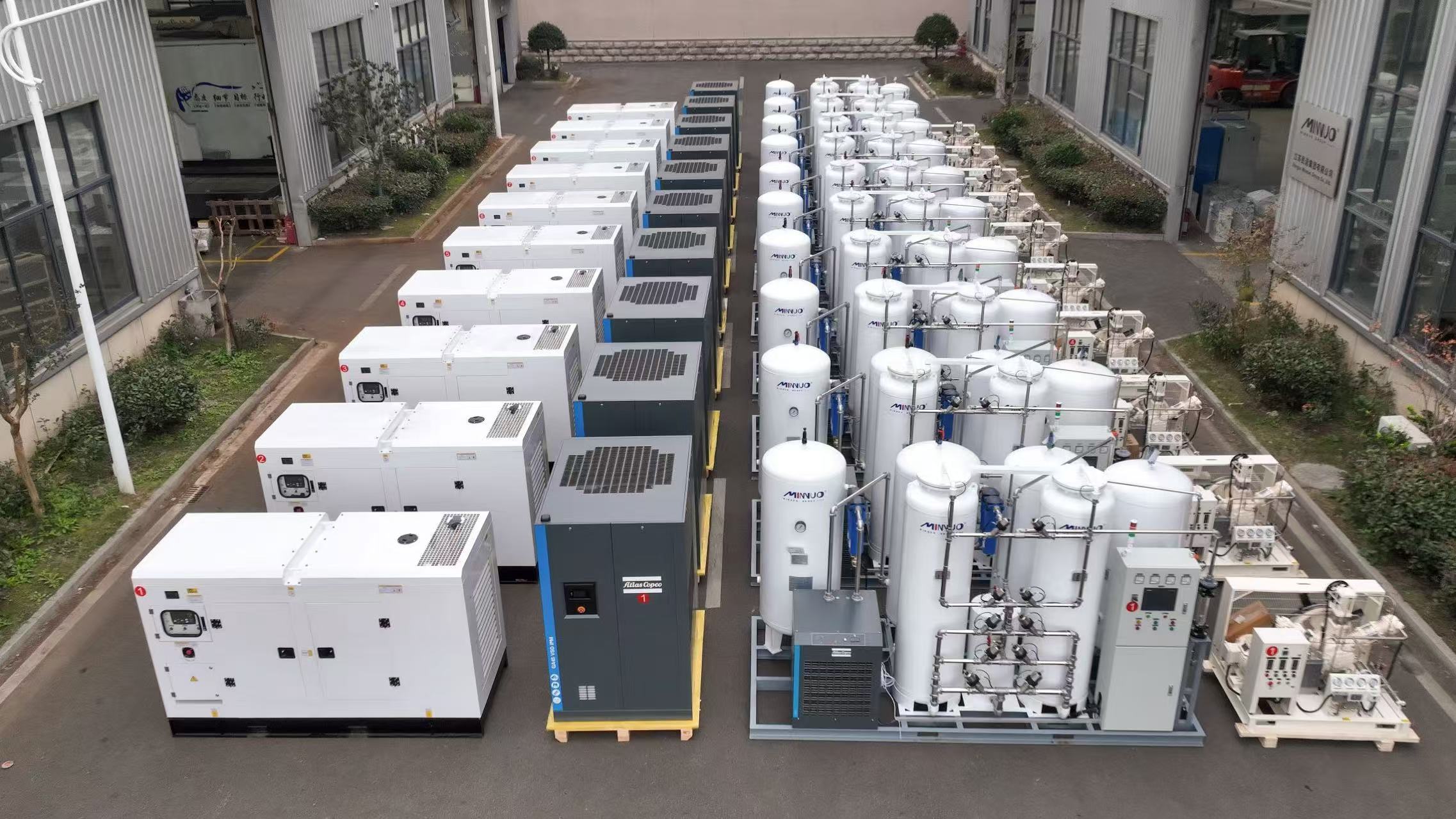
The oxygen generator uses Pressure Swing Adsorption (PSA) technology. Compressed air passes through zeolite sieves that adsorb nitrogen, allowing oxygen to flow through. The system produces 90-95% oxygen—medical grade—continuously as long as power is available.
PSA generators are well-suited to solar power because they can run during sunlight hours and produce oxygen that can be stored for nighttime use. They have no complex moving parts, making maintenance straightforward.
Solar array
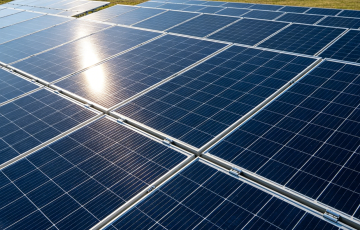
Solar panels capture sunlight and convert it to electricity. The array must be sized to power the oxygen generator during daylight hours while also charging batteries for nighttime operation. In sunny regions, a relatively modest array can power a generator producing 10-50 liters per minute of oxygen.
Battery storage
Batteries store solar energy for use when the sun isn’t shining. The battery bank must be sized to cover nighttime oxygen demand, typically 12-16 hours. Lithium-ion batteries are common due to their efficiency, cycle life, and decreasing cost.
Compressed air system
The oxygen generator requires clean, dry compressed air. This is typically provided by an oil-free compressor, which also runs on solar power. Energy efficiency is critical—every watt saved reduces the solar array and battery requirements.
Oxygen storage
Oxygen can be stored in cylinders or a buffer tank to smooth out demand. This allows the generator to run steadily while serving intermittent needs, and provides reserve during maintenance or periods of low solar production.
IV. System Sizing for Off-Grid Facilities
Sizing a solar-powered oxygen system requires careful planning.
Determining oxygen demand
Start with the facility’s oxygen needs. A small rural clinic might need 5-10 liters per minute (LPM) for basic services. A district hospital with surgery capacity might need 20-50 LPM. A regional referral hospital could need 100+ LPM.
Calculating energy requirements
PSA oxygen generators consume about 1-2 kWh per cubic meter of oxygen produced. A system producing 10 LPM (0.6 m³/hr) would consume about 0.6-1.2 kWh per hour. Over 24 hours, that’s 15-30 kWh.
Sizing solar array
In sunny regions, a solar panel produces about 4-5 times its rated capacity in daily kWh. A system needing 25 kWh/day would require about 5-6 kW of solar panels. Local insolation data determines exact sizing.
Sizing battery storage
Battery capacity must cover nighttime and cloudy periods. For a 25 kWh/day system, batteries might need to supply 15-20 kWh overnight. With depth-of-discharge considerations, 30-40 kWh of battery capacity is typical.
Redundancy
For critical healthcare applications, redundancy is essential. Some systems include a backup diesel generator for extended cloudy periods or maintenance. Others are designed with enough battery capacity for 2-3 days of autonomy.
V. Benefits Beyond Oxygen
Renewable-powered oxygen systems offer benefits beyond reliable medical gas.
Energy independence
Hospitals that rely on diesel generators are vulnerable to fuel price fluctuations and supply disruptions. Solar systems produce power at a predictable cost for decades. Fuel savings alone often justify the investment.
Cost savings
A typical rural hospital might spend $10,000-$30,000 annually on diesel for generators and oxygen cylinders. A solar oxygen system has higher upfront cost but lower ongoing expenses. Payback is typically 3-5 years, after which the hospital saves substantially.
Environmental impact
Diesel generators produce carbon emissions, local air pollution, and noise. Solar systems produce none of these. For health facilities, eliminating diesel exhaust from hospital grounds has direct benefits for patients and staff.
Reliability
Solar-powered systems, properly sized, can achieve 99%+ uptime—often better than grid connections in developing regions. For oxygen—a life-critical service—this reliability is transformative.
Community resilience
A solar-powered oxygen system can serve as an anchor for broader energy access. Some installations support additional services: lighting for the facility, refrigeration for vaccines, or power for medical equipment.
VI. Case Examples and Real-World Impact
Solar-powered medical oxygen systems are already saving lives.
The Malawi experience
In Malawi, a partnership between the Ministry of Health and non-governmental organizations has deployed solar-powered oxygen systems in dozens of district hospitals. Facilities that previously relied on cylinders—often rationed—now have continuous oxygen. Clinical outcomes have improved, and hospital budgets have been relieved of cylinder costs.
Sierra Leone
Following the Ebola outbreak, Sierra Leone invested in solar oxygen systems for district hospitals. The systems proved their value during the COVID-19 pandemic, providing reliable oxygen when global supply chains were disrupted.
Pacific islands
Remote island clinics in the Pacific face some of the highest energy costs in the world, with diesel exceeding $2 per liter. Solar oxygen systems have made reliable oxygen affordable, transforming maternal and child health services.
The common thread
In each setting, the combination of renewable energy and PSA technology has enabled something previously impossible: reliable, affordable, sustainable oxygen in places where the grid doesn’t reach.
VII. Challenges and Considerations
Solar-powered oxygen systems are not without challenges.
Upfront cost
The initial investment—$50,000 to $500,000 depending on scale—is a barrier. However, financing mechanisms are emerging, including pay-as-you-go models, government programs, and international development funding.
Technical expertise
Installation and maintenance require trained technicians. Some programs have established regional service centers and remote monitoring to address this challenge. Ongoing training for local biomedical engineers is essential.
System integration
Oxygen systems must integrate with hospital workflows. This includes proper piping to wards and operating rooms, training for clinical staff, and protocols for maintenance and troubleshooting.
Battery life
Batteries require replacement every 5-10 years. This must be planned and budgeted. System design should anticipate battery end-of-life and make replacement straightforward.
Extreme weather
Hurricanes, monsoons, and other extreme weather can damage solar arrays or interrupt service. Systems must be designed for local conditions, with robust mounting, lightning protection, and contingency plans.
FAQ
Q1: Can solar power run a medical oxygen generator 24/7?
A1: Yes, with appropriate battery storage. The solar array powers the generator during daylight while charging batteries. Batteries provide power overnight and during cloudy periods. Proper sizing is essential for reliable 24/7 operation.
Q2: How much oxygen can a solar-powered system produce?
A2: Systems range from small units producing 5-10 liters per minute (LPM) for clinics to large installations producing 200+ LPM for regional hospitals. Sizing depends on facility needs, available space for solar panels, and budget.
Q3: What happens when there are several cloudy days in a row?
A3: Properly sized systems include enough battery capacity for 2-3 days of autonomy. Some installations also include a backup diesel generator for extended periods of low solar production. In many regions, a few cloudy days are manageable with proper sizing.
Q4: Is the oxygen quality the same as hospital-grade oxygen?
A4: Yes. PSA generators produce 90-95% oxygen, which meets medical standards (USP, EP, JP) for oxygen. The oxygen is filtered and meets purity, moisture, and particulate requirements for medical use.
Q5: How does the cost compare to diesel-powered oxygen?
A5: Upfront cost is higher, but operating costs are much lower. A hospital might recover the investment in 3-5 years through eliminated fuel costs and cylinder purchases. Over the 15-20 year life of the system, savings are substantial.
Q6: What maintenance does a solar-powered oxygen system require?
A6: The oxygen generator requires filter changes (every 6-12 months) and periodic service. Solar panels need occasional cleaning. Batteries may need replacement every 5-10 years. With proper design, maintenance can be performed by locally trained technicians.
Q7: Are these systems suitable for urban hospitals with reliable grid power?
A7: They can be, particularly where grid power is expensive or unreliable. For urban hospitals, solar can supplement grid power, reduce electricity costs, and provide backup during outages. The business case varies by location and utility rates.
Conclusion
Oxygen is life. For millions of people in off-grid communities, access to reliable medical oxygen has been a persistent challenge—one that traditional solutions have struggled to solve.
Renewable-powered oxygen generators offer a new path. By combining solar energy, battery storage, and PSA technology, these systems deliver medical-grade oxygen without grid power, without diesel fuel, and without complex supply chains.
The technology exists. The need is urgent. And the impact is measurable: fewer preventable deaths, stronger health systems, and sustainable infrastructure that serves communities for decades.
For healthcare facilities in remote areas—and for the patients who depend on them—solar-powered oxygen isn’t just an alternative. It’s a lifeline.
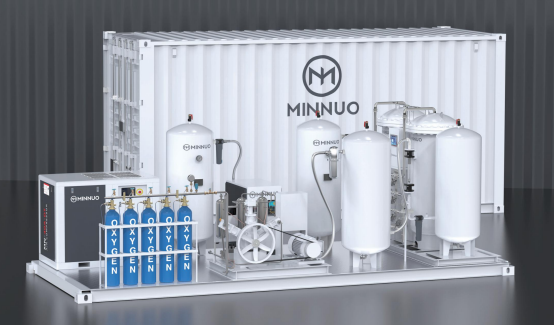
At MINNUO, we’re committed to expanding access to medical oxygen through sustainable technology. From system design to installation to ongoing support, we help healthcare facilities deploy oxygen generation that works where it’s needed most. Because we believe that geography should never determine who has access to life-saving care.


 sales2:+86 17506119168