
Introduction: The Oxygen Supply Dilemma in RAS and the Breakthrough Solution
Amid the global shift toward intensive and intelligent aquaculture, Recirculating Aquaculture Systems (RAS) have become a core solution to overcome resource constraints in traditional farming, thanks to their water-saving, eco-friendly, and controllable advantages. However, the challenge of dissolved oxygen (DO) supply under high-density conditions remains a critical bottleneck limiting productivity and profitability in RAS operations.
When farming density increases by more than 30%, traditional aeration equipment suffers from fatal flaws: low efficiency, high energy consumption, and unstable oxygen supply. Issues such as hypoxia-induced fish stress and surface gulping during hot summer nights, pond crash risks on cloudy and low-pressure days, and uneven DO distribution causing stress in shrimp and fish, result in tens of millions of dollars in annual losses for farmers.
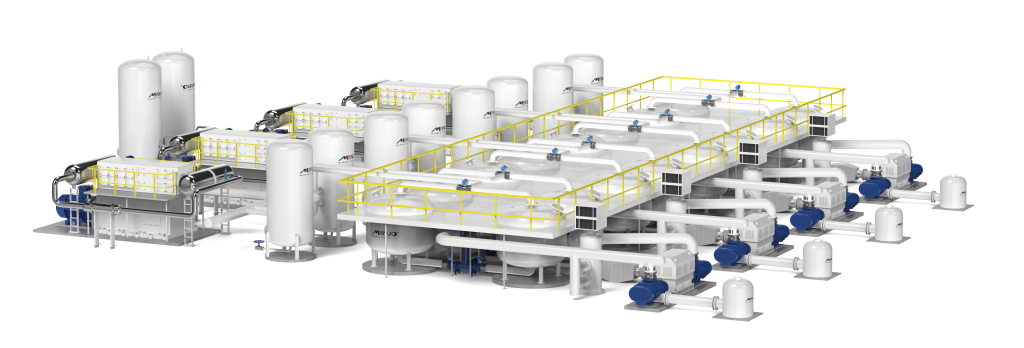
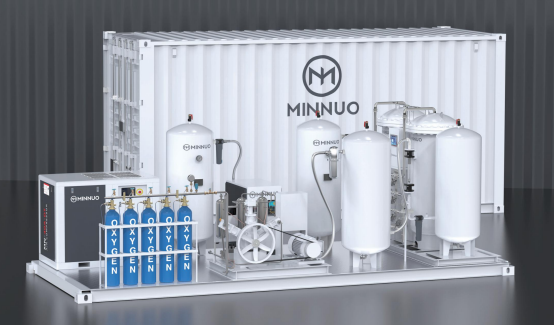
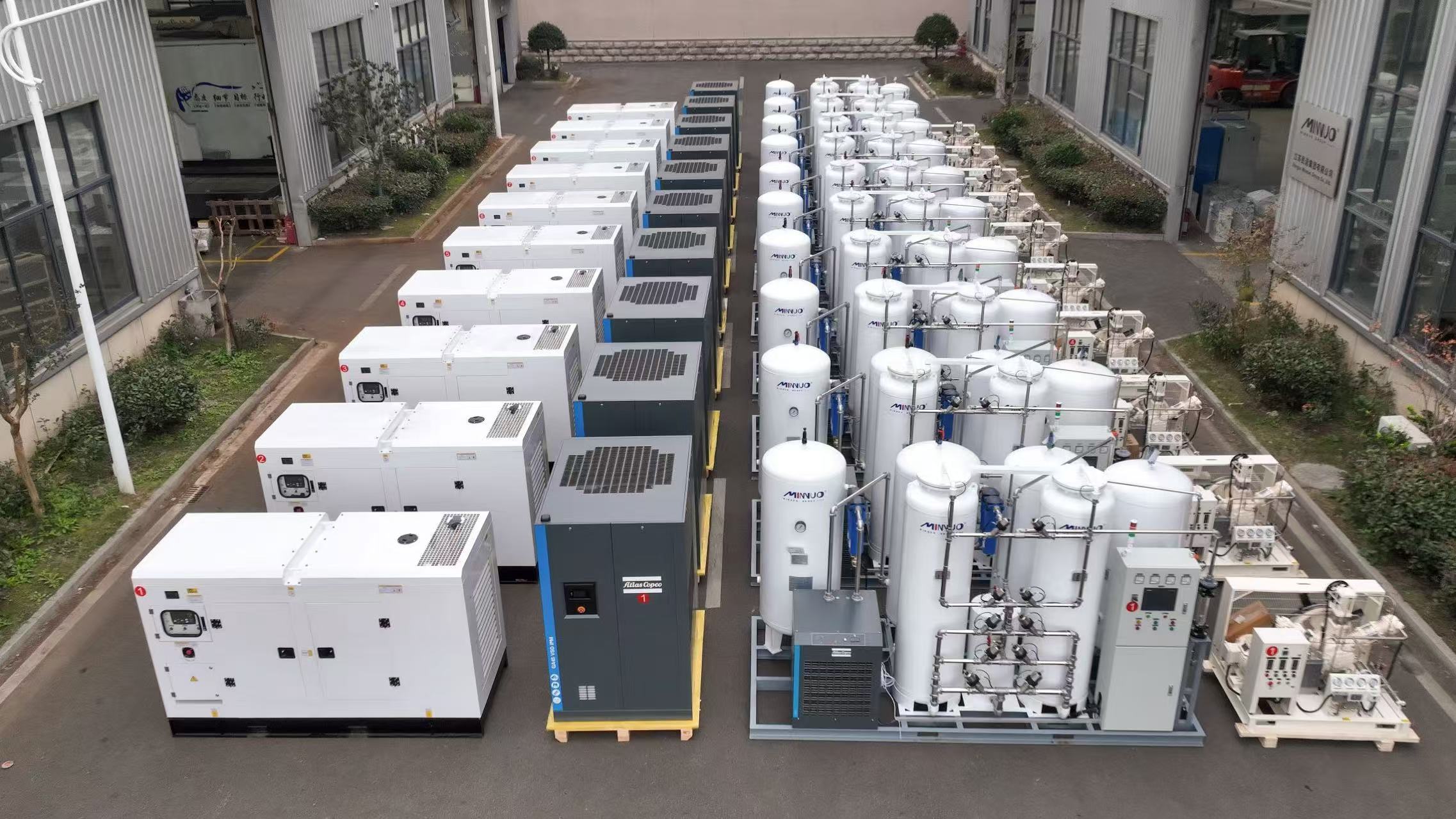
With over 20 years of expertise in VPSA oxygen generation technology, Jiangsu Minnuo Group has developed a dedicated oxygen supply solution tailored to the unique demands of RAS. Centered on high efficiency, stability, energy saving, and intelligence, the Minnuo VPSA Oxygen Generator completely disrupts traditional aeration logic, elevating oxygen purity, dissolution efficiency, operating costs, and system compatibility to new levels, making it the core oxygen supply engine for the large-scale development of RAS farming.
I. Addressing Industry Pain Points: Four Critical Shortcomings of Traditional Aeration
In RAS, dissolved oxygen (DO) is the lifeline determining the survival, growth, and reproduction of shrimp and fish. Studies show that maintaining DO at 8–10 mg/L boosts metabolic efficiency by 25%, improves feed conversion ratio (FCR) by 18%, and raises survival rates above 95%. Yet traditional aeration methods consistently fail to meet this core need, with four major limitations:
- Low DO efficiency, severe waste
Traditional aerators (impeller, blower aeration) inject air (only 21% oxygen) into water, with oxygen transfer efficiency below 20%. Most oxygen escapes before dissolving, wasting both energy and resources. Even higher power only achieves temporary, localized aeration and cannot deliver uniform DO across the entire RAS.
- High energy costs, squeezing profits
To meet high-density oxygen demand, traditional aerators run at full load for long hours, with electricity accounting for 30%–40% of total farming costs. For a 50-mu RAS farm, annual electricity costs exceed ¥80,000, becoming a major profit drag.
- Unstable oxygen supply, frequent risks
Traditional aeration relies heavily on the environment. Higher water temperatures and cloudy, low-pressure weather sharply reduce water’s oxygen-holding capacity. The combination of peak oxygen consumption at night and minimum DO in early mornings frequently causes hypoxia and mass mortality. Industry data shows about 70% of large-scale fish kills are directly linked to unstable oxygen supply.
- Reactive water quality control, widespread diseases
Under hypoxia, anaerobic bacteria multiply rapidly, leaving feed waste and feces partially decomposed. Ammonia nitrogen and nitrite spike, triggering diseases and raising medication costs, creating a vicious cycle: hypoxia → water degradation → disease outbreaks.
II. Technical Breakthrough: Five Core Advantages of the Minnuo VPSA Oxygen Generator
As a leader in VPSA oxygen generation, Jiangsu Minnuo Group leverages military-grade R&D to deeply iterate technology for RAS, creating a solution that combines efficiency, stability, and economy. Its core strengths lie in five areas:
High-Purity Oxygen + High-Efficiency Dissolution, Unlocking Maximum Farming Density
The Minnuo VPSA Oxygen Generator uses lithium-based molecular sieve (LiLSX) as its core separation material. Using an innovative low-pressure adsorption–vaccium desorption process, it steadily produces 93±3% high-purity oxygen.
Compared with traditional air aeration, high-purity oxygen paired with micro-nano bubble diffusers raises oxygen dissolution rate from 15%–20% to over 85%, and triples bubble residence time in water. This ensures uniform oxygen distribution to every zone of the RAS with no dead spots.
In practice, this system supports a 30%–50% increase in farming density. For Pacific white shrimp, density can exceed 5 kg/m³, and fry survival improves by 20%–30%.
A Zhejiang RAS shrimp farm reported that after adopting Minnuo VPSA, shrimp reached an average 36 g in an 80-day cycle — 18% heavier than traditional aeration — with 25% better size uniformity.
Intelligent Control + Stable Operation, Safeguarding Farming 24/7
The Minnuo VPSA is equipped with an industrial PLC intelligent control system, integrating high-precision DO sensors and IoT modules. It monitors water DO in real time (accuracy ±0.1 mg/L) and automatically adjusts output based on growth stage, density, and temperature, enabling precision on-demand oxygen supply.
If DO drops below the set threshold (e.g., 7 mg/L), the system activates oxygen replenishment within 3 seconds to quickly restore safe levels.
The unit supports 24-hour continuous operation with dual-tower alternating work, no downtime for maintenance, and is immune to weather or grid fluctuations. An optional backup power system restores supply within 30 minutes during outages, eliminating pond crash risks entirely.
A Jiangsu mandarin fish RAS farm reported zero hypoxia incidents in two consecutive years, greatly improving operational safety.
Energy Saving + Low-Cost Maintenance, Greatly Improving Profit Margins
Minnuo VPSA achieves energy revolution through three innovations:
- Low-pressure adsorption (around 0.1 MPa), reducing energy use by 40% vs. conventional PSA.
- High-efficiency roots blowers and vacuum pumps with IE3+ motors, cutting no-load loss by 30%.
- Intelligent variable frequency control, dynamically adjusting power; off-peak energy use drops by 50%.
Field data shows that in a 1,000 m³ RAS, daily power consumption is only 55% of traditional aerators, saving over ¥30,000 per year in electricity. For a 50-mu farm, equipment investment is fully recovered in 1.5–2 years via energy savings and higher yield.
The modular design ensures a 5–8 year service life for molecular sieves, with annual maintenance costs below ¥2,000 — far below the ¥8,000 average for traditional equipment.
Synergistic Water Quality Optimization, Building an Ecological Farming Loop
Stable, abundant oxygen not only meets respiration but also activates aerobic microbes, accelerating decomposition of organic waste. This reduces ammonia nitrogen by 40%–60% and nitrite by 30%–50%.
High-purity oxygen can work with ozone generators, cutting ozone use by 8%–10%, lowering chemical costs and environmental residue, while raising ORP to suppress harmful bacteria.
A Shandong RAS salmon farm reported:
- 30% higher water transparency
- 28% lower COD
- Disease rate dropped from 12% to below 3%
- 40% lower medication costs
Achieving low-medication, zero-residue green farming, with market prices increased by 15%–20%.
Customized Adaptation + Rugged Protection, Suitable for All Farming Scenarios
Minnuo offers a full lineup from 5 m³/h to 100 m³/h, adaptable to fry nursery, grow-out, and special species farming.
The unit features a 304 stainless steel body with anti-corrosion coating and IP54 water resistance, enduring high humidity and salt spray for a service life of over 10 years.
- Large-scale farms: parallel operation and remote cluster control via mobile APP for unattended management.
- Small & medium farms: economical all-in-one units integrating oxygen generation, aeration, and monitoring, easy to install and operate without specialized staff.
III. Case Validation: The Farming Profit Revolution with Minnuo VPSA
Case 1: Pacific White Shrimp RAS Farm, Jiangsu
- Scale: 20 tanks, total water volume 800 m³
- Density: 4.5 kg/m³ (traditional limit: 3 kg/m³)
Results:
- DO stably 7.5–8.5 mg/L; survival from 82% to 96%
- Culture cycle shortened from 90 to 78 days; per-tank yield +45%
- Annual electricity saved ¥28,000; medication cost -¥15,000
- Annual net profit +¥620,000; ROI +35%
Case 2: Mandarin Fish RAS Base, Guangdong
- Scale: 15 tanks, total water volume 1,200 m³
- Pain point: high oxygen demand; frequent hypoxia with traditional aerators
Results:
- DO fluctuation within ±0.3 mg/L; hypoxia completely eliminated
- Daily weight gain +12%; FCR improved from 1.8:1 to 1.5:1
- Zero hypoxia-related mortality; annual loss reduced by over ¥100,000
- Ammonia nitrogen stably below 0.2 mg/L; 100% water quality compliance
IV. Conclusion: Empowering Farming Upgrading Through Innovation, Minnuo Partners With Farmers for Win-Win Growth
As aquaculture moves toward intensification and sustainability, upgrading the oxygen supply system is key to competitive advantage. With over 20 years in VPSA technology, Jiangsu Minnuo Group focuses on solving industry pain points and creating customer value, merging industrial-grade oxygen technology with aquaculture to deliver a high-efficiency, stable, and economical dedicated solution.
The Minnuo VPSA Oxygen Generator is more than a machine — it is the energy core and safety barrier of RAS:
- High-purity oxygen breaks density limits
- Intelligent control eliminates hypoxia risks
- Energy saving boosts profits
- Water quality optimization enables green farming
From fry to harvest, from family farms to large-scale bases, Minnuo stands with farmers, solving challenges with technology and protecting farming success with reliable equipment.
Choosing Minnuo VPSA means choosing an efficient, safe, and profitable farming future.
Jiangsu Minnuo Group will continue investing in R&D, launching more innovative oxygen supply solutions, and working with farmers to write a new chapter of high-quality development in the aquaculture industry.

 sales2:+86 17506119168