
I. Core Performance Comparison
| Comparison Dimension | PSA Nitrogen Generator | Membrane Nitrogen Generator |
| Nitrogen Purity | Advantage: 95%~99.9995% (ultra-high purity coverage); 99.9%~99.99% offers the best cost performance | Limitation: 95%~99.5% (hardly exceeding 99.9% at maximum), for medium and low purity requirements |
| Flow Range | 110,000+ Nm³/h (covers small, medium to large flow rates); 503000 Nm³/h is the optimal application range | 10~5000 Nm³/h (feasible for large flow rates); more flexible for small flow rates (<100 Nm³/h) |
| Start-Stop Response | Disadvantage: 10~30 minutes to reach stable purity | Advantage: Instant start-stop (gas production in 1~5 minutes), no switching impact during operation |
| Energy Consumption Level | 0.18~0.35 kWh/Nm³ (higher purity means higher energy consumption) | Advantage: 0.15~0.28 kWh/Nm³ (stable operation without switching loss) |
| Gas Quality | Dew point ≤-40~-60℃ (drier at high purity); high control precision | Dew point ≤-40℃ (greatly affected by intake humidity); additional control of water molecule interference required |
II. Economic Comparison (From the Perspective of Life Cycle Cost)
| Cost Type | PSA Nitrogen Generator | Membrane Nitrogen Generator |
| Initial Investment | Disadvantage: Complex equipment (adsorption tower + valve group + control system); investment cost 30%~50% higher than membrane nitrogen generator | Advantage: Simple structure (only membrane module + filtration system); investment cost over 40% lower in small flow rate scenarios |
| Operation and Maintenance Cost | Molecular sieve replacement: once every 1~2 years (moderate cost); high valve group maintenance frequency; energy consumption increases significantly with purity | Advantage 1: Membrane module service life 5~10 years (high replacement cost but long cycle) Advantage 2: No moving parts, low maintenance frequency Limitation: Extremely high intake pretreatment requirements (oil content ≤0.01ppm) |
| Long-Term Economy | More cost-effective in high-purity (≥99.99%) scenarios; outstanding cost performance in small and medium flow rates (1~3000 Nm³/h) | Better for medium and low purity (95%~99.5%) + large flow rate scenarios (annual operation >8000 hours), significant cost advantage |
III. Applicable Scenarios and Summary of Core Advantages and Disadvantages
PSA Nitrogen Generator
Core Advantages
- High purity ceiling (up to 99.9995%), meeting strict process requirements in electronics, pharmaceuticals and other industries
- Strong flow flexibility, covering 1~10000 Nm³/h
- Excellent operation stability (MTBF over 18000 hours), suitable for continuous production
- Wider adaptability to intake temperature (5℃~40℃)
Core Limitations
- Large equipment size, requiring reserved maintenance channels (occupies 50% more space than membrane nitrogen generator)
- Slow start-up (10~30 minutes), not suitable for frequent start-stop scenarios
- Significant increase in energy consumption in high-purity mode
Typical Applications: Semiconductor manufacturing, lithium battery drying, laser cutting, pharmaceutical freeze-drying (GMP certification required), fine chemical synthesis
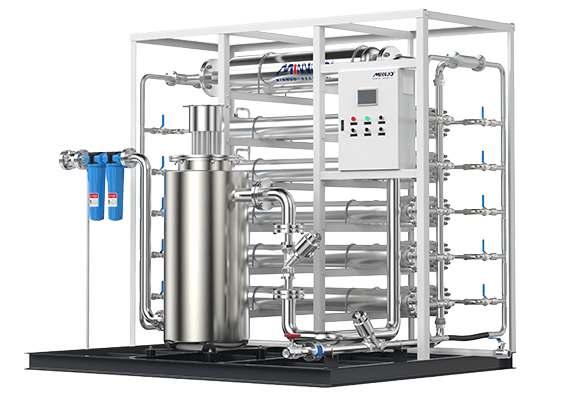
Membrane Nitrogen Generator
Core Advantages
- Ready to use, fast start-stop response (first choice for emergency gas supply)
- Modular design, compact size (suitable for space-constrained scenarios)
- Lower energy consumption in low-purity scenarios (15%~25% lower than PSA)
- No valve group switching, low operating noise (≤75dB(A))
Core Limitations
- Low purity ceiling (hardly exceeding 99.5%), unable to meet high-end demands
- Membrane modules are vulnerable to oil/water pollution (irreversible damage), requiring multi-stage pretreatment
- Sensitive to intake temperature (optimal 40℃~55℃), high temperature reduces separation efficiency
Typical Applications: Oilfield associated gas recovery, granary inerting, steel structure anti-corrosion coating, storage tank nitrogen sealing, vehicle-mounted emergency gas supply
IV. Key Notes
- Membrane nitrogen generators must strictly control intake quality: oil content ≤0.01ppm + pressure dew point ≤-40℃, otherwise the service life of membrane modules will be sharply reduced (from 10 years to less than 1 year)
- The energy consumption of PSA nitrogen generators is positively correlated with purity: energy consumption at 99.999% purity is 30%~40% higher than that at 99% purity
- For large flow rate (>5000 Nm³/h) + high purity (≥99.99%) scenarios, cryogenic nitrogen production is preferred (instead of the above two)


 sales2:+86 17506119168