
The green hydrogen revolution is underway, with electrolysis plants emerging as key to decarbonizing industry and energy. While the spotlight shines on electrolyzers and renewable power, a silent yet indispensable partner operates in the background: the industrial nitrogen generator. Far from being a mere utility, a reliable on-site nitrogen supply forms the critical backbone of safe, efficient, and continuous hydrogen production. From startup to shutdown and every moment in between, nitrogen ensures process integrity, protects multi-million dollar equipment, and safeguards the entire facility. This article explains the multifaceted, non-negotiable roles of nitrogen in electrolysis-based hydrogen plants and why on-site generation is the only logical choice.
I. The Foundational Role of Nitrogen in Electrolyzer Safety
Hydrogen’s wide flammability range (4-75% in air) makes inerting the primary safety strategy, and nitrogen is the ideal inert gas due to its cost-effectiveness and availability.
1. Purging and Inerting: Preventing Explosive Mixtures
This is the most critical safety function, applied during any operational change.
- Startup and Shutdown Sequences: Before introducing water or power to an electrolyzer stack (especially PEM and AEM types), the system must be purged with nitrogen to displace all oxygen, preventing the formation of explosive oxy-hydrogen gas. The same rigorous purge is required before opening the system for maintenance.
- Emergency Shutdown (ESD): In the event of a leak, power failure, or control fault, nitrogen systems are triggered to rapidly inert critical volumes, isolating and flooding sections with inert gas to prevent fire or explosion.
2. Blanketing of Hydrogen and Oxygen Buffer Tanks
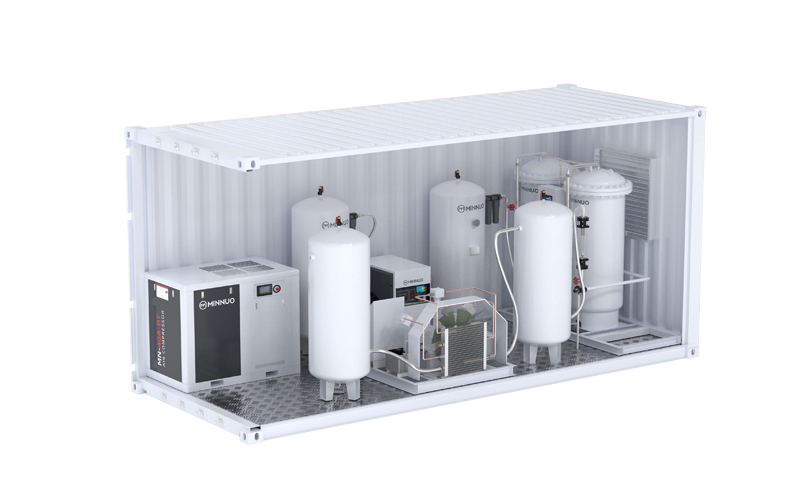
The produced hydrogen and oxygen (in some designs) are often stored in low-pressure buffer tanks before compression. The headspace of these tanks is continuously blanketed with nitrogen. This maintains an inert atmosphere above the gas/liquid interface, ensuring that even during level fluctuations, the mixture inside the tank never enters the flammable range.
II. Protecting Process Equipment and Ensuring Product Quality
Beyond safety, nitrogen is essential for protecting sensitive equipment and meeting purity specifications.
1. Electrolyzer Stack Protection (PEM/AEM)
Proton Exchange Membrane (PEM) and Anion Exchange Membrane (AEM) electrolyzers are highly sensitive to contaminants.
- Dry Standby: During periods of standby or idling, a low flow of dry nitrogen is maintained through the stack to prevent membrane dehydration and absorb any residual moisture, prolonging membrane life.
- Prevention of Carbonation: In systems using air-derived water, trace CO₂ can form carbonic acid and degrade membranes. Using nitrogen to purge and blanket minimizes this exposure.
2. Hydrogen Drying and Purification Process
After electrolysis, hydrogen is saturated with water. A common drying method involves Pressure Swing Adsorption (PSA) dryers, which use desiccant beds. Nitrogen is used in two key ways:
- Regeneration Gas: The clean, dry waste nitrogen stream from the nitrogen generator’s own PSA process is the perfect medium to regenerate the hydrogen dryer’s desiccant beds, creating a highly efficient, integrated utility loop.
- Purging Regeneration Steps: During the dryer’s cycle changes, nitrogen ensures safe purging of vessels.
3. Instrument Air and Carrier Gas
The plant’s analytical instruments, such as gas chromatographs (GCs) monitoring hydrogen purity (to ISO 14687:2019 standards), require ultra-clean carrier and zero gases. High-purity nitrogen from the on-site generator serves this purpose perfectly, eliminating the need for separate cylinder supplies.
III. Why On-Site Generation is the Only Viable Solution
For a hydrogen production facility, the nitrogen demand is continuous, large, and safety-critical. Delivered gas is not an option.
1. Uninterrupted Supply and Absolute Reliability
A hydrogen plant often operates as part of a renewable energy grid, requiring rapid start-stops. Nitrogen must be instantly available, 24/7. On-site generation eliminates the risks of delivery delays, truck access issues, or supplier shortages that could force a complete plant shutdown.
2. Massive Cost Reduction and Predictable OPEX
The volume of nitrogen consumed for purging, blanketing, and drying is substantial. The Total Cost of Ownership (TCO) of an on-site PSA nitrogen generator is typically 60-80% lower than relying on liquid nitrogen (LIN) deliveries over a 10-year period. Operational expenditure becomes a predictable function of electricity cost.
3. Integration and Process Optimization
An on-site system can be engineered as an integrated utility:
- Waste Heat Recovery: Heat from the nitrogen generator’s air compressor can be repurposed for feedwater pre-heating.
- Optimal Purity Matching: The system can be designed to produce multiple purity streams—e.g., a lower purity (95-99%) bulk stream for purging/blanketing, and a smaller, higher purity (99.9%+) stream for instrument air—maximizing energy efficiency.
IV. Specifying the Right Nitrogen Generator for Hydrogen Duty
Not all nitrogen generators are suited for this critical, continuous-duty role.
1. Technology and Reliability Focus
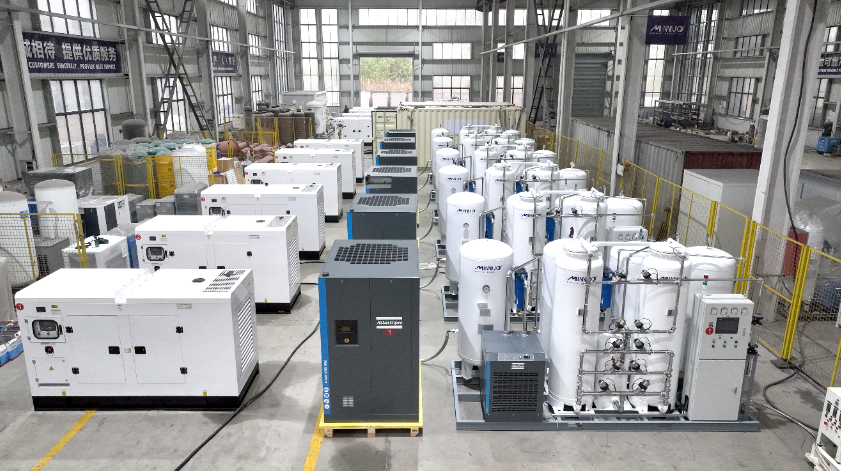
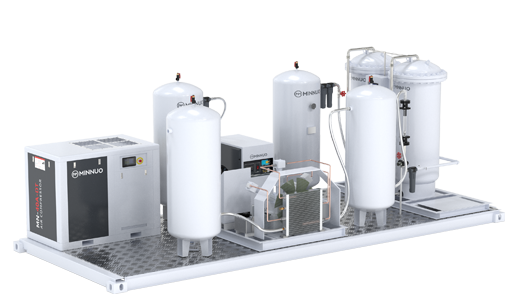
- PSA Technology: Robust and ideal for the required purities (95-99.9%). The system must be designed for 100% continuous duty with redundant critical components (e.g., dual air compressors in lead/lag configuration).
- Air Preparation: Given the sensitivity of electrolyzers, the intake air filtration for the nitrogen generator must be exceptional, removing oil vapors and particulates to protect the molecular sieves and, indirectly, the hydrogen process.
2. Capacity and Purity Planning
The generator must be sized for the simultaneous peak demand of all processes: the largest possible purge volume, continuous blanket flows, and regeneration demands. A detailed Nitrogen Demand Analysis (NDA) is essential. Purity requirements should be tiered to avoid energy waste.
FAQ: Nitrogen in Hydrogen Production Plants
Q1: What purity of nitrogen is required for purging a PEM electrolyzer stack?
A1: For safe purging to prevent explosive mixtures, ≥99.5% nitrogen purity is typically specified. This ensures oxygen content is reduced to a safe level (well below 1%). Higher purity (e.g., 99.9%) may be specified for longer-term dry standby protection of sensitive membranes.
Q2: Can we use the oxygen byproduct from the electrolyzer for purging instead of nitrogen?
A2: Absolutely not. Using oxygen for purging would create an extreme fire hazard. The purpose of purging is to remove oxygen and create an inert atmosphere. Nitrogen, being inert, is the only safe choice for this application. The oxygen stream is a separate product or is often vented safely.
Q3: How is the nitrogen generator controlled in relation to the electrolyzer’s operation?
A3: The nitrogen generator’s control system must be fully integrated with the hydrogen plant’s Safety Instrumented System (SIS) and Distributed Control System (DCS). It must receive signals for plant startup, shutdown, and emergency trips to automatically initiate the correct purge sequences at the required flow rates.
Q4: What about using membrane nitrogen generators for this application?
A4: PSA generators are generally preferred over membrane systems for hydrogen plants due to their higher purity stability, better turndown ratio, and lower sensitivity to feed air pressure and temperature fluctuations—all critical for reliable, safety-related purging. Membranes are better suited for constant-flow, lower-purity blanketing applications.
Q5: What are the key maintenance items to ensure nitrogen reliability for hydrogen safety?
A5: Maintenance focuses on preventing unscheduled downtime: regular replacement of intake air filters and oil filters (on the compressor), monitoring molecular sieve life via dew point or purity trends, and frequent testing of all safety interlocks and purge sequencing valves. Redundant systems should be rotated online regularly.
Conclusion
In the meticulously engineered world of green hydrogen production, nitrogen is not a supporting actor but the critical backbone that enables safe and stable operation. From ensuring explosive mixtures never form to protecting delicate electrolyzer membranes and enabling product purification, an uninterrupted, reliable nitrogen supply is non-negotiable. Investing in an on-site, robustly engineered PSA nitrogen generation plant is therefore not an auxiliary decision but a core strategic pillar of any hydrogen facility’s design—directly impacting its safety record, operational availability, and long-term profitability. For pioneers building the hydrogen future, MINNUO provides the high-reliability nitrogen backbone engineered to match the critical duty of your vision, ensuring your path to clean energy is built on a foundation of unwavering safety and efficiency.


 sales2:+86 17506119168