
I. Introduction
Tablets and capsules are the most common drug delivery forms in the world. From pain relievers to antibiotics to vitamins, billions of solid dosage units are manufactured every day. But producing these seemingly simple forms is a complex process involving granulation, drying, compression, and coating—each step sensitive to environmental conditions.
Many active pharmaceutical ingredients (APIs) and excipients degrade when exposed to oxygen or moisture. Oxidation can reduce potency, change color, or form harmful degradation products. Moisture can cause sticking, promote microbial growth, or alter dissolution rates.
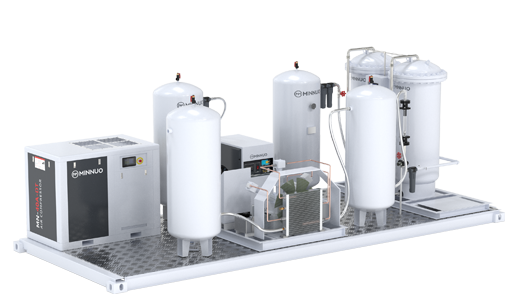
That’s where nitrogen comes in. Pharmaceutical manufacturers use nitrogen to blanket process equipment, transfer materials, and purge packaging. For facilities with high nitrogen demand, on-site generation offers purity control, supply security, and cost savings.
This guide explains how nitrogen is used in solid dosage form manufacturing, what purity is required, and how to select a generator for GMP-regulated production.
II. Where Nitrogen Is Used in Solid Dosage Manufacturing
Nitrogen protects products and processes at multiple stages.
Granulation and drying
Fluid bed granulators and dryers use air to suspend and dry powder particles. For oxygen-sensitive APIs, substituting nitrogen for process air prevents oxidation during this high-temperature, high-surface-area step.
The API remains exposed to gas for minutes or hours while drying. Oxygen at this stage can cause significant degradation. Nitrogen blanketing during granulation and drying preserves API integrity.
Milling and blending
Once dried, granules are milled to uniform size and blended with lubricants and disintegrants. These processes expose powder to air. For sensitive compounds, nitrogen-purged milling and blending equipment prevent oxidation.
Compression (tableting)
During tableting, powder is compressed into tablets at high pressure. The friction generates heat, which accelerates oxidation. Some tableting presses can be operated under nitrogen purge, protecting the API during this final processing step.
Coating
Tablet coating serves multiple purposes: protecting the API from moisture and light, masking taste, or controlling release. Coating solutions are applied as the tablets tumble in a rotating pan while warm air dries the coating.
For oxygen-sensitive products, the drying air can be replaced with nitrogen. This prevents oxidation during the coating process and allows use of coating polymers that would otherwise degrade.
Intermediate storage
Between processing steps, bulk granules or uncoated tablets may be stored in intermediate bulk containers (IBCs). Nitrogen blanketing during storage prevents degradation while batches await the next step.
Packaging
Solid dosage forms are packaged in blister packs or bottles. In blister packaging, the formed cavities are purged with nitrogen before sealing. In bottles, nitrogen flushes the headspace before capping. Both methods remove oxygen that could degrade the product during shelf life.
III. Oxygen Sensitivity in Solid Dosage Forms
Why does nitrogen protection matter? Oxygen can damage drug products in several ways.
Degradation pathways
| Mechanism | Effect | Examples |
| Direct oxidation | API converts to degraded form | Some statins, antipsychotics |
| Color change | Discoloration, unappealing appearance | Many APIs with phenolic groups |
| Potency loss | Reduced efficacy, batch failure | Vitamins, natural products |
| Formation of toxic degradants | Safety risk | Certain nitrosamine precursors |
| Polymer degradation | Coating failure, moisture barrier loss | Some film coatings |
Root causes of oxygen exposure
- Process air in fluid bed dryers
- Headspace in storage containers
- Oxygen in packaging
- Leakage during transfer
Prevention strategies
- Use nitrogen in place of process air
- Blanket storage containers
- Purge packaging before sealing
- Use oxygen scavengers (in packaging)
IV. Nitrogen Purity Requirements for Solid Dosage
Different applications need different purity levels.
Process protection (granulation, milling, coating)
For most solid dosage processes, 99.0-99.5% nitrogen (0.5-1.0% residual oxygen) is sufficient to prevent oxidation. The residual oxygen is so low that oxidation kinetics slow dramatically.
Intermediate storage
Similar purity — 99.0-99.5% — maintains protection during storage. The key is maintaining a slight positive pressure to prevent air ingress.
Packaging
Blister packaging often requires 99.9%+ nitrogen to achieve target oxygen levels in sealed blisters (typically 1-2% oxygen or lower). Bottle packaging may be similar.
GMP compliance
For GMP compliance, the nitrogen specification should be:
- Documented in a user requirements specification (URS)
- Justified based on product needs
- Verified through testing (oxygen, moisture, particulates, oil, microbes)
Membrane vs. PSA for solid dosage
Membrane generators produce 95-99.5% nitrogen — suitable for most process protection and some packaging applications. PSA generators produce 99.0-99.999% nitrogen — preferred for high-purity packaging where oxygen must be below 1%.
V. System Sizing for Solid Dosage Manufacturing
Sizing a nitrogen generator requires understanding demand.
Calculate flow requirements
| Application | Typical Nitrogen Use |
| Fluid bed dryer | 50-500 CFM (varies by scale) |
| Tablet coater | 20-200 CFM |
| Blister packer | 5-50 CFM |
| Intermediate storage blanketing | Low continuous flow |
| Bottle filler | 10-100 CFM |
Peak vs. average demand
A fluid bed dryer runs intermittently, drawing high flow during drying cycles but nothing between batches. A packaging line runs steadily. A generator sized for average demand may not handle peaks.
Buffer tanks (typically 200-1,000 gallons) store nitrogen during low-demand periods for release during peaks, allowing a smaller generator to serve the facility.
Redundancy for continuous production
For 24/7 operations, N+1 redundancy (one extra generator) prevents production loss during maintenance. For critical processes, dual 100% generators with automatic changeover provide maximum reliability.
Sizing example
A solid dosage facility has:
- One 400 CFM fluid bed dryer (intermittent)
- Two 50 CFM blister packers (continuous)
- Blanketing and other uses: 50 CFM average
Average demand: ~150 CFM. Peak demand (dryer + packers): ~500 CFM. With a 1,000-gallon buffer tank, a 250 CFM generator can supply the peak by drawing from storage.
VI. GMP Considerations for Nitrogen Systems
Nitrogen generators in pharmaceutical manufacturing must comply with GMP.
Qualification requirements
| Phase | Activities |
| DQ (Design Qualification) | Supplier audit, specification review, material selection |
| IQ (Installation Qualification) | Verify correct installation, utilities, components |
| OQ (Operational Qualification) | Test alarms, interlocks, normal operating ranges |
| PQ (Performance Qualification) | Demonstrate consistent purity under load |
Monitoring requirements
- Continuous: Oxygen (purity) analyzer with recording and alarm
- Periodic: Water (dew point), oil, particulates, microbes
- Alarm response: Defined procedure for out-of-spec conditions
Material compatibility
System components contacting nitrogen should be:
- Stainless steel or other non-reactive material
- Smooth, cleanable surfaces
- Free of potential contaminants
Documentation
- User requirements specification (URS)
- Qualification protocols and reports
- Standard operating procedures (SOPs)
- Maintenance and calibration records
- Change control documentation
VII. Installation and Maintenance
Proper installation and maintenance ensure reliable operation.
Compressed air supply
Nitrogen generators require clean, dry compressed air. The air compressor must be sized for the generator’s demand (typically 4-6× nitrogen output). For GMP applications, oil-free compressors are strongly recommended.
Location
Install the generator in a clean, dry, ventilated area—typically a utility corridor or service room, not a processing suite. If located in a classified area, the generator must meet appropriate cleanroom standards.
Distribution piping
Nitrogen distribution piping should be:
- Stainless steel (316L preferred)
- Electropolished interior surface
- Welded or sanitary connections
- Sloped to drain points
- Verified clean (particle, moisture, bioburden testing)
Maintenance
| Task | Frequency |
| Filter changes | 6-12 months (per manufacturer) |
| Oxygen analyzer calibration | 6-12 months |
| Leak checks | Quarterly |
| Performance verification | Annually |
| Sieve replacement (PSA) | 5-10 years |
All maintenance must be documented. Critical spares should be maintained.
FAQ
Q1: What purity of nitrogen is needed for tablet coating?
A1: For most solid dosage coating applications, 99.0-99.5% nitrogen (0.5-1.0% oxygen) is sufficient to prevent oxidation. If the coating polymer itself is oxygen-sensitive, higher purity may be required. Document the specification based on product needs.
Q2: Can I use a membrane generator for blister packaging?
A2: Yes, if the packaging machine can achieve target oxygen levels with 99.5% nitrogen. Many blister packers require 99.9%+. Test your specific machine. PSA generators produce higher purity and are often preferred for packaging.
Q3: How much nitrogen does a fluid bed dryer use?
A3: It varies by scale. A lab-scale dryer might use 50 CFM. A production-scale dryer (200-600 kg batch) can use 300-500 CFM. The flow is intermittent—high during drying, zero between batches. Buffer storage smooths demand.
Q4: Do I need an oxygen analyzer on my nitrogen system?
A4: Yes for GMP applications. Continuous oxygen monitoring with recording and alarm is expected. For non-GMP process protection, periodic testing may suffice, but continuous monitoring is still recommended.
Q5: What’s the difference between nitrogen for processing and nitrogen for packaging?
A5: Processing (granulation, coating) typically uses 99.0-99.5% nitrogen. Packaging often requires higher purity (99.9%+) to achieve target oxygen levels in sealed blisters. Some facilities use separate generators or purity polishing for packaging.
Q6: Can I use the same nitrogen generator for processing and packaging?
A6: Yes, if it meets the higher purity requirement. Size for the larger flow (usually processing) and verify that purity remains within spec at all flow rates. A buffer tank maintains purity during peak demand.
Q7: What’s the typical ROI for a nitrogen generator in solid dosage manufacturing?
A7: Payback varies by nitrogen usage. A facility using 10+ cylinders per week might see payback in 18-30 months. Larger users recover investment faster. Beyond cost savings, benefits include supply security, purity control, and elimination of cylinder handling.
Conclusion
Solid dosage form manufacturing demands protection from oxygen at multiple stages. Granulation, milling, compression, coating, and packaging all expose products to air—and for oxygen-sensitive APIs, that exposure means degradation, potency loss, and batch failure.
Nitrogen blanketing and purging provide the protection these products need. On-site nitrogen generators offer pharmaceutical manufacturers control over purity, uninterrupted supply, and significant cost savings compared to cylinders or liquid nitrogen.
For GMP-regulated facilities, the nitrogen system must be qualified, monitored, and maintained like any other process equipment. Documented specifications, continuous purity monitoring, and rigorous change control are all required.
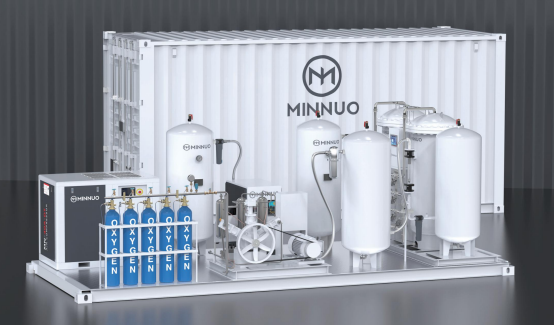
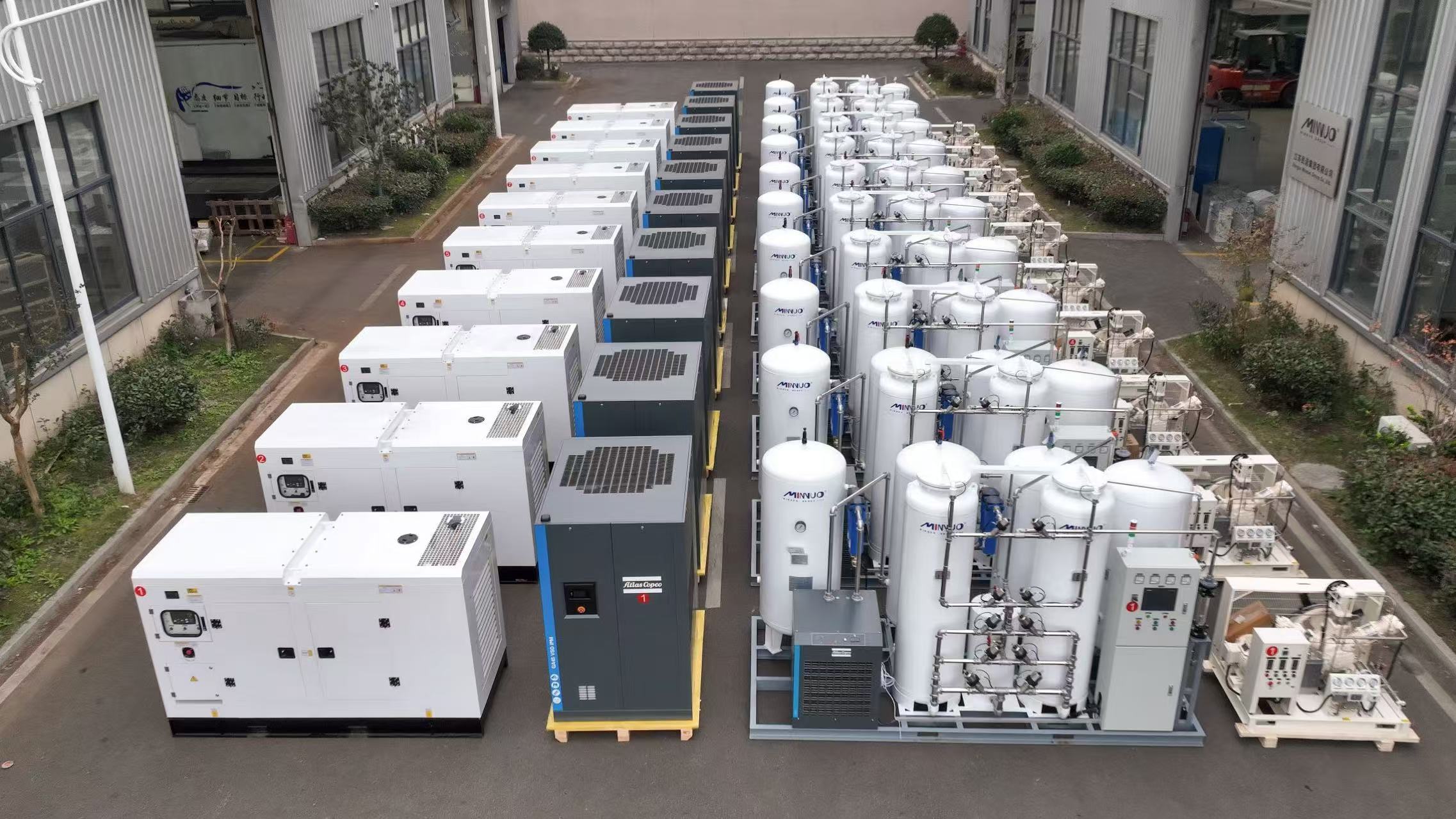
At MINNUO, we help pharmaceutical manufacturers design, qualify, and maintain nitrogen generation systems for solid dosage production. From membrane generators for process protection to PSA systems for high-purity packaging, we focus on GMP-compliant solutions that protect your products. Because in pharmaceuticals, product quality starts with process protection.


 sales2:+86 17506119168