
Adding oxygen to aquaculture and increasing the dissolved oxygen content of the farming environment increases the activity and feeding efficiency of fish and shrimp, increases farming density and metabolic intensity.
Ordinary air oxygenation in the water body to maintain the DO content of 5mg / L are more difficult, many farmers in the culture of a variety of problems, bad breeding, more inputs, no benefit, most of them related to the dissolved oxygen can not reach the demand. The use of oxygen generators high-purity oxygen can effectively improve the oxygen content of the water, significantly promoting the growth and development of fish
Dissolved oxygen and feeding: Dissolved oxygen is above 5mg/L, fish feeding is normal; Dissolved oxygen drops to 4mg/L, fish feeding drops 13%; Dissolved oxygen drops to 2mg/L, fish feeding drops 54%, growth stagnates and the phenomenon of floating head starts to appear; Dissolved oxygen drops to 1mg/L, fish and shrimps basically do not eat, and float out of the water, forming the phenomenon of floating head; Dissolved oxygen drops to 0.5mg/L The fish and shrimps will all suffocate and die in a few hours.
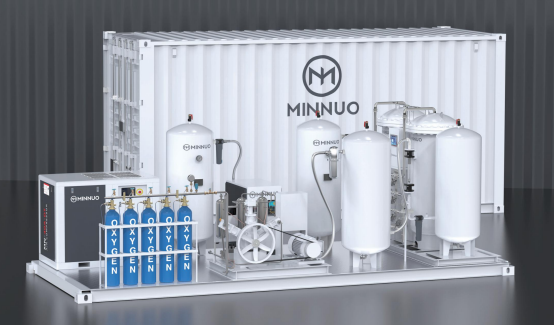
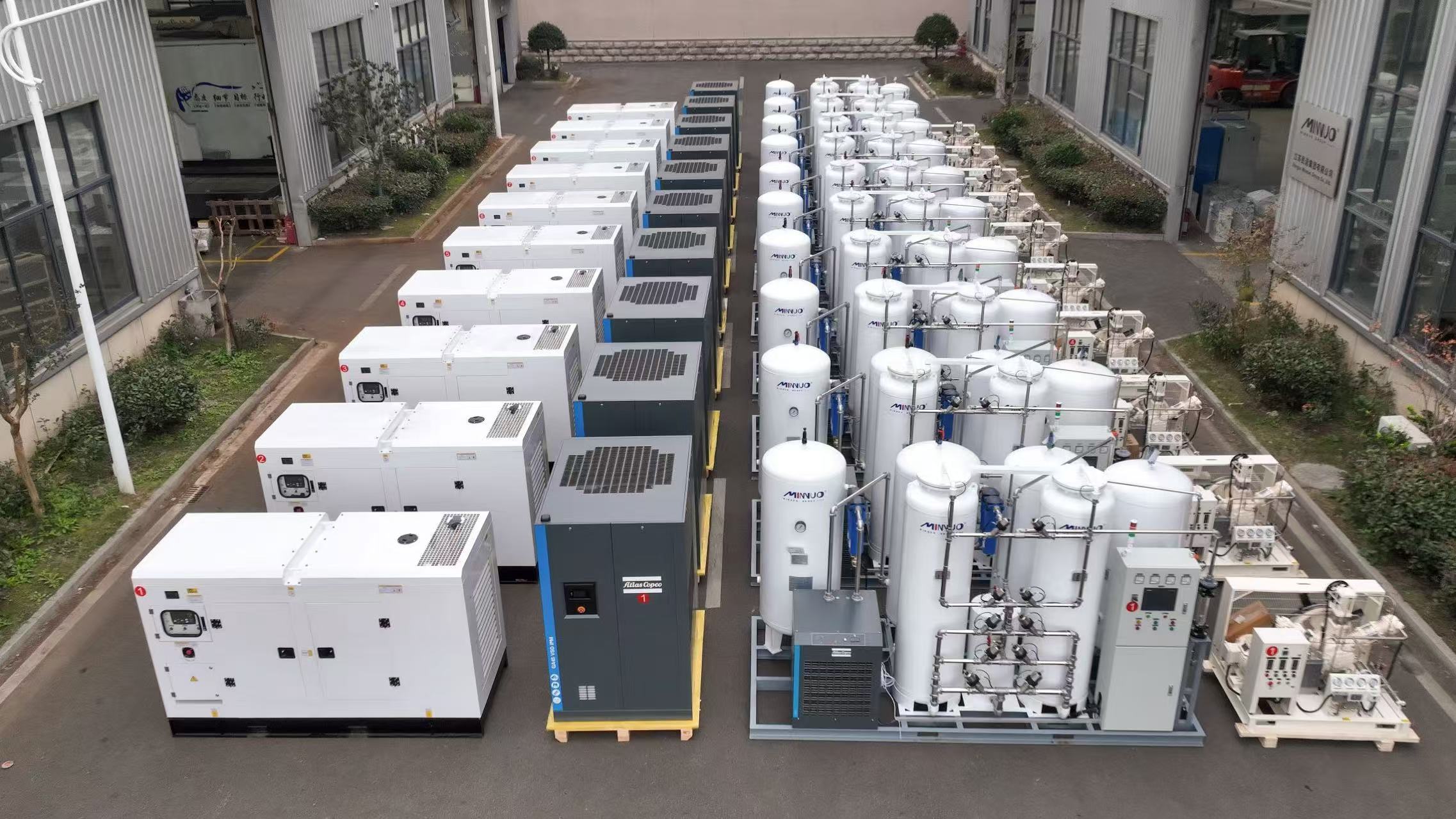
Minnnuo Group has designed oxygen solutions for farmers around the world to maximise cost recovery. Avoiding the risk of high costs and untimely supply caused by their reliance on oxygen tanks for transport.
Why use PSA Oxygen Genrator For Aquaculture?
- Easy to use
Plug and play. Compared to liquid oxygen, oxygen cylinders, dewars, etc., the requirements for use are reduced and there is no need for frequent replacement of the added material. The purity of the oxygen produced is over 93±3%, which is perfectly suited to the needs of the farm.
2. Less consumables
almost an input without secondary consumption. Pure oxygen generator for fish farm with air as raw material, without any auxiliary materials, no pollution, low cost, one kilogram of oxygen (oxygen) can be produced by one degree of electricity, full pneumatic control, simple and reliable structure, easy maintenance and adjustment.
3. Stable operation
oxygen (oxygen) flow (flow) can be controlled. Oxygen production is rapid and unchanging. Oxygen is produced when the machine is switched on.
4. Humanized use
Equipped with flow adjustment device, oxygen flow can be controlled.
5. Can be connected to supporting equipment, smart control
On the basis of pure oxygen production equipment, and invested huge manpower, material resources, and experience, the development of dissolved oxygen monitoring equipment, can be matched with pure oxygen production machine, to achieve the dissolved oxygen in the water body is not enough that is open, dissolved oxygen reached that is closed, disguised to reduce consumption. It can also be used on the mobile phone APP for real-time dissolved oxygen monitoring, which greatly reduces the risk of breeding.
6. can be used with an ozone machine
With the pollution of water sources and the world’s emphasis on environmental protection, breeding tailwater purification, and sterilization of raw water is also on the agenda, ozone is currently known to be the best way to deal with it, but air-source ozone equipment is facing high costs, low output, poor results. Oxygen source ozone machines can not be used alone, need to be equipped with the corresponding oxygen source. Oxygen equipment solves this problem and can be used as an oxygen source to supply oxygen to the ozone system, supporting the use.
How to choose oxygen generator aquaculture?
Fish Farm oxygen supply method: When using a PSA oxygen generator to supply oxygen to the breeding plant (or pool), two types of oxygen supply methods can be used: one is decentralized oxygen supply: and the other one is centralized oxygen supply, these two types of oxygen supply are divided according to the different ways of dissolving oxygen in the water, each of the two methods has its own advantages and disadvantages, the following is a detailed introduction respectively.
1. Decentralised oxygen-generating system
A decentralized oxygen-generating system means that the oxygen produced by the oxygen generator (oxygen purity of 93% or more) is transported to each fish pond unit that requires oxygen through a closed pipeline and then diffused into the pool water through the decentralized device at the end of the pipeline. The main equipment and materials used are the gas source, oxygen piping (copper or PU pipe), manifold, regulator, throttle valve, flow meter and carbon nanotubes. The oxygen produced by the gas source is controlled by the regulator, flow meter and throttle valve and then sent to the side of the fish pond by the oxygen pipeline, where it is diverted by the diverter row and then diffused into the pond water through the carbon nanotubes, where the oxygen terminal diffusion device is a carbon nanotube with many micro-pores evenly distributed on the surface so that the oxygen molecules can be evenly dispersed into the pond water.
For example, if a semi-enclosed plant with 100 L/S of water exchange is to be supplied with oxygen from a source water containing 5 ppm to maintain the oxygen content of the pool water at 10 ppm, the oxygen requirement is
Q=(5mg/L × 100L/S)/60%=833mg/S=0.833g/ s=2.1Nm3/h
The decentralised oxygen supply method is relatively simple to construct and suitable for small breeding plants, with the advantage of quick results with little investment, but decentralised oxygen supply also has its drawbacks, such as too dense in the fish pond, not very convenient when cleaning the fish pond, and more material waste, the dissolved oxygen in each pool is more difficult to control and other disadvantages.
2. Centralised oxygen-generating system
The advantages of centralised oxygen supply are that the oxygen content of the fish pond can be effectively controlled, the fish pond can be effectively and quickly disinfected and it is easy to automate the control and reduce labour input. The method of centralised oxygen supply is also relatively simple and involves setting up a pressurised dissolved oxygen spray chamber at the water source, where all or part of the water from the source is pressurised and dissolved before being piped to the fish pond. The oxygen generator can provide oxygen at a pressure of 0.6 to 0.1MPa at its outlet, so the pressure required for pressurised oxygen dissolution is fully met without the need for additional pressure boosting equipment. For example, if you want to use PSA equipment to supply oxygen to a semi-closed aquaculture plant with a water exchange of 100L/S to increase the oxygen content of the fish pond by 5ppm, the oxygen requirement is
Q = (5mg/L × 100L/S ) / 90% = 555.6mg/S = 0.5556g/s = 1.39Nm3/h
we recommend using a 5Nm3/h 93% oxygen generator, a price of around: $20000
Why Fish Farms Need Onsite Oxygen Generation?
Investing in an onsite aquaculture oxygen generator is no longer a luxury but a necessity for modern high-density farming. Unlike traditional aeration methods, an oxygen plant for fish farming provides high-purity O2 that directly impacts your bottom line.
1. Maximize Growth with Stable Dissolved Oxygen
The primary reason to use an oxygen generator for fish farm operations is to maintain consistent dissolved oxygen (DO) levels. Fluctuations in DO can lead to “off-flavor” in fish or, in worst-case scenarios, mass mortality. With an onsite system, you can ensure a 93%±3% oxygen purity level 24/7.
2. Support High-Density Stocking in RAS Systems
For those utilizing a Recirculating Aquaculture System (RAS), an onsite aquaculture oxygen generator is critical. It allows you to increase stocking density safely by providing the intensive oxygenation required when more fish are competing for the same water volume. This is particularly vital for oxygen generator for salmon farming where water quality demands are extremely high.
3. Cost-Efficiency Over Oxygen Tanks
Relying on oxygen tanks for aquaculture involves high logistics costs, rental fees, and the risk of supply chain disruptions. An oxygen plant for aquaculture pays for itself by generating oxygen from the ambient air, eliminating the need for frequent liquid oxygen deliveries and reducing long-term operational expenses.
4. Enhanced Feed Conversion Ratio (FCR)
When fish are in an oxygen-rich environment, their metabolism is more efficient. Using an aquaculture oxygen generator improves the Feed Conversion Ratio (FCR), meaning your fish grow faster while consuming less feed, directly increasing your farm’s profitability.
5. Reliability for Remote Locations
Many fish farms are located in remote areas where delivering liquid oxygen is difficult or impossible. An onsite oxygen plant provides complete independence, ensuring that your livestock is never at risk due to a missed delivery.
Frequently Asked Questions About Aquaculture Oxygen Systemsx
1. Q: Why is an onsite oxygen generator better than liquid oxygen for fish farms?
A: Onsite oxygen generators provide a continuous, independent supply of oxygen, eliminating the logistics and rental costs associated with liquid oxygen tanks. It is more cost-effective for remote aquaculture sites, ensures 24/7 supply security, and reduces the carbon footprint by eliminating heavy truck deliveries.
2. Q: How does high-purity oxygen increase fish stocking density?
A: By maintaining optimal dissolved oxygen (DO) levels above 6-8 mg/L, our systems allow you to increase stocking density safely. High-purity oxygen (up to 95%) enables faster fish growth cycles and significantly reduces mortality rates caused by oxygen stress, especially in intensive RAS (Recirculating Aquaculture Systems).
3. Q: Can Minnuo oxygen generators be integrated into existing RAS systems?
A: Yes. Our oxygen plants are designed for seamless integration with existing Recirculating Aquaculture Systems (RAS). They feature automated control systems that can adjust oxygen output based on real-time DO sensor data, ensuring precise aeration and energy efficiency.
4. Q: What is the maintenance requirement for an industrial oxygen generator?
A: Minnuo oxygen generators are built for industrial durability with minimal maintenance. Generally, it only requires regular filter element replacements and routine air compressor checks. Our PSA (Pressure Swing Adsorption) technology is designed for over 10 years of stable operation with proper care.
5. Q: Is the oxygen purity adjustable for different aquatic species?
A: While our systems typically deliver 93%±3% purity (the industry standard for aquaculture), the flow rate and pressure can be adjusted to meet the specific biological needs of different species, such as Salmon, Tilapia, or Shrimp, ensuring the most efficient gas-to-liquid transfer.
Get Free Solution for your Project
Our Engineer will design solutions to help you save your project cost.

 sales2:+86 17506119168