
In 2022, Africa CDC set a target that reshaped the continent’s pharmaceutical investment landscape: by 2040, 60% of vaccines, diagnostics, and therapeutics consumed by African nations should be produced locally. Four years on, the Partnerships for African Vaccine Manufacturing framework has moved from planning documents to groundbreakings. Manufacturing hubs in Senegal, Rwanda, and Kenya are commissioning production lines. Regulatory harmonization through the African Medicines Agency is advancing. But as the first wave of these facilities comes online in 2026, a bottleneck that was once theoretical has become an operational reality: reliable, pharmaceutical-grade oxygen supply.
Oxygen is not only a hospital commodity for respiratory patients. It is an industrial feedstock for pharmaceutical synthesis, fermentation, and sterilization. A continent-wide effort to build local drug manufacturing capacity demands a continent-wide oxygen supply chain that does not yet exist. This is where modular PSA oxygen plants enter the picture — not as a peripheral equipment category, but as a foundational technology that shapes how quickly and how independently African nations can build pharmaceutical production. This article explains why these compact, skid-mounted gas generators are becoming central to Africa CDC’s 60% local production target, and what makes them more than just a stopgap for regions without liquid oxygen infrastructure.

I. Understanding Africa CDC’s 60% Local Production Vision
The 2040 target and the Partnerships for African Vaccine Manufacturing framework
The Africa CDC’s 60% target, formally endorsed by the African Union in 2022, aims to reduce the continent’s reliance on imports that currently supply over 99% of its vaccines and a significant share of essential medicines. The Partnerships for African Vaccine Manufacturing framework coordinates financing, technology transfer, regulatory harmonization, and workforce development. It is not a single initiative but an umbrella under which development finance institutions, pharmaceutical companies, and national governments align their investments. By 2026, the framework has catalyzed concrete projects: the Institut Pasteur de Dakar’s vaccine manufacturing facility in Senegal, the BioNTech modular mRNA facility in Rwanda, and the African Pharmaceutical Technology Foundation’s technology transfer initiatives, among others. Each of these facilities brings with it a derived demand for industrial gases that the local supply chain must now meet.
Strategic reclassification of oxygen after recent health emergencies
The vulnerabilities exposed during recent disease outbreaks — from the Marburg virus outbreaks in Equatorial Guinea and Tanzania in 2023 to the mpox public health emergency declared by Africa CDC in 2024 — have reinforced a strategic insight: oxygen is not a routine utility. It is a surge-critical commodity. Health systems that depend entirely on imported liquid oxygen or donated cylinders find themselves exposed to supply disruptions precisely when demand peaks. These recurring emergencies have cemented the policy reclassification of oxygen from a procurement line item to a strategic material, on par with energy and water security. The lesson has been learned not once but repeatedly, and it now shapes infrastructure investment decisions across the continent.
Why pharmaceutical sovereignty depends on gas infrastructure
Local pharmaceutical manufacturing requires more than reactors, clean rooms, and qualified chemists. Active pharmaceutical ingredient synthesis, fermentation-based biologic production, and final product sterilization all consume industrial-grade oxygen in quantities that scale with production volume. A vaccine facility without a reliable oxygen supply is as inoperable as one without electricity. The 60% local production target therefore implies a parallel build-out of gas infrastructure — an implication that early planning documents acknowledged but that the equipment supply chain is only now beginning to address in a structured way. As of 2026, the gap between pharmaceutical manufacturing capacity under construction and the oxygen generation capacity needed to support it is becoming a visible constraint in project planning timelines.
II. The Oxygen Gap That Modular PSA Plants Are Closing
Historical reliance on liquid oxygen imports and cylinder logistics
Sub-Saharan Africa’s medical and industrial oxygen supply has historically been concentrated in a small number of large air separation units, typically located near major ports or industrial centers. From these plants, liquid oxygen is trucked in cryogenic tankers to hospitals and factories or decanted into high-pressure cylinders for distribution to smaller facilities. The cost of this logistics chain multiplies with distance from the plant. A cylinder of oxygen that costs a few dollars at the fill station can cost ten times that amount by the time it reaches a district hospital or a pharmaceutical facility in a rural province, once transport, cylinder rental, and return logistics are included. For many end users, the result is not expensive oxygen — it is no oxygen at all, or oxygen of unreliable purity delivered on an unpredictable schedule.
Distribution challenges to rural and peri-urban health and production facilities
The last-mile problem in oxygen delivery is well documented and persists into 2026. Roads become impassable in rainy seasons. Cylinder return rates remain low because deposit systems incentivize hoarding. Refill queues at centralized fill stations create stockouts. For pharmaceutical manufacturers, these structural weaknesses translate into production risk. A fermentation batch that loses oxygen supply mid-cycle is not simply paused — it is lost. A modular PSA oxygen plant installed at or near the point of use collapses the supply chain into a single piece of equipment. It does not fix roads or refill queues, but it removes the need for them entirely for the facilities within its service radius.
How on-site PSA generation bypasses supply chain bottlenecks
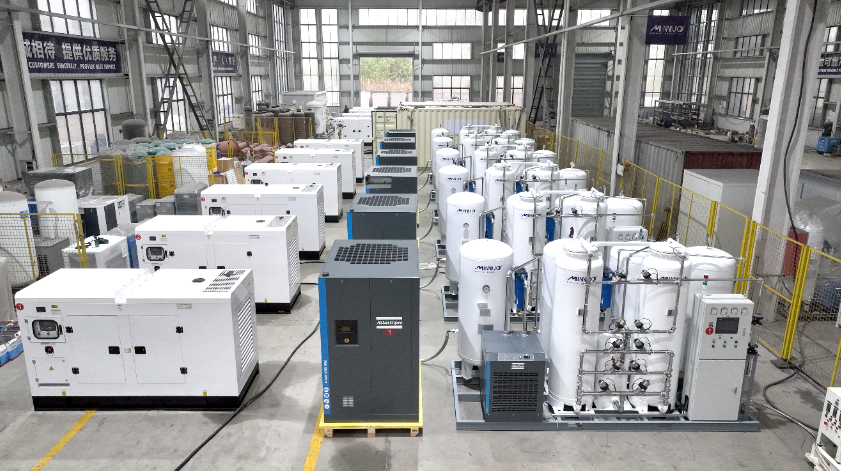
Pressure swing adsorption plants separate oxygen from ambient air using zeolite molecular sieves. The raw material is the atmosphere. The only ongoing inputs are electricity and periodic filter and sieve material replacement. A skid-mounted PSA unit producing 5 to 50 normal cubic meters of oxygen per hour can supply a district hospital, a pharmaceutical production line, or a shared medical-industrial gas hub. Because the plant sits on site, the oxygen supply is decoupled from the tanker truck, the cylinder exchange depot, and the international liquid oxygen spot market. This supply chain independence is precisely why modular PSA oxygen plants are being discussed in the context of Africa CDC’s pharmaceutical sovereignty agenda — not merely as hospital equipment, but as enabling infrastructure for local production. In 2026, as donor-backed manufacturing projects move from construction to commissioning, the oxygen supply question has shifted from “can we find a vendor?” to “can we generate it on site?”
III. Beyond Hospitals: Oxygen as an Industrial Feedstock for Pharma Manufacturing
Oxygen demand in API synthesis and fermentation processes
Active pharmaceutical ingredient manufacturing often involves oxidation reactions, controlled aerobic fermentation, or oxygen-enriched aeration in bioreactors. A single fermentation train producing vaccine antigens or antibiotic precursors can consume oxygen at rates comparable to a mid-sized hospital’s peak demand. The difference is that a pharmaceutical plant needs this oxygen continuously, at consistent purity, and with documented compliance to pharmacopoeia standards. Interruptions in oxygen supply do not just lower production yield — they can force the disposal of entire batches worth hundreds of thousands of dollars. For the new manufacturing facilities coming online across Africa, where batch failure represents not just a financial loss but a setback to regulatory credibility and market confidence, oxygen reliability is non-negotiable.
Cold chain and medical device sterilization requirements
Oxygen is also an indirect input to cold chain integrity through its role in producing medical-grade ozone for sterilization. Pharmaceutical packaging, single-use bioreactor components, and fill-finish consumables must be sterilized before use. Ethylene oxide sterilization requires controlled gas mixtures that often include oxygen. Facilities producing vaccines or injectable drugs therefore need oxygen for both the process line and the sterilization suite — a dual demand that liquid oxygen delivery can meet but that on-site PSA generation can satisfy with less logistical friction and greater scheduling autonomy.
Integrating medical and industrial oxygen supply for hybrid facilities
An emerging model in several African countries is the co-location of pharmaceutical production units with medical oxygen PSA plants that supply both the factory and a nearby hospital. This hybrid demand profile improves the utilization rate of the oxygen plant, spreading the capital cost across two budgets. A PSA plant sized to feed a fermentation line during the day can fill cylinders for a hospital’s emergency ward at night. This operational flexibility is harder to achieve with liquid oxygen, which boils off during storage and penalizes underutilization. Modular PSA oxygen plants in Africa are therefore being evaluated not just for single-purpose installations but for their ability to anchor broader oxygen ecosystems that serve both healthcare and industrial users — a model that development finance institutions are increasingly willing to fund because it addresses multiple Sustainable Development Goal targets with a single infrastructure investment.
IV. Modular Design as a Geopolitical Advantage
Skid-mounted PSA plants and rapid deployment into underserved regions
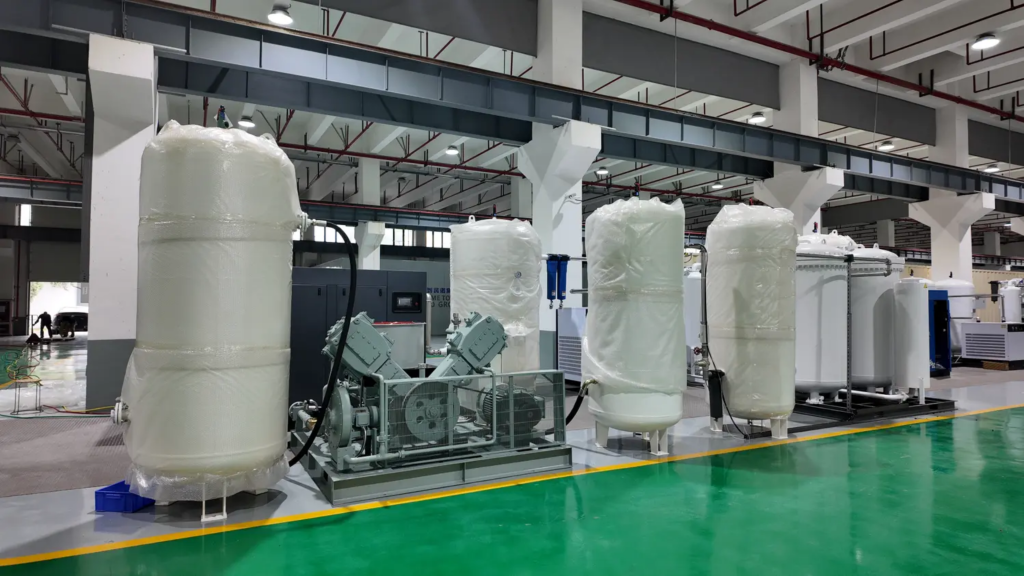
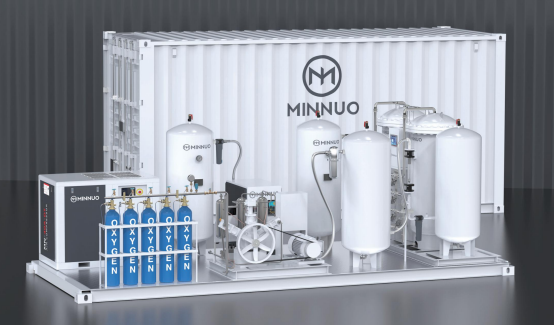
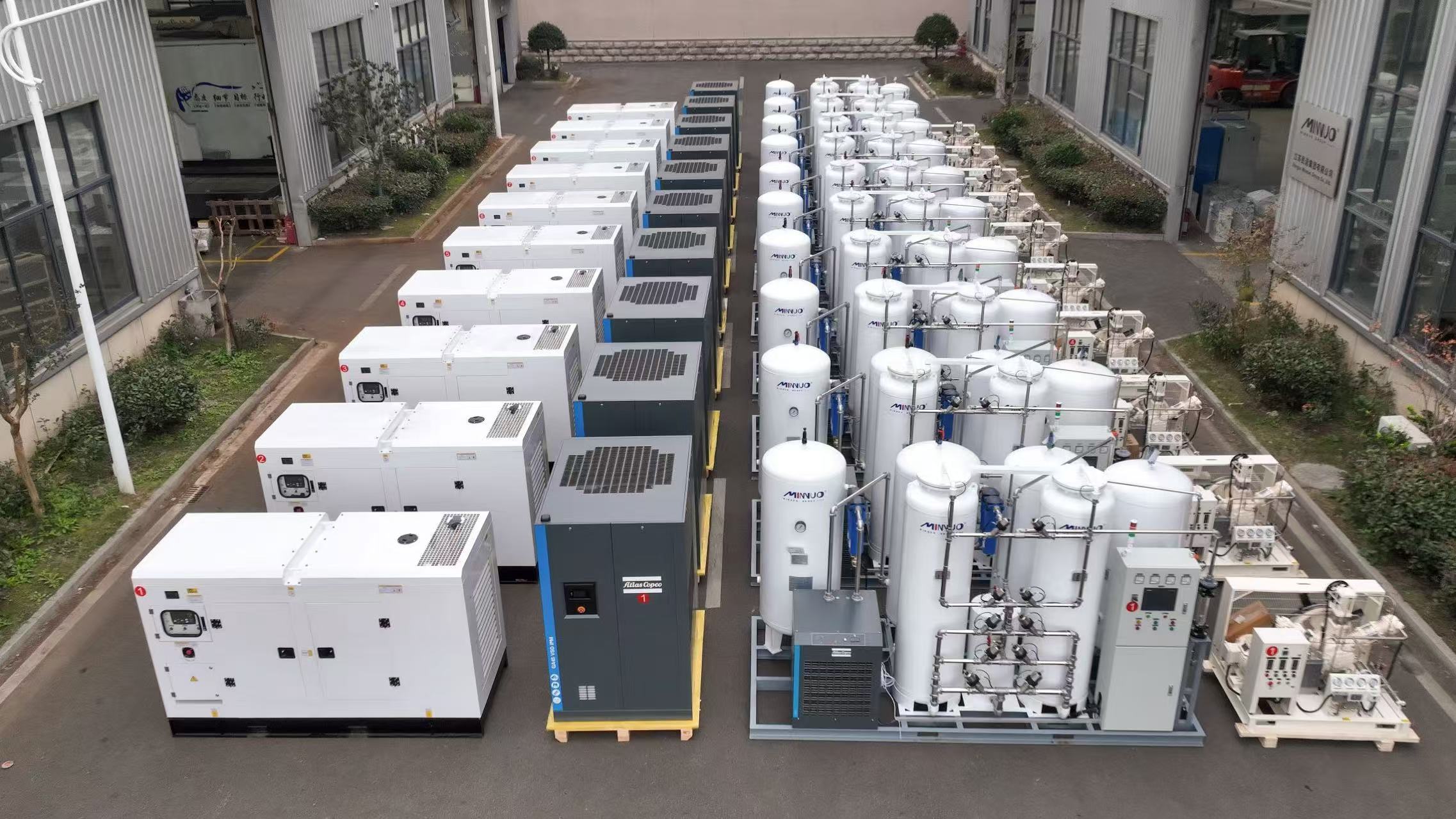
Modular PSA oxygen plants are built on a structural steel skid that contains the air compressor, air treatment system, oxygen generator vessels, buffer tank, and control panel — all pre-piped, pre-wired, and factory-tested before shipment. A unit can be transported on a flatbed truck, set on a concrete pad, connected to power, and commissioned within days of arrival. This rapid deployment capability has direct geopolitical implications. Countries or regions without existing cryogenic air separation infrastructure can establish domestic oxygen production in a timeframe measured in weeks rather than years, compressing the industrial development curve. For governments seeking to demonstrate tangible progress on pharmaceutical sovereignty within an electoral cycle, the speed advantage of modular PSA is a political asset as much as a technical one.
Scalability without requiring permanent infrastructure
Unlike a cryogenic air separation unit, which is typically a custom-engineered plant requiring substantial civil works, structural steel, and months of on-site construction, a modular PSA plant can be relocated as demand patterns shift. A unit installed to support an initial vaccine production campaign can be moved to a different facility or a different region as national manufacturing strategies evolve. This scalability also allows a phased investment approach. A country can start with a small plant supporting one manufacturing line and add parallel modules as production capacity grows, matching capital expenditure to demonstrated demand rather than betting on a large upfront investment. In an environment where pharmaceutical market forecasts carry significant uncertainty, this flexibility reduces the financial risk of overbuilding.
Reduced dependency on foreign bulk oxygen shipments and technology leverage
The geopolitics of oxygen supply are straightforward: nations that rely on imported liquid oxygen for their pharmaceutical and healthcare sectors are strategically exposed to price volatility, shipping disruptions, and the policy decisions of the countries where the oxygen is produced. On-site PSA generation shifts the dependency from a consumable supply to a piece of capital equipment. The oxygen source becomes the local atmosphere, not a foreign refinery. This does not eliminate all external dependencies — PSA sieve materials and certain compressor components are still manufactured in a limited number of countries — but it changes the nature of the dependency from continuous supply reliance to periodic maintenance and parts procurement, which is an easier position from which to negotiate and plan. In the context of Africa CDC’s 60% target, this distinction matters: a pharmaceutical sector built on imported oxygen remains structurally dependent, regardless of how many manufacturing buildings are constructed.
V. Technical Requirements for Pharmaceutical-Grade PSA Oxygen in African Operating Environments
Purity, pharmacopoeia compliance, and validation
Pharmaceutical oxygen must meet pharmacopoeia specifications — typically 90 to 93% purity for medical oxygen per the relevant national or regional pharmacopoeia, or up to 93% ± 3% for European Pharmacopoeia medical oxygen. PSA plants can achieve these specifications with standard molecular sieve configurations. The additional requirement is documented validation: oxygen purity must be continuously monitored, recorded, and traceable for batch release purposes. Modern PSA plants include online oxygen analyzers and data logging that integrates with pharmaceutical quality management systems. For manufacturers seeking WHO prequalification or stringent regulatory authority approval for their products, this documentation trail is not optional — it is a condition of market access.
Designing for high ambient temperatures, dust, and unstable grid power
Operating conditions in many African regions are more demanding than the temperate environments for which standard European or North American PSA packages are designed. Ambient temperatures above 40 degrees Celsius reduce compressor efficiency and accelerate sieve degradation. Dusty air — particularly in Sahelian and semi-arid regions — shortens inlet filter life and can foul heat exchanger surfaces. Unstable grid power, still a daily reality in many countries in 2026 despite ongoing grid investments, requires either an on-site generator backup or a PSA plant that can tolerate voltage fluctuations and phase imbalances without tripping. Engineering a modular PSA oxygen plant for Africa means specifying high-ambient-rated compressors, heavy-duty inlet filtration with extended surface area, and control systems with wide voltage tolerance — not simply shipping a standard skid and hoping it holds up under conditions it was never designed to face.
Local serviceability and skills transfer considerations
A PSA plant installed thousands of kilometers from the manufacturer’s nearest service center must be maintainable by local technicians. This has implications for design: accessible component layout, clear documentation in the local language of operation, onboard diagnostics with plain-language fault codes, and a spare parts strategy that balances inventory cost against lead time. The most successful installations in emerging markets are those where the equipment supplier commits to a structured skills transfer program, training local engineers not just to operate the plant but to diagnose faults and perform scheduled maintenance independently. This human element is as critical to the plant’s long-term performance as the specification of the air compressor or the choice of molecular sieve material. A PSA plant that cannot be maintained locally becomes a stranded asset the moment the commissioning engineer leaves the site.
FAQ
Q1: What is the difference between a modular PSA oxygen plant and a traditional liquid oxygen supply for pharmaceutical production?
A1: A modular PSA oxygen plant generates gaseous oxygen on site from ambient air using pressure swing adsorption. Liquid oxygen is produced at a centralized air separation unit, then trucked and stored in cryogenic tanks. PSA eliminates the delivery logistics and boil-off losses of liquid oxygen, while liquid oxygen can deliver higher purity and larger total volumes for very large facilities. For many pharmaceutical production lines in the 5 to 100 Nm³/h range, modular PSA offers a more predictable cost structure and greater supply security, particularly for facilities located far from existing air separation units.
Q2: Can PSA oxygen meet pharmaceutical grade purity requirements?
A2: Yes. Standard industrial PSA plants reliably produce oxygen at 90 to 93% purity, which meets the pharmacopoeia specifications for medical oxygen in most jurisdictions. The key is ensuring that the PSA system includes continuous purity monitoring, data logging, and an automatic divert valve that rejects off-spec gas — features that are standard on pharmaceutical-grade PSA packages and essential for regulatory compliance documentation.
Q3: How does Africa CDC’s 60% target relate to oxygen infrastructure investment?
A3: Africa CDC’s target covers vaccines, diagnostics, and therapeutics. Pharmaceutical manufacturing across all three categories consumes oxygen in API synthesis, fermentation, and sterilization. The 60% target therefore creates a derived demand for reliable, pharmaceutical-grade oxygen supply across the continent. As of 2026, development finance institutions are increasingly recognizing that funding fill-finish facilities without funding the gas infrastructure that keeps them running is an incomplete investment, and several blended finance instruments now explicitly include industrial gas supply in their project scope.
Q4: What are the main challenges of operating a PSA oxygen plant in sub-Saharan Africa?
A4: The primary challenges are high ambient temperatures reducing compressor efficiency, airborne dust loading increasing maintenance frequency, unstable grid power causing unplanned shutdowns, and limited local access to specialized spare parts and service expertise. Plants designed specifically for these conditions — with high-ambient-rated components, robust inlet filtration, voltage-tolerant controls, and a structured local training program — overcome most of these issues and have demonstrated reliable operation across multiple African countries.
Q5: Is it more economical to use PSA or import liquid oxygen for a pharmaceutical plant in Africa?
A5: The breakeven point depends on the distance to the nearest liquid oxygen source, the cost of cryogenic storage infrastructure, and the plant’s oxygen consumption rate. For facilities located more than a few hundred kilometers from an air separation unit or those with moderate oxygen demand below roughly 100 Nm³/h, on-site PSA generation often offers a lower total cost of ownership when logistics, boil-off losses, and supply reliability are factored into the calculation.
Q6: How long does it take to install and commission a modular PSA oxygen plant?
A6: A skid-mounted modular PSA unit can be installed and commissioned within one to two weeks of arrival on site, assuming the concrete pad, power supply, and interconnection piping are prepared in advance. This timeline is a fraction of what a cryogenic plant or a large cylinder filling station requires, which is one reason modular PSA is attractive for rapidly scaling pharmaceutical production capacity under the timelines that Africa CDC’s 2040 target implies.
Q7: Can one PSA plant supply both a pharmaceutical production line and a hospital?
A7: Yes. Hybrid medical-industrial oxygen supply models are operational in several African countries. A PSA plant can be sized to serve both the continuous demand of a pharmaceutical production line and the variable demand of a hospital, often with a manifold system that prioritizes the pharmaceutical process and diverts excess capacity to cylinder filling for ward use. This co-supply model improves plant utilization, spreads capital cost across two operational budgets, and makes the overall investment case more attractive to development finance providers.
Conclusion
Africa CDC’s 60% local production target is not solely about building pharmaceutical factories. It is about building the infrastructure ecosystem — power, water, logistics, and industrial gases — that makes those factories viable. Without reliable oxygen supply, vaccine and drug manufacturing cannot scale beyond pilot projects, regardless of how well-funded the production facility itself may be. Modular PSA oxygen plants address this need in a way that aligns with the economic and geographic realities of the African continent: they are quick to deploy, scalable in step with production demand, and decoupled from the long liquid oxygen supply chains that have historically left rural facilities underserved.
At MINNUO, we design and manufacture modular PSA oxygen plants for clients whose requirements span healthcare, pharmaceutical manufacturing, and industrial gas supply. We understand that equipment destined for Africa’s expanding pharmaceutical sector must be engineered for local conditions, not simply shipped from a template designed for temperate climates. By matching the right PSA configuration to the specific demands of the site — ambient conditions, power stability, purity requirements, and the skills of the operating team — the oxygen plant transitions from a generic commodity to a reliable production asset, and contributes in a measurable way to the continent’s long-term health sovereignty.

 sales2:+86 17506119168