
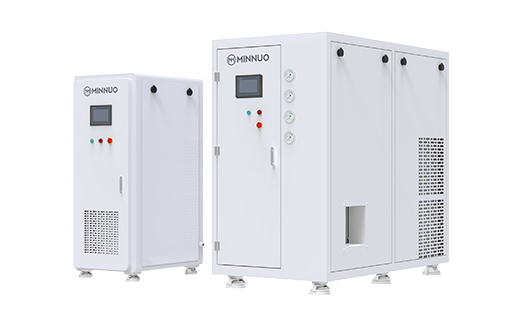
Resistor materials are core fundamental materials for electronic information, power engineering, new energy and other fields. Their performance stability, precision and reliability directly determine the quality and service life of end products. Capable of steadily providing an ultra-low temperature environment of -196℃ (77K), liquid nitrogen generators feature high efficiency, convenient operation and low operating costs. They have been widely applied throughout the whole process of R&D, production and testing of resistor materials, and become essential auxiliary equipment driving the industry to upgrade towards higher precision, better performance and greater reliability. This article elaborates on its core application scenarios and prominent advantages in detail.
I. Core Application Scenarios of Liquid Nitrogen Generators in the Resistor Material Industry
The application of liquid nitrogen generators in the resistor material industry mainly focuses on creating low-temperature environments, covering three key links: R&D and characteristic characterization, production and preparation, as well as performance testing. It meets the full-life-cycle demands of various resistor materials, including metal film resistors, alloy resistors, thermistors and superconducting resistors.
R&D and Characteristic Characterization of Resistor Materials
In the R&D phase, liquid nitrogen generators are used to simulate extreme low-temperature conditions, explore the electrical transport properties, phase transition rules and quantum effects of materials at low temperatures, and provide data support for formula optimization and performance improvement of new resistor materials.
1.1 Low-temperature Resistivity Test
Liquid nitrogen generators create a stable environment of 77K to measure the resistivity and temperature coefficient of resistance (TCR) of resistor materials at ultra-low temperatures. It helps study how physical phenomena such as electron-phonon scattering and quantum confinement affect resistance performance, and screen material formulas suitable for low-temperature scenarios like aerospace and quantum equipment.
For example, in the R&D of nickel-chromium alloy nano-film resistors, the low-temperature environment formed by liquid nitrogen suppresses thermal noise and captures tiny changes in resistance values accurately, offering references for film thickness optimization and process improvement.
1.2 R&D of Superconducting Resistors
For high-temperature superconducting resistor materials such as YBCO-series and Bi-series copper oxides, liquid nitrogen generators can directly provide the 77K temperature range required for superconducting transition. It eliminates the need for complicated and costly liquid helium refrigeration systems, greatly cutting R&D costs and accelerating the industrialization of superconducting resistors. In addition, it can be used to test key parameters including critical current and magnetic susceptibility, and improve the application theories of superconducting resistors.
1.3 Research on Material Phase Transition and Stability
With the rapid cooling capacity of liquid nitrogen generators, the phase transition process of resistor materials under drastic temperature changes can be simulated. Relevant tests on thermal expansion coefficient and low-temperature brittleness are carried out to evaluate the performance stability of materials amid temperature fluctuations and prevent resistor failure caused by temperature variation.
Production and Preparation Process of Resistor Materials
In the large-scale production of resistor materials, the low-temperature characteristics of liquid nitrogen generators optimize production processes and raise product consistency and performance limits, especially for the manufacturing of high-precision and special resistor materials.
2.1 Low-temperature Grinding and Mixing
For resistor material powders such as ruthenium dioxide and zinc oxide, liquid nitrogen planetary ball mills are adopted. Liquid nitrogen absorbs heat generated during grinding in a timely manner and keeps the grinding tank at a low temperature. This effectively prevents powder agglomeration, refines particle size and improves powder uniformity. It further guarantees the conductivity and consistency of materials in subsequent resistor production, and is widely used in powder preparation for thermistors and varistors.
2.2 Low-temperature Deposition of Film Resistors
During the production of metal film and alloy film resistors, liquid nitrogen generators control the temperature of the deposition environment. This eliminates thermal stress defects generated in normal-temperature deposition, enhances the bonding force between thin films and substrates, and reduces resistance drift. It achieves a resistance matching precision of ±0.01%, satisfying the strict precision requirements of quantum equipment and precision instruments.
2.3 Low-temperature Curing and Shaping
For some special resistor materials such as polymer composite resistors, the rapid cooling capability of liquid nitrogen generators enables fast curing during molding. It locks the microscopic structure of materials, avoids structural defects occurring in normal-temperature curing, and improves the mechanical strength and performance stability of resistors.
Performance Testing and Screening of Finished Resistors
Before delivery, finished resistors must undergo strict performance tests to ensure reliability in various environments. Liquid nitrogen generators simulate extreme low-temperature working conditions to complete low-temperature performance tests and screen out defective products.
3.1 Low-temperature Performance and Reliability Test
Finished resistors are placed in the low-temperature environment created by liquid nitrogen generators for long-term heat preservation tests. The equipment detects the resistance stability, insulation performance and aging resistance of resistors at -196℃. Products with excessive resistance drift or insulation failure under low temperatures are eliminated, ensuring the normal operation of terminal equipment used in polar regions, aerospace devices and other low-temperature scenarios.
3.2 High and Low Temperature Cycling Test
Combined with heating equipment, liquid nitrogen generators realize cyclic switching between high and low temperatures to simulate temperature fluctuations in actual use. It tests the fatigue resistance and resistance recovery capability of resistors and verifies their service life, which is particularly applicable to automotive electronics, aerospace and other fields with high requirements for resistor reliability.
3.3 Thermal Noise Test
A low-temperature environment formed by liquid nitrogen greatly reduces the thermal noise of resistors. By accurately testing the noise spectral density, low-noise resistor products can be screened out to meet the stringent noise control standards of quantum computing, precision measurement and other fields.
II. Core Advantages of Liquid Nitrogen Generators in the Resistor Material Industry
Compared with traditional refrigeration equipment such as liquid helium refrigerators and ordinary low-temperature chambers, liquid nitrogen generators stand out in low-temperature performance, operating efficiency and cost control, making them the preferred refrigeration equipment for the resistor material industry.
Excellent Low-temperature Performance with Precise and Stable Temperature Control
Liquid nitrogen generators can steadily deliver an ultra-low temperature of -196℃ (77K) with minor temperature fluctuation. Supported by PID algorithm, it enables continuous temperature adjustment within a wide range of 78K to 800K, and the temperature control precision reaches ±0.05K, fully meeting the strict low-temperature requirements in R&D, production and testing of resistor materials.
The temperature range of liquid nitrogen is more suitable for low-temperature testing and production of most resistor materials than liquid helium refrigeration (4K). Its superior temperature stability avoids test data deviation and inconsistent product performance caused by temperature changes. Meanwhile, liquid nitrogen features strong chemical inertness and will not react with resistor materials, ensuring accurate material performance and test results.

High Operating Efficiency, Adaptable to Large-scale Production
The cooling rate of liquid nitrogen generators can reach 20K/min, which quickly creates the required low-temperature environment and greatly shortens the cycle of R&D tests and production processes. Some liquid nitrogen equipment like planetary ball mills can be equipped with multiple working units (e.g. 4 grinding tanks) to process multiple groups of samples simultaneously and boost working efficiency.
In addition, liquid nitrogen generators are easy to operate with a high degree of automation. They can provide continuous and stable low-temperature conditions without complex manual supervision, adapting to continuous operation in large-scale production and effectively increasing production efficiency and product qualification rate.
Controllable Costs with Outstanding Cost Performance
Liquid nitrogen is far cheaper than liquid helium, with convenient storage and transportation, which significantly cuts the refrigeration cost for R&D and production of resistor materials. Liquid nitrogen generators have a relatively simple structure, low maintenance costs, no complicated refrigeration pipelines or expensive consumables, and low energy consumption during operation. Long-term application helps enterprises reduce overall operating expenses. For scientific research institutions and small and medium-sized enterprises, liquid nitrogen generators satisfy low-temperature demands while controlling R&D and production costs and optimizing cost performance.
Wide Application Range, Compatible with Various Resistor Materials
Liquid nitrogen generators are applicable to the R&D, production and testing of multiple resistor materials, including metal film resistors, alloy resistors, PTC/NTC thermistors, varistors and superconducting resistors. They cover powder preparation, thin film deposition, performance testing and other processes.
Whether it is small-batch R&D in laboratories, mass production in factories, routine performance testing of common resistors or manufacturing of special resistors, liquid nitrogen generators can provide stable low-temperature support. Its high universality caters to diversified demands of the resistor material industry.
Safe and Reliable with Simple Operation
Liquid nitrogen generators adopt a closed refrigeration structure and are fitted with comprehensive safety protection devices, including pressure protection, temperature alarm and leakage detection systems, which effectively eliminate potential safety hazards caused by liquid nitrogen leakage. Moreover, liquid nitrogen is chemically stable, non-flammable and non-explosive, delivering higher safety than other low-temperature refrigerants.
The operation process is simple. The automatic control system realizes precise adjustment of parameters such as temperature and time, and no professional low-temperature operation qualification is required, lowering personnel training costs for enterprises.
Summary
Thanks to superior low-temperature performance, high operating efficiency, controllable costs and wide compatibility, liquid nitrogen generators have become key equipment for technological innovation, production upgrading and quality control in the resistor material industry. They not only create a stable low-temperature experimental environment for the R&D of new resistor materials and drive technological breakthroughs, but also optimize production processes, improve product quality and reduce operating costs, promoting the development of resistor materials towards higher precision, better performance and greater reliability.
As resistor materials are increasingly applied in high-end fields such as quantum computing, aerospace and new energy, liquid nitrogen generators will have broader application scenarios and provide stronger support for the development of the industry.
FAQ
Q1: What is the standard low temperature provided by a liquid nitrogen generator? What is the temperature control accuracy?
A1: It can stably reach -196℃ (77K). With PID control, the adjustable temperature range covers 78K to 800K, and the temperature control precision is up to ±0.05K, which fully meets the low-temperature requirements for resistor material testing and production.
Q2: Why choose liquid nitrogen refrigeration instead of liquid helium refrigeration for resistor material research?
A2: Most resistor materials only need a temperature range around 77K, which is perfectly matched by liquid nitrogen. Meanwhile, liquid nitrogen has much lower procurement, storage and operating costs than liquid helium. It also features more stable operation and simpler equipment structure, making it the cost-effective choice for industrial and scientific research scenarios.
Q3: Which types of resistor materials are liquid nitrogen generators suitable for?
A3: They are widely compatible with metal film resistors, alloy resistors, thermistors, varistors, superconducting resistors and polymer composite resistors. They can serve the whole process from powder preparation, thin film deposition to finished product testing.
Q4: Can liquid nitrogen generators support high-volume continuous production?
A4: Yes. The equipment has a fast cooling rate and high automation level, enabling long-term continuous supply of low-temperature environments. Multiple working units can be configured to process samples in batches, which fully adapts to the continuous operation mode of large-scale resistor production lines.
Q5: Is liquid nitrogen safe to use in the production and testing of electronic materials?
A5: Absolutely safe. Liquid nitrogen is chemically inert, non-flammable and non-explosive, and will not cause chemical reactions with resistor materials. The equipment is equipped with leakage detection, overpressure protection and temperature alarm systems to eliminate potential safety risks during operation.


 sales2:+86 17506119168